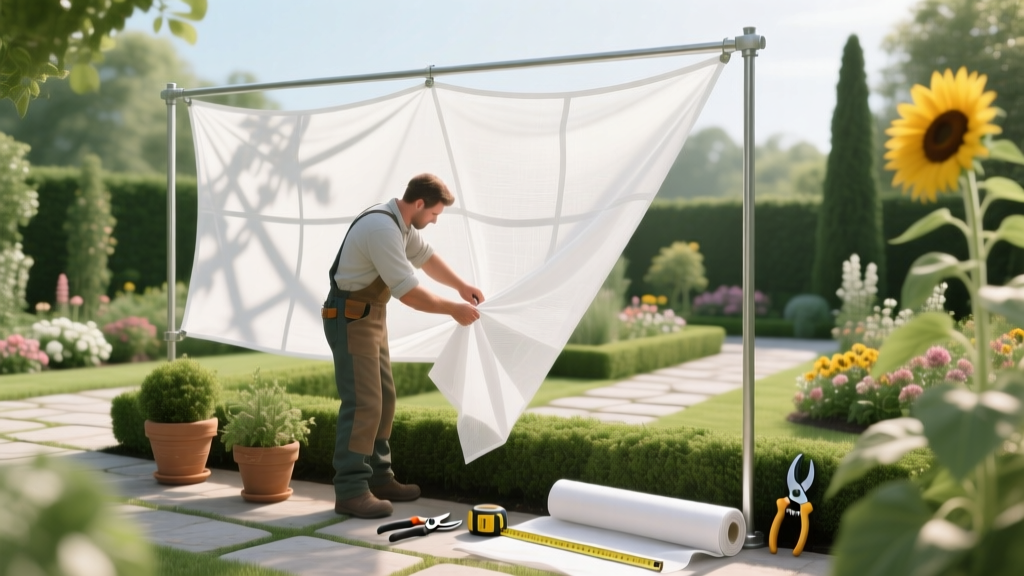
Summer Garden: Shade Cloth Installation Timing
The next hot spell is the one that does the damage—not the one you already survived. Once daytime highs start sticking above 90°F (or even 85°F for cool-season crops), leaf scorch, blossom drop, and sunburned fruit can show up in a single week. Shade cloth is one of the fastest, most reversible interventions you can make in summer, but timing matters: install too early and you slow growth; too late and you’re protecting plants that are already stressed.
This seasonal guide lays out what to do right now, organized by priority: what to plant, what to prune, what to protect (including exactly when to hang shade cloth), and what to prepare for the next heat wave. You’ll see concrete thresholds, week-by-week timing cues, and regional variations so you can act quickly in your own garden.
Priority 1: What to protect (shade cloth timing, heat tactics, and triage)
Install shade cloth ahead of the first multi-day heat event
Shade cloth works best as a preventive tool. Plan installation when your forecast shows:
- 3+ consecutive days of highs above 90°F for warm-season crops (tomatoes, peppers, beans)
- 2+ consecutive days above 85°F for cool-season crops (lettuce, spinach, cilantro), especially in full sun
- Night temperatures holding above 75°F, which often worsens tomato and pepper fruit set problems
If you garden in USDA Zones 8–11, that trigger often arrives between late May and mid-June. In Zones 5–7, it’s commonly mid-June through July. In maritime/coastal climates (many Zone 8 coastal areas), your trigger may be less about peak highs and more about intense sun after marine layers clear—watch UV index and sun angle.
“Shade can reduce heat load and sunburn risk, but excessive shading can reduce yield—match shade percentage to crop needs and local conditions.”
—Paraphrased from extension guidance on heat/sunburn management in vegetables (e.g., University of California Agriculture and Natural Resources, 2019)
Choose the right shade percentage by crop—and install it like a tool, not a tent
For summer vegetables, shade cloth is most useful when it reduces peak stress without pushing plants into low-light growth. A practical starting point:
- 30% shade: tomatoes, peppers, eggplant; also good for mixed beds where you still want strong growth
- 40–50% shade: lettuces, spinach, arugula, cilantro; seedling flats and transplant “hardening” during heat
- 50–60% shade: nurseries/propagation, some ornamentals, and extreme heat in Zones 9–11 where full sun becomes punitive
Install so air can move. Leave 12–24 inches between the cloth and plant tops whenever possible. Tight “draped” shade can trap heat and raise humidity—conditions that invite foliar disease.
Timing rules that prevent common shade cloth mistakes
Use these timing rules to get the benefits without trading them for problems:
- Install before damage: Put cloth up 24–72 hours ahead of the heat wave. Plants acclimate better when stress is reduced early.
- Start midday-first: If you’re unsure, shade only from 11 a.m.–4 p.m. for the first week by using clips you can open/close, or by shading the west side first.
- Remove or retract after the event: When highs drop below 85°F and nights cool, roll it back to restore full light for ripening and disease suppression.
- Keep pollinators in mind: For crops that need strong pollinator traffic (squash, cucumbers), keep shade high and airy; avoid blocking access during morning bloom.
Three real-world scenarios: your shade cloth timing will differ
Scenario A: Hot inland summer (USDA Zones 8–10, triple-digit spikes)
If your forecast regularly hits 95–105°F in June–August, treat shade cloth as seasonal infrastructure, not emergency gear. Install a frame (EMT conduit hoops, cattle panels, or a simple post-and-wire trellis) by the first week of June or once you see your first 95°F forecast. Use 30–40% over tomatoes/peppers and 40–60% over greens. In these regions, leaving cloth on for 6–10 weeks is common, with brief roll-backs for harvest and airflow.
Scenario B: Humid summers with frequent rain (USDA Zones 6–8 East/Midwest)
Here the enemy is often humidity-driven disease after storms, not just heat. Use shade cloth sparingly: install only during heat advisories or persistent 90°F+ stretches, and prioritize airflow. Choose lighter cloth (30%) and keep it high. Avoid “low tunnels” that trap moisture—especially over tomatoes where early blight and septoria can explode after leaf wetness events.
Scenario C: High elevation / strong sun but cooler nights (USDA Zones 4–6 mountains)
Your highs may only reach 82–90°F, but solar intensity can still scorch tender leaves and fruit. Shade cloth timing is often tied to sun angle and wind rather than heat waves. Install when UV is intense (often late June through July) and you notice midday wilting that doesn’t recover by evening. Use 30% and secure edges well—gusty winds tear poorly anchored cloth fast.
Monthly timing schedule: when to install, adjust, and remove
| Month | What to watch | Shade cloth action | Notes |
|---|---|---|---|
| Late May | First highs near 88–92°F; transplants settling | Build frames; test-fit clips; shade west side only if needed | Keep full sun for growth unless plants show scorch |
| June | First 3-day heat streak; nights above 70–75°F | Install 24–72 hrs before heat; start with 30% | Retract after the event in humid regions |
| July | Peak sun angle; fruit sunburn risk | Maintain shade over fruiting crops during extremes; add 40–50% over greens | Ventilation is non-negotiable; avoid draping on foliage |
| August | Heat + drought fatigue; late-summer sowing begins | Use cloth to protect new seedlings; gradually increase light for fall crops | Great time to shade seedbeds and transplant flats |
| September | Nights cool; sun intensity drops | Remove or roll back most shade; keep for tender fall seedlings during hot afternoons | In Zones 9–11, you may keep partial shade longer |
Heat triage checklist (do this before and during shade installation)
- Water early morning, aiming for consistent soil moisture (avoid midday overhead irrigation).
- Mulch to 2–3 inches (straw, shredded leaves, pine fines) to cut evaporation.
- Prioritize shading: new transplants, greens, fruit exposed on the west/south side, peppers in pots, and any plant in reflected heat near walls.
- Check irrigation output: containers may need water daily at 90–100°F, sometimes twice daily in wind.
- After cloth goes up, scout for increased humidity issues (powdery mildew, leaf spots) and improve airflow if needed.
Priority 2: What to plant right now (and how shade cloth changes summer sowing)
Summer planting is less about what can grow and more about what can germinate and establish during heat. Shade cloth can give you a window to sow when soil temperatures are otherwise too high for uniform germination.
Warm-season succession planting (Weeks 1–3)
If you’re within 10–12 weeks of your average first fall frost date, choose fast, reliable producers:
- Bush beans: sow every 2–3 weeks until about 8–10 weeks before first frost; shade cloth can help seedlings establish during 90°F+ weeks.
- Cucumbers: direct sow or transplant for late summer; protect seedlings from scorching sun for the first 7–10 days.
- Basil: thrives in heat; light shade (20–30%) can keep leaves tender in extreme sun.
In Zones 3–5, your “right now” window may be narrow. Count backward from your local frost date (often Sept 15–Oct 15, depending on site). If you’re closer than 60 days to frost, favor greens and roots rather than heat-lovers.
Start fall crops in summer using shade cloth as a germination tool (Weeks 2–6)
Many fall crops struggle to germinate in hot soil. A simple method: sow in the evening, water in, then shade the seedbed with 40–50% cloth until emergence.
- Lettuce: best germination often occurs when soil is cooler; shading can moderate surface temperatures. Use cloth until seedlings have 2 true leaves, then gradually increase sun.
- Carrots: keep the top 1/2 inch consistently moist; shade helps prevent crusting and drying.
- Brassicas (kale, broccoli, cabbage): start in trays under 30–40% shade during heat, then transplant when highs trend below 85°F.
Extension services consistently recommend timing fall plantings by counting back from frost dates and using local calendars. For example, Colorado State University Extension discusses using average frost dates and crop maturity to schedule plantings (CSU Extension, 2020).
Priority 3: What to prune (and what not to prune) during summer heat
In summer, pruning is about risk management. The wrong cut at the wrong time can trigger sunscald, reduce fruit set, or encourage a flush of tender growth that wilts daily.
Tomatoes: avoid heavy pruning right before heat
When a heat wave is coming, don’t strip foliage. Leaves are shade for fruit. If you prune hard and then hit 95°F, sunburned shoulders on tomatoes are common within a week.
- Do: remove leaves touching the soil to reduce splash-borne disease after storms.
- Do: thin only to improve airflow—aim for “dappled light,” not bare stems.
- Don’t: remove the canopy over fruit clusters during peak heat.
Peppers and eggplant: prune lightly, stake early
Peppers often drop blossoms when nights stay above 75°F. Shade cloth helps, but so does reducing stress from branch breakage and inconsistent watering. Use gentle staking and only remove damaged or crossing stems.
Herbs and greens: harvest as “pruning”
Cut basil, mint, and oregano in the morning and keep plants compact. For bolting-prone crops (cilantro, arugula), partial shade (40–50%) can buy you extra harvest days, but the real win is frequent cutting and immediate re-sowing in a shaded seedbed.
Priority 4: What to prepare (frames, anchors, irrigation, and a repeatable heat plan)
Build a shade cloth setup you can deploy in under 30 minutes
The best timing advice fails if installation takes half a day. Set up so you can roll out shade quickly when forecasts change.
Fast frame options for home gardens
- Hoop frame (PVC or, better, EMT conduit): strong, reusable, ideal for raised beds.
- T-post + top wire: great for long rows; clip cloth to the wire and tie down edges.
- Cattle panel arch: doubles as trellis for cucumbers/beans; cloth clips on top.
Anchor for wind. Use wiggle wire, greenhouse clips, or UV-resistant zip ties, and secure corners with sandbags or stakes. In gusty sites, leave a small gap at the top or leeward side to vent.
Irrigation timing: shade cloth is not a substitute for water
Shade reduces transpiration, but drought stress still builds fast in summer. A practical schedule:
- Water early morning to reduce evaporation and leaf wetness overnight.
- For in-ground beds: aim for deep watering 1–3 times per week depending on soil type and heat.
- For containers: check daily when highs exceed 88–90°F.
Using drip under mulch is the cleanest approach for disease prevention in humid regions. The University of Minnesota Extension emphasizes that many foliar diseases are encouraged by prolonged leaf wetness and splash; practices like mulching and avoiding overhead watering help reduce spread (University of Minnesota Extension, 2022).
Heat + pests + disease: prevention steps that match the season
Summer stress changes pest pressure. Plants under heat and drought are more attractive to some pests and less able to outgrow damage.
Spider mites (hot, dry conditions; common under fabric if airflow is poor)
- Check undersides of leaves weekly during 90°F+ weather.
- Hose off foliage in the morning (target undersides) if populations are building—then improve airflow so leaves dry quickly.
- Avoid excess nitrogen; it pushes soft growth that mites love.
Whiteflies and aphids (especially on peppers, kale, cucurbits)
- Use yellow sticky cards near susceptible plants to detect early spikes.
- Spot-treat with insecticidal soap in the early morning, and repeat in 5–7 days if needed.
- Control ants; they protect aphids.
Powdery mildew (cucurbits, zinnias; worsens when nights are warm and air is stagnant)
- Space and trellis cucurbits for airflow; don’t let shade cloth sag onto foliage.
- Water at soil level; avoid evening overhead watering.
- Remove heavily infected leaves (don’t compost if disease is active and spreading).
Tomato leaf spot diseases (after rain + warm temps)
- Mulch to reduce soil splash.
- Prune only the lowest leaves and stake plants to keep foliage off the ground.
- Harvest and remove infected leaves promptly; sanitize pruners.
Use USDA zones and frost dates to decide how long shade stays up
Shade cloth isn’t automatically “summer-long.” Decide based on your zone, forecast pattern, and crop stage:
- Zones 3–5: use shade mainly for heat events and for starting fall crops in July/August; begin rolling back when highs routinely fall below 85°F.
- Zones 6–7: likely need shade for parts of July/August; keep it flexible and prioritize ventilation and disease prevention.
- Zones 8–11: shade may be a long-season tool; consider permanent frames with retractable cloth and plan fall planting under shade, then remove gradually as sun intensity drops.
Week-by-week timeline (do this now)
This week (next 7 days)
- Check the 10-day forecast for a 3-day run of 90°F+ highs or a heat advisory.
- Identify the plants most likely to sunburn: tomatoes with exposed fruit, peppers in black pots, cucumbers on bare soil, new transplants.
- Build or inspect your frame; pre-attach clips so cloth deployment is fast.
- Mulch bare soil to 2–3 inches and fix irrigation leaks.
Next week (Days 8–14)
- Install shade cloth 24–72 hours ahead of predicted heat.
- Start fall seedlings (brassicas) under 30–40% shade if highs exceed 88°F.
- Scout for spider mites and whiteflies; treat early hot spots before populations explode.
Weeks 3–6
- Direct sow beans or cucumbers if you have at least 60–75 frost-free days remaining.
- Use shade cloth over seedbeds for lettuce/carrots to improve germination and reduce crusting.
- Adjust cloth height and tension; prevent sagging that reduces airflow and increases mildew risk.
Quick comparison: shade cloth strategies by garden type
| Garden setup | Best installation style | Recommended shade rate | Timing cue |
|---|---|---|---|
| Raised beds (4x8, 4x12) | Hoops + clips; easy roll-up | 30% for fruiting crops; 40–50% for greens | Install when highs exceed 90°F for 3 days |
| Containers/patio | Freestanding frame or pergola edge; shade west side | 30–40% | Install when pots dry daily and leaves scorch in afternoon |
| In-ground rows | T-post + wire spine; tie-down edges | 30% | Install before heat advisories; remove after storms if humidity is high |
| High tunnel/greenhouse | Exterior shade cloth (preferred) or interior if needed | 30–50% depending on crop | Deploy when inside temps exceed 85–90°F midday |
Shade cloth fine-tuning: signs you installed too early or too late
Too early (light limitation): plants stretch, leaves are large and soft, flowering slows, tomato trusses look sparse. Fix it by retracting cloth in the morning or switching from 40% to 30%.
Too late (damage already done): bleached patches on fruit, papery leaf edges, persistent wilting even after watering. Fix it by shading immediately, then stabilizing moisture and adding temporary protection to exposed fruit (leave foliage, avoid pruning).
Just right: plants recover by evening, flowers hold better, greens stay tender longer, and fruit shows fewer sunburned shoulders.
Seasonal notes for specific crops
Tomatoes
Shade cloth helps most when fruit is exposed and highs exceed 90–95°F. Pair shade with steady moisture and mulch. Avoid heavy pruning during heat. If you’re in Zones 8–10 and nights stay above 75°F, expect some blossom drop even with shade; the goal is to keep plants healthy so they set fruit again when nights cool.
Peppers
Peppers in containers are prime candidates for 30–40% shade during heat waves. Watch for sunscald on exposed fruit. Keep watering consistent; intermittent drought followed by heavy watering increases blossom end rot risk in susceptible varieties.
Leafy greens and herbs
For lettuce and cilantro in summer, shade cloth is often the difference between “bolts tomorrow” and “harvest for two more weeks.” Use 40–50% shade, harvest early morning, and re-sow every 10–14 days in a shaded seedbed for continuity.
Action checklist: shade cloth installation timing you can repeat every summer
- Know your average first fall frost date; keep it on your calendar (many gardens fall between Sept 15 and Nov 15 depending on region).
- Watch for forecast triggers: 3 days above 90°F (or 2 days above 85°F for greens).
- Install cloth 24–72 hours before the heat arrives.
- Use 30% for fruiting crops; 40–50% for greens/seedbeds.
- Keep cloth off foliage and vent for airflow.
- Roll back after the heat breaks to restore light and reduce disease pressure.
- Scout weekly for mites, mildew, and leaf spots—shade changes microclimate.
Once you’ve set up a quick-deploy frame and learned your local trigger temperatures, shade cloth becomes a simple seasonal rhythm: anticipate the heat, protect before stress peaks, and give your plants back full sun as soon as conditions allow. That timing—more than the fabric itself—is what keeps summer gardens productive instead of merely surviving.