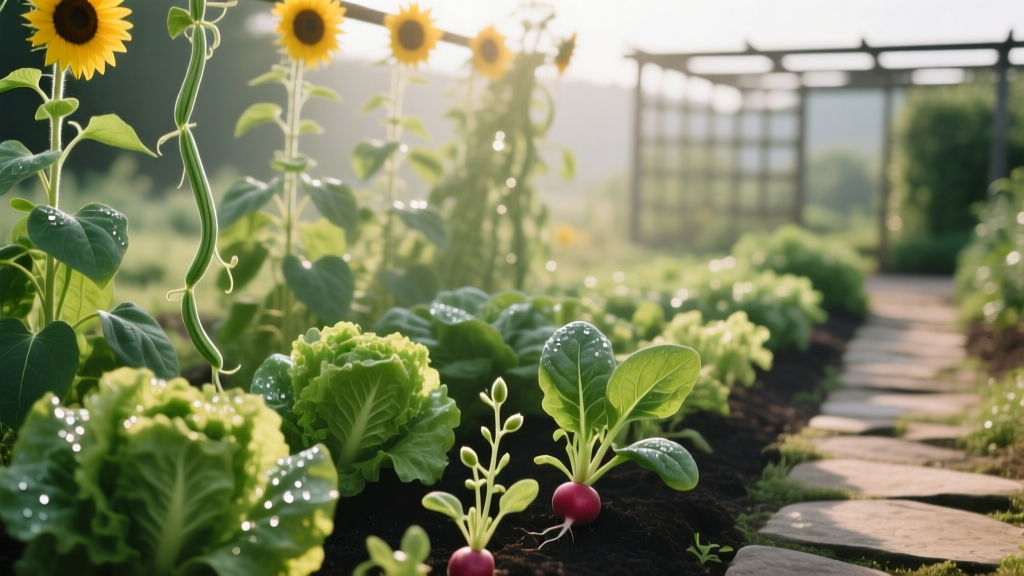
Summer Garden: Managing Heat Stress on Cool-Season Crops
The moment daytime highs start holding above 85°F and nights refuse to drop below 65°F, cool-season crops don’t just “slow down”—they shift into survival mode. Lettuce turns bitter, spinach bolts, peas stall, broccoli heads loosen, and leafy greens invite pests that thrive in warm, dry weather. This is also your narrow window of opportunity: a few fast interventions this week can buy you 2–4 more productive weeks, protect flavor, and keep plants healthy enough to bridge into fall planting.
Use the priorities below as your right-now checklist. The goal is to reduce heat load, keep roots evenly moist, prevent bolting, and stay ahead of summer pests and disease—without overcorrecting and creating new problems (like soggy soil or rampant aphids).
Priority 1: What to protect right now (next 48 hours)
1) Deploy shade strategically (and quickly)
When forecasts show 3+ consecutive days above 88–90°F, act before plants wilt. Shade reduces leaf temperature and slows bolting—especially for lettuce, arugula, spinach, cilantro, and Asian greens.
- Use 30–50% shade cloth over hoops or a simple frame. Start with 30% if you still want growth; use 50% during heat waves or for spinach.
- Time it: Put shade up by 10–11 a.m. and remove in late afternoon if nights are cool (below 60–62°F). In prolonged heat, leave it on.
- Aim for airflow: Keep cloth off foliage to avoid trapping humidity and encouraging leaf diseases.
- Temporary option: An old bedsheet can work for 1–3 days during a spike, but shade cloth breathes better and won’t act like a sail in wind.
“Shade cloth is one of the most effective and immediate tools for moderating heat stress in vegetables, especially leafy greens, by reducing radiation load while still allowing ventilation.” — University Extension guidance on season-extension practices (e.g., shade use in summer), 2019
2) Water for root stability, not constant wetness
Cool-season crops are shallow-rooted and react fast to moisture swings. The worst pattern is dry soil followed by a heavy soak—this pushes stress, bitterness, cracking, and disease flare-ups.
- Deep, early watering: Water at 6–9 a.m. so leaves dry quickly. Avoid evening watering when nights stay above 68–70°F (greater disease pressure).
- Target: Keep soil consistently moist to a depth of 4–6 inches for greens; 8–10 inches for broccoli/cabbage family crops.
- Rule of thumb: Many vegetable beds need about 1–1.5 inches of water per week in summer, more during heat waves and on sandy soils. Adjust for rainfall and mulch.
- Use drip or soaker lines under mulch to reduce evaporation and leaf wetness.
Extension guidance consistently emphasizes that mulch + drip irrigation reduces heat and water stress while limiting foliar diseases. For example, University of Minnesota Extension notes the value of mulch for moderating soil temperature and conserving moisture in vegetable gardens (2020). Similarly, UC ANR materials on irrigation efficiency and evapotranspiration principles support watering to match plant demand during hot periods (2018).
3) Mulch to cool the root zone
In summer, your soil is the battery that stores heat. Cooling that root zone prevents midday shutdown and reduces bolting pressure.
- Apply 1.5–3 inches of clean straw, shredded leaves, or untreated grass clippings (thin layers so they don’t mat).
- Keep mulch 1 inch away from stems to reduce rot and slug hiding spots.
- For brassicas (broccoli, cauliflower, cabbage): mulch is especially helpful when daytime highs exceed 86°F, because root stress often shows up as loose heads and uneven growth.
4) Harvest to reduce stress (and improve flavor)
Heat-stressed plants respond to harvest. Removing older leaves and over-mature parts lowers respiration demand and directs the plant to produce new growth.
- Lettuce & greens: Harvest at sunrise or early morning for best texture. Take outer leaves first; don’t scalp the whole plant unless you’re finishing the crop.
- Peas: Pick daily when temps rise above 80–85°F to reduce pest pressure and keep vines producing.
- Cilantro: Cut stems low and often; once it starts bolting in sustained heat, treat it as a short-timer and plan replacement.
Priority 2: What to prune (and what NOT to prune) during heat
Trim strategically: remove stress multipliers
Pruning in summer is about removing problem growth, not forcing a flush. Too much leaf removal exposes crops to sunscald and raises leaf temperature.
- Remove yellowing or disease-spotted leaves from lettuce, spinach, chard, kale, and brassicas. Bag and discard if disease is suspected—don’t compost if it’s actively sporulating.
- Brassicas: Remove leaves that touch soil to reduce splash-borne disease and slug habitat.
- Peas: Snip off dying lower foliage once it browns; this improves airflow and reduces mildew pressure.
Avoid these common heat-season mistakes
- Don’t heavily prune leafy greens during a heat wave. Plants need leaf area for recovery and shading their own crowns.
- Don’t fertilize aggressively with high nitrogen when highs are above 90°F. It can push tender growth that attracts aphids and burns under stress.
- Don’t overhead-water late day during humid stretches—powdery mildew and downy mildew risk rises fast when leaves stay wet overnight.
Priority 3: What to plant (now and soon) while protecting cool-season beds
Use “relay planting” to keep beds productive
If your spring greens are fading, you have two smart paths: keep them alive with shade long enough to bridge to fall, or swap to heat-tolerant crops and plan a fall replant. Your choice depends on your region and how close you are to fall’s cooler nights.
Plant now: heat-tolerant replacements near cool-season crops
- Basil as a companion edge plant (also distracts some pests and thrives in heat).
- Bush beans (quick returns, good bed filler as peas fade).
- Chard (more heat-tolerant than spinach; harvest leaves continuously).
- New Zealand spinach or Malabar spinach (hot-weather “spinach substitutes”).
- Scallions for vertical interest and light shade at soil level.
Start now for fall: seed indoors or in a shaded nursery bed
Count backward from your average first fall frost date. In USDA Zones 3–5, that might be Sept 15–Oct 10; in Zones 6–7, often Oct 10–Nov 1; in Zones 8–10, frost may be late Nov–Feb or not at all. The timing matters because brassicas need time to size up before cold nights slow growth.
- Broccoli: Start seedlings 8–10 weeks before your targeted transplant date.
- Cabbage: Start 6–8 weeks before transplanting.
- Lettuce: Direct sow in 2-week intervals once daytime highs reliably fall below 85°F.
- Spinach: Wait until highs are closer to 75–80°F for better germination; in many areas this is late summer.
If soil temperatures are too warm for germination (common when daytime highs exceed 90°F), start seeds in plug trays in a cooler spot or under shade cloth and transplant once established.
Priority 4: What to prepare (this week) to keep cool-season crops going
Build a simple heat-response kit
- 30–50% shade cloth (or temporary fabric for emergencies)
- Hoops or stakes + clips
- Drip line/soaker hose + timer (even a basic one)
- Mulch (straw or shredded leaves)
- Row cover (lightweight) for pest exclusion on brassicas when not overheating
- Yellow sticky cards (monitoring flying pests)
- Hand lens (10x) for aphids/mites and early disease scouting
Dial in soil moisture with a 60-second test
Skip guesswork. Push your finger or a trowel down 4–6 inches:
- If soil is cool and forms a loose ball: water can wait.
- If it’s dusty/crumbly and warm: water today, then mulch.
- If it’s soggy: hold irrigation, improve airflow, and check for root issues.
Monthly schedule: summer management for cool-season crops
| Timing | Watch for | Do this now | Don’t do this |
|---|---|---|---|
| Early summer (weeks 1–2 of sustained 80s) | First bolting signs; bitter flavor; midday droop | Add 30% shade cloth; mulch 1.5–2"; switch to morning irrigation | Heavy nitrogen feeding |
| Mid-summer (heat waves 88–95°F) | Aphids, mites; loose brassica heads; tipburn on lettuce | Increase shade to 40–50%; deepen watering; harvest early; scout 2x/week | Overhead watering late day; removing too many leaves |
| Late summer (nights begin dropping <65°F) | Opportunity for fall starts; slower pest pressure | Start fall brassicas 6–10 weeks before transplant; begin lettuce succession sowing as highs fall <85°F | Waiting until “it feels cool” to seed spinach |
Heat stress triage by crop (quick comparisons)
| Crop | Heat stress symptoms | Fastest fix | When to give up & replant |
|---|---|---|---|
| Lettuce | Bitter leaves, bolting, tipburn | 40–50% shade + consistent moisture; harvest at dawn | When flower stalks elongate and leaves turn sharply bitter |
| Spinach | Rapid bolting, leaf yellowing, stalling | Shade + mulch; treat as short-term crop in heat | Once bolting starts in sustained >85°F weather |
| Peas | Flowers drop, pods stop filling, mildew | Harvest daily; keep evenly moist; improve airflow | When vines brown from the base and production stops |
| Broccoli | Loose heads, uneven beads, bitterness | Mulch + steady irrigation; partial shade during spikes | If heads consistently deform and plants stall in >90°F spells |
Pest and disease prevention that matters in summer
Heat-stressed plants leak more sap and recover slowly, which makes pest pressure feel sudden. Scout twice weekly—more during hot, dry wind or prolonged humidity.
Aphids (greens, brassicas)
- Signs: curled new growth, sticky honeydew, ants “farming” stems.
- Act now: Blast colonies off with a firm morning hose spray, then re-check in 48 hours.
- Prevent: Avoid high-N fertilizer during heat; keep plants evenly watered. Use reflective mulch (silver) if aphids are chronic in your area.
Spider mites (especially in hot, dry regions)
- Signs: fine stippling, bronzing, webbing on undersides.
- Act now: Increase irrigation consistency, rinse leaf undersides in the morning, and remove heavily infested leaves.
- Prevent: Dust control matters—dusty plants get mites faster. Keep pathways damp during extreme dryness.
Cabbage worms and loopers (brassicas)
- Signs: ragged holes, green frass pellets in crowns.
- Act now: Handpick early morning; apply Bacillus thuringiensis var. kurstaki (Bt-k) at dusk if pressure is steady (follow label).
- Prevent: Use insect netting/row cover only if it won’t overheat the bed. In hot zones, choose shade cloth plus targeted scouting instead of trapping heat under fabric.
Powdery mildew and downy mildew (peas, greens)
- Risk pattern: Warm days + humid nights, or crowded plants with poor airflow.
- Act now: Thin or harvest to open airflow; water early; remove infected leaves.
- Prevent: Avoid overhead irrigation late. Rotate crops; don’t replant the same family into the same spot in late summer.
For disease prevention principles (airflow, sanitation, rotation, watering timing), extension resources consistently recommend reducing leaf wetness duration and improving air circulation to lower foliar disease pressure in vegetables (e.g., Penn State Extension vegetable disease management materials, 2021; Cornell Cooperative Extension home vegetable guidance, 2020).
Regional scenarios: what “heat stress” looks like where you garden
Scenario 1: Pacific Northwest / coastal climates (cool nights, surprise heat spikes)
If you’re in a marine-influenced summer where nights drop into the 50s but occasional heat domes push days above 90°F, your best move is temporary shade + deep morning watering. You can often keep lettuce and brassicas going longer than inland gardeners—just don’t let beds dry during the spike. Put shade cloth up as soon as forecasts show 2–3 hot days, then remove it when highs return to the 70s.
Scenario 2: Hot-summer inland (USDA Zones 6–8, humid heat)
When you’re dealing with 85–95°F highs and sticky nights, mildew and bacterial leaf issues rise. Prioritize airflow and morning-only irrigation. Keep shade cloth elevated for ventilation. Harvest aggressively—don’t “wait for bigger leaves” because texture and flavor degrade quickly in humid heat.
Scenario 3: Arid Southwest / high desert (intense sun, big day-night swings)
In intense sun, leaf temperature can exceed air temperature significantly. Shade cloth (often 40–60%) is non-negotiable for summer greens. Because nights may still cool, crops can recover if roots stay moist. Use drip under mulch, and consider a second, lighter watering during extreme stretches above 95°F—not to soak the bed, but to keep the top root zone from baking.
Scenario 4: Short-season North (USDA Zones 3–5, summer arrives fast)
In northern gardens, you may go from perfect pea weather to sudden 90°F days. Your play is to extend spring crops briefly (shade + mulch) while starting fall brassicas early enough to size up. Mark your average first frost (often Sept 15–Oct 1 depending on locale) and count backward. Missing that window by 2 weeks can mean undersized heads and slower fall performance.
Heat-wave response timeline (printable-style)
When the forecast shows 88–95°F for 3+ days
- Day 0 (today): Install 30–50% shade cloth; check irrigation coverage; mulch bare soil.
- Day 1: Water early; harvest mature greens at sunrise; remove yellow/diseased leaves.
- Day 2: Scout for aphids/mites; hose off aphids; re-check soil moisture depth.
- Day 3: Decide which crops to finish (bolt-prone) and which to hold; seed heat-tolerant replacements in gaps.
When nighttime lows stay above 70°F for a full week
- Reduce leaf wetness: no late overhead watering.
- Increase airflow: thin crowded greens; lift shade cloth off foliage.
- Plan transitions: prepare a bed or containers for fall starts in a cooler microclimate (north side, dappled shade).
Microclimate tricks that buy real time
If you only do one “expert move,” make it microclimate management. A few feet can change performance dramatically in summer.
- Use afternoon shade: Place greens on the east side of tall crops (tomatoes on trellis, corn, sunflowers) so they get morning sun and afternoon protection.
- Container rescue: If lettuce or cilantro is in pots, move them to bright shade during heat spikes. Containers heat up faster than ground soil.
- Wind protection: Hot wind strips moisture. A temporary windbreak (lattice, row of taller plants) reduces transpiration stress.
Quick decision checklist: keep it, cut it, or compost it
- Keep and protect if: leaves are still tender in morning, crowns are firm, and bolting hasn’t started. Add shade and stabilize moisture.
- Cut back and harvest if: plant is productive but stressed (outer leaves bitter, inner growth decent). Harvest hard for 7–10 days and reassess.
- Pull and replant if: bolting is underway (tall flower stalks), disease is spreading, or pests are chronic despite control. Replace with beans, basil, chard, or a summer cover crop.
Summer’s job is to force transitions. If your cool-season crops are still giving you good leaves, protect them and ride the shade-and-mulch strategy until nights cool. If they’re past their prime, don’t babysit bitterness—clear the space, sanitize the bed, and plant what loves heat now while you start your fall crops on schedule. The gardeners who get the best fall harvest are the ones making these moves in mid-to-late summer, not waiting for the first chilly morning.