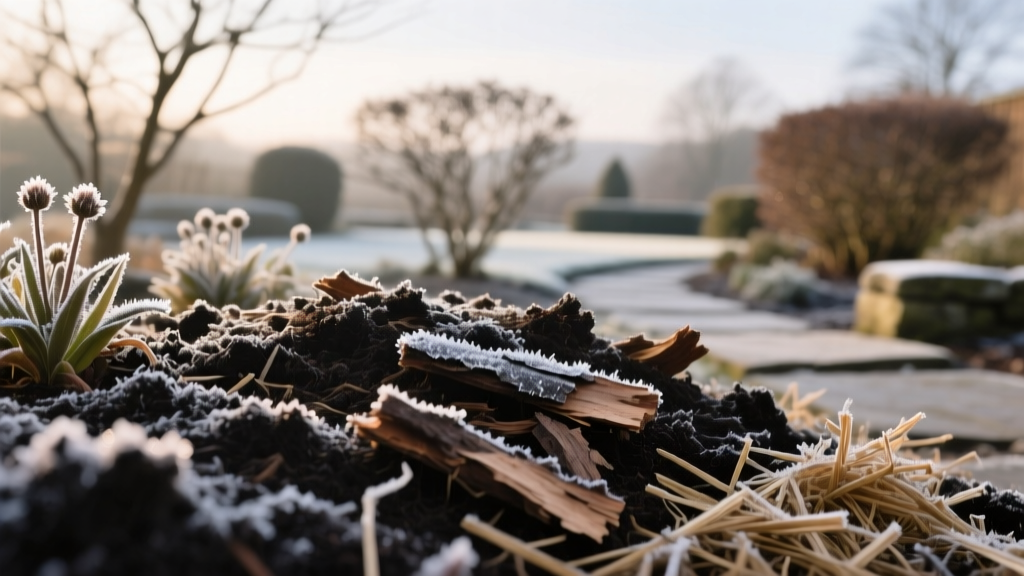
Winter Mulching to Insulate Root Zones
The fastest way to lose a plant in winter isn’t always “too cold”—it’s rapid temperature swings. When bare soil flips from 45°F to 15°F and back again, roots heave, fine feeders tear, and evergreens desiccate while the ground is locked up. Your window is tight: once soils are consistently cold but before deep freeze, mulch becomes a thermostat for root zones. Aim to mulch after the first hard frosts (often when nighttime lows hit 25–28°F) but before the soil is frozen solid—typically a 2–4 week window in most climates.
This is the week-to-week, do-it-now playbook for insulating root zones: what to plant, what to prune, what to protect, and what to prepare—organized by priority, with timing triggers you can actually use.
Priority 1: What to protect right now (mulch timing, depth, and placement)
Winter mulching is most effective when it keeps soil temperature steady, not when it “warms” soil. The goal is to slow freezing, reduce heaving, and reduce moisture loss. Most extension recommendations cluster around 2–4 inches for ornamentals and perennials, with extra care around trunks and crowns. Purdue Extension notes that winter mulch is applied after the ground begins to freeze and is used to reduce temperature fluctuation and heaving (Purdue Extension, 2020). Similarly, University of Minnesota Extension recommends applying mulch after the ground freezes to keep plants dormant and prevent repeated freeze-thaw cycles (University of Minnesota Extension, 2019).
“Apply mulch after the ground freezes to keep the soil temperature more constant and to prevent plants from breaking dormancy during warm spells.” — University of Minnesota Extension (2019)
Use these timing triggers (concrete numbers)
Pick the trigger that matches what you can observe:
- After 2–3 nights in a row with lows at or below 28°F (hard frost territory for many gardens).
- When the top 1 inch of soil is stiff in the morning and thawing by afternoon (early freeze phase).
- 2–4 weeks after your average first frost date (check your local frost date; many Zone 5 sites average around Oct 10–20, Zone 7 around Nov 1–15, Zone 3 around Sep 15–30).
- Before a forecast of a multi-day cold snap with highs staying below 32°F (soil will lock up fast).
- For newly planted trees/shrubs: mulch within 7–10 days of planting once soil settles and you’ve watered deeply.
Mulch depths that actually insulate (without causing rot)
- Perennial beds: 2–4 inches after soil starts to freeze.
- Strawberries: 3–5 inches of clean straw or pine needles after several frosts, before sustained lows below 20°F (a common threshold for crown injury).
- Newly planted trees/shrubs: 2–3 inches across a wide ring; keep mulch 3–6 inches away from the trunk to prevent rodent damage and crown rot.
- Roses (hybrid teas, grafted): 8–12 inches mounded soil/compost around the crown in colder zones (often Zones 3–6), then top with leaves or straw once frozen nights settle in.
Best mulch materials for winter root-zone insulation
Choose mulch that traps air, stays put, and doesn’t mat into a soggy layer:
- Shredded leaves: Excellent insulation, readily available. Shred to reduce matting.
- Pine needles: Great for slopes and around acid-loving plants; resists compaction.
- Straw: Ideal for strawberries and vegetable beds; avoid hay (weed seeds).
- Wood chips: Best for trees/shrubs and paths; keep off crowns of perennials that hate wet feet.
Where mulch matters most (high-return targets)
Start with plants most likely to suffer from freeze-thaw injury or shallow rooting:
- New plantings from the last 12 months (trees, shrubs, perennials).
- Marginally hardy perennials (one zone tender—e.g., Zone 6 plant in Zone 5 garden).
- Heaving-prone sites: exposed beds, south-facing slopes, sandy soils.
- Evergreens and broadleaf evergreens: rhododendron, holly, boxwood—mulch supports winter moisture management.
- Bulb beds in exposed spots (especially if planted late).
Checklist: Winter mulching done right (10-minute audit)
- Mulch applied after hard frosts, before deep freeze.
- Depth is 2–4 inches (unless a crop like strawberries needs more).
- Mulch is pulled back 3–6 inches from trunks/crowns.
- No “mulch volcanoes” around trees.
- Soil was watered well 24–48 hours before mulching if it’s been dry.
- Mulch is anchored (watered in lightly or topped with evergreen boughs) in windy sites.
Priority 2: What to prepare (soil moisture, tools, and overwintering setup)
Mulch works best over soil that’s evenly moist going into winter. Dry soil freezes deeper and stresses roots, especially in windy, open winters. Before the ground freezes hard, do one deep watering on a mild day when temperatures are above 40°F. Focus on evergreens, new plantings, and anything under eaves that misses rainfall.
Timeline: The 3-pass winterization sequence
- Pass 1 (3–4 weeks before expected hard freeze): Weed and remove diseased debris; water if rainfall is under 1 inch/week.
- Pass 2 (after first hard frosts, lows 25–28°F): Apply mulch to perennials, bulbs, and new plantings.
- Pass 3 (once soil is mostly frozen, highs near/below 32°F): Add wind protection (burlap) for vulnerable evergreens; set rodent guards; check mulch coverage after storms.
Monthly schedule (adjust by USDA zone)
| Month | Zone 3–4 (cold/early freeze) | Zone 5–6 (moderate) | Zone 7–8 (milder winters) |
|---|---|---|---|
| September | Stop nitrogen; prep leaf mulch; plant trees early month | Order mulch; clean up disease; plant perennials late month | Plan winter sowing beds; monitor mites on evergreens |
| October | Mulch after first hard frosts; protect strawberries | Plant bulbs; wait to mulch until hard frosts | Plant cool-season crops; mulch after first real cold snap |
| November | Soil often frozen; check wind blow-off; add burlap | Main mulching month; mound roses; rodent guards | Mulch tender perennials; watch for saturated crowns in wet areas |
| December | Re-check mulch after thaws; prevent vole tunnels | Inspect for heaving; top up mulch on exposed beds | Focus on drainage; protect from sudden Arctic fronts |
Prepare for pests and disease that peak with winter mulch
Mulch is habitat. Used well, it stabilizes roots; used carelessly, it shelters rodents and keeps crowns too wet.
- Voles and mice: Avoid thick mulch piled against trunks. Install trunk guards up to 18–24 inches high for young trees. Keep grass trimmed short around orchard trees before snowfall.
- Crown rot risk: For plants like lavender and some hardy sages, keep mulch thinner (1–2 inches) and use airy material (pine needles) rather than wet leaf mats.
- Fungal carryover: Remove and discard (don’t compost) leaves with black spot, powdery mildew residue, or fruit tree scab. Sanitation is winter disease prevention.
- Slugs/snails in mild-winter regions: In Zones 7–9 with wet winters, thick mulch can shelter slugs. Use coarser mulch, avoid overwatering, and set iron phosphate bait in late fall when nights hover 45–55°F.
Priority 3: What to plant (yes, there are winter-adjacent planting moves)
Mulch and planting go together because newly planted roots are the most vulnerable to freeze-thaw stress. The key is timing: plant when roots can begin establishing but top growth won’t be forced by warmth.
Plant trees and shrubs (best for many zones: 4–8)
If your soil is still workable and not frozen, you can plant hardy trees/shrubs up until roughly 4–6 weeks before the ground typically freezes solid. In many Zone 5 areas, that’s often through late October to early November; in Zone 7, it may extend into December. Water deeply at planting, then mulch a wide ring (not deep at the trunk).
- Target soil temp: planting is comfortable when soil is above 40°F and workable.
- Mulch ring size: at least 3 feet wide for small trees; larger is better.
Plant bulbs, then mulch strategically
Bulbs are happiest when planted before soil temperatures drop below about 50°F for long stretches (often mid-fall). If you planted late, mulch helps buffer temperature swings. Add 2–3 inches after hard frosts; avoid smothering bulbs too early in warm falls, which can invite rot in poorly drained beds.
Set up garlic and overwintering onions
In Zones 3–6, garlic is typically planted 2–4 weeks before the ground freezes—often when soil is around 45–55°F. After planting, add 3–4 inches of straw or shredded leaves once hard frosts arrive. In milder Zones 7–8, garlic can be planted later, but mulching still stabilizes moisture and reduces weeds.
Priority 4: What to prune (and what to leave alone until late winter)
Pruning at the wrong time can remove cold protection, stimulate tender growth, or open pathways for disease. Winter mulching pairs best with selective pruning and strong sanitation.
Prune now (late fall/early winter) only when it prevents damage
- Remove dead, diseased, or broken branches any time you see them (clean cuts, sanitize tools for known disease issues).
- Cut back perennials that are disease-prone (like peonies with botrytis history) and remove debris from the bed before mulching.
- Reduce snow-load risk on shrubs prone to splaying (arborvitae, upright junipers) by gently tying with soft twine before heavy snow season.
Hold off until late winter (common mistake: fall pruning of spring bloomers)
- Don’t prune spring-blooming shrubs (lilac, forsythia, many hydrangeas) now if they set buds on old wood—you’ll remove next year’s flowers.
- Don’t hard-prune roses in fall in cold zones; instead, mound and mulch for winter, and do structural pruning in late winter/early spring when buds swell.
Regional scenarios: adjust your mulching strategy to real winter patterns
Winter is not one thing. Your best mulching move depends on whether your winter is deep-cold and steady, seesaws around freezing, or stays wet and mild.
Scenario 1: Upper Midwest / Northern Plains (USDA Zones 3–4) — deep freeze, wind, and snow cover
Your biggest threats are desiccating wind, deep soil freeze, and rodent damage under snow. Mulch early enough to beat a sudden lock-up, but not so early that you trap warmth.
- Typical timing: apply mulch in October to early November after several frosts; expect soil to freeze hard soon after.
- Depth: lean toward the upper end (3–4 inches) for perennials; strawberries often need 4–5 inches.
- Extra step: add burlap windbreaks for broadleaf evergreens when highs stay below 35°F and wind is persistent.
- Rodent defense: keep mulch off trunks; install guards before first lasting snow.
Scenario 2: Mid-Atlantic / Ohio Valley (USDA Zones 6–7) — freeze-thaw whiplash
This is the heaving zone. Temperatures bounce above and below freezing, and warm spells can trick plants into breaking dormancy. Here, winter mulch is less about deep insulation and more about stability.
- Typical timing: late November into December, often 2–4 weeks after first frost. Watch forecasts for a cold snap with highs under 32°F for several days.
- Focus plants: shallow-rooted perennials (heuchera/coral bells, mums), new plantings, and anything on a south-facing slope.
- Technique: use shredded leaves topped with pine needles to prevent matting; check after heavy rains for compaction.
Scenario 3: Pacific Northwest / Coastal (USDA Zones 7–8) — mild temps, heavy winter rain, and crown rot risk
Your winter is often not brutally cold—it’s wet. Heavy mulch can keep crowns saturated and invite rot and slug pressure. You still want temperature buffering, but you must prioritize drainage and airflow.
- Typical timing: after the first real cold spell (often December), apply a lighter 1–3 inch layer in perennial beds.
- Material choice: pine needles or coarse arborist chips around shrubs; avoid dense leaf mats over lavender, rosemary (where marginal), and sedums.
- Pest watch: slug/snail control in late fall when nights are 45–55°F; keep mulch pulled back from crowns.
Scenario 4: High-elevation Intermountain West (Zones 4–6, altitude-driven extremes) — sunny days, sharp nighttime drops
At altitude, winter sun can warm soil surfaces and trigger repeated freeze-thaw. Use mulch plus shading/wind protection where needed.
- Timing: mulch after hard frosts but before prolonged subfreezing nights—often earlier than nearby lowlands.
- Extra step: protect south-facing beds where thawing is common; consider temporary shade cloth for vulnerable evergreens.
- Irrigation: deep water before freeze if fall has been dry; winter sun + wind dries evergreens fast.
Comparison: common winter mulch choices (what works where)
| Mulch material | Insulation value | Best uses | Watch-outs in winter |
|---|---|---|---|
| Shredded leaves | High | Perennials, bulbs, vegetable beds | Can mat if not shredded; may shelter voles |
| Pine needles | Moderate–High | Slopes, strawberries, acid-loving shrubs | Can blow in open sites (water in or top with boughs) |
| Clean straw | High | Garlic, strawberries, winter vegetable beds | Blows easily; can harbor rodents if piled at trunks |
| Wood chips (arborist) | Moderate | Trees/shrubs, pathways, shrub borders | Too wet for some crowns; keep off perennial centers |
| Evergreen boughs | Moderate | Holding leaf mulch in place; insulating tender perennials | Temporary; remove/redistribute in spring |
Common winter mulching mistakes (and quick fixes)
Small placement errors cause most winter failures. Fix these now—before snow makes it hard.
Mistake: mulching too early in warm fall weather
Problem: soil stays warm, plants keep growing, and crowns stay wet. Fix: wait until after hard frosts (lows 25–28°F) and the top inch of soil is starting to freeze overnight.
Mistake: mulch piled against trunks (“mulch volcano”)
Problem: bark rot, vole girdling, and hidden cankers. Fix: pull mulch back 3–6 inches from trunks; keep a donut shape, not a volcano.
Mistake: smothering crowns of perennials that need airflow
Problem: crown rot and winterkill in wet winters. Fix: use lighter, airier mulch (pine needles), and keep the crown itself slightly exposed while still insulating surrounding soil.
Mistake: forgetting to check mulch after storms
Problem: wind exposes soil; heavy rain compacts leaves. Fix: do a 5-minute walk-through after major wind or a 1-inch+ rain event; fluff or top up as needed.
Do-this-now walk-through (60–90 minutes, high impact)
If you only have one pocket of time this week, use it like this:
- 10 minutes: Check the forecast for a cold snap (highs below 32°F) and note your first frost date if you don’t already track it.
- 15 minutes: Water priority plants if the soil is dry and temps are above 40°F (especially evergreens and anything planted this year).
- 20 minutes: Rake, shred, and stage mulch. Keep diseased leaves out of the pile.
- 20 minutes: Apply 2–4 inches mulch to perennial beds and around new trees/shrubs, keeping trunks/crowns clear.
- 10 minutes: Install trunk guards and tidy grass/weeds near young trees to reduce vole cover.
- 5 minutes: Tie up splaying evergreens if heavy snow is common in your area.
Once mulch is down, your winter job becomes monitoring: after thaws, look for heaved crowns (especially coral bells and mums). If you see lifting, press plants back gently on a mild day and add a thin layer of mulch around—not on—the crown.
Winter mulching is quiet work with loud results. Get mulch on at the right moment, keep it off trunks and crowns, and tailor depth to your winter pattern—steady cold, freeze-thaw, or wet mild. That’s how you carry root systems through the hard weeks ahead and start spring with plants that never knew winter tried to move in.
Sources: Purdue Extension (2020); University of Minnesota Extension (2019).