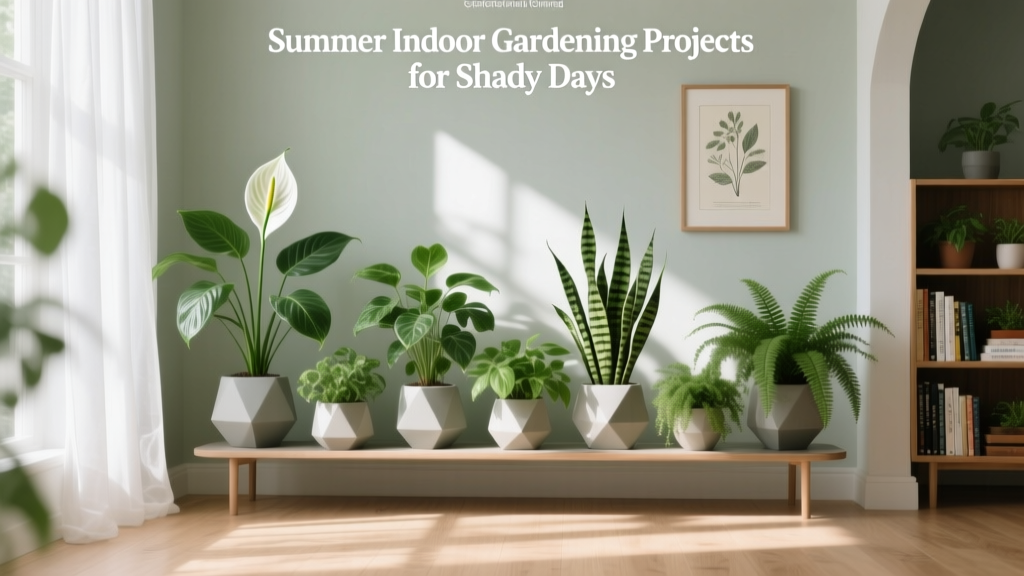
Summer Indoor Gardening Projects for Shady Days
When summer turns humid, stormy, or just too hot to be outside, indoor gardening becomes more than a rainy-day distraction—it’s a chance to keep your growing momentum while protecting plants from heat stress, pests, and sunscald. Use these shady days to propagate, start a fresh run of edibles, reset your houseplant care, and prep for late-summer and fall planting. The best part: many of these projects deliver results in 7–21 days, right when outdoor beds can feel stalled.
Below, tasks are organized by priority—what to plant, what to prune, what to protect, and what to prepare—so you can choose the highest-impact work first. Timing is keyed to real thresholds (like sustained indoor temps of 75–85°F and outdoor nights above 60°F) and to seasonal windows that matter across USDA hardiness zones.
Priority 1: What to plant indoors right now (fast rewards in 1–3 weeks)
On shady days, aim for crops and projects that thrive under bright windows or simple LED lights. If your indoor setup stays between 68–78°F, you can germinate and grow a surprising amount without complex equipment. If your space runs warmer (a common summer reality), choose heat-tolerant greens and herbs and keep airflow moving.
Project A: Seed-to-salad microgreens (harvest in 7–14 days)
Microgreens are the fastest edible win you can get indoors in summer. They also sidestep common outdoor mid-summer problems like bolting greens, slug damage, and flea beetles.
- Best choices for summer indoor trays: radish, broccoli, mustard, pea shoots, sunflower (use hulled if possible).
- Timing: Soak pea and sunflower for 8–12 hours; most others don’t need soaking.
- Temperature target: Germination is typically strongest at 70–75°F.
- Light: Bright window or a basic LED shop light 2–4 inches above the tray, 12–16 hours/day.
Quick checklist (microgreens):
- Sanitize tray (hot soapy water, rinse well).
- Add 1–1.5 inches of sterile seed-starting mix or coco coir.
- Sow thickly, mist, and cover for 2–4 days (“blackout” phase).
- Uncover when seedlings push up; water from below to reduce mold.
- Harvest with scissors when first true leaves appear (often day 7–14).
Pest/disease prevention: Summer indoor microgreens can develop fuzzy mold if humidity stays high. Use a small fan on low, avoid overhead watering after day 3, and don’t reuse old potting mix.
Project B: Root herb cuttings for a steady kitchen supply (2–3 weeks)
Shady-day propagation keeps you stocked with herbs even if outdoor pots are drying out twice daily. Many herbs root readily in water or a light potting mix.
- Easiest in water: basil, mint, oregano (change water every 2–3 days).
- Better in mix (less rot): rosemary, thyme, sage (use a humidity dome or loose bag for 7–10 days).
- Cutting size: 4–6 inches, remove lower leaves, keep at least 2 nodes submerged/in contact with mix.
- Rooting window: Basil can root in 7–10 days; rosemary may take 21–28 days.
“Many foliar diseases require extended leaf wetness; reducing humidity around foliage and improving air circulation can significantly reduce disease pressure.” — University Extension plant pathology guidance (general principle echoed across extension publications)
Timing note: If your indoor temps are consistently above 80°F, water-rooting can encourage stem rot. Switch to a sterile, lightly moistened rooting mix and keep cuttings shaded from direct sun.
Project C: Start a second wave of basil, cilantro alternatives, and heat-tough greens (for late summer eating)
If outdoor cilantro bolts instantly where you live, use indoor sowing to keep tender herbs going. Cilantro prefers cooler conditions; indoors with AC can be ideal.
- Best indoor sowings in summer: basil, parsley, chives, arugula, leaf lettuce (choose heat-tolerant varieties), Swiss chard (as baby greens).
- Temperature thresholds: Lettuce germination can struggle when media temps rise above 80°F; aim for 65–75°F in the root zone.
- Timeline: Baby greens harvest in 21–30 days under decent light.
Regional scenario: In hot-summer areas (USDA zones 8–10), indoor greens often outperform outdoor plantings from mid-June through August. In cooler zones (3–5), indoor sowing is still valuable during smoky days, hail periods, or extended rain.
Priority 2: What to prune and reset indoors (highest impact for plant health)
Shady days are perfect for cleanup work you’ll rush outdoors later. Indoors, focus on controlling leggy growth, preventing pests from spreading, and steering houseplants through peak summer growth.
Prune houseplants strategically (not aggressively)
Most common indoor plants are in active growth in summer. Light pruning improves airflow and reduces pest habitat, but hard pruning can shock plants when indoor humidity is low.
- Pinch tips on basil, coleus, pothos, and tradescantia to encourage branching.
- Remove yellowing leaves promptly to reduce fungus gnat breeding and leaf spot spread.
- Do not heavily prune slow growers (ZZ plant, snake plant) unless removing damage.
Timing: Do quick grooming weekly; plan a deeper clean every 14 days during peak summer growth.
Repot only when necessary—use the summer window wisely
Repotting is helpful when roots are circling and water runs straight through. But don’t repot just because you have time; summer heat can make recovery harder if plants dry out fast.
- Repot if: roots emerge from drainage holes, plant wilts daily despite watering, or soil is hydrophobic.
- Pot size rule: move up 1–2 inches in diameter (oversizing increases risk of root rot).
- Aftercare: keep in bright indirect light for 7 days, then return to normal light.
Extension-backed note: Overwatering and poor drainage are common causes of indoor plant decline. University extension houseplant resources consistently emphasize drainage and letting the root zone partially dry between waterings, especially in low-light conditions.
Priority 3: What to protect (pests, disease, heat stress, and indoor air issues)
Summer indoor gardening has its own pest calendar. Warm temperatures and open windows can trigger spikes in mites, gnats, and scale. Address problems early—indoor infestations spread fast.
Houseplant pest patrol (10 minutes, twice a week)
Check the undersides of leaves and along stems. Isolate anything suspicious immediately.
- Spider mites: common when indoor air is hot/dry; look for stippling and fine webbing. Rinse leaves in the shower and increase humidity locally (pebble tray) without soaking soil.
- Fungus gnats: thrive in constantly wet soil; let the top 1–2 inches dry, use yellow sticky cards, and consider a BTi drench.
- Scale/mealybugs: wipe with alcohol on cotton swabs; repeat every 7 days for 3 weeks.
Citation: University of Minnesota Extension (2019) notes that fungus gnats are most common in overwatered houseplants and recommends allowing potting media to dry between waterings and using sticky traps as part of an integrated approach.
Reduce disease risk in indoor seed-starting and propagation
Damping-off and molds are the main summer indoor threats for seedlings.
- Use sterile media (fresh seed-starting mix) and clean containers.
- Bottom water seedlings when possible.
- Airflow: run a small fan on low for a few hours daily.
- Temperature control: keep seedlings out of direct afternoon sun behind glass—leaf temperatures can exceed 90°F quickly.
Citation: Cornell University’s home gardening resources (2020) emphasize sanitation, sterile media, and careful watering to prevent damping-off in seed starting.
Heat-wave protocols for indoor edible setups
During outdoor heat waves, indoor temperatures can climb too—especially in apartments and sun-facing rooms.
- At 85°F indoors: move greens away from windows, increase airflow, and shorten light duration to 10–12 hours for a few days to reduce stress.
- At 90°F indoors: pause new sowings, harvest microgreens early, and prioritize ventilation.
- Water timing: morning watering reduces nighttime humidity spikes that favor molds.
Priority 4: What to prepare (late-summer/fall payoff; indoor tasks that save outdoor time)
Shady days are ideal for the behind-the-scenes work that makes late summer and early fall gardening smoother. This is where you set up your next outdoor wave—without standing in the heat.
Build a “mid-summer propagation station” in under an hour
You don’t need a fancy grow tent. A consistent setup beats a complicated one.
- Light: 1 LED shop light (or a small grow light) on a timer.
- Shelf: wire rack or any stable surface with reflective backing (even a white wall).
- Airflow: small fan on low, not blasting seedlings.
- Supplies: labels, sterile mix, clean trays, sticky cards, and a spray bottle.
Timeline: Set up today; sow microgreens tomorrow; start cuttings on day 3; pot up rooted cuttings around day 14–21.
Plan your fall planting calendar using your local frost date
Indoor projects now should connect to what you’ll transplant or direct-sow later. Use your average first fall frost date to back-calculate. Three real-world scenarios:
Scenario 1: Short-season North (USDA zones 3–5)
If your average first frost is around September 15–30, you’re already in the window to plan fall brassicas and greens. On the next shady day, start a batch of seedlings indoors for transplant in late summer. Aim to have transplants ready in 4–6 weeks.
Scenario 2: Temperate Midwest/Northeast (zones 5–7)
With typical first frost around October 5–20, you can use July and early August indoor time to start brassicas and lettuce for transplant. If outdoor nights are consistently above 60°F, harden seedlings gradually to avoid heat shock.
Scenario 3: Warm South/Coastal (zones 8–10)
First frost may be late November to January (or none). Your indoor summer projects can focus on keeping greens alive during heat and starting transplants for fall gardens when outdoor highs drop below 90°F consistently. Many fall crops perform best when you wait for that temperature shift.
Monthly schedule: indoor projects that match outdoor reality
| Month | Indoor priority projects (shady-day list) | Outdoor link (what this supports) | Timing trigger to watch |
|---|---|---|---|
| June | Start microgreens; root basil/mint; sanitize pots and trays | Replaces bolting greens; backups for heat-stressed herbs | Outdoor highs consistently > 85°F |
| July | Succession microgreens every 7 days; start fall seedlings (zones 3–7); pest patrol twice weekly | Preps fall beds; prevents indoor pest explosions | Indoor temps > 80°F or smoky/poor air days |
| August | Pot up rooted cuttings; begin hardening transplants; mix potting soil; label fall plan | Late-summer transplanting; container refresh | Night temps drop toward 60–65°F |
| September | Indoor backup greens; bring in tender herbs at night; inspect/clean before moving plants indoors | Extends harvest; prevents hitchhiker pests | Within 2–4 weeks of first frost date |
Indoor project timelines (choose one track per shady day)
Use these timelines to stay focused. Each is designed for a single afternoon or weekend day when outdoor work is off the table.
1-day quick win (60–90 minutes)
- Sow one microgreen tray (label with date).
- Take 6–10 basil or mint cuttings and set them to root.
- Inspect 10 houseplants: wipe leaves, remove yellow foliage, check for mites/scale.
7-day rhythm (best for steady harvests)
- Day 1: Sow microgreens tray A.
- Day 3: Uncover tray A; start tray B.
- Day 7: Harvest tray A; start tray C; clean and reset tray A.
21-day propagation plan (for herbs you’ll keep for months)
- Days 1–3: Start herb cuttings; keep warm (around 72–78°F) and bright but not sunny.
- Days 7–10: Check for roots; refresh water or lightly mist rooting mix.
- Days 14–21: Pot up rooted cuttings; pinch tips after new growth appears.
What to plant next indoors: a practical comparison
When you’re deciding what to start on a shady day, pick based on how fast you need results and how much light you can provide.
| Indoor crop/project | Days to first harvest/use | Light needs | Summer failure risk | Best use |
|---|---|---|---|---|
| Microgreens (radish/broccoli) | 7–14 | Medium to high | Medium (mold if stagnant air) | Fast salads, sandwiches |
| Basil cuttings | 10–21 | Medium to high | Low (if not overwatered) | Continuous kitchen harvest |
| Baby leaf lettuce | 21–30 | High | High (heat > 80°F in media) | Fresh greens when outdoor bolts |
| Green onions from scraps | 7–14 | Low to medium | Low | Quick garnish, regrowth |
| Rosemary cuttings | 21–28 (rooting) | Medium | Medium (rot in water) | Long-term herb plant |
Shady-day indoor prep that directly improves your outdoor garden
Indoor work should feed outdoor success. If you only do two things, do these: prep labels/plans for fall succession, and clean/organize tools and containers so you can act fast when weather breaks.
Prep fall sowing and transplant supplies
- Make pre-labeled plant tags for fall crops (date + variety).
- Pre-mix potting media: blend in slow-release fertilizer if you use it (follow label rates).
- Inventory row cover, insect netting, and clips for late-summer pest pressure.
Summer pest note (outdoor tie-in): Late summer often brings surges of aphids and caterpillars on fall brassicas. Having insect netting ready before transplant day is one of the simplest prevention steps—much easier than spraying after pests arrive.
Clean and quarantine before bringing anything indoors
If you move houseplants outdoors for summer (or bring porch pots back in during storms), build a quarantine routine. One infested plant can turn into a whole-house problem in a month.
- Quarantine duration: 10–14 days away from other plants.
- Rinse foliage, inspect stems, and replace the top inch of potting mix if fungus gnats were present.
- Use sticky cards immediately to detect gnats or flying pests.
Citation: North Carolina State Extension (2022) Integrated Pest Management guidance for houseplants highlights early detection, isolation, and sanitation as core steps to prevent pest spread indoors.
Right-now checklist (printable mindset, no fluff)
If you have 30 minutes:
- Inspect 5–10 plants for mites/gnats/scale.
- Remove dead leaves and wipe dusty foliage.
- Start green onions from kitchen scraps in a jar.
If you have 2 hours:
- Sow one microgreen tray and one baby-greens pot.
- Take 8 herb cuttings and label them with the date.
- Set up a fan + timer routine for airflow and lights.
If you have a full shady afternoon:
- Sanitize and organize propagation supplies.
- Draft a fall planting schedule based on your first frost date (mark it on your calendar).
- Repot only the plants that truly need it; top-dress the rest with fresh mix.
Summer doesn’t reward waiting for perfect weather. A few focused indoor projects—microgreens on a weekly cycle, herb propagation every couple of weeks, and a strict pest-check routine—keep you harvesting now and set you up for the late-summer shift when nights cool toward 60–65°F and fall planting windows open. The next time the sky goes gray, you’ll still be moving the garden forward—just from the inside.