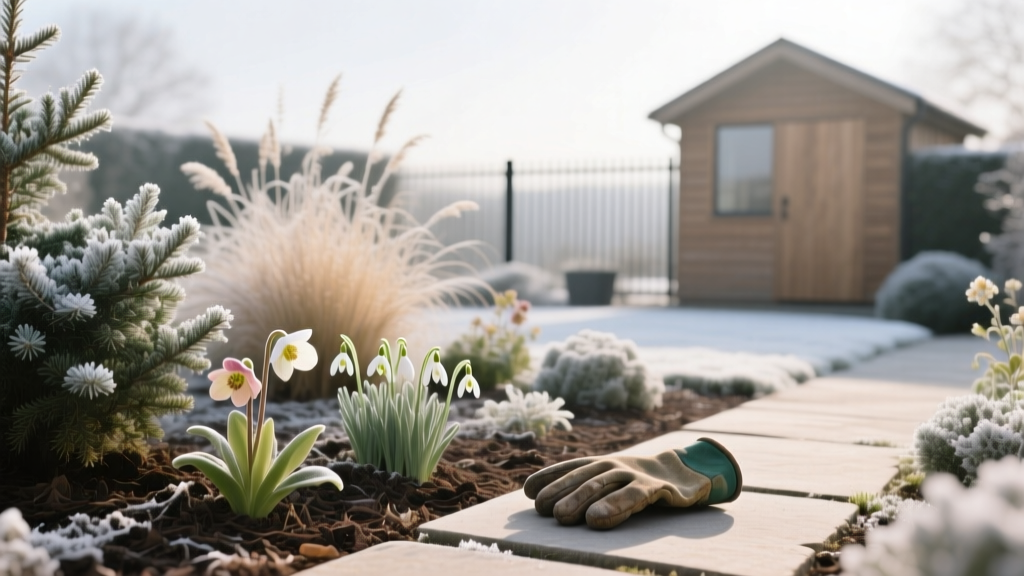
Your Winter Garden To-Do List
Winter is the season that quietly decides how good your spring will be. Wait too long and you miss prime planting windows, prune at the wrong time and you invite disease, skip protection during a single 18°F night and you lose tender perennials. The opportunity: winter work is efficient. Beds are visible, pests are exposed, and a few well-timed tasks now can cut next season’s workload in half.
Use this list like an almanac: prioritize what protects living plants first, then do the pruning and planting that can only happen now, then tackle prep tasks that will pay off when soil warms. If you don’t know your USDA hardiness zone, look it up and write it on your shed wall—most winter decisions (what survives outdoors, what needs covering, when to prune) hinge on it.
Priority 1: What to Protect (Do these first)
1) Protect roots and crowns before the first hard freeze
Once soil freezes, roots can’t take up water and plants can desiccate even when it’s cold. In most areas, start winter protection 1–2 weeks before your typical first hard freeze (often defined as 28°F or lower for several hours). Add protection after the ground begins to firm up, not while it’s still warm, or you may encourage rodents and rot.
- Mulch depth: Apply 2–4 inches of shredded leaves, pine needles, or straw around perennials; keep mulch 2–3 inches back from crowns to avoid rot.
- Strawberries: In cold-winter regions (USDA zones 3–6), mulch when nighttime lows consistently hit 20°F for several nights. Aim for 3–5 inches of clean straw over plants.
- Garlic (planted in fall): Mulch after soil cools to roughly 40°F to reduce heaving and keep cloves stable.
Real-world scenario: In windy, open sites (prairie, plains, coastal bluffs), winter wind does more damage than cold alone. Increase mulch depth by an inch and prioritize windbreaks (burlap screens, snow fencing) on the windward side.
2) Water strategically on warm days
Winter drought is a real stressor for evergreens and newly planted trees/shrubs, especially in zones 5–8 where soil may thaw between freezes. If you can push a screwdriver into the soil, roots can take water.
- When to water: Water when daytime highs are above 40°F and soil is not frozen.
- Frequency guideline: For first-year trees/shrubs, water deeply every 10–21 days during dry spells without snow cover.
- Stop point: Do not water when a hard freeze (< 28°F) is expected within 24 hours and the soil surface will glaze into ice.
3) Guard against winter sun, wind, and animal damage
Most winter losses aren’t “mystery deaths.” They’re desiccation, sunscald, gnawing, or crown damage.
- Evergreen burn: Use burlap windbreaks (not wrapped tight to foliage) on exposed broadleaf evergreens like boxwood and rhododendron. Install before recurring nights below 25°F.
- Sunscald on young trees: On thin-barked trees (maple, fruit trees), wrap trunks with light-colored tree wrap from just above soil to the first branches; remove in early spring when temps stabilize above 50°F.
- Rodents and rabbits: Install 1/4-inch hardware cloth guards around trunks, 18–24 inches tall, sunk 1–2 inches into soil. Keep mulch pulled back from trunks to reduce vole cover.
- Deer browsing: Apply repellents during a thaw when temps are above 40°F and reapply after heavy rain or snowmelt.
4) Prevent snow and ice breakage
Heavy wet snow is more damaging than cold. If a storm is forecast, prep now.
- Before storms: Tie up columnar evergreens with soft twine (spiral upward) so branches don’t splay.
- After storms: Brush snow off shrubs with a broom (upward strokes). Don’t try to remove ice; let it melt naturally to prevent bark tearing.
Priority 2: What to Prune (Timing matters)
1) Prune for structure in dormancy—but avoid disease windows
Winter pruning is ideal for many deciduous trees because branch structure is visible and cuts stimulate strong spring growth. The caveat: some plants bleed sap or are prone to disease if pruned at the wrong time.
- Best winter candidates: apple/pear (structure), shade trees (remove deadwood), grapevines (late winter).
- Wait to prune spring bloomers: lilac, forsythia, azalea, and many hydrangeas that bloom on old wood—prune after flowering.
- Avoid pruning oaks during oak wilt risk: In many regions, do not prune oaks during active beetle season; some extension services recommend pruning during the dormant season only and sealing fresh cuts if pruning is unavoidable.
“Most plant disease organisms need moisture to infect; pruning during dry weather and sanitizing tools helps reduce the chance of spreading pathogens.” —Extension guidance on pruning sanitation and timing (see references below)
2) Tool sanitation: do it like you mean it
Winter is when cankers and blights show up clearly. If you’re removing diseased wood, sanitize tools between cuts.
- Disinfectant: Use 70% isopropyl alcohol wipes/spray between cuts, or a labeled disinfectant. Alcohol is fast and doesn’t require rinsing.
- Cut placement: Remove cankered wood at least 6–12 inches below visible symptoms, back to healthy tissue.
- Don’t compost disease: Bag and dispose of infected material when diseases like fire blight, canker, or black knot are present.
3) Late-winter fruit tree pruning window (high impact task)
For many home orchards, the sweet spot is late winter: coldest extremes have usually passed, but buds haven’t broken. In many climates this is roughly 4–6 weeks before your average last spring frost date. If your last frost averages around April 15, target pruning from about March 1 to March 15.
- Remove dead, damaged, and crossing branches first.
- Open the canopy for airflow (key for scab, brown rot, and mildew prevention).
- Keep cuts clean; don’t leave stubs.
Priority 3: What to Plant (Winter planting is real)
1) Plant bare-root trees and shrubs during dormancy (zones 6–9 especially)
If your ground isn’t frozen solid, winter is prime time to plant bare-root stock. Roots establish while tops stay dormant, giving a head start before spring heat.
- Temperature threshold: Plant when daytime temps are reliably above 40°F and soil can be worked.
- Timing: Aim for 6–8 weeks before budbreak for that species in your area.
- After planting: Water deeply, then mulch 2–3 inches. Stake only if needed for wind.
Regional variation: In USDA zones 3–5, winter planting is often limited because soil freezes hard. In zones 7–9, winter planting is often easier than spring because you avoid sudden heat spikes and drying winds.
2) Winter sowing (cold stratification in mini greenhouses)
Winter sowing is a practical way to start hardy perennials and cool-season annuals outdoors using milk jugs or clear bins. Seeds experience natural freeze-thaw cycles, which improves germination for many species that need cold stratification.
- Best window: After consistent freezing nights begin (below 32°F), typically December through February in many regions.
- Good candidates: coneflower (Echinacea), milkweed (Asclepias), columbine, poppy, lettuce, spinach, kale.
- Ventilation: Leave a vent hole; closed containers can overheat on a sunny 55°F day.
3) Plant indoors: onions, herbs, and slow growers
If you’re itching to grow but the beds are frozen, use winter to get a jump on long-season plants.
- Onion seeds: Start 10–12 weeks before your last frost date for bulbing onions (varies by daylength type).
- Herbs: Start rosemary and perennial herbs earlier because they grow slowly.
- Light requirement: Use grow lights to provide 14–16 hours of light daily; a dim windowsill produces weak seedlings.
Priority 4: What to Prepare (So spring is easier)
1) Run a winter garden audit (30 minutes, big payoff)
Pick a mild day (above 35°F) and walk the garden with a notebook.
- Where does water pool after snowmelt? Mark drainage fixes.
- Which beds are compacted or bare? Mark for compost and mulch.
- Which shrubs blocked paths or flopped? Mark for spring support or relocation.
- Which areas had disease last year (powdery mildew, blight, rust)? Mark for rotation and sanitation.
2) Soil prep you can do now (without wrecking soil structure)
Don’t till wet winter soil. Compaction lasts for years. Instead:
- Topdress compost: On a thawed day, add 1–2 inches compost to beds; let freeze-thaw and soil life incorporate it.
- Leaf mold: Bag shredded leaves now; you’ll have leaf mold for mulching later.
- Test planning: Schedule a soil test for early spring. Many labs advise sampling when soil is workable and not saturated.
3) Pest and disease prevention that starts in winter
Winter is sanitation season. Many pests overwinter in debris, bark crevices, and fallen fruit.
- Remove mummified fruit from trees and the ground to reduce brown rot and other fungal carryover.
- Rake and dispose of diseased leaves (especially from roses and fruit trees with black spot/scab history). Composting may not get hot enough in small piles.
- Clean stakes, cages, and pots: Scrub and disinfect to reduce damping-off and foliar disease spores next year.
- Rodent habitat reduction: Keep tall grass and dense weeds down near beds and young trees; voles tunnel under cover.
If you grow fruit, monitor for scale insects and mite eggs on dormant wood. Dormant oil sprays can be effective when properly timed and applied according to label directions (and only when temperatures are suitable).
- Dormant oil temperature rule: Apply only when temperatures are above 40°F for at least 24 hours with no freeze forecast, and the plant is dormant (follow local extension guidance and label).
4) Make a seed and supply plan that matches your frost dates
Winter is when gardens are won on paper. Build a simple schedule anchored to your average last frost date (for many U.S. regions this ranges from March 15 to May 30).
- Count backward from last frost to set indoor seed-start dates.
- Order seeds early; popular varieties sell out by mid-winter.
- Check germination dates on packets and discard old seed with poor viability.
Monthly winter schedule (adjust by zone and local frost dates)
| Month | Top outdoor priorities | Indoor/garage priorities | Temperature/timing triggers |
|---|---|---|---|
| December | Mulch perennials after soil cools; set windbreaks; trunk guards for rodents | Clean and sharpen tools; inventory seeds; set up grow lights | Install protection after repeated nights < 28°F; water on days > 40°F if dry |
| January | Check covers after storms; brush snow; monitor animal damage | Start onions (timed to last frost); plan crop rotation and bed maps | Winter sow after consistent freezes (< 32°F) begin |
| February | Late-winter pruning (as appropriate); remove mummified fruit; scout for scale | Start slow-growing seedlings; sanitize pots and trays | Prune about 4–6 weeks before average last frost; dormant oil only if > 40°F and no freeze forecast |
Regional variations: adjust your to-do list to your winter reality
Scenario 1: Cold-winter climates (USDA zones 3–5, long freezes, deep snow)
Your winter is about insulation and preventing damage from heaving and animals.
- Mulch timing: Wait until the ground starts to freeze, then mulch to prevent freeze-thaw heaving.
- Snow as insulation: Snow cover is protective; don’t clear it off perennial beds unless it’s causing breakage.
- Pruning window: Focus on late winter on milder days; avoid pruning in extreme cold snaps (below 0°F) when wood is brittle.
Scenario 2: Milder winters (USDA zones 7–9, frequent thaws, winter rain)
Your winter is a planting season and a disease-management season.
- Planting: Winter is excellent for trees, shrubs, and cool-season crops where soil is workable.
- Watch fungal disease: Extended leaf wetness favors fungus. Prioritize sanitation, airflow pruning at the right time, and keeping mulch from touching trunks.
- Slug/snail pressure: In wet winters, manage hiding places (boards, debris) and use traps or iron phosphate baits as needed.
Scenario 3: High-desert and mountain west (big day-night swings, winter sun, low humidity)
Your winter is about sun, wind, and dry soil.
- Desiccation risk: Evergreens burn quickly in drying winds; windbreaks matter more than extra mulch.
- Watering: Water during warm spells above 40°F when soil is thawed, especially for new plantings.
- Sunscald: Wrap thin-barked trees on the southwest side; that’s where winter sun is harshest.
Fast checklists (printable mindset)
48-hour checklist before a hard freeze
- Water if soil is dry and temps will stay above freezing for a day
- Cover tender plants (row cover, frost cloth) before dusk
- Move containers into an unheated garage or against a warm wall
- Harvest remaining greens and herbs if lows will drop below 28°F
- Secure burlap windbreaks and recheck ties on evergreens
Mid-winter (once a month) checklist
- Inspect tree guards for gaps; check for gnawing
- Knock snow off shrubs; leave ice alone
- Check mulch coverage after windstorms
- Look for standing water around crowns (drainage fixes for spring)
- Review seed inventory and order replacements
Late-winter checklist (4–6 weeks before last frost)
- Prune apples/pears for structure and airflow (dry day)
- Remove mummified fruit and diseased debris
- Start seedlings timed to your frost date (onions, brassicas, herbs)
- Clean trays and tools; sharpen pruners
- Plan dormant oil applications only if conditions and labels allow (> 40°F)
Notes on timing: use dates and thresholds, not guesswork
If you only track five numbers this winter, track these:
- Your average first fall frost date (e.g., October 15)
- Your average last spring frost date (e.g., April 15)
- The 28°F hard-freeze threshold (triggers protection decisions)
- The 40°F workable/safer threshold (watering, dormant oil timing, planting on thaw days)
- The 4–6 weeks late-winter pruning window before last frost (common target for fruit tree structure work)
Extension-backed guidance (what the research says)
Two winter practices consistently show up in extension recommendations: sanitation and correct pruning/plant protection timing.
- University of Minnesota Extension emphasizes pruning at the right time for plant type and using tool sanitation to limit disease spread (University of Minnesota Extension, 2023).
- Washington State University Extension highlights that many fruit tree pests and diseases overwinter in fallen leaves and mummified fruit, and sanitation reduces spring infection pressure (WSU Extension, 2020).
Both points are why winter cleanup and correctly timed pruning belong high on the priority list: they reduce problems you can’t “spray your way out of” later.
Keep a simple winter timeline on your fridge
Write your local frost dates at the top, then plug in these anchors:
- 1–2 weeks before first hard freeze (28°F): stage covers, trunk guards, windbreak materials
- After soil cools (~40°F) and starts to firm: mulch perennials, mulch garlic, protect crowns
- Any thaw above 40°F: water new plantings if dry; check guards and ties
- December–February after consistent freezes: winter sow hardy flowers/greens in jugs
- 4–6 weeks before last frost: late-winter pruning and orchard sanitation; start key seedlings
Do the protective work first, then prune with discipline, then plant what winter allows in your zone, and finish by cleaning up and mapping next season. When spring finally hits and everyone else is scrambling, you’ll be planting into a garden that’s already protected, prepped, and pointed in the right direction.