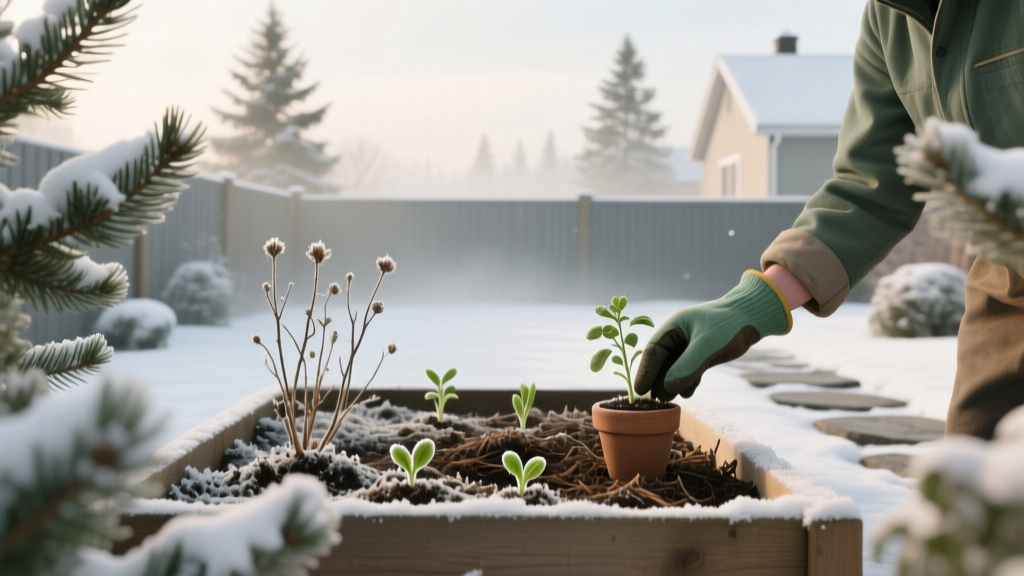
Winter Month-by-Month Gardening Calendar
Winter is when gardens either coast into spring strong—or limp in with pest carryover, broken branches, and missed planting windows. The good news: winter tasks are clear, time-sensitive, and often faster than peak-season work. Use this month-by-month calendar to target the right jobs at the right temperatures, and you’ll protect what you’ve grown while setting up earlier harvests and cleaner beds.
Keep two numbers handy all winter: your average first fall frost date (already passed in most regions) and your average last spring frost date (coming). Many winter tasks key off temperature thresholds like 32°F (hard freeze), 28°F (damaging freeze for many tender plants), and soil temps around 40–45°F (cool-season root growth slows but doesn’t stop). If you garden in USDA Zones 8–10, winter is also prime planting season—your urgency is reversed: don’t wait, or you lose cool-season yields.
Winter priorities at a glance (what to do first)
When time is limited, work in this order:
- Protect (freeze, wind, wildlife, irrigation shutoff)
- Prune (only what’s safe now; avoid stimulating tender growth too early)
- Plant (region-dependent: bulbs, garlic, bare-root, cool-season crops)
- Prepare (soil testing, tool maintenance, seed orders, bed planning)
Timing rule: Do protection work before the next forecast low under 28°F; do pruning on a dry day when temps are above 25–30°F to reduce brittle wood and tearing; do planting on days the soil is workable (not waterlogged or frozen).
Month-by-month winter schedule
| Month | What to plant | What to prune | What to protect | What to prepare |
|---|---|---|---|---|
| December | Garlic (Zones 6–8 if not planted), paperwhites indoors; bare-root in mild climates | Remove dead/damaged limbs; avoid heavy fruit-tree pruning in very cold snaps | Mulch roots, wrap young trunks, drain hoses, protect evergreens from wind | Soil test sampling (where ground isn’t frozen), inventory seeds, order supplies |
| January | Start onions/leeks indoors (long-season); sow microgreens; plant in Zones 9–10 | Dormant prune apples/pears (milder periods); cut back perennials only if needed | Frost cloth readiness; check mulch depth; rodent guards; monitor moisture | Clean/repair tools; plan crop rotation; sharpen pruners; set up seed-starting area |
| February | Start tomatoes/peppers indoors late month in cold zones; direct sow peas in Zones 7–8; transplant in Zones 9–10 | Finish dormant pruning before bud swell; prune summer-flowering shrubs later | Protect early buds from late freezes; apply dormant oil if needed on correct temps | Prepare beds as soon as soil is workable; pre-sprout potatoes in some regions |
December: lock in protection, then tackle cleanup and late planting
December is your “prevent damage” month. Once repeated freezes arrive, you’ll be reacting instead of preventing. Aim to complete core protection tasks by December 10–20 in Zones 5–7, or anytime a sustained cold pattern is forecast.
What to protect first (Week 1–2 of December)
- Disconnect hoses and drain spigots before nights consistently dip below 32°F. If you use irrigation, blow out lines or shut off at the source and drain.
- Mulch vulnerable root zones after the ground begins to cool (often when average highs fall below 50°F). Apply 2–4 inches of shredded leaves or straw around perennials, strawberries, and young shrubs—keep mulch 2–3 inches away from trunks to prevent rot and rodents.
- Guard trunks from sunscald and rodents: wrap thin-barked trees (young maple, fruit trees) and add hardware cloth guards. Sunscald risk spikes when days are sunny and nights plunge below 25°F.
- Wind protection for evergreens: in exposed sites, set burlap screens on the windward side; winter burn is common when soil is frozen and wind strips moisture from needles.
Pest and disease angle: Clean up fallen fruit and mummified fruit now—overwintering pests and disease spores use them as shelters. As Penn State Extension notes, sanitation (removing diseased plant material) is a key tool for reducing inoculum going into spring (Penn State Extension, 2023).
What to plant in December (region-dependent)
Cold-winter regions (USDA Zones 3–6): Outdoor planting is limited, but you can still:
- Plant garlic if your ground is workable and you’re not deeply frozen—especially in Zone 6 or warm microclimates. Plant cloves 2–3 inches deep and mulch well. If the soil is frozen solid, hold cloves in a cool, dry spot and plant as soon as a thaw allows.
- Force bulbs indoors (paperwhites don’t need chilling; tulips/hyacinths do). For chilled bulbs, aim for 12–16 weeks cold treatment at 35–45°F to time blooms.
Mild-winter regions (USDA Zones 8–10): December is planting season. Direct sow or transplant:
- Leafy greens (lettuce, spinach, arugula), brassicas, and alliums
- Potatoes in warmest areas (watch soil temp and local guidance)
- Strawberries and bare-root fruit trees in some areas when available
What to prune in December (only the safe cuts)
Keep December pruning conservative. Do:
- Remove broken, dead, and crossing branches any time.
- Cut out diseased canes and dispose—don’t compost if disease is suspected.
Hold off on major pruning of stone fruits (peach, cherry) in very cold climates until late winter to reduce dieback risk. Also avoid heavy pruning of spring-flowering shrubs (lilac, forsythia, azalea) if you want blooms—they set buds on old wood.
What to prepare in December (quick wins)
- Soil test planning: If soil is unfrozen, collect samples and send to a lab. If frozen, flag areas now and test at the first thaw.
- Seed inventory: Check packet dates; older seed can still work but germination drops. Plan to over-sow by 25–50% for questionable seed.
- Compost management: Keep adding browns/leaves; turn on a mild day to reduce winter anaerobic odors.
January: prune strategically, start long-season seedlings, prevent winter pests
January is deceptively important. Days begin to lengthen, and in many areas plants sense the shift long before we do. Your goal is to keep plants dormant where you want dormancy and start seedlings that truly need extra time.
What to protect in January (weekly checks)
Do a 10-minute garden walk once a week:
- Check mulch after wind events; re-cover exposed crowns.
- Inspect for vole and rabbit damage: look for gnawing near soil line and runways under mulch. Tighten guards and reduce thick mulch piled directly against trunks.
- Water on warm spells if you’re dry: if temps rise above 40°F for a day and soil isn’t frozen, give evergreens and newly planted shrubs a deep drink. Winter drought is a common killer in Zones 5–7 with low snow cover.
Research-based winter injury guidance consistently points to wind + frozen soil as a major driver of evergreen desiccation: when roots can’t replace moisture, needles dry out even in cold weather.
What to prune in January (dormant pruning window)
Best window: After the coldest period has passed but before bud swell—often mid-January to late February, depending on region.
- Apples and pears: Dormant pruning improves structure and light penetration. Choose a dry day above 25–30°F so wood is less brittle.
- Grapes: In many climates, prune in late winter; in very cold regions, waiting helps you assess winter kill.
- Ornamental grasses: If they’re flopping and messy, you can cut back now; otherwise, leave for winter interest and beneficial insect habitat until late winter.
Disease prevention: Disinfect pruners between suspect cuts. A practical approach is to wipe blades with 70% isopropyl alcohol. This is especially important if you’re removing cankers or fire blight strikes (sanitation is repeatedly recommended by extension programs for disease management; see University of Minnesota Extension, 2020).
What to plant in January (indoors + warm climates outdoors)
Indoors (Zones 3–7): Start only what needs a long runway.
- Onions from seed: Start 8–12 weeks before your outdoor transplant date. In many northern gardens, that’s January into early February for spring transplanting.
- Leeks: Similar timing to onions; they’re slow but worth it.
- Microgreens/sprouts: A winter morale booster and a legit harvest pipeline.
Outdoors (Zones 9–10): Keep succession planting every 2–3 weeks for lettuce and quick greens. Frosts can still hit—be ready to cover when forecasts dip under 32°F.
What to prepare in January (the “quiet power” jobs)
- Tool sharpening and cleaning: Sharp pruners make cleaner cuts that heal better. Clean off sap, oil metal, tighten bolts.
- Bed mapping: Sketch where nightshades, brassicas, legumes, and cucurbits will rotate. Crop rotation reduces soil-borne disease pressure.
- Order dormant plants early: Bare-root fruit, berries, asparagus crowns often sell out. Schedule delivery close to when you can plant.
February: race the bud swell, start spring seedlings, and prep soil at the first workable window
February is the pivot month. In many areas, a warm week can trigger bud swell, and then a late hard freeze (below 28°F) can damage early blossoms. Your job: finish dormant pruning on time, prepare beds whenever soil allows, and start the right seeds—not all the seeds.
What to prune in February (finish before buds break)
Priority pruning checklist (target: by Feb 15–28 in many regions):
- Apple/pear structure: Remove steep upright watersprouts, thin crowded spurs, open the center for airflow.
- Roses (cold climates): Wait until you see buds swelling but before active leaf-out; in Zones 6–7 this is often late Feb to March, depending on the year.
- Summer-flowering shrubs: Many (like panicle hydrangea and butterfly bush) bloom on new wood and can be pruned late winter. Confirm your shrub type before cutting.
Regional variation: In the Pacific Northwest and other wet-winter climates, prioritize pruning on dry days to reduce disease spread and avoid working in saturated soils that compact easily.
What to plant in February (seed-starting and early sowing)
Indoors:
- Tomatoes: Start seeds about 6–8 weeks before your last frost date. If your last frost is around May 10, starting around March 15 is often right—so in many northern zones, late February is still early unless you have strong lights and pot-up space.
- Peppers/eggplant: Start 8–10 weeks before last frost. If your last frost is April 15 (common in warmer inland areas), mid-February starts make sense.
- Brassicas for early spring: Start broccoli/cabbage/cauliflower 6–8 weeks before transplanting out under cover.
Direct sow outdoors (when soil is workable):
- Peas: In Zones 7–8, you can often sow in February if soil isn’t waterlogged. Aim for soil temps near 40–45°F. In Zones 5–6, this may be March.
- Spinach: Can germinate in cool soils; protect with low tunnels for earlier success.
Mild-winter climates (Zones 8–10): February is prime for potatoes, onions, and continued cool-season planting. Watch for late cold snaps—keep frost cloth ready for quick covers.
What to protect in February (late freeze strategy)
This is when premature warmth causes damage. Do these now:
- Stage frost protection: Keep frost cloth, hoops, and clamps accessible. Cover tender growth when nights are forecast below 32°F; double-layer when heading toward 28°F.
- Avoid early nitrogen on fruit trees during warm spells—it can push tender growth that’s easily frozen.
- Dormant oil timing: If you use dormant oils for overwintering scale/mites, apply only when temps are above the product’s minimum—commonly around 40–45°F for a 24-hour period—and only on labeled plants. Many extension programs emphasize applying oils at proper temperatures to prevent plant injury and improve effectiveness (e.g., University of California IPM guidance; updated regularly, cite local product labels).
What to prepare in February (soil and beds)
As soon as soil is workable (crumbles rather than smears), get ahead:
- Top-dress beds with compost (about 1–2 inches) and let winter rains help integrate it.
- Do not till wet soil—compaction lasts all season. A simple test: squeeze a handful; if it forms a slick ball, wait.
- Pre-sprout seed potatoes (“chit”) in bright, cool conditions about 2–4 weeks before planting for earlier growth in cool springs.
Regional scenarios: how winter changes the calendar
Winter gardening isn’t one schedule—it’s three (or more). Use these scenarios to adjust timing without guesswork.
Scenario 1: Cold continental winters (USDA Zones 3–5; Upper Midwest, Northern Plains, interior Northeast)
Main risks: deep freezes, desiccating wind, sunscald, rodent damage.
- Focus on protection: mulch, trunk guards, windbreaks, and checking evergreen moisture on warm days above 40°F.
- Hold major pruning until the coldest stretch has passed; prioritize structural pruning late winter.
- Start onions/leeks indoors in January; wait on tomatoes until March in most homes to avoid leggy plants.
Scenario 2: Wet, mild winters (USDA Zones 7–8 maritime; Pacific Northwest/coastal areas)
Main risks: root rot from waterlogged soil, moss/algae, fungal disease spread during pruning, slug/snail buildup.
- Protect by improving drainage and keeping mulch off crowns prone to rot.
- Prune only during drier windows; sanitize tools and remove diseased debris.
- Use winter to prep raised beds and pathways to avoid spring compaction.
- Start slug prevention now: remove boards/debris, hand-pick on mild evenings, and consider iron phosphate bait as needed (follow label).
Scenario 3: Warm-winter growing season (USDA Zones 9–10; parts of the South, Southwest, coastal California, Florida)
Main risks: sudden radiational freezes, bolting as days lengthen, winter weeds, aphids/whiteflies in protected areas.
- Plant heavily in December–February: lettuce, brassicas, carrots, beets, peas (where appropriate), onions.
- Protect crops during frost events: cover when forecasts hit 32°F; harvest tender greens before a predicted 28°F night.
- Scout for aphids weekly on brassicas and greens; wash off with water sprays early in the day, and encourage beneficials by keeping flowering winter annuals nearby.
Winter pest and disease prevention (do this before spring wakes up)
Winter is a cleanup season that directly reduces spring outbreaks. The key is to remove shelters and inoculum without stripping away every beneficial habitat.
Priority prevention checklist
- Sanitation: Remove diseased leaves (especially from roses and fruit trees) and dispose. This reduces overwintering disease pressure (Penn State Extension, 2023).
- Fruit tree hygiene: Pick up dropped fruit and remove “mummies.” These harbor pests and fungal spores.
- Weed control: Pull winter annuals before they seed. Chickweed and henbit explode in spring if ignored now.
- Rodent management: Keep mulch pulled back from trunks; set guards; reduce tall grass near orchards and berry patches.
- Slug/snail habitat reduction: Remove boards, dense groundcover piles, and excess debris near beds.
Extension note: University of Minnesota Extension highlights sanitation and pruning practices as part of integrated disease management—removing infected tissues and improving airflow reduces disease likelihood (University of Minnesota Extension, 2020).
Practical winter timelines (printable-style)
48-hour freeze prep (when forecast shows ≤ 28°F)
- Water evergreen shrubs if soil is unfrozen and temps are above 40°F earlier in the day.
- Cover tender plants before sunset; secure covers to the ground to trap radiant heat.
- Harvest vulnerable crops (citrus in marginal areas, tender herbs, late peppers in warm zones).
- Move containers next to the house or into a garage; pots freeze faster than ground soil.
Two-week winter reset (pick any 14-day window)
- Day 1–3: Clean up disease debris; remove mummified fruit.
- Day 4–6: Mulch top-up; check trunk guards; adjust wind screens.
- Day 7–9: Tool maintenance (sharpen, oil, replace handles).
- Day 10–12: Seed inventory and ordering; map rotations.
- Day 13–14: Start onions/leeks indoors (or first succession greens in Zones 9–10).
What to plant / prune / protect / prepare: winter master checklist
Plant
- Garlic (late planting in workable soil)
- Onions/leeks indoors (8–12 weeks before transplant window)
- Cool-season successions in Zones 8–10 every 2–3 weeks
- Paperwhites and forced bulbs indoors (12–16 weeks chilling for many bulbs)
Prune
- Any time: dead, damaged, dangerous limbs
- Late winter: apples/pears before bud swell; summer-blooming shrubs as appropriate
- Avoid: heavy pruning of spring-blooming shrubs if you want flowers
Protect
- Insulate roots with 2–4 inches mulch after cooling
- Trunk guards for rodents + wraps for sunscald on young trees
- Wind protection for evergreens; water during warm spells above 40°F if dry
- Frost cloth staged for 32°F/28°F events
Prepare
- Soil test (first thaw or anytime soil is workable)
- Compost top-dressing (1–2 inches) when beds are accessible
- Tool cleaning and sharpening
- Crop rotation map + seed orders + indoor light setup
Work this calendar like an almanac: check the 10-day forecast, watch for those key thresholds (32°F, 28°F, and soil around 40–45°F), and match tasks to what your garden is actually doing. If you keep plants protected, prune with restraint and timing, and use winter’s quieter weeks to prepare, spring won’t feel like a starting gun—it’ll feel like a continuation.
Citations: Penn State Extension (2023), plant disease sanitation and seasonal garden cleanup recommendations; University of Minnesota Extension (2020), pruning/sanitation principles for disease management and plant health.