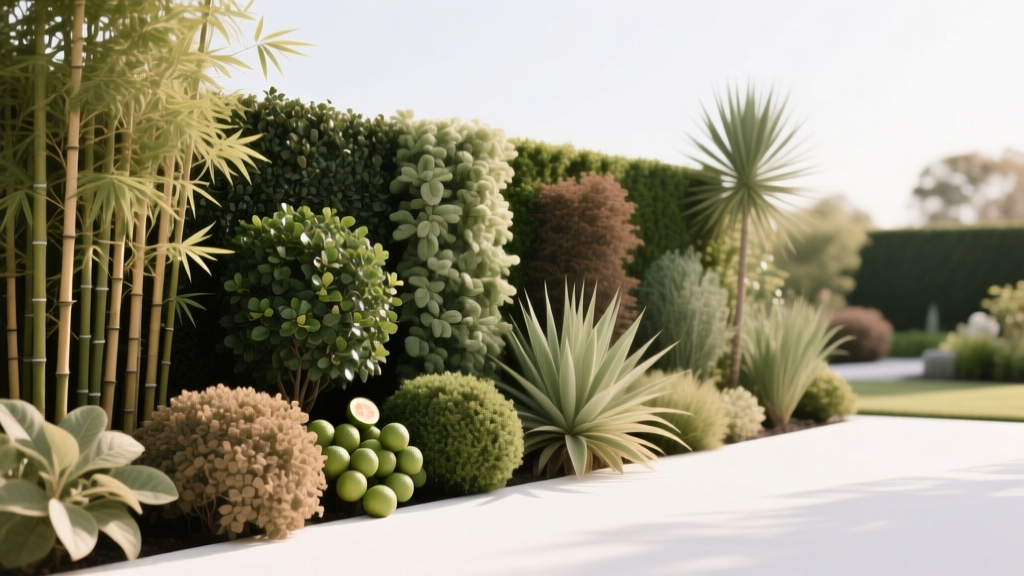
15 Garden Hacks for Privacy Screening with Plants
The fastest way to “grow privacy” is also the easiest way to fail at it: planting a single row of the same shrub, spaced too tight, and expecting it to block views in year one. That’s how you end up with dead spots, leggy bottoms, and a screen that somehow still shows your neighbor’s kitchen light like a spotlight. Privacy screens work best when you treat them like a system—layers, angles, and timing—not just a line of plants.
Below are the plant-and-practical hacks I use when friends want real screening without waiting a decade (or blowing the budget). You’ll find quick wins, DIY tricks, and a few “wish I’d known that sooner” spacing moves that make a bigger difference than buying bigger plants.
Fast Results: Get Privacy This Season (Not in 3 Years)
1) Use “Nurse” Annual Vines While Shrubs Catch Up
Plant your long-term screen (shrubs/evergreens) and immediately add annual vines to buy privacy this summer. Run scarlet runner bean, morning glory, or black-eyed Susan vine up a simple trellis or wire grid; most will cover 6–10 ft in a single season if they have sun and something to climb. Example: a $25 roll of nylon garden netting stretched between two T-posts can hide a patio by July while your hedge is still “ankle height.”
2) Cheat Height with a 2-Tier Planter Screen
If your sightline problem is from a neighbor’s second-story window, ground planting alone may never fully solve it. Set a row of large containers (18–24 inch diameter) on the ground, then add a second row on a sturdy bench or cinder-block platform to gain 16–24 inches of instant height. Example: two tiers of pots planted with tall ornamental grasses can create a “living wall” on a deck where you can’t dig.
3) Pick “Instant Bulk” Plants for Year-One Density
For quick visual mass, choose plants that naturally make big canopies early—think clumping bamboo (non-running), tall grasses, or large-leaf shrubs—instead of slow, narrow conifers. A 3-gallon plant often establishes faster than a stressed 10–15 gallon tree that needs constant babysitting, and it’s usually cheaper by 2–4x. Real-world example: I’ve seen 3-gallon Miscanthus fill out to 4–5 ft wide by late summer, while an oversized evergreen sulked for a full year.
4) Install a Temporary “Green Curtain” on Wire
Stretch two parallel wires (or galvanized clothesline) between posts: one at about 12 inches and another at 6–7 ft. Plant fast climbers at the base and weave as they grow; you get a flat, tidy screen instead of a tangled blob. Example: cucumbers or pole beans can become an edible privacy wall—nice for side-yard sightlines that only matter in summer.
Design Tricks: Make a Screen Look Fuller Without More Plants
5) Offset Planting (Staggered Rows) to Block Sightlines
A single straight row leaves “windows” between plants until they mature; a staggered double row blocks views sooner with the same species. Space plants in a zig-zag pattern so gaps don’t line up—often 3–5 ft between plants (varies by species) and 2–4 ft between rows is enough for an early screen without overcrowding. Example: along a chain-link fence, two offset rows of shrubs can hide the fence and the neighbor behind it by the second growing season.
6) Angle the Screen Where You Actually Need It
Privacy problems are usually from one or two “peep points,” not the whole yard. Instead of planting 40 ft of hedge, plant a shorter screen at an angle to block the sightline triangle—often saving 30–50% of plants and cost. Example: for a patio that’s visible only from your neighbor’s back steps, a 10–12 ft diagonal planting bed can do what a 25 ft straight hedge would.
7) Use the “Skirt Plant” Hack to Prevent Bare Legs
Many evergreens and tall shrubs thin out at the base over time, especially if shaded or lightly sheared. Plant a low, shade-tolerant “skirt” in front—like dwarf boxwood (where appropriate), heuchera, liriope, or small grasses—to hide stems and keep the screen looking full. Example: a row of 18-inch mounding perennials in front of arborvitae makes a big difference when the hedge has a few thin spots near the ground.
8) Mix Leaf Shapes to Make the Screen Read as “Solid”
Our eyes see holes more easily in uniform textures. Combine at least two textures—like a fine-needled evergreen plus a broadleaf shrub—to reduce the appearance of gaps even before everything knits together. Example: alternating glossy broadleaf shrubs with upright conifers can visually “patch” spaces between trunks and keep the screen from looking like a picket fence.
Spacing, Soil, and Water Hacks That Prevent Costly Do-Overs
9) Measure the Mature Width and Plant for Airflow (Yes, Even for Privacy)
The biggest hedge mistake is planting too tight, which invites disease and forces constant pruning. Use the mature width on the plant tag and plant at 60–70% of that distance for a dense screen without suffocation (e.g., 6 ft mature width → plant about 4 ft apart). Example: a row spaced correctly may look “too open” for a season, but it fills in cleaner and needs fewer replacements.
10) Dig a Wide Hole, Not a Deep One (Root Flare Matters)
For shrubs and trees, a hole 2–3x wider than the root ball and no deeper than the root ball helps roots spread and keeps the plant from sinking. Planting too deep is a common killer, especially on heavy soils where water pools. Extension guidance consistently emphasizes correct planting depth and root flare visibility for long-term health (Clemson Cooperative Extension, 2020).
11) Use a Soaker Hose “Backbone” for the First 8 Weeks
New screens fail when watering is random or only surface-deep. Lay a soaker hose along the planting line and run it 45–90 minutes, 2x per week for the first two months (adjust for soil and heat), then taper. Example: on a sunny fence line, that steady deep moisture can mean the difference between “stalled all summer” and “put on 12 inches of growth.”
12) Mulch Like a Pro: The 3-Inch Rule (and Keep It Off Stems)
A 2–3 inch mulch layer reduces weeds and keeps soil moisture steadier—huge for hedge establishment. Keep mulch 3–4 inches away from trunks/stems to avoid rot and rodents nesting in the “mulch volcano.” Research-backed best practices for mulch depth and keeping it off trunks are widely recommended by extension sources (Washington State University Extension, 2019).
Budget + DIY: Get a Better Screen for Less Money
13) Skip the Giant Specimens—Buy Smaller and Plant More Strategically
Big plants cost a lot and often suffer more transplant shock. A common cost pattern: a 10–15 gallon shrub might run $120–$250, while a 3–5 gallon of the same plant is often $25–$60—and the smaller one frequently catches up faster after establishment. Example: instead of three huge shrubs, you might buy six medium ones, stagger them, and get a fuller screen sooner.
14) DIY Trellis Panels from Cattle Panels (Cheap, Strong, and Pretty)
Cattle panels are a fantastic privacy tool: they’re rigid, wind-resistant, and give vines a grid to grab. A typical panel is about 16 ft long and can be cut and zip-tied to T-posts; the cost is often lower per linear foot than pre-made wood lattice. Example: train flowering vines on panels to screen an AC unit area, then let shrubs take over long-term.
15) “Free Plants” Hack: Layering or Hardwood Cuttings (Where It Works)
Some screening plants propagate easily—meaning you can expand your screen without paying retail prices. Layering (pinning a low branch into soil) can root in a season; hardwood cuttings of certain shrubs can root over winter with patience and humidity. Example: if you already have one good shrub that roots readily, you can create a matching line over time for the cost of pots and soil instead of buying a dozen new plants.
Pick the Right Screen Style: Evergreen, Deciduous, or Mixed?
| Screen Approach | Best For | What You Gain | Tradeoffs | Typical Cost Notes |
|---|---|---|---|---|
| Evergreen hedge | Year-round privacy | Consistent blocking in winter | Can thin at base; careful spacing needed | Often pricier per plant; fewer plants needed if well-placed |
| Deciduous screen | Seasonal privacy + airflow | Fast growth; lighter feel | Less winter screening | Often cheaper; can mix with vines for summer density |
| Mixed “layered” screen | Most yards with multiple sightlines | Depth, resilience, fewer visible gaps | More planning up front | Can save money by using smaller plants in layers instead of one big hedge |
“Most screening failures I see come down to planting too deep, spacing too tight, and expecting instant results from slow plants. Get the establishment right, and the privacy comes much faster than people think.” — Extension horticulture guidance summarized from common planting and establishment recommendations (Clemson Cooperative Extension, 2020; WSU Extension, 2019)
Real-World Scenarios: How These Hacks Play Out in Actual Yards
Scenario 1: The tiny patio with a direct neighbor view. A homeowner had a 12x12 patio visible from the neighbor’s kitchen window. The fix wasn’t a 40-ft hedge; it was an angled screen bed (Tip #6) plus a wire “green curtain” with annual vines (Tip #4) for immediate cover, then a staggered shrub row (Tip #5) behind it for permanence.
Scenario 2: The rental yard where digging isn’t allowed. A renter needed privacy on a small deck but couldn’t plant in-ground. Two-tier containers (Tip #2) plus a cattle panel trellis (Tip #14) created a tall, stable screen that could move with them—no landlord drama, no sunk costs in a garden they’d leave behind.
Scenario 3: The windy corner lot that shredded flimsy screens. After a storm flattened a lightweight lattice, the solution was sturdier infrastructure: T-posts with tensioned wire (Tip #4) and a soaker-hose backbone to establish tougher plants (Tip #11). Wind is less of a problem when your support system is solid and plants aren’t stressed.
Scenario 4: The “leggy hedge” that looked worse every year. The homeowner had tall evergreens with bare stems at the bottom, so the screen felt see-through at sitting height. Adding skirt plants (Tip #7) and correcting mulch habits (Tip #12) made it feel finished again—without replacing the entire hedge.
A Few Final “Insider” Reminders Before You Plant
If you only do one thing today, map the sightline you want to block: stand (or sit) where you want privacy, then have someone walk the property line and mark the problem angles with flags. That one step prevents the classic mistake of planting where it’s convenient instead of where it actually blocks views.
Also: don’t fall for the idea that privacy equals a single plant choice. The best screens are built like a layered outfit—something fast, something structural, something that hides the “awkward bits” near the ground. When you stack these hacks, you can get real privacy in weeks, better privacy in a season, and a screen that still looks good five years from now.
Sources: Clemson Cooperative Extension (2020) planting depth and establishment guidance; Washington State University Extension (2019) mulch best practices and trunk clearance recommendations.