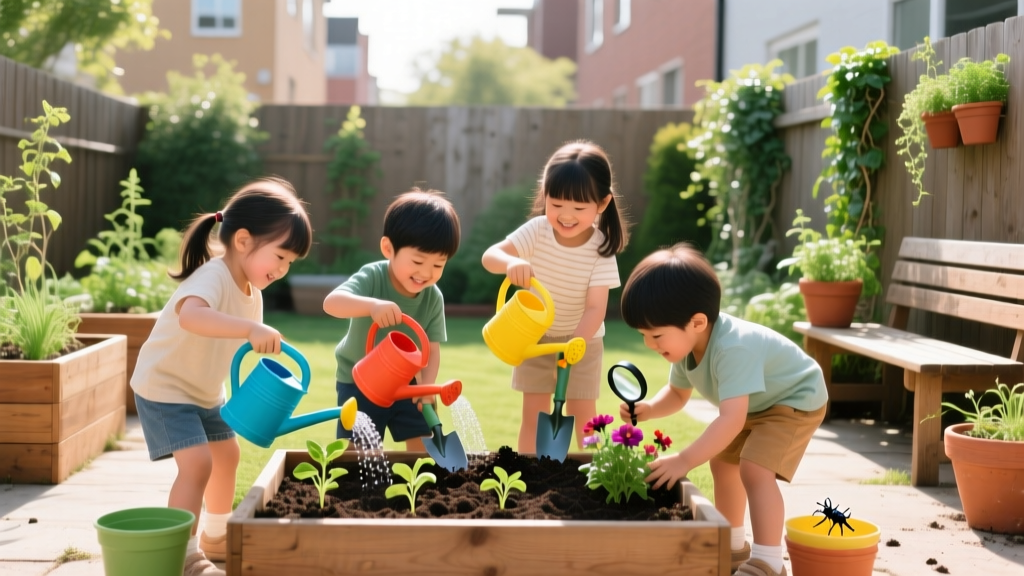
5 Garden Hacks for Kids Garden Activities
Most kid-gardening “fails” aren’t because children can’t focus—they’re because we quietly set them up with grown-up systems: tiny seeds, slow crops, fussy watering, and tools that don’t fit their hands. The result is a lot of waiting, a little disappointment, and one forgotten pot of crunchy seedlings on the porch. The good news: a few smart hacks make kid garden activities faster, sturdier, and way more fun (for you, too).
Below are five shortcuts I lean on when I want kids to get real wins in the garden—within days, not months—without turning the yard into a chaotic science experiment. Each one is simple, specific, and designed around kid attention spans and adult sanity.
Fast Wins: Make Success Visible in Under a Week
1) The “3-Day Sprout Window” Hack (Pre-sprout big seeds in a bag)
What to do: Skip planting dry seeds directly into soil for kid activities and pre-sprout large, easy seeds first. Put 10–20 pea, bean, or sunflower seeds between two damp paper towels, slide into a zip-top bag, and tape it to a bright window (not scorching hot). Check daily; once you see a 1/4-inch (6 mm) root, plant it root-down about 1 inch deep.
Why it works: Kids get visible progress in 48–72 hours, and you avoid the “did I water it too much?” guessing game. It also lets you weed out non-viable seeds so every planting attempt has a higher success rate.
Real-world example: In one rainy-weekend scenario, a parent I worked with pre-sprouted 12 bean seeds on Friday; by Monday, 10 had roots and went into cups. The kids marked “Root Day” on a calendar and were measuring shoots by Thursday—instant buy-in.
“Warm, moist conditions are what seeds need to germinate—your job is to provide consistency.”
—University of Illinois Extension (2023)
2) The “Salad in 21 Days” Hack (Grow microgreens in a takeout container)
What to do: Microgreens are the cheat code for kid gardening because they’re fast, edible, and forgiving. Punch 8–12 drainage holes in a plastic clamshell takeout container, add 1 inch of potting mix, and sprinkle seeds thickly (about 1–2 teaspoons for a 6x6 inch area, depending on seed size). Mist, close the lid for 2 days, then open and set in bright light; snip with scissors when they’re 2–3 inches tall—usually 10–21 days.
Why it works: It bypasses the hardest kid-garden phase (seedling care for weeks) and delivers a harvest on a school-project timeline. It’s also a low-stakes way to practice gentle watering: misting is easier than pouring.
Cost reality: A $3–$6 packet of radish or broccoli microgreen seed can yield multiple trays; compare that to $4–$5 per store clamshell of microgreens in many areas. Even factoring in $5–$8 for potting mix, the DIY version usually pays back fast.
Less Mess, More Independence: Kid-Proof Your Setup
3) The “Painted Pour Line” Hack (Make watering foolproof with a jug + timing rule)
What to do: Overwatering is the #1 kid gardening mistake I see—because kids are kind and think more water equals more love. Use a clean 1-gallon milk jug or juice jug and draw a bold line with paint pen at 1/4-gallon (1 quart). Teach one simple rule: “One line per pot, then stop,” or for beds: “Two lines per 4 square feet.” Water slowly so it soaks in instead of running off.
Why it works: You’re replacing vague instructions (“water lightly”) with a measurable, repeatable action a child can own. It also prevents the soggy-soil fungus gnat spiral that happens when little hands water three times a day.
Timing trick: Keep watering on a schedule kids can remember: right after school on Mondays and Thursdays. If the top 1 inch of soil still feels cool and damp, they skip watering—this adds a quick sensory check without turning it into a lecture.
Source note: Overwatering and poor drainage are common causes of container plant problems, especially for seedlings. For practical container watering guidance, see University of Minnesota Extension (2020) container gardening resources.
4) The “Instant Raised Bed” Hack (Use fabric grow bags + a kid-sized soil recipe)
What to do: If you don’t want to build a bed, use 10-gallon fabric grow bags as mini raised beds kids can reach. Fill them with a simple, repeatable mix: 2 parts potting mix + 1 part finished compost. Plant 1 cherry tomato per bag (with a stake) or 6–9 bush beans per bag; label with a paint stick sign.
Why it works: Fabric bags drain well, warm up faster than in-ground soil, and are easy to move if you guessed wrong on sunlight. The “recipe” aspect is huge with kids—they love scooping measured parts like they’re baking.
Cost comparison: A basic 10-gallon fabric bag often runs $3–$6. Building a small wood raised bed can easily hit $60–$150 in lumber and hardware, depending on prices—plus time and tools. Bags aren’t forever, but they’re a fantastic entry-level option.
| Option | Upfront cost | Setup time | Kid-friendly strengths | Tradeoffs |
|---|---|---|---|---|
| 10-gallon fabric grow bag | $3–$6 each | 15–25 minutes | Lightweight, drains well, easy to label, movable | Needs more frequent watering in hot weather |
| Plastic tote “planter” (DIY) | $0–$12 (repurposed) | 20–40 minutes | Big soil volume, stable, can be decorated | Must drill drainage; can overheat in full sun |
| Wood raised bed (4x4) | $60–$150+ | 2–4 hours | Long-lasting, great soil depth, looks tidy | More tools, more commitment, harder to relocate |
DIY alternative: No grow bag? Use a 27-gallon storage tote. Drill 12–16 drainage holes in the bottom (3/8-inch bit), add 3 inches of sticks or chunky bark for airflow (optional), then fill with the same 2:1 soil mix. Kids can decorate the outside with weatherproof stickers or paint markers.
Make It Stick: Build Kid Motivation (Without Bribing Them)
5) The “Job Jar + Tiny Tools” Hack (Turn chores into one-minute missions)
What to do: Create a “Garden Job Jar” with 20–30 craft sticks, each with a task that takes about 60 seconds: “Pick 5 weeds,” “Check moisture with finger,” “Harvest 3 beans,” “Refill birdbath,” “Look for ladybugs,” “Add 1 scoop compost.” Pair it with kid-sized tools: a 2–3 inch hand trowel, a small bucket, and a spray bottle set to mist.
Why it works: Kids resist open-ended chores (“go weed the garden”) but respond well to short, concrete missions they can finish quickly. The jar also stops the daily negotiation over what to do—and it keeps you from handing over complicated tasks when you’re rushed.
Real-world example: A family with two kids (ages 5 and 8) kept the jar by the back door. Their rule was “one stick before screen time.” The garden stayed noticeably tidier, but the bigger win was that the kids began choosing extra sticks on their own when they wanted to check on “their” plants.
Extra Tricks That Pair Perfectly With the 5 Hacks
The five hacks above are the core, but these add-ons plug common gaps: pests, boredom, and harvesting drama. Mix and match based on your space and your kid’s age.
Make labels indestructible (so kids can “own” plants)
Use paint sticks (free at many hardware stores) as labels, written with an oil-based paint pen. Push them 3–4 inches into the soil so they don’t pop out during watering. For a fun upgrade, let kids draw a tiny “plant portrait” on each stick—tomatoes get a red circle, carrots get orange triangles, and so on.
Use the “pizza topping” planting pattern for small beds
Kids plant more accurately when the bed has a visual plan. Divide a 3–4 foot round container (or a small bed) into “pizza slices” with string, and assign each slice one crop: basil, lettuce, marigolds, radishes, and so on. It prevents overcrowding and makes it easy to remember what’s supposed to be where.
Turn pest checks into a scavenger hunt (without panic-spraying)
Once a week, do a 5-minute “bug safari” with a magnifying glass: find 1 chewed leaf, 1 beneficial insect, and 1 mystery bug. Teach one simple decision rule: if a plant has less than about 20% leaf damage and it’s still growing, you observe first rather than spraying. This keeps kids curious and reduces the urge to “fix” everything with chemicals.
Source note: Integrated pest management (IPM) emphasizes monitoring and correct identification before taking action—home garden IPM guidance is widely supported by extension programs such as UC IPM (University of California Agriculture and Natural Resources, 2021).
Three Real-World Setups (Pick the One That Matches Your Life)
You don’t need the perfect yard. You need a setup that survives your schedule, your kid’s attention span, and your local weather. Here are three scenarios I see all the time—with a simple plan for each.
Scenario A: Apartment balcony + one sunny window
Go with microgreens (Hack #2) inside and one 10-gallon grow bag (Hack #4) outside. Microgreens keep the excitement going even if the balcony plant is slow, and the grow bag gives kids a “real” outdoor plant to check daily. Aim for a cherry tomato or bush beans and add one marigold to reduce the “it’s all green and boring” problem.
Scenario B: Busy weekdays + kids who forget everything by Thursday
Use the “Painted Pour Line” watering jug (Hack #3) and keep the schedule to two days a week—Monday/Thursday is easy to remember. Add the Job Jar (Hack #5) with only quick tasks so you’re not creating a new burden. Plant pre-sprouted beans (Hack #1) so there’s early progress even if care is a bit inconsistent at first.
Scenario C: School garden day or a birthday party activity
Pre-sprout seeds ahead of time (Hack #1) so every kid leaves with a “living thing that’s already happening.” Set up a potting station with a measured scoop (like a 1-cup scoop) and a simple rule: 3 scoops soil, 1 seed, 1 label. For party-proof success, choose sunflowers or beans—big seeds, quick sprouts, and dramatic growth.
Quick Troubleshooting (So You Don’t Lose Momentum)
If seeds rot before sprouting: Switch to pre-sprouting (Hack #1) and reduce watering volume with the pour-line jug (Hack #3). Soggy soil plus cool temps is the classic recipe for failure.
If kids keep yanking seedlings out: Give them their own “dig zone” container filled with cheap soil where they can excavate guilt-free. Then put a simple boundary on the real pots: only touch plants using two fingers at the stem base.
If plants look leggy indoors: Put microgreens and seedlings within 2–4 inches of a basic LED shop light on a timer set to 14–16 hours per day. A $15–$30 light plus a $10 timer is often cheaper than re-buying seeds and potting mix after repeated failures.
If harvesting causes drama (“That one was mine!”): Assign each child a plant label color and harvest into matching bowls. For shared beds, use the “one for the bowl, one for the mouth” rule with peas and cherry tomatoes to keep it fun and fair.
Kid Crops That Pay Off Fast (My Short List)
If you want the biggest “wow” for the least waiting, start with plants that give quick or frequent rewards.
Fast: radish (often 25–35 days), microgreens (10–21 days), bush beans (often 50–60 days to first harvest), nasturtiums (edible flowers).
Big and dramatic: sunflowers, pumpkins (if you have space), cherry tomatoes in a grow bag with a stake.
Harder than they look (save for later): carrots in rocky soil, celery, and anything that demands perfectly consistent moisture for weeks.
When kid garden activities are built around fast feedback, measurable actions, and a setup that forgives mistakes, children don’t just “help”—they start thinking like gardeners. And once they’ve proudly eaten a microgreen they grew in a recycled takeout box or watched a pre-sprouted bean turn into a climbing plant, you won’t have to sell them on the next garden day. They’ll be the ones reminding you.