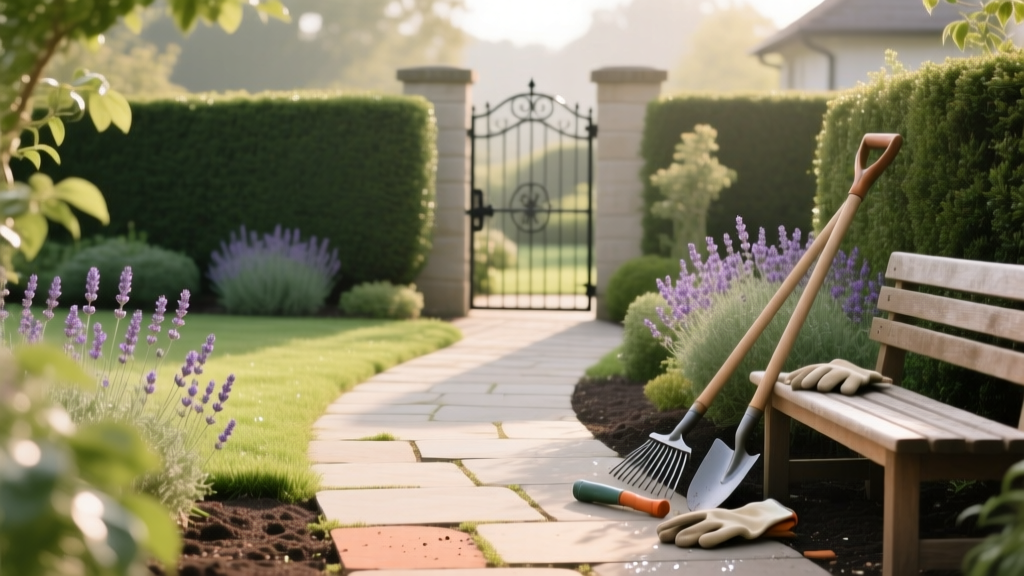
12 Garden Hacks for Garden Path Maintenance
Most garden paths don’t “wear out” first—they get contaminated first. A thin film of soil, decomposing leaves, and algae turns gravel into mush, pavers into a skating rink, and mulch paths into a weed nursery. The common mistake is treating every path problem as a surface problem (sweep it, spray it, forget it) when the real fix is usually about drainage, edging, and stopping organic gunk from bonding to the path in the first place.
Below are 12 practical hacks I’ve used (and seen clients use) to keep paths crisp with less work—organized so you can tackle the big wins first.
Fast “Stop the Mess” Moves (Do These Before You Scrub or Rebuild)
1) Treat your path like a roof: add a tiny crown so water runs off
If your path stays wet, you’ll fight algae and moss forever. Aim for a subtle crown: about 1/4 inch of rise per foot from center to edge (or a similar gentle pitch to one side). On pavers, that can be as simple as lifting the middle course slightly with bedding sand; on gravel, rake material to a high center line.
Real-world example: A 3-foot-wide stepping-stone run that puddled every winter stopped getting slick once the homeowner re-set stones with a ~3/8-inch center rise and added a shallow swale on the downhill side.
2) Install “invisible” edging to stop soil creep (the sneakiest path killer)
Soil migration is what makes gravel paths disappear and pavers look sunken. Use steel, aluminum, or heavy-duty plastic edging set so the top sits 1/2 inch above the path surface—just enough to hold material back, not trip you. Stake it every 18–24 inches to prevent bowing.
Money saver: A 20-foot run of basic poly edging often costs $20–$40, which is cheaper than topping up gravel twice a year.
3) Put a leaf-blower “no-fly zone” into your routine (it’s a 90-second habit)
Organic debris is the glue that turns paths into compost. Once a week in fall (or after storms), do a quick pass: blow or broom debris off the path before it gets ground in. The hack is timing—do it when leaves are dry; even 10–15 minutes after morning dew burns off makes cleanup faster.
Scenario: In a wooded yard with oak leaves, doing this twice weekly for 6 weeks saved a full spring “power-wash weekend” because the pavers never developed that black biofilm.
Weed & Algae Control That Doesn’t Wreck Your Path
4) Use boiling water for the crack weeds you can’t pull (and skip the salt)
For weeds in paver joints or along edging, boiling water is a solid DIY option: pour slowly right at the crown, then follow up with a stiff brush once the plant wilts. Avoid salt—it can accumulate and damage nearby plants and soil structure over time. Boiling water works best on small, young weeds (think 2–4 inches tall) and may require a second hit 7 days later.
Example: A patio-path seam that kept sprouting chickweed cleared after two kettle treatments a week apart, then staying on top of it with a quick brush once a month.
5) Hit algae/moss with oxygen bleach, not chlorine bleach
Chlorine bleach can discolor surfaces and harm nearby plants; oxygen bleach (sodium percarbonate) is typically gentler on hardscapes. Mix at about 1/2 cup per gallon of warm water, wet nearby plants first, apply, wait 10–15 minutes, then scrub and rinse. Don’t do it right before rain—give it time to work and avoid runoff into beds.
Expert-backed note: Washington State University Extension discusses safer, less-damaging approaches for algae and moss control on hard surfaces and emphasizes preventing moisture buildup (WSU Extension, 2019).
“Prevention is usually easier than removal—improving drainage and sunlight and reducing surface moisture are long-term fixes for moss and algae.” — Washington State University Extension (2019)
6) The polymeric sand trick: only use it where it actually works
Polymeric sand can be fantastic in paver joints, but it fails if the base is unstable or if water constantly sits on the surface. Use it on well-set pavers with good drainage; blow joints clean and dry, sweep sand in, then mist lightly (don’t blast it out). Expect a material cost around $25–$45 per bag, and a typical bag covers roughly 70–90 sq ft depending on joint width.
Case example: A homeowner with a shaded walkway used polymeric sand but didn’t fix a low spot; the joints washed out in one winter. After re-grading the dip and reapplying, the joints held for multiple seasons.
Gravel, Mulch, and Decomposed Granite: Keep It Fluffy, Not Funky
7) Refresh gravel the smart way: top with fines, not more rocks
When a gravel path feels loose, many people add more gravel—then it still shifts underfoot. Instead, top-dress with a thin layer (1/4–1/2 inch) of gravel fines (stone dust) and compact it to lock the surface. You’ll use less material and get a firmer walk.
Cost reality: A 1/2 cubic yard of fines often runs $20–$35 (plus delivery), and it can stabilize a surprising amount of path compared to buying new decorative gravel.
8) Lay a “sacrificial strip” of mulch where people step off the path
The edges fail first because feet cut corners and kick material into beds. Add a 6–8 inch strip of coarse wood chips along the outside edge where traffic naturally spills over. Think of it as a replaceable bumper that protects the real path.
Scenario: On a veggie garden path, kids constantly hopped off near the gate, chewing up the edge. A sacrificial chip strip reduced gravel loss enough that the path needed topping up only once that season instead of three times.
9) Decomposed granite (DG) hack: stabilize only the top layer
If you have DG paths, you don’t need stabilizer through the entire depth unless you’re rebuilding. For maintenance, loosen the top 1 inch, blend in stabilizer per label rate (often around 3–5% by volume), lightly mist, then compact. This repairs ruts and keeps dust down without hauling out the whole path.
Example: A DG side path that got dog-traffic ruts was repaired in an afternoon by reworking only the top inch, then compacting with a hand tamper.
Pavers & Stone Paths: Make Them Look New Without Breaking Your Back
10) The “two-broom” reset: sweep sand back where it belongs
After winter, joint sand often ends up on the surface, and everyone’s instinct is to hose it away—don’t. Use a stiff push broom to pull sand off the paver faces, then a softer broom to guide it back into joints. Do this on a dry day so sand flows; you’ll reduce weeds and wobble without buying anything.
Real-world win: A 40-foot paver walk that looked “washed out” tightened up after two dry-day sweeps and a light mist to settle the joints.
11) Spot-level sunken pavers with a shop-vac and a trowel (no full tear-out)
For a single low paver collecting water, you don’t need to redo the whole walkway. Pop the paver, shop-vac out soggy bedding, add fresh sand in 1/4-inch lifts, tamp, and reset. Check with a straight board so the repaired paver sits 1/8 inch proud (it will settle slightly).
Case example: A front entry path had one “ankle-twister” paver. This spot fix took 30 minutes and stopped puddling that had been feeding algae each spring.
Cleaners, Tools, and Timing: Save Money (and Surfaces)
12) Pressure-washer rules that prevent damage (and keep joints intact)
Pressure washing can strip joint sand, etch concrete, and blast gravel into beds if you’re not careful. Use a wider fan tip (e.g., 25°), keep the wand moving, and stay roughly 12–18 inches from the surface; test a corner first. On pavers, plan to re-sweep joint sand afterward—especially if you washed more than a light surface film.
Extension-backed reminder: Many university extension resources emphasize that hardscape “cleaning” should avoid pushing contaminants into storm drains and should protect adjacent plants by pre-wetting and rinsing—general best practice echoed across extension guidance (e.g., University of California Agriculture and Natural Resources, 2020).
Pick the Right Fix: Quick Comparison Table
Not every problem needs the same solution. Here’s a fast cheat sheet that matches the fix to the mess.
| Problem | Fastest Hack | Best Long-Term Fix | Typical Cost | Time Needed |
|---|---|---|---|---|
| Slippery green film on stone/pavers | Oxygen bleach wash (1/2 cup/gal) | Add crown + reduce shade/moisture traps | $5–$15 DIY | 30–60 min |
| Weeds in joints | Boiling water spot treatment | Polymeric sand + tighter edges | $0–$45 | 10–90 min |
| Gravel shifts and feels loose | Top with 1/4–1/2 in fines + compact | Edging + proper base + crown | $20–$60 | 1–2 hrs |
| Mulch path turns to mud | Rake out soggy layer + add coarse chips | Improve drainage + add stepping stones | $0–$40 | 30–90 min |
| Single sunken paver | Shop-vac, add sand in lifts, reset | Fix base/drainage if it repeats | $0–$15 | 30–45 min |
Three Real-World Maintenance Plans (Steal One and Make It Yours)
Scenario A: Shady side yard that stays damp
Start with drainage and light: re-grade for that 1/4 inch per foot fall, then prune back the lowest branches that block airflow. Clean existing algae with oxygen bleach, then keep the surface dry by clearing leaves weekly during peak drop. If moss keeps returning, consider swapping standard joint sand for polymeric sand on pavers—but only after the low spots are corrected.
Scenario B: Gravel path next to messy beds
Install edging first, because without it you’re just donating gravel to your border plants. Top-dress with 1/4–1/2 inch of fines and compact; this is the difference between “decorative gravel” and “walkable gravel.” Add that 6–8 inch sacrificial mulch strip at the gate or corners where people cut across.
Scenario C: Front walkway pavers that look tired after winter
Skip the power washer at first. Do the two-broom reset on a dry day, then spot-level any low pavers that collect water. If you do wash, use a 25° tip and plan to re-sand joints—most “my pavers got worse” stories come from blasting out the very material that keeps them stable.
Little Extras That Make These Hacks Stick
Mark problem spots once. When you see a puddle or a wobble, drop a golf tee or a landscape flag beside it. Fixing “the three flagged spots” beats wandering around trying to remember what annoyed you last rainstorm.
Keep a tiny path kit. A stiff hand brush, a margin trowel, and a small bucket of joint sand (or fines) stored in the garage turns path maintenance into a 5-minute job instead of a weekend project.
Don’t feed weeds by accident. If you pressure wash or deep scrub, rinse away loosened debris rather than letting it settle into joints. That dirty slurry is basically potting mix for weed seeds.
Garden paths are supposed to be the easy part of the yard—the thing that keeps you out of the mud and makes everything feel intentional. Once you stop the organic buildup, keep water moving, and lock your edges in place, most “constant maintenance” paths turn into occasional touch-ups you can handle while the kettle boils.
Sources: Washington State University Extension (2019), guidance on moss/algae management and moisture prevention on outdoor surfaces; University of California Agriculture and Natural Resources (2020), best-practice guidance for outdoor cleaning and protecting plants/limiting runoff impacts.