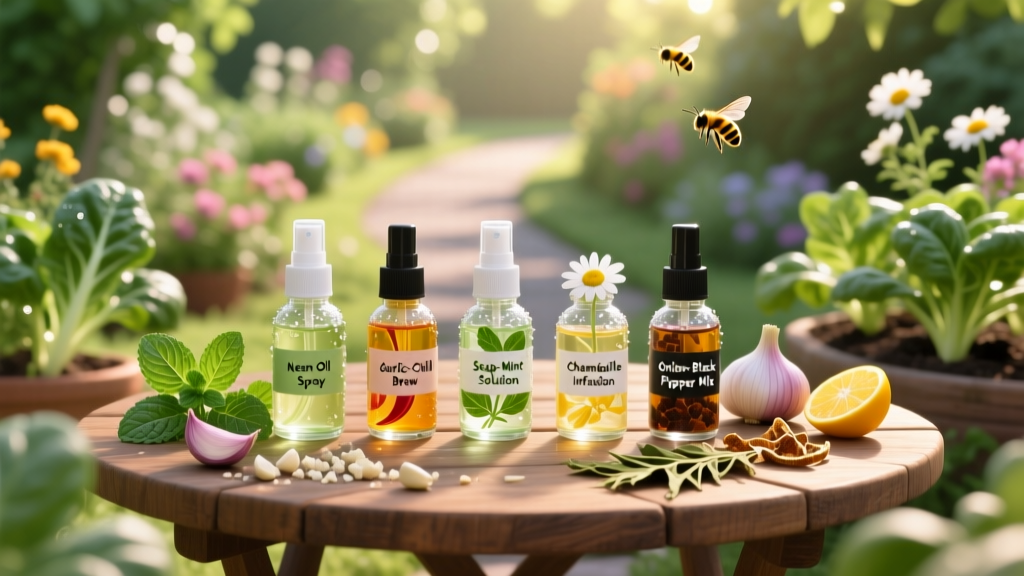
Organic Pest Spray Guide: 5 Homemade Recipes That Actually Work (Tested 2026)
Why Choose Homemade Organic Pest Sprays?
Commercial pesticides kill beneficial insects alongside pests, contaminate soil, and leave residues on food. Homemade organic sprays target specific pests using ingredients you already have in your kitchen — and they cost pennies per application compared to $15-30 for store-bought alternatives.
Before You Spray: The Golden Rules
- Identify the pest first. Not every bug is a problem. Ladybugs, lacewings, and hoverflies are beneficial — don't spray them.
- Test on a small area. Spray one leaf and wait 24 hours to check for plant damage before treating the whole plant.
- Spray at dawn or dusk. Midday sun + wet leaves = leaf burn. Spraying when pollinators are inactive reduces harm to bees.
- Reapply after rain. All homemade sprays wash off. Reapply after any rainfall or overhead watering.
- Be consistent. One application rarely eliminates a pest population. Apply every 3-5 days for 2-3 weeks.
Recipe 1: Soap Spray (The All-Purpose Workhorse)
Targets:
Aphids, whiteflies, mealybugs, spider mites, thrips, scale insects
Ingredients:
- 1 tablespoon pure castile soap (Dr. Bronner's unscented) OR mild dish soap (no degreasers, no antibacterial)
- 1 quart (950ml) water
- Optional: 1 teaspoon vegetable oil (helps soap cling to insects)
Instructions:
- Mix soap and water in a spray bottle — shake gently
- Add oil if using, shake again
- Spray directly on pests (contact kill — must hit the insect)
- Cover undersides of leaves where aphids and whiteflies hide
How it works:
Soap dissolves the protective waxy coating on soft-bodied insects, causing them to dehydrate and die within hours. Does NOT affect hard-shelled beetles or caterpillars.
Caution:
Never exceed 2% soap concentration (2 tablespoons per quart) — higher concentrations damage plant tissue. Avoid using on seedlings, ferns, or succulents.
Recipe 2: Neem Oil Spray (The Heavy Hitter)
Targets:
Aphids, caterpillars, beetles, leaf miners, fungus gnats, powdery mildew, black spot
Ingredients:
- 1 teaspoon cold-pressed neem oil (100% pure, not neem extract)
- 1/2 teaspoon mild liquid soap (emulsifier — neem oil won't mix with water alone)
- 1 quart (950ml) warm water
Instructions:
- Mix soap with warm water first
- Add neem oil, shake vigorously for 30 seconds
- Use immediately — neem degrades in mixed solution within 8 hours
- Spray all leaf surfaces thoroughly until dripping
- Apply every 7 days for prevention, every 3-4 days for active infestations
How it works:
Neem oil is a triple-threat: it repels adult insects, disrupts feeding and egg-laying, and acts as a growth regulator that prevents larvae from maturing. It also has antifungal properties that combat powdery mildew and black spot.
Caution:
Do not apply to plants in direct hot sunlight (leaf burn risk). Not effective once mixed for more than 8 hours — mix only what you need.
Recipe 3: Garlic-Chili Spray (The Repellent Barrier)
Targets:
Beetles, caterpillars, deer, rabbits, squirrels (repellent — doesn't kill, deters feeding)
Ingredients:
- 1 head garlic (all cloves, peeled)
- 2-4 hot chili peppers (or 2 tablespoons cayenne powder)
- 1 quart water
- 1 teaspoon liquid soap
Instructions:
- Blend garlic, peppers, and 1 cup water until smooth
- Let mixture sit overnight (steeping extracts the active compounds)
- Strain through cheesecloth or fine mesh (prevents spray bottle clogging)
- Add remaining water and soap
- Spray on leaves, stems, and around plant base
How it works:
Capsaicin (from peppers) and allicin (from garlic) create an irritating barrier that chewing insects and browsing animals avoid. The soap helps the solution stick to leaf surfaces through light rain.
Caution:
Wear gloves when handling hot peppers. Don't touch your face. Test on sensitive plants first — peppers and tomatoes love it, but lettuce and herbs may show stress.
Recipe 4: Baking Soda Spray (The Fungus Fighter)
Targets:
Powdery mildew, black spot, anthracnose, botrytis (gray mold), early blight
Ingredients:
- 1 tablespoon baking soda (sodium bicarbonate)
- 1/2 teaspoon liquid soap
- 1 tablespoon vegetable oil
- 1 gallon (3.8L) water
Instructions:
- Dissolve baking soda in water, stir until clear
- Add soap and oil, mix gently
- Spray all leaf surfaces, focusing on areas with visible fungus
- Apply every 7-10 days as preventive, every 5 days for active infections
- Remove and dispose of severely infected leaves before spraying
How it works:
Baking soda raises the pH on leaf surfaces, creating an alkaline environment where fungal spores cannot germinate. The oil helps the solution adhere and creates a physical barrier. This is preventive — it stops new infections but won't cure existing ones.
Caution:
Never exceed 1 tablespoon per gallon — higher concentrations cause leaf burn (sodium toxicity). Avoid using on hot days (>85°F). Alternate with neem oil for best results.
Recipe 5: Beer Trap (The Slug & Snail Eliminator)
Targets:
Slugs, snails, earwigs, sowbugs
Ingredients:
- 1 cup cheap beer (any brand — slugs prefer yeasty, malt-forward beers)
- Shallow container (tuna can, yogurt cup, or buried jar lid)
Instructions:
- Bury the container so its rim is level with the soil surface
- Fill with beer to within 1/2 inch of the rim
- Place near affected plants in the evening
- Empty and refill every 2-3 days
- For larger gardens, space traps every 3-4 feet along garden edges
How it works:
Slugs and snails are attracted to the fermentation gases (CO2 and yeast volatiles) in beer. They crawl in to feed and drown. Studies show beer traps catch 10-20x more slugs than water alone.
Pro tip:
Don't waste good beer. Any cheap lager or ale works. If you don't have beer, mix 1 tablespoon sugar + 1 teaspoon baker's yeast + 1 cup water as a substitute.
When to Use Which Spray — Quick Reference
| Pest Problem | Best Spray | Frequency |
|---|---|---|
| Aphids/whiteflies | Soap spray | Every 3 days for 2 weeks |
| Caterpillars/beetles | Neem oil | Every 5-7 days |
| Chewing insects + deer | Garlic-chili spray | Every 3-5 days + after rain |
| Powdery mildew/fungus | Baking soda spray | Every 7-10 days |
| Slugs/snails | Beer traps | Replace every 2-3 days |
| Multiple problems | Rotate neem + soap | Alternate every 3 days |
What NOT to Do
- Don't spray beneficial insects. If you see ladybugs, lacewings, or parasitic wasps, leave them alone — they're eating your pests for free.
- Don't mix sprays together. Combining neem + baking soda can create phytotoxic reactions that burn leaves.
- Don't spray stressed plants. Plants that are drought-stressed or heat-stressed are more susceptible to spray damage. Water well the day before spraying.
- Don't use vinegar as a pest spray. Vinegar is a herbicide — it kills plants. Save it for weed control on pavement cracks only.
Storage and Shelf Life
- Soap spray: Use within 24 hours (soap degrades)
- Neem oil (mixed): Use within 8 hours — mix fresh each time
- Garlic-chili spray: Refrigerate up to 1 week
- Baking soda spray: Use within 48 hours
- Beer traps: Replace beer every 2-3 days
Final Thoughts
These five recipes cover 90% of common garden pest problems without any synthetic chemicals. Start with soap spray — it's the simplest and most broadly effective. Add neem oil for tougher infestations, and use garlic-chili spray as a preventive barrier. With consistent application and proper timing (dawn/dusk, before rain), homemade organic sprays are just as effective as commercial products — and your garden ecosystem will thank you for it.