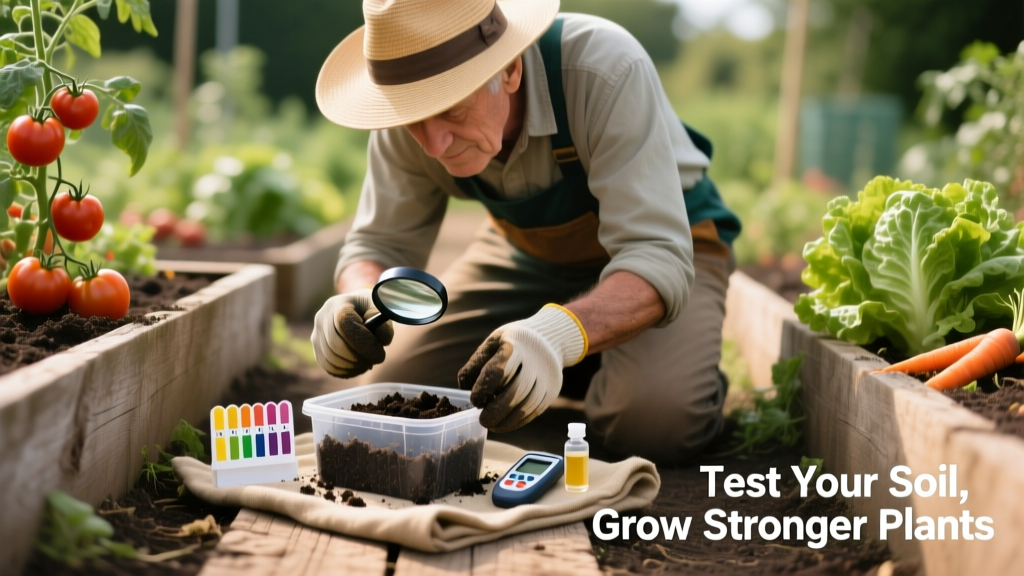
Garden Soil Testing Guide: pH, NPK, and What Your Results Mean
Why Test Your Soil?
A soil test is the single most valuable thing you can do for your garden. Without it, you're guessing — adding fertilizer your soil doesn't need, missing deficiencies that stunt growth, or applying lime when your pH is already too high. A $15-30 lab test tells you exactly what your soil has, what it lacks, and what to add.
What a Soil Test Measures
| Measurement | Ideal Range | What It Affects |
|---|---|---|
| pH | 6.0-7.0 (most vegetables) | Nutrient availability — too high or low locks out nutrients |
| Nitrogen (N) | 20-40 ppm | Leaf growth, green color |
| Phosphorus (P) | 20-50 ppm | Root development, flowering, fruiting |
| Potassium (K) | 150-250 ppm | Disease resistance, drought tolerance, overall vigor |
| Organic matter | 3-6% | Water retention, nutrient holding, soil structure |
| CEC (Cation Exchange) | 10-20 meq/100g | Soil's ability to hold and release nutrients |
| Calcium | 1000-2000 ppm | Cell wall strength, prevents blossom end rot |
| Magnesium | 100-200 ppm | Chlorophyll production, photosynthesis |
How to Collect a Soil Sample
- Use a clean trowel or soil probe
- Collect from 6-8 inches deep (root zone) in 5-10 spots across the garden
- Mix all samples in a clean bucket
- Take 1-2 cups of the mixed sample for testing
- Air dry (don't bake) before sending to lab
- Label with garden location and date
Where to Get Tested
- University Extension ($15-30): Most accurate, includes recommendations. Search "[your state] extension soil test"
- Private labs ($25-50): Logan Labs, Waypoint Analytics — detailed results
- DIY kits ($10-15): Less accurate but useful for pH and rough NPK
- pH meter ($20-40): Reusable, accurate for pH only
Reading Your Results: pH
pH Below 6.0 (Too Acidic)
- Add garden lime (calcium carbonate): 5 lbs per 100 sq ft raises pH by ~0.5
- Dolomitic lime if magnesium is also low
- Apply in fall (takes 3-6 months to work)
pH Above 7.5 (Too Alkaline)
- Add elemental sulfur: 1 lb per 100 sq ft lowers pH by ~0.5
- Acidifying fertilizers (ammonium sulfate)
- Organic matter (peat moss, pine needles) gradually lowers pH
Fixing Nutrient Deficiencies
| Deficiency | Symptoms | Quick Fix | Long-Term Fix |
|---|---|---|---|
| Nitrogen | Yellow older leaves, stunted growth | Fish emulsion (water in) | Compost, cover crops |
| Phosphorus | Purple leaves, poor flowering | Bone meal (scratch in) | Rock phosphate |
| Potassium | Brown leaf edges, weak stems | Wood ash (1 cup/10 sq ft) | Kelp meal, greensand |
| Calcium | Blossom end rot, tip burn | Gypsum (doesn't change pH) | Lime (if pH is low) |
| Iron | Yellow leaves, green veins | Chelated iron spray | Lower pH (iron locks out above 7.0) |
How Often to Test
- Every 2-3 years for established gardens
- Before starting a new garden bed
- When plants show unexplained problems
- After major amendments (wait 3 months before retesting)
Final Thoughts
Don't guess — test. A soil test costs less than one bag of fertilizer and tells you exactly which bag to buy. Most garden problems (yellow leaves, poor fruit set, stunted growth) trace back to pH or nutrient imbalances that a $20 test would have caught.