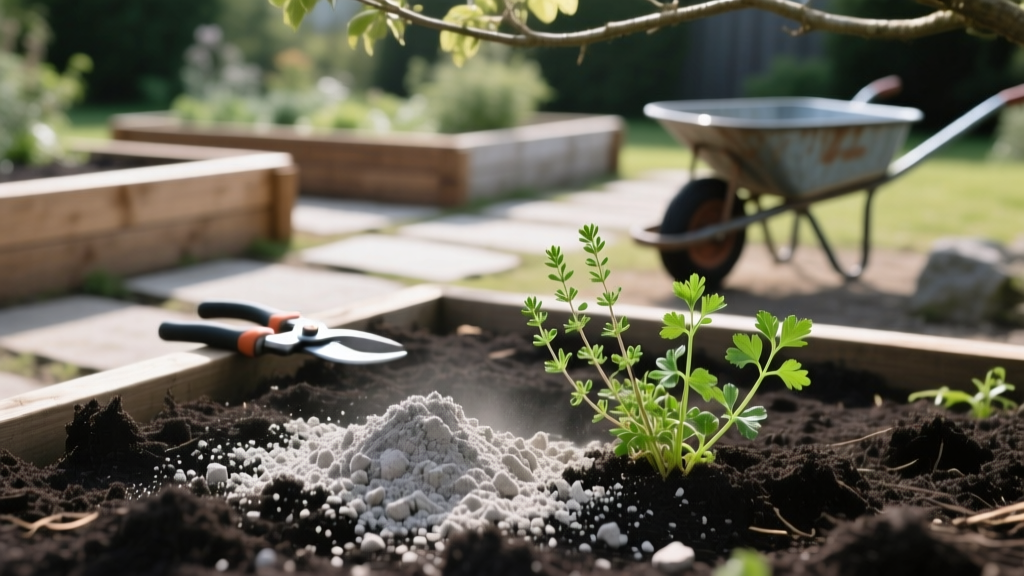
Wood Ash in the Garden: When and How to Use
If you’ve ever dumped a bucket of fireplace ash into a garden bed “for potassium,” you might have accidentally done the exact opposite of what your plants needed. Wood ash is basically a fast-acting lime: it can push soil pH up quickly, and too much can lock up nutrients like iron and manganese—hello yellow leaves on blueberries and azaleas.
Used carefully, though, wood ash is one of those old-school, low-cost garden tools that still deserves a spot in modern beds. Think of it as a targeted soil amendment (and sometimes a pest trick), not a general “sprinkle it everywhere” miracle dust.
First, Know What Wood Ash Actually Does (and What It Doesn’t)
Tip: Treat wood ash like lime, not like compost
Wood ash is alkaline and raises pH, similar to agricultural lime—often faster because it’s more soluble. Most hardwood ash contains roughly 20–40% calcium carbonate equivalent (CCE), meaning it can “sweeten” acidic soil but can overshoot if you’re heavy-handed. If you’re trying to add organic matter, ash won’t help; it’s minerals, not humus.
Example: If your lawn soil is pH 5.5 and you’re aiming for 6.5, ash can help—but it’s a measured application, not a “dump whatever you have” situation.
Tip: Expect potassium and calcium, but don’t count on nitrogen
Ash commonly supplies potassium (K) and calcium (Ca), plus small amounts of magnesium and trace elements. What it does not supply is nitrogen—any nitrogen in wood burns off during combustion. That means ash won’t green up leafy plants the way composted manure or a balanced fertilizer will.
Real-world note: People often add ash to fix “weak plants” and then wonder why growth doesn’t take off—because the limiting nutrient was nitrogen, not potassium.
“Wood ash acts like a liming material because it contains calcium compounds that increase soil pH.” — University of Minnesota Extension (2019)
Before You Apply: Quick Safety + Testing Shortcuts
Tip: Only use ash from clean, untreated wood
Stick to ash from firewood, pruned branches, or untreated lumber. Avoid ash from painted/pressure-treated wood, plywood, charcoal briquettes, coal, or trash—those can concentrate heavy metals or additives you don’t want in soil or food crops.
Shortcut: If you didn’t personally source the wood, don’t use the ash on edible beds—use it for icy walkways or dispose of it.
Tip: Test soil pH first—$15 now beats replanting later
A basic lab soil test often runs about $15–$30 and tells you pH plus key nutrients; that’s cheaper than replacing acid-loving shrubs or wasting a season on nutrient lockout. If you need a fast check, a decent pH probe or kit ($10–$20) is better than guessing, but lab tests are more reliable.
Example: If your soil already sits at pH 7.2, adding ash is like adding lime to a cup of coffee that’s already bitter—it won’t improve anything.
Tip: Do the “jar test” for ash strength (quick reality check)
Ash varies a lot depending on tree species and how completely it burned. Mix 1 tablespoon ash into 1 cup water, stir, let settle, then test the water with pH strips. If it reads very high (often pH 11–12), you know you’re working with a strong liming agent and you should apply lightly.
DIY alternative: No pH strips? Apply at the low end of recommended rates and re-check soil in 6–8 weeks.
Smart Application: Rates, Timing, and Where It Actually Works
Tip: Cap your annual rate to avoid pH whiplash
A safe rule many extension services use is to keep applications modest—think up to 10–15 pounds per 1,000 sq ft per year (roughly a 5-gallon bucket is often in that ballpark, depending on how fluffy the ash is). Split applications are safer than one big dose. If you’re unsure, start with half that rate and retest.
Example: For a 200 sq ft vegetable bed, that’s about 2–3 pounds total for the year, not a whole winter’s worth of fireplace cleanout.
Tip: Apply when soil is workable—late fall or early spring is easiest
Late fall (after harvest) or early spring (before planting) gives ash time to react with soil and avoids coating tender leaves. Apply on a calm day; ash dust is messy and irritating. If you’re applying in spring, do it at least 2–3 weeks before sowing carrots, beets, or seedlings so you’re not germinating into a salty, alkaline surface layer.
Timing hack: If you lime or ash in fall, you can often skip a spring pH adjustment altogether.
Tip: Water it in, or lightly mix it—don’t leave it sitting on top
Ash left on the soil surface can blow away or concentrate in a crust. Rake it in to the top 1–2 inches or water it thoroughly right after spreading. For no-till beds, dust lightly and then cover with a thin layer of compost to keep it from drifting.
Example: In windy yards, tossing ash on top is like broadcasting fertilizer into the street—most of it won’t end up where you need it.
Tip: Keep ash away from seeds and young transplants
Fresh ash can be caustic and salty at the surface, especially if applied thickly. Keep it at least 2–3 inches away from seed rows and transplant holes. If you want potassium near tomatoes or peppers, mix a tiny amount into the surrounding soil—not the planting hole.
Real-world fix: If you already over-dusted a bed, scrape off the top crust and blend it into a larger soil volume, then water well.
Where Wood Ash Shines (and Where It Backfires)
Tip: Use ash to sweeten acidic lawns and veggie beds—if pH is low
If your soil test shows pH below 6.0, a light ash application can help bring it toward the sweet spot for most vegetables (about 6.2–6.8). It’s especially handy where calcium is also low. Just don’t stack ash on top of lime in the same season—pick one.
Case example #1: A gardener with mossy patches in a shady lawn tested at pH 5.4. After applying 10 lb/1,000 sq ft in late fall and overseeding in spring, grass filled in better the next season—because the soil was less acidic, not because ash is “fertilizer magic.”
Tip: Skip ash around acid-lovers (blueberries, azaleas, potatoes)
Blueberries, azaleas, rhododendrons, and many conifers prefer acidic soil; ash can push them into deficiency territory fast. Potatoes are a special case: higher pH can increase potato scab risk, so ash is usually a poor choice in potato beds.
Case example #2: Someone added ash around blueberries “for minerals” and within weeks the leaves yellowed (iron lockout). The fix was sulfur + acidic mulch, but the fruiting set back for the season.
Tip: Use ash strategically for brassicas—only if pH supports it
Cabbage-family crops often struggle in overly acidic soil and are prone to clubroot disease, which is worse at low pH. If your soil is acidic, nudging pH toward neutral with ash can help create a less favorable environment for clubroot. This is a “test first” move, not a blanket practice.
Source: Several extension programs note liming as a clubroot management tool by raising soil pH (e.g., Oregon State University Extension guidance on clubroot management, updated publications in the 2010s–2020s).
Mixing and Matching: What NOT to Combine with Wood Ash
Tip: Don’t mix ash with nitrogen fertilizers or fresh manure
Wood ash can increase ammonia loss when combined with ammonium-based fertilizers or fresh manures—meaning you literally lose nitrogen to the air. Keep ash and manure applications separated by at least 2–4 weeks, and don’t blend ash into a manure pile you’re trying to preserve nitrogen in.
Example: If you top-dress with chicken manure pellets in spring, wait a month before using ash, or apply ash in fall instead.
Tip: Don’t overdo it in compost—use it like seasoning
A little ash in compost can add minerals and help with odors, but a lot can make the pile too alkaline and slow decomposition. Keep ash to roughly no more than 5% by volume of your compost ingredients (think: a light dusting every few layers, not buckets). Always balance it with “greens” and moisture.
DIY alternative: If you want minerals in compost without pH spike, use crushed eggshells (slow calcium) or a small amount of rock dust instead.
Real-World Scenarios: Exactly How Gardeners Use Ash Successfully
Tip: Correct acidic raised beds without replacing all the soil
Raised beds can drift acidic over time, especially if you use lots of pine bark or repeated organic inputs. If a test shows pH 5.5–5.8, you can apply ash at a conservative rate—about 1–2 cups per 10 sq ft, mixed into the top couple inches, then retest after 6–8 weeks. It’s a cheap adjustment compared to buying new soil.
Case example #3: A 4x8 bed (32 sq ft) tested at pH 5.6. The gardener mixed in 4–6 cups of sifted ash in early spring, watered well, and re-tested at pH 6.3 before transplanting tomatoes—no soil swap needed.
Tip: Patch-fix blossom end rot risk by focusing on calcium uptake, not just calcium supply
Ash contains calcium, but blossom end rot is often a watering/uptake issue more than a “no calcium in soil” issue. If your soil test indicates low calcium and pH is acidic, ash can help—but it won’t fix inconsistent moisture. Use ash as part of the plan: adjust pH, mulch, and avoid letting containers swing from dry to drenched.
Example: For in-ground tomatoes on acidic soil, a light ash application in fall plus consistent mulch the next season can reduce issues—while dumping ash into the planting hole can burn roots.
Tip: Use ash as a winter traction hack (and save your garden ash for soil)
If you generate a lot of ash, it’s tempting to throw it all into beds. A better split is to reserve the cleanest, finest ash for measured garden use and use the rest for icy walkways as traction. It’s often free and works surprisingly well compared to buying ice melt.
Cost comparison: A bag of pet-safe ice melt can run $15–$25. A bucket of ash is basically free—just store it dry in a metal can with a lid.
Quick Comparison: Wood Ash vs Common Alternatives
| Option | Best for | Speed of pH change | Typical cost | Main “gotcha” |
|---|---|---|---|---|
| Wood ash | Raising pH + adding K/Ca in acidic soils | Fast (weeks) | Often free | Easy to over-apply; can harm acid-lovers |
| Garden lime (calcitic) | Raising pH + calcium | Moderate (months) | $5–$10 per 40 lb bag | Slower, but still can overshoot if not tested |
| Dolomitic lime | Raising pH + calcium + magnesium | Moderate (months) | $6–$12 per 40 lb bag | Not ideal if magnesium is already high |
| Sulfur (elemental) | Lowering pH (blueberries, azaleas) | Slow (months) | $10–$20 per bag (varies) | Overdoing can crash pH; needs time and warmth |
Handling, Storage, and Application Tools (So It’s Not a Mess)
Tip: Sift for even spreading (and fewer “hot spots”)
Chunks of charcoal and partially burned bits don’t spread evenly. Run ash through a simple screen (hardware cloth or an old colander) so you’re applying a consistent powder. Even application matters because ash works like a concentrated amendment—hot spots are where plants suffer.
Example: If one spot gets 5x the ash, you may see stunted seedlings in that patch while the rest of the bed looks fine.
Tip: Store ash bone-dry in metal with a tight lid
Ash + water quickly turns into a high-pH slurry, and wet ash can corrode containers and get nasty to handle. Use a metal can with a lid and keep it out of rain. And yes, make sure it’s fully cool—ash can hold embers for more than 24 hours.
Safety habit: Keep the can on concrete, not a wooden deck.
Tip: Use a scoop-and-shake method for accuracy
If you’re doing beds, measure by volume so you don’t “oops” your way into over-liming. A simple method: measure ash into a 1-cup scoop, then shake it through a small bucket with holes or a handheld lawn spreader for larger areas. You’ll get more even distribution and you’ll know exactly how much you used.
Example: For a 4x8 bed, pre-measure your 4–6 cups into a container so you don’t keep sprinkling until it “looks right.”
Pest and Disease Myths: Where Ash Helps a Little (and Where It’s Overhyped)
Tip: Ash is not a reliable slug barrier outdoors—use it only as a short-term trick
Dry ash can irritate soft-bodied pests, but the first dew or watering turns it into mush and the barrier fails. If you want to try it, make a thin ring around a pot or a single plant and reapply after rain. For a longer-lasting DIY approach, use copper tape on raised beds or iron phosphate bait in problem zones.
Example: Ash around lettuce seedlings might buy you one dry night; it won’t protect a whole bed through a wet week.
Tip: Don’t use ash to “sterilize” soil—use it to correct chemistry
Ash isn’t a disinfectant for garden soil problems. What it can do is shift pH and nutrient availability, which sometimes changes disease pressure (like clubroot). If you’re fighting a soilborne disease, think rotations, resistant varieties, and soil tests—not ash as a cure-all.
Source: Cornell University and other extension programs repeatedly emphasize pH management as a tool, not a sterilization method; ash is just one way to influence pH (Cornell Cooperative Extension resources, various years).
Numbers to Keep You Out of Trouble (Print This in Your Head)
Tip: Use the “small, then retest” schedule
If you remember one routine, make it this: apply a conservative amount, wait, then measure again. A practical schedule is: apply ash, water it in, and retest soil pH in 6–8 weeks. If you’re still low, you can repeat lightly; if you overshot, it’s a slow road back.
Example: It’s much easier to raise pH from 5.6 to 6.2 in two small steps than to fix a jump to 7.5 after one enthusiastic afternoon.
Tip: Keep records like a minimalist—date, area, amount
You don’t need a spreadsheet, just a note on your phone: “April 10: Bed A (32 sq ft) added 5 cups ash.” Next year, you’ll know what worked and you won’t repeat a mistake. This is especially useful because ash strength varies from batch to batch.
Money-saving angle: Good notes prevent you from buying unnecessary lime or fertilizer after an accidental pH swing.
Trusted References (So You’re Not Taking Random Internet Advice)
For deeper reading and region-specific rates, these are solid, research-based sources:
- University of Minnesota Extension. Wood Ash in the Garden: Use Wisely (2019).
- Penn State Extension. Wood Ash: Using Wood Ash in the Garden (2015).
If you use wood ash like a measured soil amendment—clean source, tested soil, modest rates—it’s one of the easiest ways to recycle a winter byproduct into healthier beds. The best part is how “set and forget” it can be: one careful application in fall often saves you from chasing pH problems all season long.