Recycling in the Garden: Raised Bed Ideas
The fastest way to ruin a raised bed isn’t pests or bad weather—it’s building it like a little landfill. I see it all the time: folks toss in random scraps (treated lumber, glossy cardboard, mystery “clean” fill dirt), then wonder why plants stall or the bed sinks 6 inches by July. Recycling in the garden works brilliantly, but only when you match the right “waste” to the right job—structure, drainage, soil, or mulch.
Below are raised-bed ideas that reuse everyday materials without turning your garden into a science experiment. These are the shortcuts I actually trust—because they’re measurable, repeatable, and forgiving.
Start With Safe Salvage: What Belongs Near Food (and What Doesn’t)
Tip: Use the “Food-Safe Zone” Rule for Anything Touching Soil
If a material will touch the soil where you’re growing food, assume it will get wet, break down, and leach whatever it’s made of. Stick to untreated wood, stone, brick, food-grade plastic, and clean metal (like galvanized stock tanks). Skip pressure-treated lumber from unknown sources, painted boards with peeling paint, and railroad ties—those are common “free” finds that can carry contaminants you don’t want in lettuce.
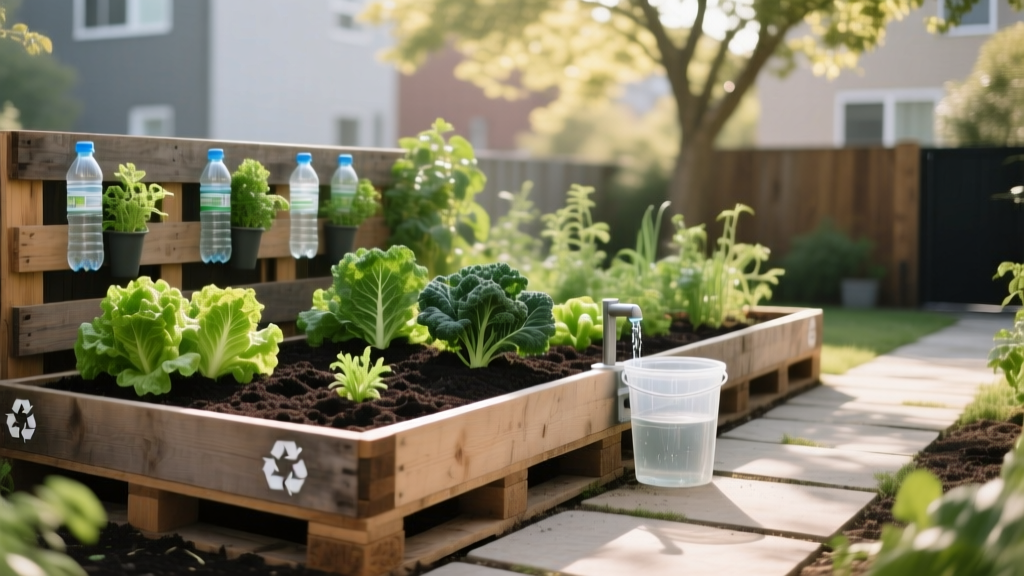
Example: If you’re offered “old deck boards,” pass unless you know they’re untreated. Instead, use free heat-treated pallets stamped HT (not MB), then line the inside with thick cardboard to slow soil contact.
Tip: Don’t Use Glossy Cardboard or Colored Print Under Beds
Plain brown cardboard is a garden MVP; glossy packaging is not. The coatings and heavy inks on shiny boxes can break down slowly and unpredictably. If you’re sheet-mulching under a raised bed, aim for 2–3 layers of plain cardboard overlapped like shingles, then soak it so it molds to the ground and doesn’t wick moisture from your soil.
Example: Moving boxes + shipping cartons = great. Frozen pizza boxes and glossy retail packaging = leave them out of the bed build and put them in regular recycling.
Tip: Verify Compost and Manure Sources (Especially “Free” Loads)
“Free horse manure” can be expensive if it carries persistent herbicides that stunt tomatoes and beans for seasons. Ask if the animals were fed hay from sprayed fields or if the bedding includes grass clippings from treated lawns. If you can’t verify, do a quick bioassay: plant beans in a pot of the compost mix and a pot of known clean soil—if the compost pot shows twisted growth in 10–14 days, don’t use it in food beds.
Source note: Persistent herbicide contamination in compost and manure is a documented issue in home gardens; multiple extension services provide bioassay testing guidance (e.g., Washington State University Extension, 2019).
Build the Bed Frame From “Waste” Without Building a Wobble
Tip: Pallet Wood Works Best as Cladding, Not Structure
Pallet boards are usually thin and split-prone, so treat them like siding. Build a strong frame from thicker salvaged lumber (or even new 2x lumber if needed), then screw pallet slats onto the outside for the recycled look. Use exterior screws (not nails) so you can tighten things up after seasonal swelling and shrinkage.
Example: A 4x8 bed can be framed with 2x8s, then faced with pallet slats for free—saving the aesthetic without relying on pallet wood to hold hundreds of pounds of wet soil.
Tip: Cinder Blocks Make Fast Beds—But Cap the Holes Intentionally
Cinder blocks (technically concrete masonry units) create instant raised beds and double as small planting pockets. The trick is deciding what the hollow cells are for: fill some with soil for herbs, and cap others with scrap pavers or bricks where you want a stable stepping edge. A common layout is a 4 ft x 8 ft bed with blocks perimeter-only—no mortar, just leveled ground.
Example: Fill the sunny side holes with thyme and oregano; cap the shaded side holes so you’re not watering empty pockets all summer.
Tip: Stock Tanks Are a “Pay Once, Cry Once” Recycled Look
Used galvanized stock tanks can be found secondhand and last years, but don’t skip drainage. Drill 10–15 holes of 1/2 inch diameter in the bottom, set the tank on bricks or 2x4 runners, and add a thin layer of coarse wood chips to keep holes from clogging. It’s a great option when you want height without building a tall wooden frame that will bow.
Cost reality: A used tank might run $60–$150 depending on size and local demand; compare that with new cedar beds that can hit $200+ for similar footprint.
Fill Smarter (and Cheaper): Recycling “Bulk” Into Raised Beds
Tip: Use a Layered Fill Strategy to Cut Soil Costs by Half
Buying bagged raised-bed mix for a whole bed is a wallet-buster. For a 4x8x12-inch bed you need about 32 cubic feet (roughly 1.2 cubic yards) of fill. Instead, put bulky recycled material in the bottom third, then reserve your best soil mix for the top 8–10 inches where roots actually feed.
Example: Bottom: sticks and small logs. Middle: half-finished compost + leaves. Top: a blend of compost and topsoil. You’ll still get strong growth, and you’re not paying premium prices for the part roots won’t use.
Tip: Do “Mini Hugelkultur” With Pruned Branches and Logs
Woody debris is free bed volume. Lay branches and logs in the bottom, then pack gaps with chopped leaves and a shovel of soil to inoculate microbes. Expect settling—plan for a 2–4 inch drop over the first season as materials break down and knit together.
Source note: Wood decomposition ties up nitrogen temporarily; balancing with nitrogen-rich materials is a standard composting principle described by USDA composting guidance (USDA NRCS, 2011).
Tip: Balance Carbon and Nitrogen So Your Bed Doesn’t “Steal” Fertility
If you add a lot of dry leaves, shredded cardboard, or wood chips, offset that carbon with nitrogen so microbes don’t rob your plants. A practical ratio is 2 parts “brown” (dry leaves/cardboard) to 1 part “green” (fresh grass clippings, coffee grounds, kitchen scraps compost). Top it with your planting mix so seedlings start in a stable zone.
Example: Cleaning the yard in fall? Use two contractor bags of dry leaves and one bag of fresh clippings (if you know they’re herbicide-free), then cap with 8 inches of soil.
Tip: Use Leaf Mold as a Water-Saving Ingredient (Not Just Mulch)
Leaf mold is decomposed leaves, and it’s like a sponge in raised beds. Work in a 2-inch layer into the top 8 inches of soil to improve moisture retention without making things muddy. It’s especially helpful in beds that dry out fast, like those on patios or against south-facing walls.
Example: If you’ve got oak leaves, corral them in a wire ring, keep them moist, and in 6–12 months you’ll have dark, crumbly leaf mold for free.
Recycle as Mulch and Pathways (So You Weed Less)
Tip: Cardboard + Wood Chips Beats Fabric for Paths
Landscape fabric often becomes a weedy mess once soil and seeds settle on top. For paths, lay cardboard (overlap by 6 inches), soak it, then add 3–4 inches of arborist wood chips. You get a soft walkway, fewer weeds, and the cardboard disappears without leaving shreds to pull later.
Example: Ask a local tree crew for a chip drop—often free—and use it for every path between beds. Your knees and your weeding schedule will thank you.
Tip: Use Grass Clippings Only If They Pass the “No Spray” Test
Grass clippings are nitrogen-rich and great as a thin mulch, but only if the lawn hasn’t been treated with herbicides or “weed-and-feed.” Apply in thin layers—1 inch at a time—so it doesn’t mat into a smelly blanket. Let clippings dry for a day in the sun before spreading if they’re lush and wet.
Example: A neighbor offers bagged clippings: ask when they last applied weed control. If they can’t tell you, skip it and use leaves instead.
Compost, Worms, and Kitchen Scraps: Recycle Without Inviting Critters
Tip: Put a “Compost Pocket” in One Corner of the Bed
If you don’t want a full compost bin, designate a 12-inch square pocket in a bed corner. Bury vegetable scraps 8 inches deep, cover with soil, and rotate the pocket around the bed each month. Avoid meat, dairy, and oily foods—those are the critter magnets.
Example: In a tomato bed, bury chopped cucumber peels and coffee grounds in the far corner; by the time roots reach that zone, it’s mostly broken down.
Tip: Add Worm Castings Like a Spice, Not the Main Dish
Worm castings are powerful but pricey. A little goes a long way: mix castings at 10–20% of the planting zone volume or add 1 cup per transplant hole for heavy feeders. If you vermicompost at home, you can stretch your castings by blending with finished compost 1:3.
Example: Planting peppers? Put a half-handful of castings under each transplant and cover with soil—roots find it fast without burning.
“Compost improves soil structure, increases water-holding capacity, and supports beneficial soil organisms—benefits that are especially noticeable in raised beds that dry quickly.” — University of Minnesota Extension, 2020
Comparison Table: Best Recycled Fill Options (and When to Use Them)
| Recycled material | Best use in raised beds | Watch-outs | Typical cost |
|---|---|---|---|
| Plain cardboard | Weed barrier under beds; path base | Avoid glossy/coated boxes; overlap 6 inches | Free |
| Arborist wood chips | Paths; mulch around perennials (not mixed into topsoil) | Keep off seedling stems; refresh yearly | Often free (chip drop) to $30–$50/yd |
| Leaves / leaf mold | Soil amendment; moisture retention | Shred thick leaves for faster breakdown | Free |
| Branches/logs (mini hugel) | Bottom third filler; long-term sponge | Expect 2–4 inch settling; add nitrogen above | Free |
| Finished compost | Top 8–10 inches; planting zone | Verify source; consider herbicide bioassay | $35–$70/yd bulk (varies) or $5–$10/bag |
Three Real-World Scenarios (So You Can Copy What Works)
Scenario: The “New House, Ugly Clay” Bed That Settled Too Much
A homeowner built two 4x8 beds and filled them with half sticks and half bagged soil, then planted immediately. By midsummer the beds had sunk nearly 5 inches and the plants looked hungry. The fix was simple: top-dress with 2 inches of finished compost, add a light nitrogen boost (like blood meal at label rates), and plan to refill each spring until the wood layer stabilizes.
Steal this move: When you use woody fill, budget for a spring “top-off” of about 4–6 cubic feet of compost per 4x8 bed for the first year or two.
Scenario: The Patio Gardener Who Needed Height Without Lumber
An apartment gardener wanted a raised bed on pavers where wood would rot fast and drilling into the ground wasn’t possible. They found a used stock tank for $80, drilled drainage holes, and filled the bottom third with upside-down nursery pots and chunky sticks to save soil volume. The result: deep roots, fewer backaches, and a container that didn’t warp.
Steal this move: If you’re filling a tall container, use “clean air space” volume like upside-down pots only in the bottom 6–8 inches, then cover with landscape cardboard so soil doesn’t wash down and plug drainage.
Scenario: The Community Garden Bed Built From Blocks and Leaf Mold
A community plot used cinder blocks because lumber kept disappearing. They sheet-mulched with 3 layers of cardboard, filled with a bulk topsoil/compost blend, then mixed in homemade leaf mold to keep watering manageable during hot weeks. They also planted herbs in block holes, which acted like living mulch at the bed edges.
Steal this move: If you’re gardening where theft or damage is common, heavy materials like blocks and stone are low-drama—and they don’t need power tools on-site.
Small Hacks That Make Recycled Raised Beds Work Better
Tip: Pre-Soak Dry Fill Materials Before You Add Good Soil
Dry leaves, cardboard, and wood can wick moisture from the soil layer above—right when seedlings are trying to get established. Soak those layers with a hose until water is pooling slightly, then add your top mix. This one step can save you from daily watering for the first two weeks.
Example: If you’re building in late spring, fill the bed halfway, soak for 5–10 minutes, wait an hour, then top off and soak again.
Tip: Use a Simple, Repeatable Soil Blend for the Top Layer
The easiest “raised bed math” is a 50/50 blend: half screened topsoil and half finished compost for the top 8–10 inches. If your compost is rich and dense, cut it back to 1/3 compost and add 2–3 inches of leaf mold for texture. You want a mix that drains but doesn’t turn into sand by July.
Source note: Many extension services recommend incorporating compost to improve soil physical properties and nutrient availability; see Oregon State University Extension compost guidance (2018) for practical home garden use.
Tip: Line Wooden Beds to Extend Life—But Don’t Trap Water
If you’re using salvaged wood, protect it from constant wet soil contact. Staple cardboard to the inner walls as a sacrificial layer, or use a breathable landscape felt (not plastic sheeting) so water can move out instead of rotting boards from the inside. Leave the bottom open to native soil unless you’re on contaminated ground.
Example: A bed built from reclaimed fence boards can last several extra seasons if you replace the cardboard liner each spring when you top up compost.
Tip: Put the “Best Stuff” Where Roots Actually Live
Most vegetables do their heavy feeding in the top foot of soil. That’s why recycled filler belongs low, and your nicest compost belongs high. If you’re planting shallow-rooted crops like lettuce and radishes, prioritize the top 6–8 inches even more and keep woody fill deeper.
Example: Building a 24-inch-tall bed for greens? You can still reserve the top 10 inches for premium mix and use leaves/branches below—just expect settling and top off as needed.
Tip: Time Your “Free Materials” Seasonally for Maximum Payoff
The cheapest raised bed is the one you build when materials are abundant. Collect leaves in fall, ask for wood chips after storm season, and source cardboard after holiday shipping spikes. If you start a leaf mold pile in October, you’ll have usable material by spring planting or at least by midsummer to keep beds from drying out.
Example: Set a reminder for the first week of November: gather 10–20 bags of leaves from neighbors (only if they don’t spray), and you’ve just banked next year’s bed amendment.
Recycling in raised beds isn’t about cramming in as much “free” stuff as possible—it’s about using each material like a tool. Put the bulky, slow stuff down low, keep the clean, nutrient-rich mix where plants can reach it, and be picky about anything that could carry chemicals. Do that, and your raised bed won’t just be cheaper—it’ll be easier to manage, easier to water, and a lot more productive season after season.