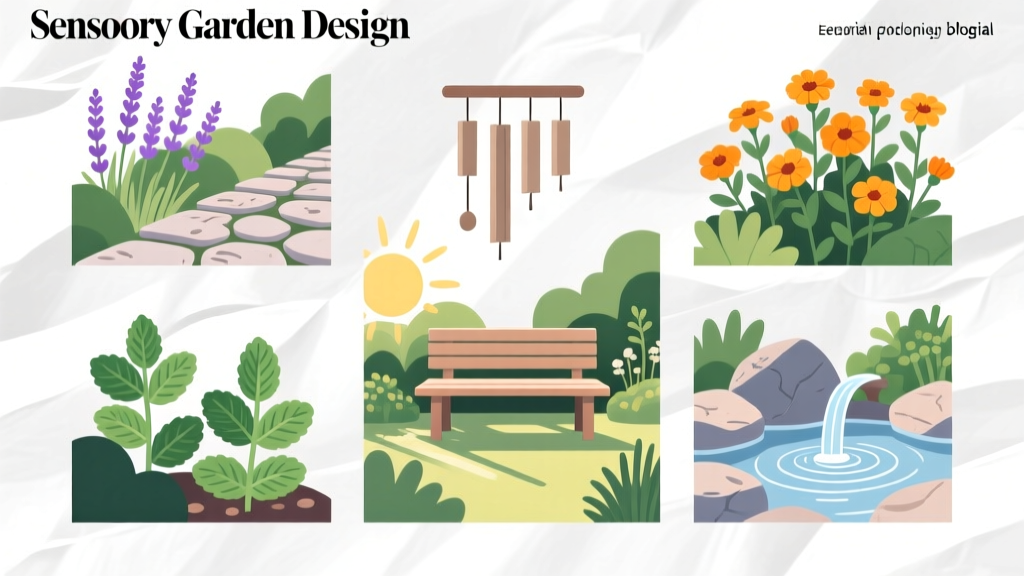
7 Garden Hacks for Sensory Garden Design
The most common sensory-garden mistake isn’t “forgetting the fragrant plants.” It’s accidentally designing a look-only garden: pretty from the patio, but flat up close—no rustle, no squeeze-and-smell, no “run your fingers along this” moments. A good sensory garden isn’t bigger or fussier; it’s just built with a few smart shortcuts that make every square foot do double-duty.
Below are seven field-tested hacks that sensory-garden folks use to get richer sound, scent, touch, taste, and visual contrast—without turning your yard into a high-maintenance project.
Start With the “Reach & Repeat” Layout (So People Actually Touch Things)
1) The 18–24 Inch Reach Rule (and the 36-Inch Loop Path Hack)
If people can’t comfortably reach a plant, they won’t interact with it—especially kids, older adults, or anyone using a mobility aid. Keep the most touchable/smellable plants within 18–24 inches of the path edge, and build at least one “loop” path that’s 36 inches wide so two people (or a wheelchair and a helper) can pass without turning sideways.
Example: In a small front yard, run a simple loop with compacted gravel and place lavender, thyme, and lamb’s ear in a ribbon right along the edge; put taller stuff (like ornamental grasses) behind it so the best sensory plants are never “trapped” in the back.
2) Cheap Raised “Touch Bars” Using Half-Logs or 2x10s
Raised beds are great, but building full boxes gets expensive fast. For a quick reach-friendly touch zone, edge a planting strip with 2x10 boards or half-logs to create a raised “touch bar” that’s about 9–10 inches tall—enough to lift plants into easy reach and keep soil from spilling onto paths.
Cost hack: A simple 8-foot run of pressure-treated 2x10 is often $12–$20 depending on region, versus $60+ for a full raised bed kit. Fill the strip with a tough sensory mix: lamb’s ear, creeping thyme, and calendula for soft, fragrant, and colorful payoff.
Build Sensory “Stations” Instead of Random Plants
3) The 3-Plant Scent Stack (Top/Middle/Bottom) That Works in a 2x2 Foot Patch
Scent gets diluted when fragrant plants are scattered. The hack is to stack fragrance at different heights so you smell it as you walk by, bend down, or brush past. In one 2x2 foot area, use a simple “top/middle/bottom” trio: one upright plant, one mid-height, one groundcover.
Try this combo: rosemary (top), lavender (middle), creeping thyme (bottom). Plant them 12–18 inches apart so air moves through, then lightly brush the plants when you’re watering or weeding—fragrance releases best when leaves are warmed and touched.
Real-world scenario: A renter with only a tiny patio can mimic this by stacking pots: a 12-inch pot with rosemary behind an 8–10 inch pot of lavender, with a shallow bowl planter of thyme in front. It’s a full scent station in under 6 square feet.
4) “Touch-Texture Trios” to Stop the Garden From Feeling Monotone
Most gardens accidentally repeat the same texture (smooth leaves, same flower shape), so touch becomes boring. Pick three textures that contrast hard: one fuzzy/soft, one rubbery/waxy, and one structural/spiky—but keep spiky plants set back 12 inches from the path so nobody gets poked.
Example trio: lamb’s ear (soft), sedum ‘Autumn Joy’ (waxy), and blue fescue or fountain grass (structural). Put a small sign that literally tells people “touch me” near the soft plant—people often need permission.
Sound & Movement Without Wind Chimes (Because Plants Can Be Noisy Too)
5) The “Rustle Zone”: Plant Grasses in a Tight Clump, Not a Line
For sound, many gardeners hang chimes… then realize they’re annoying at 2 a.m. Plants can do it better. Instead of a row of grasses, plant 3 of the same grass in a tight triangle, spaced about 18 inches apart; that clump amplifies rustle as blades brush each other.
Good picks: little bluestem, switchgrass, or fountain grass (choose non-invasive species for your region). Add one broad-leaf “clapper” plant nearby (like canna or hardy banana in warm zones) so wind makes different sounds, not just one.
Case example: In a windy corner that previously felt harsh, a 3-grass clump plus a single large-leaf plant turned it into a calming sound pocket—no hardware required.
“Landscape plants can reduce stress and support well-being by shaping how people experience a space—through sight, sound, and comfort.” — Texas A&M AgriLife Extension, Horticultural Therapy and the Benefits of Plants (2020)
Get the Soil and Water Right (So Sensory Plants Smell Strong and Feel Good)
6) The Fast Soil “Squeeze Test” + One-Bucket Compost Ratio
Sensory plants lose fragrance and softness when soil stays soggy or becomes concrete-hard. Do the squeeze test: grab a handful of damp soil and squeeze—if it forms a tight ball that doesn’t crumble with a poke, you need drainage; if it falls apart like dust, you need organic matter. A simple fix is to top-dress with compost at a consistent ratio: spread 1 inch of compost over the bed each spring (roughly 0.6 cubic feet per 10 square feet), then lightly rake it in.
DIY alternative: If you don’t have compost, use shredded leaves (“leaf mold in progress”). Even half-finished leaf breakdown improves texture and reduces crusting. For small gardens, one 5-gallon bucket of compost covers about 6–8 square feet at a light top-dress.
Source note: Cornell University Cooperative Extension emphasizes compost and organic matter for improving soil structure and water-holding capacity (Cornell Cooperative Extension, compost/soil resources, 2019).
Comparison Table: Two Low-Fuss Ways to Keep Sensory Beds Evenly Moist
| Method | Upfront cost (typical) | Best for | Hack to make it easier |
|---|---|---|---|
| Soaker hose under mulch | $15–$35 for 25–50 ft | In-ground beds, long borders | Pin it down with landscape staples every 3 ft so it doesn’t snake around. |
| Drip line with 1 GPH emitters | $30–$60 starter kit | Raised beds, containers, mixed plantings | Use a battery timer and run 20–30 minutes early morning 2–3x/week to stabilize moisture. |
Real-world scenario: For a school sensory garden, a soaker hose under 2–3 inches of mulch kept the bed consistent through summer break. The “touch plants” stayed soft instead of crisping up, and staff weren’t dragging sprinklers around.
Make It Safe and Kid-Proof Without Killing the Fun
7) The “Bite-Safe + Pick-Often” Edible Strip (and a Rule for Avoiding Yucky Tastes)
Taste is a powerful sensory element, but it needs guardrails. Make one clearly designated edible strip—about 12 inches wide—right along the path, and plant only familiar, snackable items (strawberries, mint in a pot, basil, cherry tomatoes). Here’s the rule that prevents disappointing bites: if it doesn’t taste good raw and right off the plant, don’t put it in the taste zone.
Example: Edge a path with alpine strawberries (spaced 10–12 inches apart) and tuck basil every 12 inches between them. Put mint in a container sunk into the soil so it doesn’t run—an inexpensive 1-gallon nursery pot works fine.
Case example: A family with toddlers used a single “yes” strip: strawberries + basil + sugar snap peas on a short trellis. Kids learned what they could pick without asking, and the rest of the garden stayed intact.
Safety note: If the garden is for public/community use, label edible plants clearly and avoid anything with confusing look-alikes. Your local extension office often has region-specific guidance on plant safety and edible landscaping.
Bonus Micro-Hacks That Multiply Sensory Impact (Use These Anywhere)
These aren’t full tips on their own, but they’re the little moves that make the seven hacks work better in real yards.
Use “hand-level signs”: Place small labels about 24–30 inches high that say “Rub leaves to smell” or “Touch the soft leaves.” Interaction goes way up when people are invited.
Mulch for touch comfort: If people will kneel or sit near touch plants, use a softer mulch (fine bark or leaf mulch) in that zone. Keep it about 2 inches deep so it cushions without burying low plants like thyme.
Night scent timing: Add at least one evening-fragrant plant near a bench or window. Many fragrant species release more scent in the evening; placing them within 6–10 feet of where you actually sit makes the difference between “I planted it” and “I smell it every night.” (A classic example is night-blooming jasmine in suitable climates or nicotiana in many annual beds.)
One cheap seat changes everything: A sensory garden gets used more when there’s a place to pause. Even a $25–$40 folding garden bench or a flat stone seat turns a path into an experience zone—especially near the rustle clump or scent stack.
Three Quick “Put It Together” Layouts (Steal These)
Scenario 1: Small suburban front bed (6x10 feet). Run a simple 36-inch gravel path loop that returns to the sidewalk. Line the edge with a 12-inch edible strip (strawberries + basil), place a 2x2 scent stack near the mailbox (rosemary/lavender/thyme), and install one tight rustle clump (3 grasses) at the back corner for sound.
Scenario 2: Apartment balcony (8x4 feet usable space). Use vertical layering instead of ground space: one tall pot for rosemary, one medium pot for lavender, a shallow bowl for thyme at the front, and a pot of lamb’s ear specifically labeled “touch.” Add a small saucer fountain if allowed (often $20–$35) or skip it and rely on the rustle of grasses in a narrow container.
Scenario 3: Community/school sensory bed (one 4x12 foot strip). Build touch bars with 2x10s, keep everything within a 24-inch reach, and plant in stations: a soft-touch trio at one end, a scent stack in the middle, and a bite-safe strip on the path edge. Put irrigation on a timer set for 20–30 minutes early morning to reduce staff workload and keep plants consistent during breaks.
Two Credible Notes to Keep You Grounded
1) If you’re designing specifically for therapeutic use (memory care, rehab spaces, autism-friendly areas), you’ll find strong support for plant-centered environments improving mood and perceived well-being. Kansas State University’s horticultural therapy resources discuss measurable benefits of plant interaction and purposeful garden activity (Kansas State University, Horticultural Therapy program materials, 2021).
2) For soil performance and long-term plant health—which directly affects scent intensity, leaf softness, and flowering—extension services consistently recommend adding organic matter like compost to improve soil structure (Cornell Cooperative Extension, 2019; Texas A&M AgriLife Extension, 2020).
Once you build a sensory garden around reach, stations, and one or two smart infrastructure choices (like a loop path and low-fuss watering), the plants do most of the work. The fun part is watching people interact: the kid who keeps rubbing thyme, the neighbor who pauses by the rustle clump, the friend who finally notices that lavender smells different at sunset.