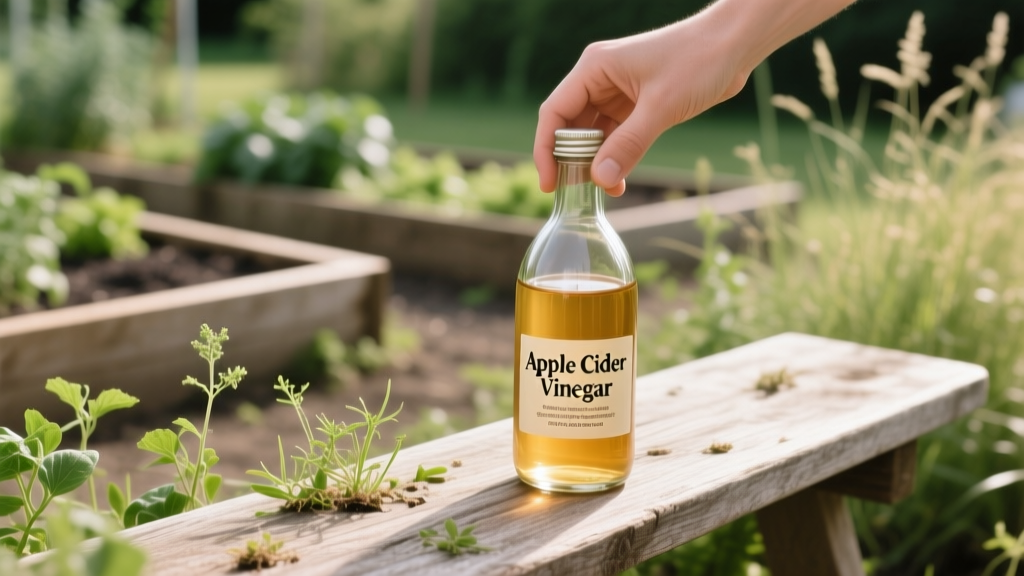
Vinegar as a Natural Herbicide: Tips and Limits
Most people get vinegar “weed killer” wrong in the same way: they treat it like a magic potion that kills weeds roots and all. Household vinegar usually only burns the green parts it touches—so the weed looks dead on Day 1, then pops right back up from the crown or roots a week later. If you know that going in, vinegar becomes a genuinely useful tool… just not for every weed, and definitely not for every spot in your yard.
Let’s turn vinegar into a reliable shortcut—without accidentally nuking your patio plants, staining your pavers, or learning the hard way that “natural” can still be harsh.
Know what vinegar can (and can’t) do
Tip: Treat vinegar like a “leaf burn” tool, not a root killer
Vinegar (acetic acid) works as a contact herbicide—it desiccates leaf tissue fast, especially in sun. It’s best on young annual weeds with shallow roots (think chickweed, young crabgrass, small spurge). Extension guidance notes that vinegar is inconsistent on established perennials and often requires repeat applications because it doesn’t reliably kill roots (University of Maryland Extension, 2023).
Example: A 2-inch-tall seedling dandelion might brown in hours but often regrows from the taproot; a 1-inch purslane patch may collapse and not return if you catch it early.
Tip: Match vinegar strength to the job (and your risk tolerance)
Regular white vinegar is typically 5% acetic acid. “Horticultural” vinegar is commonly 20%—about four times stronger and much more likely to burn skin and eyes. Oregon State University Extension warns that higher-concentration vinegar can cause serious burns and needs careful handling (OSU Extension, 2019).
Example: Use 5% for small seedlings in driveway cracks; reserve 20% for stubborn young weeds in gravel—only when you can keep spray off anything you want to keep alive.
Tip: Aim at the weeds you actually have—annual vs. perennial
Vinegar shines on annuals before they flower and seed. On perennials (dandelion, thistle, bindweed), expect “top kill” only, meaning you’ll be repeating treatment or switching tactics. If you’re fighting perennials, vinegar is better as a knock-back step before digging, solarizing, or smothering.
Example: Spray thistle rosettes to reduce spines and make pulling safer the next day—then dig the crown out.
Mixing and applying vinegar the way it actually works
Tip: Spray at the right time: bright sun, warm temps, calm air
Vinegar works best when it can dry quickly and concentrate on the leaf—think midday sun and 60–85°F conditions. Avoid windy days; drift is how “weed killer” ends up as “why is my rose bush crispy?” If rain hits within 6 hours, you may lose a lot of the effect and need a redo.
Example: If your forecast shows a dry window from 11 a.m. to 6 p.m., spray around noon and let the sun do the heavy lifting.
Tip: Use a tight stream, not a fog—precision beats coverage
A fine mist feels satisfying, but it drifts and lands on nearby plants. Use an adjustable sprayer set to a coarse stream or “jet,” and aim low. For weeds hugging ornamentals, a foam paintbrush or sponge dab is slower but ridiculously safe.
Example: Dabbing vinegar onto oxalis in a succulent bed targets the weed without spot-burning your echeverias.
Tip: Add a surfactant only if you understand the trade-off
A tiny amount of dish soap helps vinegar stick to waxy leaves, but it also increases the chance of damaging nearby plants if you drift. If you do it, keep it minimal: 1 teaspoon (5 mL) of dish soap per 1 quart (1 L) of vinegar is plenty. Too much soap can create runoff that spreads the burn where you don’t want it.
Example: Clover leaves bead water; a small soap addition helps the vinegar wet the leaf surface instead of sliding off.
Tip: Skip the salt “hack” unless you’re treating a no-plant zone
Salt plus vinegar is popular online because it looks dramatic—but salt can linger and create long-term soil problems, especially near beds. If you want plants to grow there later, avoid salting the soil. Reserve salt blends for places you truly want sterile, like a gravel strip where nothing should grow for a while.
Example: Along a fence line beside your vegetable bed? Vinegar only. Between pavers where you never want green? Salt may be acceptable—just keep it contained.
Tip: Use the “two-pass” method for tougher weeds
For weeds bigger than a few inches, one spray often isn’t enough. Hit them once, wait 24–48 hours, then spray any surviving green tissue again. This is especially useful on sprawling weeds where the first spray misses shaded leaves.
Example: A patch of young crabgrass in the driveway usually needs a second pass because some blades hide under others on Day 1.
“Household vinegar can burn down young weeds, but it’s not selective and it generally doesn’t move into roots the way systemic herbicides do—repeat treatments are often needed.” — Extension guidance summarized from University of Maryland Extension (2023) and OSU Extension (2019)
Where vinegar fits best (and where it’s a bad idea)
Tip: Treat hardscapes, not garden beds, as your vinegar sweet spot
Cracks in sidewalks, gravel driveways, patio edges, and curb lines are ideal because there’s less collateral damage. In beds, drift and splash are constant risks, and soil contact can stress nearby roots. Think of vinegar as a hardscape maintenance tool, not a bed-weeding replacement.
Example: Spray the weeds in your paver joints, then follow up by sweeping polymeric sand into the joints to slow regrowth.
Tip: Keep vinegar away from tree roots and desirable groundcovers
While vinegar is mainly contact-based, repeated applications in the same spot can affect surrounding plants, especially if runoff reaches their root zone. Avoid spraying near shallow-rooted ornamentals and newly planted perennials. If you must treat nearby weeds, switch to dabbing or physical removal.
Example: Under a Japanese maple with surface roots? Hand-pull or sheet-mulch—don’t broadcast vinegar there.
Tip: Don’t use vinegar on poison ivy or large woody weeds—use containment tactics
Poison ivy and woody seedlings often shrug off vinegar and regrow. For these, prioritize protection and removal: long sleeves, gloves, and bagging vines; or cut-and-cover methods (like tarping). Vinegar can help brown small poison ivy leaves, but it’s not reliable control, and you still risk skin exposure while you celebrate too early.
Example: For poison ivy creeping under a fence, tarp the area and weigh it down for several weeks rather than trying to “spray it away.”
Real-world scenarios (with tactics that actually save time)
Scenario 1: Driveway cracks that green up every 10 days
Tip: Spray vinegar, then block the light
Vinegar is great for the quick burn-down, but the long-term win is preventing new seedlings. After the weeds brown, scrape out the dead material and refill cracks with polymeric sand or a crack filler. Budget-wise: a gallon of 5% vinegar often runs around $3–$5, while a bag of polymeric sand might be $20–$35—but it can reduce weeding cycles dramatically.
Example: If you’re spraying every weekend, doing one vinegar pass plus joint refilling can turn it into a once-a-month check instead.
Scenario 2: Gravel path weeds where string trimmer throws rocks
Tip: Use 20% vinegar carefully—or stay with 5% and repeat
On gravel, vinegar is safer than flame weeding in fire-prone seasons and less annoying than a trimmer. If you go stronger, treat it like a chemical: goggles, gloves, long pants, and a calm day. Many gardeners find two 5% applications cost less and feel safer than one 20% application.
Example: Spray 5% on Saturday at noon, again Monday afternoon, then rake gravel to bury any new sprouts.
Scenario 3: Weeds in a veggie garden bed (where vinegar can go very wrong)
Tip: Swap vinegar for sheet-mulch “lasagna” patches
Vinegar doesn’t know a weed from a lettuce seedling. In beds, you’ll save more time (and crops) using cardboard plus mulch: overlap cardboard by 6 inches, wet it, then add 2–4 inches of straw or shredded leaves. It’s cheap—often free cardboard—and it improves soil over time rather than risking leaf burn on your tomatoes.
Example: For a weedy corner around squash vines, slide cardboard under the leaves and mulch on top; you’ll choke weeds without spraying near food plants.
Comparison table: Vinegar vs other quick weed tactics
| Method | Best use | Speed of visible results | Root kill? | Typical cost | Big watch-out |
|---|---|---|---|---|---|
| 5% household vinegar | Young weeds on hardscapes | 2–24 hours | Usually no | $3–$5 per gallon | Drift burns nearby plants |
| 20% horticultural vinegar | Stubborn young weeds in gravel | 1–12 hours | Sometimes top-kill only | $20–$35 per gallon | Skin/eye burns; treat as hazardous |
| Boiling water | Paver cracks, small patches | Immediate wilt | Sometimes (small weeds) | Low (energy cost) | Scald risk; may crack some surfaces |
| Flame weeder | Gravel/hardscape (low fire risk) | Immediate wilt | No (unless repeated) | $30–$60 tool + fuel | Fire hazard; local restrictions |
| Mulch/cardboard | Garden beds, around shrubs | 1–3 weeks | Yes (smothers) | Often free–$20 | Needs thickness; can hide slugs |
Make vinegar safer and more predictable
Tip: Treat 20% vinegar like a serious product (because it is)
At 20%, acetic acid can cause burns—so gear up: gloves, closed shoes, long sleeves, and eye protection. Mix and pour outdoors, and label your sprayer so it doesn’t become your “fertilizer sprayer” later. OSU Extension (2019) specifically cautions about the hazards of high-concentration vinegar and the need for protective equipment.
Example: Keep a dedicated 1-gallon pump sprayer marked “VINEGAR ONLY” so no one accidentally sprays it on seedlings.
Tip: Use a spray shield when weeds are close to ornamentals
A piece of cardboard, a plastic cutting board, or a purpose-made spray shield blocks drift instantly. Hold the shield between the weed and the plant you like, then spray downward. This one trick turns “too risky” spots into manageable ones.
Example: Weeds at the base of hydrangeas: shield the stems, spray the weed leaves only, and keep the nozzle low.
Tip: Don’t spray on porous stone you care about
Vinegar can etch or dull some stone surfaces over time, and repeated applications may change the look of certain pavers. Test a hidden spot first and wait 24 hours to see if there’s discoloration. If you’re maintaining expensive natural stone, boiling water or careful hand removal may be the safer “cheap” option.
Example: On limestone edging, vinegar can cause a chalky look—spot test before you commit.
Money-saving tricks (and when vinegar is the expensive choice)
Tip: Price out “repeat sprays” vs. one-time fixes
Vinegar feels cheap until you’re buying it every week. If you’re spraying the same strip repeatedly, investing in prevention (polymeric sand, edging, thicker mulch) often wins on cost and time. As a rough comparison: using 1 gallon per month at $4 is ~$48/year—more than a couple of bags of mulch that can suppress weeds for a season.
Example: If the same sidewalk edge keeps sprouting, install a physical barrier or refresh the joint fill instead of treating symptoms.
Tip: Buy vinegar by the gallon for routine hardscape touch-ups
For 5% vinegar jobs, gallon jugs are usually the best value. Keep one jug and a small labeled bottle for refills, and you’ll avoid buying tiny “weed killer vinegar” products that cost more per ounce. Save the specialty purchases (like 20%) for situations where you truly need the extra burn-down power.
Example: A $4 gallon jug can handle multiple spot treatments on a modest patio; a boutique spray can cost $10+ for far less volume.
DIY alternatives when vinegar isn’t the right tool
Tip: Use boiling water for tiny weeds in joints (fast, no chemical storage)
Boiling water is brutally effective on little joint weeds and moss, and it’s basically free if you’re already heating water. Pour slowly and aim carefully; it works best when weeds are small and isolated. This is a great option when you don’t want to store or spray anything.
Example: After making pasta, take the kettle outside and hit the tuft of oxalis in the walkway joint—gone by evening.
Tip: Try “occultation” (tarping) for weedy areas you can’t keep up with
For a neglected patch, cover the area with a dark tarp or silage plastic and weigh the edges down. Leave it for 4–8 weeks in warm weather to starve weeds of light, then replant or mulch. It’s a bigger move than vinegar, but it saves you from endless re-spraying.
Example: A side yard strip that’s become a weed nursery: tarp it during summer, then lay cardboard + mulch in fall.
Tip: For deep-rooted perennials, go mechanical first—then use vinegar as cleanup
If you’re dealing with taproots or rhizomes, dig or pull right after rain when soil is soft, then use vinegar to spot-burn any tiny regrowth you missed. This “mechanical first” approach cuts vinegar use and improves results because you’re not asking vinegar to do a job it’s not built for.
Example: After digging dandelions, you’ll often see little crowns you missed; a careful dab of vinegar can knock those back while you monitor.
Common mistakes that cause the “vinegar doesn’t work” complaint
Tip: Don’t spray tall weeds and expect miracles
Tall weeds have more stored energy and usually deeper roots. If you want vinegar to matter, mow or trim first, then spray the tender regrowth when it’s 2–4 inches tall. You’ll get a faster burn and need fewer repeats.
Example: Cut down a patch of lambsquarters, wait for fresh leaves, then spot-spray on a sunny day.
Tip: Don’t spray once and walk away—plan a follow-up check
Vinegar rewards gardeners who revisit the site. Put a reminder on your phone for 3 days after spraying and again at 10 days. Catching regrowth early keeps you from needing bigger interventions later.
Example: If you see green tips at Day 3, you’ll know to do a second pass before the weed rebounds.
Tip: Don’t assume “natural” means harmless to soil life or plants
Acids can stress plants, and repeated applications in the same place can shift conditions at the soil surface. The biggest practical issue is still non-selectivity: vinegar will burn whatever it touches. Use it like a scalpel, not a broadcast fertilizer-style spray.
Example: A quick driveway spray that drifts onto the edge of your lawn can leave a brown scallop that takes weeks to grow out.
Vinegar is best when you treat it as a precise, sunny-day, hardscape tool—and pair it with prevention so you’re not stuck in a spray-repeat cycle. If you keep your expectations realistic (leaf burn, not root annihilation), it becomes one of those handy garden “cheats” you’ll reach for all season, right alongside cardboard, mulch, and a good old weeding knife.
Sources: Oregon State University Extension (2019); University of Maryland Extension (2023).