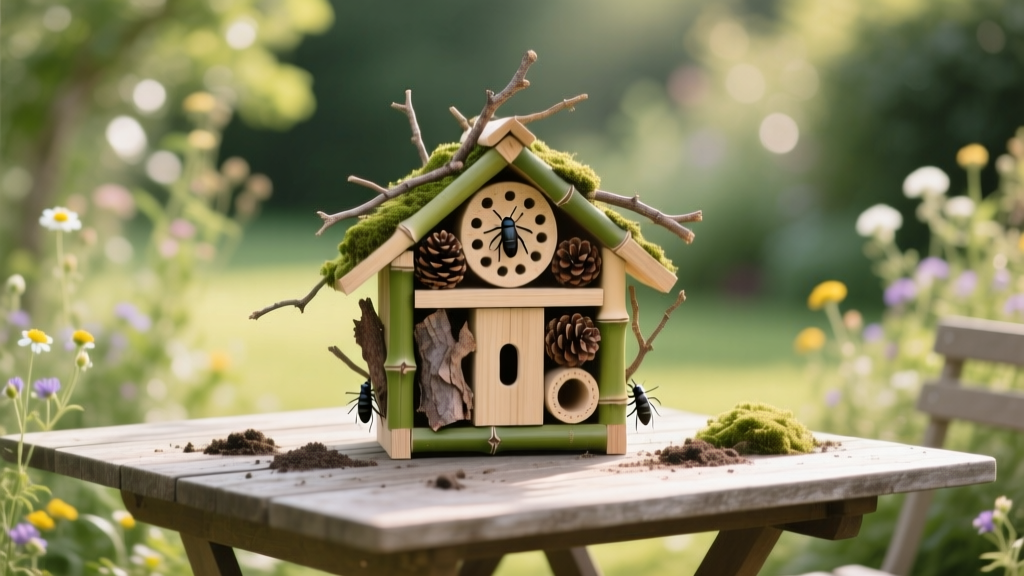
Making a Bug Hotel from Natural Materials
The most common “bug hotel” mistake isn’t the design—it’s the location. People tuck them in deep shade “to keep it moist,” then wonder why nothing moves in. Most beneficial insects want warmth, dry cavities, and a stable structure, not a damp sponge that grows mold and becomes a slug lounge.
A good bug hotel is basically a tiny apartment block with different room sizes, built from natural materials that stay dry and don’t wobble. Below are practical shortcuts that make the difference between a cute garden ornament and a real insect nursery that boosts pollination and natural pest control.
Start with the site: placement hacks that actually get tenants
Put it in morning sun, not full shade
Aim for 4–6 hours of sun, ideally morning to early afternoon, so cavities warm up quickly and dry after dew. Warm nesting spots are especially important for solitary bees, which are more active when their nests heat up. Example: mount the hotel on an east- or southeast-facing fence panel rather than under a dense shrub canopy.
Get it off the ground—higher than you think
Mount your bug hotel so the lowest “rooms” are at least 60–90 cm (2–3 ft) above soil level to reduce splashback, mold, and predation by cats, rodents, and toads. If you’re building a freestanding unit, add feet or bricks so wood never sits directly on wet ground. Example: two leftover pavers under the legs can extend the life of the frame by seasons.
Stability beats size every time
Wobble is a deal-breaker: larvae get dislodged and adults avoid unstable nests. Anchor it to a post or wall with two screws minimum and, if it’s wider than 45 cm, add a third fixing point. Real-world fix: if your fence flexes in wind, mount the hotel to a sturdy post instead of the fence slats.
Add a roof overhang like you mean it
Rain is the enemy of nesting tubes. A roof that overhangs the front by 5–8 cm keeps cavities dry and dramatically cuts mold in reed and drilled blocks. Example: a scrap of cedar fence board or an offcut of corrugated metal makes a lightweight roof that sheds water fast.
Build the frame: simple, durable, and made from what you already have
Choose untreated wood and skip the “pretty” finishes
Use untreated lumber or naturally rot-resistant scraps (cedar, larch). Avoid pressure-treated wood and avoid painting the interior surfaces—strong odors and solvents can deter insects. Cost note: a basic untreated pine offcut frame can be $0–$15 if you’re using leftovers; buying new cedar boards might run $25–$45 for the same size.
Keep the depth to a workable 10–20 cm
Deep hotels look impressive, but they’re harder to keep dry and harder to service. A depth of 10–20 cm (4–8 in) is plenty for layered materials (hollow stems, drilled blocks, pinecones) while staying ventilated. Example: an old wooden wine crate is often the perfect depth with minimal cutting.
Build compartments so one bad section doesn’t ruin the whole hotel
Use thin slats (even old pallet wood) to divide the interior into 4–8 bays. Compartmentalizing stops damp moss or moldy straw from spreading and lets you swap out only the problem “module.” Scenario: if your drilled block section gets woodpecker damage, you can replace just that bay rather than rebuilding the whole thing.
Room-by-room: natural materials that attract specific beneficials
Drilled hardwood blocks: do it with the right hole sizes
Use hardwood (oak, ash, beech) with clean drilled holes between 3–9 mm diameter, drilled 10–15 cm deep, and never drilling all the way through. Sand the entrance lightly so there are no splinters that tear wings. Example: a block with 20 holes—mixed 4 mm, 6 mm, and 8 mm—covers a range of solitary bee sizes.
Reed or bamboo bundles: cut clean and keep them tight
Use hollow stems cut to 12–18 cm lengths, with one end naturally closed by a node where possible. Tie bundles tightly with jute string and set them so openings are perfectly horizontal; tilted-down openings collect rain. DIY alternative: dried raspberry canes or Japanese knotweed stems (fully dried and contained) can substitute for bamboo.
Loose bark and pinecones: good for lacewings and ladybirds, but only if dry
Fill a bay with dry pinecones and curled bark pieces to create crevices for overwintering adults. If your garden is damp, add a small “rain screen” inside the bay—like a thin board angled above the pinecones—to reduce moisture buildup. Example: in a coastal garden, swapping straw for pinecones often reduces mold because cones ventilate better.
Straw and dry grass: only in a protected top compartment
Straw can be useful, but it molds easily if it’s in a splash zone. Put it in the upper third of the hotel and behind a slatted front to keep birds from pulling it out. Timing: replace straw once a year in late winter (February–March) before spring nesting ramps up.
Clay/sand “brick” pockets: a smart add-on for different nesting styles
Some solitary bees use clay or sandy substrates. You can pack a small tray with a 3:1 mix of sand to clay soil, kept under the roof where it stays just barely firm, not soggy. Example: a shallow wooden drawer insert (about 3 cm deep) filled with the mix can provide a mud source without turning into a mess.
Keep it safe: prevent mold, mites, and predators with simple tweaks
Add a simple predator guard—without blocking access
A 2.5 cm (1 in) chicken-wire layer across the front, spaced about 2–3 cm away from the nesting tubes, helps deter birds from pecking out larvae. The spacing matters: wire flush against the openings can scare off bees or interfere with entry. Real-world example: if you’ve seen woodpecker holes in fence posts, assume they’ll investigate your hotel too.
Face openings slightly downward? Usually no—go level instead
A small downward tilt seems logical for rain, but it can make it harder for bees to land and navigate. The better trick is level tubes + a real roof overhang. Scenario: on a windy balcony, level tubes reduce wobble and keep the “flight path” predictable.
Use replaceable liners for drilled blocks (cheap and effective)
If you like drilled blocks, consider paper liners (commercial or DIY rolled paper) sized to your holes. They make cleaning and parasite control easier—swap liners instead of re-drilling. Cost: a pack of liners can be $8–$15, but DIY from brown kraft paper is nearly free.
Don’t “clean everything” in fall—time it to insect life cycles
Many beneficials overwinter in place, so aggressive fall cleaning can destroy developing larvae. The safer window is late winter to very early spring when it’s still cool but before peak activity. Extension services commonly recommend leaving nesting materials in place through winter to protect developing brood; for example, Oregon State University Extension emphasizes proper nesting habitat and timing considerations for native bees (OSU Extension, 2019).
“Most solitary bees are gentle and important pollinators; providing nesting habitat is one of the simplest ways to support them—but it must stay dry and be properly sized.” — Oregon State University Extension (2019)
Make it work in your garden: three real-world setups
Scenario 1: Small urban balcony (windy, limited space)
Go narrow and heavy: a 30 cm wide hotel mounted to a wall is better than a big freestanding one that sways. Use mostly drilled hardwood blocks and tight reed bundles (less mess than loose straw). Example: mount it at chest height on a masonry wall that absorbs heat; you’ll often see earlier spring activity than on a shaded railing.
Scenario 2: Suburban veggie beds (you want pest control, not just pollinators)
Put the hotel within 10–20 m of flowering herbs (dill, cilantro, thyme) so adults have nectar nearby, and include crevice materials (bark, pinecones) to encourage lacewings and ladybirds that help with aphids. Add a small water source: a shallow dish with pebbles placed 2–3 m away prevents drowning and keeps mud available for nest sealing. Example: gardeners often notice fewer aphid blow-ups on broad beans once lacewings establish overwintering spots.
Scenario 3: Damp, shady yard (mold risk is high)
Prioritize airflow and roof protection: use a deeper roof overhang (8–10 cm) and skip straw entirely. Choose hardwood blocks and bamboo/reed tubes only, and mount under an eave where rain never hits the face. Example: in a north-facing garden, moving the hotel from the back fence to the side of a shed with morning sun often turns “zero tenants” into plugged tubes within weeks.
Shortcuts and money-savers (without cutting the wrong corners)
Free materials list: what’s worth grabbing
Look for fallen branches of hardwood, trimmed bamboo/reed, pinecones, and old untreated lumber. A single storm cleanup can supply enough to fill a medium hotel at $0. Example: ask a neighbor after hedge trimming for straight, hollow stems—just make sure they’re fully dry before bundling.
Skip fancy “bee house kits” if the holes are wrong
Many store-bought insect houses use shallow holes (sometimes under 7 cm) or soft wood that splinters. Shallow nests can skew sex ratios in some solitary bees and may increase vulnerability; deeper, smooth cavities are generally preferred. If you do buy one, measure before you hang it: you want 10–15 cm depth for most drilled cavities.
Use one screw type and pre-drill once
To avoid splitting wood and to speed assembly, pre-drill pilot holes and use a single outdoor screw size (like 4 x 40 mm) for the frame. It’s a small thing, but it keeps the project from stalling halfway through because you ran out of the “other” screw. Example: build the frame in 20 minutes, then spend your time on the nesting materials (the part insects actually care about).
Comparison table: drilled blocks vs. stem bundles (which should you build?)
| Feature | Drilled Hardwood Blocks | Reed/Bamboo Stem Bundles |
|---|---|---|
| Ideal hole/inner diameter | 3–9 mm drilled holes | Natural stems ~3–10 mm |
| Recommended depth/length | 10–15 cm (don’t drill through) | 12–18 cm stems |
| Mold risk | Low if protected from rain | Medium if stems aren’t fully dry |
| Cleaning/maintenance | Easier with paper liners; otherwise difficult | Easy: replace bundles yearly if needed |
| Cost range | $0–$20 (scrap wood + drill bits) | $0–$15 (garden canes + twine) |
Maintenance that won’t accidentally wipe out the residents
Do a quick “mold check” after the first heavy rain
Within 48 hours of a major rain, look for damp, darkened tube edges or a musty smell—early signs of moisture problems. If you spot it, improve the roof overhang or move the hotel to a more sheltered spot before mold takes hold. Example: adding a simple strip of flashing as a drip edge can stop water from curling under the roof and into tubes.
Replace only what’s failing, not the whole hotel
If one compartment gets soggy, pull that module and refill with a drier material; don’t trash the entire structure. This is why compartments pay off—maintenance becomes a 10-minute swap instead of a weekend rebuild. Example: replace straw with pinecones in damp climates, or swap softwood blocks for hardwood.
Watch for warning signs of parasite pressure
If you see lots of tiny holes chewed into capped tubes or a steady stream of ants, it’s time to adjust. Move the hotel 1–2 m to a slightly breezier, sunnier spot and consider replaceable liners next season. Research notes that bee hotels can increase local nesting opportunities but may also concentrate parasites if poorly managed; careful design and maintenance matter (MacIvor & Packer, 2015).
One more science-backed reminder: native bee support is about more than nesting tubes—flowers and pesticide choices matter too. Xerces Society guidance on protecting pollinators repeatedly emphasizes reducing insecticide exposure and providing season-long blooms (Xerces Society, 2020). A bug hotel works best as part of a bigger “welcome package,” not as a standalone gadget.
Small upgrades that make a big difference next season
Paint only the outside (optional) for longevity—and keep it subtle
If you want to extend the life of the frame, paint or seal only the exterior surfaces and let it cure fully for 7–10 days before installing. Keep the interior raw wood so there’s no lingering odor in the cavities. Example: an exterior milk paint or plant-based wood oil on the outside can slow weathering without turning the hotel into a chemical smell box.
Add a “bloom belt” nearby for faster occupancy
Plant a strip of flowers within 1–3 m of the hotel so new adults don’t have to travel far for nectar. Quick wins: borage, calendula, thyme, and oregano—these often bring in beneficial insects within weeks. Example: a 1 m-long border of mixed herbs near the hotel can outperform a huge hotel placed far from food.
Keep a simple log—yes, really
Once a month during warm season, note what percentage of tubes are capped and whether any materials look damp. You’ll quickly learn which cavity sizes get used in your yard and which sections are dead space. Example: if your 8–9 mm holes fill but 3–4 mm stay empty, you can drill more of what’s working next time and stop wasting effort.
If you build it dry, mount it solid, and match cavity sizes to real insects (not your aesthetic), you’ll usually see activity in the first season—sometimes within 2–4 weeks during peak spring nesting. Start modest, use what your garden already provides, and let the bugs tell you what to improve next year.
Sources: Oregon State University Extension (2019); MacIvor, J.S. & Packer, L. (2015) research on bee hotels and cavity-nesting bees; Xerces Society (2020) pollinator conservation guidance.