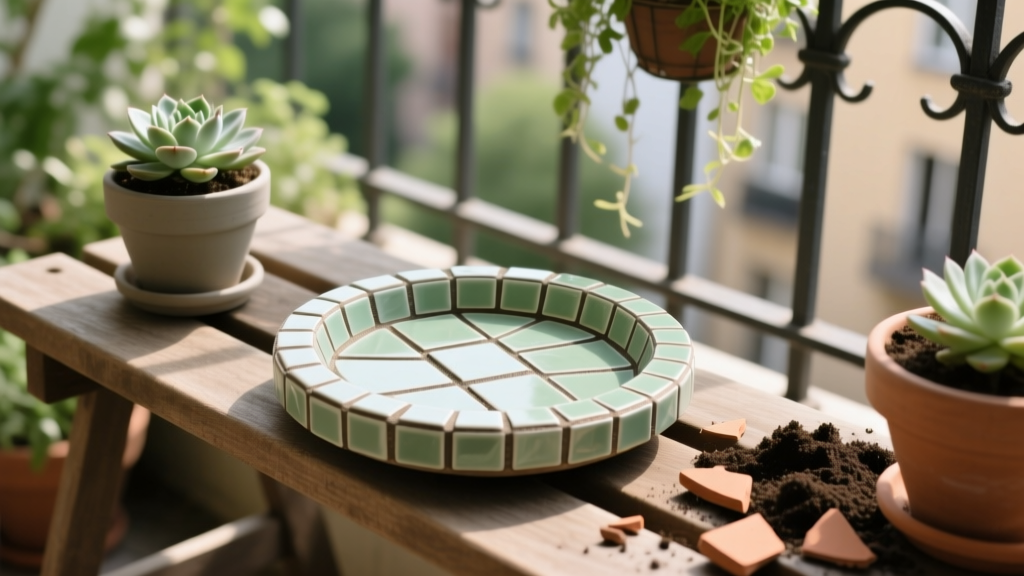
DIY Garden Pot Saucer from Tiles
Most “mystery plant deaths” on patios aren’t from forgetting to water—they’re from overwatering made worse by a bad saucer setup. A shallow plastic tray that never gets emptied turns into a swamp, roots suffocate, fungus shows up, and suddenly your healthy basil looks like it gave up overnight. The fix isn’t always buying a better saucer; you can build one from tile that’s heavier, prettier, and easier to customize for odd-sized pots.
Tile saucers also solve a sneaky problem: flimsy saucers bow under weight. A 12-inch terracotta pot filled with wet soil can weigh 25–35 lb, and thin plastic trays deform, letting water run out where you don’t want it. A tile saucer is rigid and stable, so it protects decks, indoor floors, and the one spot on the patio you swear you’ll “pressure wash later.”
Before You Start: Get the Sizing and Drainage Right
Tip: Size the saucer 1–2 inches wider than the pot’s base
A saucer that’s the same diameter as the pot base will miss runoff, especially when you water quickly and the stream hits the edge. Aim for an extra 1–2 inches all around: a pot with a 10-inch base does best on a 12–14-inch saucer. This gives you a buffer zone for splashes and keeps water from sneaking under the tray.
Example: For a 14-inch nursery pot (often ~11 inches at the base), a 16-inch tile saucer catches runoff without looking oversized.
Tip: Keep standing water shallow—think “sip,” not “soak”
If you use saucers to bottom-water, keep the water depth around 1/4 to 1/2 inch, then dump leftovers after 20–30 minutes. Many plants don’t want to sit in water all day; oxygen is just as critical as moisture. University extension resources routinely stress that overwatering reduces oxygen in the root zone and contributes to root rot; drainage and removing excess water are key management steps (University of Minnesota Extension, 2021).
Example: For African violets or herbs indoors, add 1/4 inch of water, set a timer for 25 minutes, then pour off what remains.
Tip: Raise the pot on “feet” to stop wicking and salt rings
When the pot sits flat in a saucer, it can wick water back up, keeping the bottom constantly wet and encouraging fungus gnats. Add three or four 1-inch supports (ceramic cabinet bumpers, pebble “feet,” or tile offcuts) so the pot base sits slightly elevated. You’ll also reduce the crusty white mineral rings caused by fertilizer salts collecting at the contact point.
Example: For a porch tomato, three 1-inch ceramic spacers keep the drain holes above any leftover water after a rainstorm.
Tile Choices That Won’t Crack or Stain
Tip: Use porcelain tile if freeze-thaw is a factor
Porcelain is denser and less absorbent than many ceramic tiles, so it handles moisture and cold better. If your saucer will live outdoors where temperatures dip below 32°F, porcelain (or a proven frost-rated outdoor tile) is your safest bet. It costs more up front, but it’s cheaper than replacing cracked ceramics every spring.
Example: A $4 porcelain floor tile often outlasts a $2 glazed ceramic tile on a winter patio.
Tip: Skip glossy wall tiles for heavy pots
Wall tiles are frequently thinner and not designed for loads; under a 30 lb pot, they can crack if the surface isn’t perfectly supported. If you want glossy, choose a floor-rated tile or use a mosaic technique over a solid base (like a concrete stepping stone). That way the pretty surface doesn’t have to carry the structural stress.
Example: A tall snake plant in a 12-inch ceramic pot is safer on a floor tile saucer than on a lightweight wall tile panel.
Tip: Choose a grout color that hides mineral stains
Hard water and fertilizer runoff create white crusts. Light grout shows every mark; medium gray or charcoal hides stains and still looks clean. If you’re using white tile for the look, pair it with gray grout and you’ll spend less time scrubbing.
Three Reliable Build Methods (Pick What Fits Your Tools)
| Method | Best for | Approx. cost | Build time | Durability |
|---|---|---|---|---|
| Single large tile + edge dam | Simple, modern look | $6–$15 | 30–60 min + cure | High (if sealed) |
| Mosaic tiles on a stepping-stone base | Decorative, odd sizes | $8–$25 | 1–2 hrs + cure | Very high |
| Four tiles on a backer board tray | Big pots, rectangles | $10–$30 | 1–2 hrs + cure | Medium–High |
Tip: The “single tile + dam” trick for fast saucers
Start with one large floor tile (12x12 or 18x18 inches), then create a shallow “dam” around the edges using silicone caulk or exterior-rated construction adhesive. Keep the dam about 3/8 inch tall—high enough to hold runoff, low enough to look tidy. Let it cure at least 24 hours before exposing it to water.
Example: For a 10-inch pot, a 12x12 tile with a 3/8-inch silicone edge catches water and wipes clean with a rag.
Tip: Mosaic on a concrete stepping stone for bombproof strength
If you’ve ever cracked a tile saucer by sliding a heavy pot, this is the upgrade. Use a 12–16 inch concrete stepping stone as the base, then thinset mortar + mosaic tiles on top, grouting afterward. It’s heavier (great in wind) and less likely to snap because the concrete spreads the load.
Example: A windy balcony with tall grasses: a 16-inch stepping-stone saucer keeps the pot stable and prevents “sail effect” tipping.
Tip: Four-tile tray for rectangular planters and window boxes
For long planters, build a tray using four or six floor tiles mounted to a rigid backer (cement board is ideal). Run a bead of silicone between tiles and around the perimeter to create a watertight basin. This is a smart way to protect a wooden windowsill without hunting for a rare, perfectly-sized plastic tray.
Example: A 24-inch herb trough can sit on a custom 6-tile tray that actually fits your sill depth.
Materials and Adhesives: What Holds Up Around Water
Tip: Use 100% silicone for the waterproof seal, not painter’s caulk
Painter’s caulk shrinks and can peel when it stays wet; you’ll be chasing leaks. A 100% silicone bathroom/kitchen sealant is made for constant moisture and cleans up nicely with a gloved finger. Plan on one tube doing several saucers; a typical tube is around $6–$10.
Tip: Thinset mortar beats “multi-surface glue” for tile-on-stone
If you’re attaching tile to concrete or cement board, use thinset mortar because it’s designed for that bond under wet conditions. Many all-purpose glues soften over time with repeated soaking and drying. Let thinset cure at least 24–48 hours before grouting or sealing for best strength.
Tip: Seal grout to cut down on stains and algae
Grout is porous, which means it absorbs water and fertilizer runoff—hello, stains and algae. After grout cures (often 72 hours, check your product), apply a penetrating grout sealer. This simple step makes your saucer much easier to rinse and keeps it looking new longer.
“Overwatering is one of the most common causes of houseplant decline; roots need oxygen as much as they need water, so containers must drain and excess water should be removed.” — University of Minnesota Extension (2021)
Smart Design Details That Make Your Saucer Easier to Live With
Tip: Add a tiny pour spout so you can drain without lifting the pot
Lifting a heavy pot every time you want to dump water is how backs get tweaked and pots get dropped. When you build the edge dam, leave a 1/2-inch gap at one corner as a discreet spout. Angle the saucer slightly (a thin shim under the opposite corner) so water naturally collects at the spout.
Example: Indoor fiddle-leaf fig: tilt the saucer just enough that you can slide a cup under the spout and drain it cleanly.
Tip: Build in non-slip feet to protect decks and tile floors
Tile-on-tile can slide, and tile-on-wood can trap moisture. Stick four rubber bumpers under the saucer corners to lift it about 1/8 to 1/4 inch. This improves airflow, reduces mildew under the saucer, and keeps the tray from skating when you bump the pot.
Tip: Make it “cleanable” with rounded silicone corners
Sharp inside corners collect grit and algae. When you run your silicone bead, smooth it into a rounded fillet so water and debris don’t lodge in a crevice. You’ll be able to wipe the saucer in one pass instead of scrubbing corners with a toothbrush.
Water Management Hacks (So the Saucer Helps, Not Hurts)
Tip: Treat saucers like a measuring tool
Instead of guessing how much you watered, watch how much drains into the saucer. If you consistently get more than 1/2 inch of water after watering, you’re probably overdoing it or the soil is hydrophobic and channeling. Adjust your watering pace: water half, wait 2 minutes, then water the rest to improve absorption.
Example: A rosemary pot that always floods the saucer: slowing down the pour stops runoff and keeps roots healthier.
Tip: Use a saucer for bottom-watering seedlings—briefly
Bottom-watering works great for seedling trays and small pots, but it should be timed. Fill the saucer with 1/4 inch water and let pots wick moisture for 10–15 minutes, then drain. This reduces fungus issues on the soil surface and keeps stems drier.
Example: Basil starts on a sunny windowsill: bottom-water for 12 minutes, then drain so gnats don’t set up camp.
Tip: Don’t let fertilizer runoff “cook” in the saucer
Fertilizer salts can concentrate as water evaporates, leaving crusts that can burn roots if the pot wicks it back up. If you feed with liquid fertilizer, flush with plain water every 4–6 weeks and discard the runoff. This aligns with general extension recommendations to avoid salt buildup in containers (Penn State Extension, 2023).
Example: A patio hibiscus that gets weekly feedings: once a month, water heavily until you get good runoff, then dump it so salts don’t accumulate.
Three Real-World Scenarios (And Exactly How to Handle Them)
Scenario: Indoor plants on hardwood—zero leaks allowed
Use the “single tile + dam” method with a fully sealed silicone perimeter and rubber feet underneath. Add a thin cork or neoprene pad under the saucer if your floors are delicate; a 1/16-inch sheet is usually enough to prevent scratching. Test by pouring 1 cup of water into the saucer and leaving it for 1 hour to confirm there’s no seepage.
Scenario: A sunny deck with big pots that get soaked by storms
Go with the concrete stepping-stone base so weight and wind aren’t a problem. Add pot feet so the drain holes aren’t sitting in stormwater, and include that 1/2-inch spout gap to drain after a heavy rain. If you’re in a wet summer pattern, get into the habit of dumping saucers the morning after storms—standing water plus heat is algae city.
Scenario: Apartment balcony where you can’t drip on neighbors
Build a deeper dam—closer to 1/2 inch—and use a saucer that’s 2 inches wider than the pot base for splash control. Water slowly in two passes (water, wait 2 minutes, water again) so less runs straight through. If you’re growing thirstier plants like tomatoes, consider a capillary mat inside the saucer to hold a small reserve without sloshing.
Money-Saving Moves (Without Cutting Corners)
Tip: Check tile leftovers and “single” clearance shelves first
Tile shops often sell single tiles from broken boxes for cheap—perfect for saucers. It’s common to find $3–$5 porcelain tiles that would be $8–$12 in full boxes. Bring your pot base measurement and do the math in-store so you don’t buy something barely too small.
Tip: Compare DIY tile saucers to store-bought trays by lifespan
A plastic saucer might be $4, but if it warps or cracks in a year, you’re rebuying it. A $12 tile saucer that lasts 5+ years is usually the better deal—and it looks intentional, not like a temporary fix. If you already have leftover tile and a half-used tube of silicone, your cost can drop under $5 total.
Tip: Use broken tile pieces for a mosaic edge instead of buying trim
Bullnose trim is pricey. If you need a raised rim, create one with broken tile shards set in mortar and grouted smooth—like a little fortress wall around the perimeter. It’s a great way to use what you already have and keep sharp edges safely embedded.
Common Failure Points (And Quick Fixes)
Tip: If water slowly disappears, you likely missed sealing the grout
Grout can wick water and make you think the saucer is “leaking.” Dry it fully, then apply a penetrating sealer and retest. If the saucer sits on wood, add rubber feet to keep any residual dampness from transferring.
Tip: If tiles pop loose, the adhesive probably wasn’t rated for wet areas
Scrape off the failed glue and switch to thinset mortar for tile-to-cement/stone bonds. Let it cure a full 48 hours before grouting if your space is cool or humid. This is especially important for outdoor saucers that cycle wet/dry constantly.
Tip: If you see green slime, change the routine—not just the cleaner
Algae is a sign that water is sitting too long. Add pot feet, dump leftover water after 20–30 minutes, and give the saucer a quick rinse weekly during hot months. If you want a gentle cleaner, a 1:10 bleach-to-water wipe-down works on non-porous tile—just keep it off soil and rinse well.
A tile saucer isn’t just a prettier tray—it’s a way to control water like a pro without buying specialty gear. Build it slightly oversized, seal it like it’s going on a boat, and give your pots a little lift so roots can breathe. Once you’ve used a solid tile saucer for a season, the flimsy plastic ones start to feel like single-use items.
Sources: University of Minnesota Extension (2021), guidance on overwatering, drainage, and oxygen in container root zones; Penn State Extension (2023), container plant care including avoiding salt buildup and managing drainage/runoff.