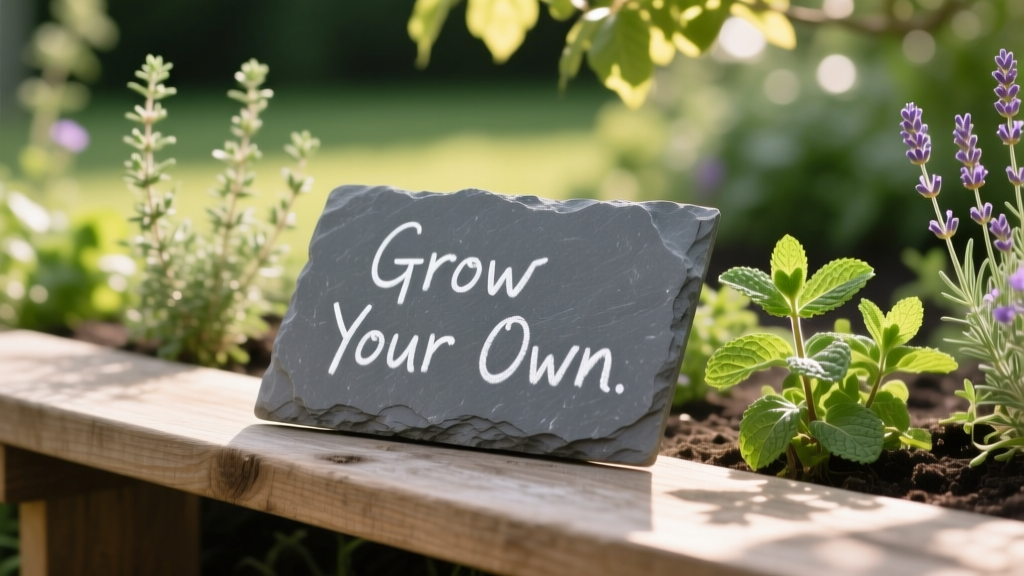
DIY Garden Sign from Slate and Chalk
Most garden signs fail for the most annoying reason: the writing disappears long before the plant label becomes useful. A week of sun and sprinkler spray can turn “Basil” into a ghost smudge, and you’re back to guessing what you planted (again). Slate and chalk can absolutely work outdoors—but only if you treat it like an outdoor finish problem, not a handwriting problem.
Below are the practical tricks I use to get crisp, readable slate signs that survive weather, stay legible at a glance, and don’t cost more than the plants they’re labeling.
Start with the Slate: Picking Pieces That Don’t Flake or Fracture
Tip: Choose slate thickness based on where it’ll live
Thin slate looks elegant but snaps easily when you push it into soil or bump it with a hose. For in-ground signs, aim for slate that’s at least 8–10 mm thick; for hanging signs or greenhouse shelves, 4–6 mm is usually fine. If you’re sourcing from roofing offcuts, bring a ruler—“thin” and “thick” vary wildly from pile to pile.
Example: In a windy front bed where my hose drags across everything, 10 mm slate held up all season; the 5 mm pieces cracked at the holes by mid-summer.
Tip: Do the “flake test” before you commit
Slate that sheds layers will keep shedding, and your lettering will peel right off with it. Rub the surface hard with your thumbnail or a coin for 10 seconds; if you get gritty dust or a thin layer lifts, skip that piece for signs and use it as mulch edging instead. The best sign slate feels dense and “ringy” when tapped.
Tip: Smooth only what you need (and keep some tooth)
A perfectly polished slate face looks nice, but chalk (and chalk markers) need a little texture to grip. Instead of sanding the whole thing, just knock off sharp corners with 120-grit sandpaper and leave the face mostly natural. If your slate is very rough, a quick pass with 220-grit on the writing area is enough.
Tools & Materials That Actually Matter (and the Cheap Substitutes)
Tip: Use a paint pen for outlines, then chalk for the fill
If you want legibility from 6–10 feet away, outline the letters once with a white oil-based paint pen and color inside with chalk. The outline stays readable even when chalk fades, and you can refresh the fill in seconds. This is especially handy for herb beds where you’re constantly brushing past signs.
Tip: Drill slate slowly—or skip drilling entirely
If you’re drilling holes, use a masonry bit and keep the speed low; high RPM heats and fractures slate. A 6 mm bit works well for twine or small screws, and a piece of scrap wood underneath prevents blowout. No drill? Wrap slate with galvanized wire (16–18 gauge) like a picture frame hanger and twist it tight—surprisingly sturdy.
Tip: Don’t use regular “dustless classroom chalk” outdoors
Dustless chalk is designed to break into soft powder and wipe off easily—exactly the opposite of what you want in rain. Go for compressed artist’s chalk or a chalk marker labeled for non-porous surfaces. Your writing will stay sharper after sprinklers and light rain.
Tip: Keep costs sane with salvage sources
Brand-new slate plaques can run $4–$12 each depending on size; roofing offcuts can be nearly free. Ask local roofers or building salvage yards for broken tiles—most are happy to let you take a bucket. I’ve paid $10 for a pile big enough to label a whole raised-bed garden.
Prep Like You Mean It: Getting Chalk to Stick (and Stay Readable)
Tip: Wash slate with dish soap, not vinegar
Vinegar is great for some garden jobs, but it can react with minerals and leave a weird haze on stone surfaces. Use warm water + a few drops of dish soap, scrub, and rinse well; then let the slate dry for 24 hours before writing. A clean surface is the difference between crisp lines and blotchy fade-out.
Tip: “Season” the slate if you’re using regular chalk
Seasoning is the classic chalkboard trick: rub the side of chalk over the surface, then buff off with a dry cloth. It fills micro-grooves so your lettering erases cleanly later instead of “ghosting.” If you plan to reuse signs each season, seasoning saves you from permanent haze.
Tip: Time your writing to your weather
Chalk looks boldest when the slate is bone-dry and warm. Write in late morning after dew evaporates, and avoid doing it right before a storm—give it at least 2–3 hours of dry time if you’re adding any sealant. The small timing tweak keeps chalk from grabbing moisture and going gray.
Lettering Tricks for Fast, Legible Signs (Even If Your Handwriting Is a Mess)
Tip: Use a “two-line rule” for quick readability
Most garden labels get hard to read because the letters are too small. On a 3 x 6 inch slate tag, limit yourself to two lines: common name on top, variety or date on bottom. If it doesn’t fit, abbreviate the variety and keep the common name big.
Example: “TOMATO” on line one and “SunG 4/15” on line two stays readable from the path; “Solanum lycopersicum ‘Sun Gold’” doesn’t help anyone.
Tip: Block letters beat cursive in the garden
Cursive looks charming… until it’s viewed through a glare of noon sun. Block capitals with a simple stroke width hold up better at a distance and when the chalk starts fading. If you want a fancy look, add one small decorative element (like a leaf icon) instead of fancy letters.
Tip: Make a DIY stencil in under 5 minutes
For repeat labels (like “BASIL” every year), cut a stencil from a plastic milk jug or scrap folder. Trace letters with a marker, cut with a craft knife, and you can stencil chalk or paint pen quickly. One stencil can label 10–20 signs before it warps.
Keep It Outside: Weatherproofing Without Ruining the “Chalk” Look
Tip: Use hairspray only for short-term events
Hairspray is a classic hack, but outdoors it’s temporary—think days to a couple weeks. It’s fine for a garden party, plant sale, or wedding signage, but don’t expect it to survive a month of sprinklers. If you try it, spray 2 light coats from 10–12 inches away to avoid drips.
Tip: For season-long signs, choose a matte clear sealer
Acrylic clear coat (matte) gives you the best balance: it protects the lettering without making the slate look glossy and cheap. Spray 3 thin coats, waiting 10 minutes between coats, and stop before it looks wet. If you go heavy, the chalk can bleed and turn fuzzy.
“Thin coats cure better than one thick coat, especially outdoors where temperature and humidity vary.” — University of Maine Cooperative Extension (2019)
Tip: Want erasable signs? Skip sealing and switch to chalk markers
Sealing locks you into that label until you scrub it hard. If you rotate crops and want reusable slate tags, don’t seal—use a wet-erase chalk marker instead. Most wipe off with a damp cloth and a drop of dish soap, even after a few weeks outside.
Tip: Use UV strategy, not just sealant strategy
Sunlight is the real sign killer. Place signs so they’re shaded for part of the day (north side of a plant, inside the canopy, or behind a border) and you’ll double the legibility time. A sign that gets 4 hours of sun looks better longer than one blasted for 10 hours, even with the same sealer.
Mounting That Doesn’t Wiggle, Rot, or Get Yanked by the Hose
Tip: Set slate into a stake instead of stabbing it into soil
Pushing slate directly into the ground is the fastest way to snap it. Attach the slate to a cedar stake (1 x 2 inch works well) with exterior screws and washers, then push the stake into soil. This also keeps the lettering at eye level, not buried under mulch.
Tip: If you want metal stakes, use stainless fasteners
Slate + moisture + cheap steel screws = rust streaks down your sign. Use stainless screws or at least galvanized hardware; it costs more up front but looks better long term. A small pack of stainless screws is often $6–$9, but you can use them for years of projects.
Tip: Anchor for mulch and mowers with a “depth rule”
In mulched beds, signs “disappear” when mulch is refreshed. As a rule, push stakes at least 6–8 inches into the soil and keep the bottom edge of the slate 2 inches above the mulch line. That spacing prevents rot on wood and keeps the sign visible after topping up mulch.
Comparison Table: Best Writing Options for Slate Garden Signs
| Writing Method | Best Use | Outdoor Lifespan (Typical) | Erasable? | Approx. Cost per Sign |
|---|---|---|---|---|
| Regular chalk (compressed) | Reusable seasonal labels | 3–14 days (sprinklers shorten it) | Yes | $0.05–$0.20 |
| Wet-erase chalk marker | Cleaner lettering, less dust | 2–6 weeks | Yes (damp cloth) | $0.30–$0.80 |
| Paint pen outline + chalk fill | High legibility, quick refresh | Outline: months; fill: 1–3 weeks | Partly (fill only) | $0.40–$1.00 |
| Chalk + matte acrylic sealer | Long-term fixed labels | 2–6 months | No (needs scrubbing/solvent) | $0.60–$1.50 |
Real-World Scenarios: What Works in Actual Gardens
Scenario: The rainy-climate vegetable bed (Pacific Northwest style)
If you’re dealing with frequent drizzle, skip regular chalk entirely. Use a wet-erase chalk marker, let it dry for 30 minutes, then add 2 thin coats of matte sealer only on the lettering area (not the whole slate). This keeps the sign readable through light rain while still letting you change it at season’s end with a bit of elbow grease.
Scenario: The sunny, high-UV front yard bed
Bright sun fades everything, including chalk markers. Here, the paint-pen-outline trick wins: outline “LAVENDER” or “ROSEMARY,” then fill with chalk when you want it extra bright for visitors. Place the sign slightly behind foliage so it gets dappled shade—your letters stay sharper, and the slate looks less “stuck in the ground.”
Scenario: The community garden plot where signs wander off
If you’ve ever had labels walk away, make your slate tags less “pocketable.” Use a larger slate (around 4 x 8 inches) attached to a stake with two screws and washers, and write your plot number at the bottom. A quick deterrent is writing with a paint pen on the back: “Plot 12—Please return.”
Scenario: The plant sale / seed swap where you need 50 labels fast
Speed matters more than permanence. Cut slate into small rectangles, about 2 x 3 inches, and drill one hole in the top corner for twine. Use compressed chalk for pricing so you can change “$3” to “$2” quickly; sealant is overkill for a one-day event.
Money-Saving Moves That Don’t Look Cheap
Tip: Make slate “frames” from broken pieces
Odd shards can look intentional if you mount them like art. Glue broken slate pieces around a central writing slate using exterior-rated construction adhesive, leaving a 1/4-inch gap as a border. It’s a great way to use leftovers and make one “focal” sign for a herb spiral or greenhouse.
Tip: Use leftover tile sealer as a slate protector
If you already have penetrating tile/stone sealer from another project, test it on a scrap first. Some sealers darken slate (which can make white lettering pop), while others add a sheen. A small bottle can cost $15–$25, but if it’s sitting on your shelf anyway, it’s essentially free protection.
Tip: Batch your work to cut time in half
Cleaning, sanding corners, and sealing go faster assembly-line style. Set up 10–20 pieces on cardboard, do all sanding at once, then all washing, then all writing. You’ll spend less time cleaning up between steps and more time actually planting.
Maintenance Tricks: Keep Signs Sharp Without Rewriting Everything
Tip: Refresh only the high-contrast edges
If you used the paint-pen-outline method, you don’t need to rewrite the whole label—just re-chalk the interior of letters. A quick rub with chalk takes 15 seconds per sign and makes everything look freshly done. This is my go-to mid-season when beds are full and labels start looking tired.
Tip: Clean with a damp microfiber cloth, not paper towels
Paper towels leave lint and can snag on slate layers. A microfiber cloth plus a drop of dish soap removes chalk residue cleanly and helps you avoid grinding grit into the surface. Let the slate dry fully before rewriting for the boldest color.
Tip: Store off-season signs flat and dry
Slate can absorb moisture and develop a chalky bloom if stored in damp sheds. Stack signs flat with cardboard between layers, and keep them off concrete floors. When spring comes, a quick wipe-down beats having to scrub every sign back to “new.”
Two quick notes on safety and garden practicality
Tip: Seal slate dust away from edible areas
If you cut or sand slate, do it away from raised beds and potting mix. Wear a basic dust mask and rinse the pieces afterward; slate dust is gritty and doesn’t belong in salad greens. Even better: do your cutting on a tarp so cleanup is simple.
Tip: Don’t rely on labels alone for food safety records
If you track planting dates for pest timing (like squash vine borer windows), keep a backup in a notebook or phone. University of California Agriculture and Natural Resources notes that pest management timing often depends on accurate planting and crop stage records (UC ANR, 2020). A faded sign shouldn’t erase your schedule.
Slate-and-chalk signage is one of those small garden upgrades that pays you back daily: fewer mystery plants, cleaner beds, and faster harvesting because you can spot what you need immediately. Once you dial in your combo (good slate, the right marker or chalk, and a mounting method that doesn’t snap), you’ll stop rewriting labels every weekend and start using signs the way they’re meant to be used—quietly doing their job in the background while you get on with growing.
Sources: University of Maine Cooperative Extension (2019); University of California Agriculture and Natural Resources (2020).