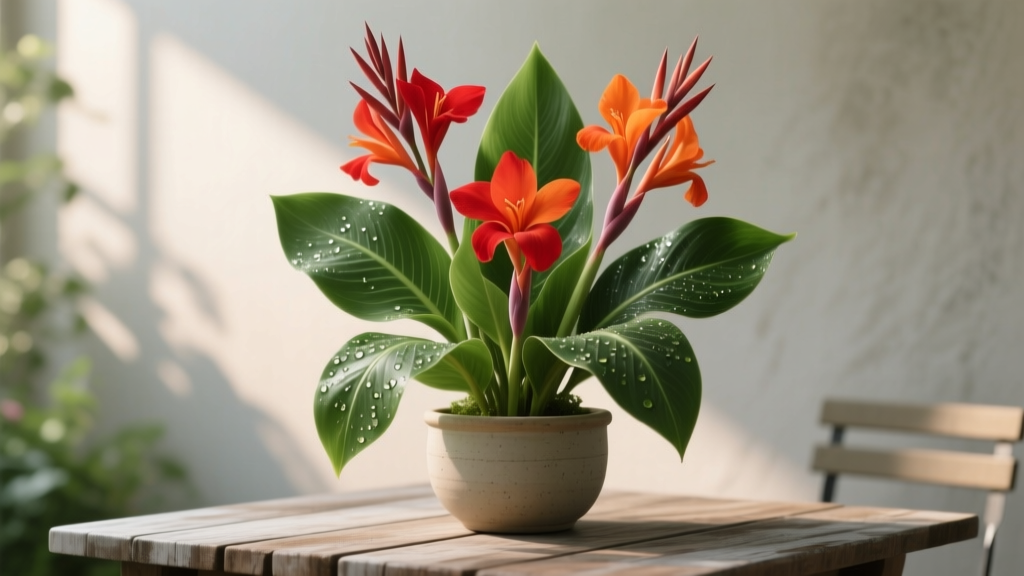
Summer Care Tips for Canna Lilies
It’s mid-July, the cannas were towering and lush in June, and now you’re looking at ragged leaves, stalled blooms, and the kind of midday wilt that makes you wonder if you’re watering wrong—or not enough. Here’s the surprising part: in summer, cannas can look thirsty even when the soil is wet, and they can also stop flowering when they’re “too happy” with nitrogen. Summer care is a balancing act: steady moisture, heat-smart watering habits, and feeding that supports blooms instead of just big leaves.
I grow cannas in both the ground and containers, and I’ve watched them thrive in brutal sun and sulk in “perfect” soil that stayed soggy. Below is the summer playbook I use to keep them blooming hard through heat waves, thunderstorms, and the inevitable week you forget to fertilize.
Quick summer goals (so you know what you’re aiming for)
In peak season, healthy cannas should:
- Hold leaves upright most mornings (a little afternoon droop can be normal during extreme heat).
- Push new leaves weekly in warm weather (growth slows when nights stay below about 55°F).
- Send up flower stalks repeatedly if spent blooms are removed and nutrition is balanced.
- Show clean foliage with minimal tearing and no widespread spotting.
When something’s off, the plant tells you—usually with leaf posture, leaf color, or bloom production. Let’s tackle the big drivers first: water, soil, light, and feeding.
Watering cannas in summer (the part most people get wrong)
Cannas are water-lovers, but “water-loving” doesn’t mean “waterlogged.” Their rhizomes need oxygen. In summer, I aim for consistently moist soil—like a wrung-out sponge—especially while they’re actively blooming.
How much water do cannas need?
Use this as a practical starting point, then adjust for your heat, soil type, and container size:
- In-ground cannas: about 1–1.5 inches of water per week (including rain) during active summer growth.
- During heat spells above 90°F: expect to water every 2–3 days in sandy soil, or every 3–5 days in loam, depending on mulch and sun exposure.
- Container cannas: often need water daily when temps sit in the high 80s–90s°F, because pots heat up and dry out fast.
That “1 inch per week” guideline is commonly used across ornamental beds and aligns with extension recommendations for maintaining consistent soil moisture during summer growth (Clemson Cooperative Extension, 2023).
Timing matters: morning watering beats evening watering
If you can pick a time, water early morning. Leaves dry faster, and the plant starts the day hydrated. Evening watering can leave foliage damp overnight, which invites leaf spot problems.
A simple, reliable way to check moisture (no gadgets required)
- Push your finger or a trowel into the soil 3–4 inches deep.
- If it feels dry at that depth, water deeply.
- If it’s moist and cool, wait and recheck tomorrow.
For containers, lift the pot. If it feels much lighter than yesterday, don’t overthink it—water.
Comparison: overhead watering vs drip/soaker (real differences you’ll notice)
| Method | Typical water efficiency | Leaf disease risk | Best use case | My practical note |
|---|---|---|---|---|
| Overhead sprinkler | Lower (wind + evaporation losses) | Higher (wet foliage) | Large mixed beds, quick coverage | Fine in the morning; avoid nightly runs |
| Soaker hose | Moderate to high | Lower | Canna rows or clumps in beds | Mulch over it to reduce evaporation |
| Drip irrigation | High (targeted delivery) | Lowest | Containers, tidy landscapes, water restrictions | Best control in heat waves; easy to automate |
Drip and soaker systems generally reduce evaporation and keep foliage drier, which is a practical disease-prevention win (University of Minnesota Extension, 2022).
Real-world scenario #1: “They wilt every afternoon, even though I watered yesterday”
What’s happening: In hot sun, cannas can temporarily droop in the afternoon as transpiration outpaces water uptake—especially if the root zone is hot. If they recover by evening or early morning, it’s often heat stress, not drought.
What to do:
- Check soil at 3–4 inches. If it’s moist, don’t panic-water.
- Add 2–3 inches of mulch (shredded bark or composted leaves) around the clump, keeping mulch 1 inch away from stems.
- Water deeply 1–2 times per week instead of frequent shallow watering. Deep watering encourages deeper roots.
- If the planting is against a heat-reflecting wall, consider a little afternoon shade (even 30–40% shade cloth helps in extreme heat).
Soil and summer root-zone management
Cannas aren’t fussy divas, but they do best in fertile, moisture-retentive soil that still drains well. Summer problems often come from the extremes: sand that dries too fast or heavy clay that stays wet too long.
What “good” soil looks like for cannas
- Texture: loam or amended clay/sand that holds moisture without staying swampy
- Organic matter: mix in 1–2 inches of compost over the bed (or top-dress) to stabilize moisture
- pH: roughly 6.0–7.0 is a comfortable range for nutrient uptake
If your cannas are in containers, don’t use straight garden soil. Use a quality potting mix and consider adding 10–20% compost for moisture buffering.
How to prevent summer rot (yes, it can happen in heat)
Rhizome rot shows up when the root zone is constantly saturated and warm—often after repeated heavy rains or over-irrigation in clay soil.
Prevention steps:
- Improve drainage with compost and (if needed) a raised bed 6–10 inches high.
- Keep mulch at 2–3 inches, not 6 inches piled against stems.
- After a multi-day rain, pause irrigation until the top 2 inches begin to dry.
“Most ornamental disease issues I see in mid-summer trace back to moisture management—either foliage staying wet too long or roots sitting in low-oxygen soil.” — University Extension plant pathology guidance (University of Minnesota Extension, 2022)
Light and heat: getting blooms instead of just leaves
For strong flowering, cannas want sun. Lots of it. They’ll grow in partial shade, but summer bloom count usually drops.
Best light levels
- Ideal: 6–8+ hours of direct sun for best flowering.
- Partial shade: 4–6 hours can work, especially in very hot climates, but expect fewer blooms.
Real-world scenario #2: “Huge leaves, no flowers”
Most common causes:
- Not enough sun (common when trees leaf out in early summer and suddenly your “full sun” bed isn’t).
- Too much nitrogen fertilizer (lush leaves, fewer blooms).
- Old flower stalks not deadheaded (the plant slows down when it’s allowed to set seed).
Fix it this week:
- Confirm sun hours. If you’re under 6 hours, consider moving the clump next season or thinning overhead branches.
- Switch to a bloom-leaning fertilizer (examples below) and stop high-nitrogen lawn fertilizer overspray near cannas.
- Deadhead: remove spent blooms and cut the finished flower stalk down to the next healthy leaf junction.
Feeding cannas in summer (and how not to overdo it)
Cannas are hungry during rapid summer growth, especially in containers where nutrients wash out. The trick is feeding enough to keep bloom production steady without pushing a leafy nitrogen binge.
How often to fertilize
- In-ground beds: feed every 4–6 weeks during active growth if your soil isn’t already rich.
- Containers: feed every 2–3 weeks with a diluted liquid fertilizer, or use a controlled-release product per label.
What fertilizer to use (practical picks)
I’ve had good bloom results with:
- Balanced granular like 10-10-10 used lightly (especially if you’re also top-dressing with compost).
- Bloom-leaning formulas where the middle number (phosphorus) isn’t excessive but potassium is solid, like 5-10-10 or 8-8-8.
Amount guideline (in-ground): A common, safe approach is about 1–2 tablespoons of granular fertilizer scratched into the soil around a medium clump, then watered in—repeat every 4–6 weeks. Always follow the product label, and go lighter if your soil is already fertile or you’re using compost.
Extension recommendations for cannas often emphasize regular feeding during growth and avoiding excess nitrogen to support flowering (North Carolina Cooperative Extension, 2021).
Comparison: granular monthly vs liquid biweekly (container cannas)
| Feeding approach | Typical schedule | Pros | Cons | Best for |
|---|---|---|---|---|
| Granular controlled-release | Every 8–12 weeks (per label) | Low effort; steady nutrition | Harder to adjust quickly if overfed | Busy gardeners, large pots |
| Liquid fertilizer (diluted) | Every 2–3 weeks | Fast response; easy to tailor for blooms | More frequent work; can leach faster | High-bloom displays, heat-prone patios |
Common summer problems (with clear symptoms and fixes)
If you grow cannas long enough, you’ll see a few repeat offenders. The key is to act early—small problems are easy; big infestations are exhausting.
Canna leaf roller (ragged, stitched leaves that won’t unfurl)
Symptoms: Leaves emerge chewed or torn, sometimes “glued” together with webbing; new growth looks shredded as it opens.
What it is: Canna leaf rollers are caterpillars that feed inside rolled leaves, protected from casual sprays.
What to do:
- Inspect new growth 1–2 times per week. Unroll suspect leaves and remove caterpillars by hand.
- Prune and discard badly damaged leaves (don’t compost if larvae are present).
- If pressure is high, use Bacillus thuringiensis var. kurstaki (Bt) in the evening, targeting young larvae. Reapply per label after rain.
Japanese beetles (skeletonized leaves, flower damage)
Symptoms: Leaves look lacey or skeletonized; flowers get shredded quickly; beetles often visible in daytime.
What to do (practical and effective):
- Hand-pick early in the morning and drop into soapy water (it works better than you’d think).
- Avoid beetle traps near your cannas; they can attract more beetles into your yard than you started with.
- If you need a spray, use a product labeled for Japanese beetles on ornamentals and follow label timing; recheck after 7–10 days.
Spider mites (fine stippling, bronzing, webbing during hot/dry weather)
Symptoms: Leaves look dusty, speckled, or bronzed; fine webbing may appear; worst during hot, dry stretches.
Fix:
- Rinse leaf undersides with a strong spray of water every 3–4 days for two weeks.
- Increase humidity around container plants (group pots; mulch the soil surface).
- If needed, use insecticidal soap or horticultural oil—spray in the cool part of the day and test one leaf first to check for burn when temps exceed 85–90°F.
Leaf spot / fungal blotches (brown spots, yellow halos, worsening after rainy spells)
Symptoms: Irregular brown spots, sometimes with yellowing around them; spots spread during humid weather or overhead watering.
What helps most:
- Switch to drip/soaker watering and water in the morning.
- Thin crowded clumps for airflow (aim for a little space between stems—don’t let it become a solid wall of foliage).
- Remove the worst affected leaves and dispose of them.
Yellow leaves (nutrient issues, soggy soil, or simply older foliage)
Symptoms: Lower leaves yellow first; sometimes the whole plant pales.
Troubleshooting checklist:
- If soil is wet and smells sour: you’re edging toward rot—pause watering and improve drainage.
- If the plant is in a pot and you water often: nutrients may be leaching—feed lightly every 2–3 weeks.
- If only the oldest leaves yellow: that can be normal. Trim them off to keep the clump tidy.
Three summer “case files” from real gardens (and what I’d do)
Case #1: Container cannas on a blazing patio
Situation: A 16–20 inch pot on concrete, full sun, temps regularly 90–95°F. Plant wilts daily and blooms are smaller.
What works:
- Water thoroughly until it runs from the drainage holes—usually daily in heat waves.
- Add a 1–2 inch mulch layer (even small bark) on top of the potting mix to slow evaporation.
- Feed with a diluted liquid fertilizer every 2 weeks.
- Move the pot so it gets morning sun and a little late-afternoon shade if blooms scorch.
Case #2: In-ground cannas after a week of thunderstorms
Situation: Leaves start yellowing, growth slows, and the base stays wet for days.
What works:
- Stop irrigation until the top 2 inches begin drying.
- Pull mulch back from stems to improve airflow at the crown.
- If the bed is low, plan to raise it 6–10 inches next season or replant on a berm.
Case #3: Cannas look great, but flowers fade fast and stalks flop
Situation: Tall varieties get heavy blooms, then lean; flowers are short-lived in extreme sun and wind.
What works:
- Stake discreetly: one bamboo stake per stalk, tied loosely in 2 places.
- Deadhead every few days so energy goes to new spikes, not seed.
- Water deeply 1–2 times weekly rather than frequent splashes (stronger growth, better anchoring roots).
- Consider a mid-summer potassium-leaning feed (per label) to support sturdier stems.
Deadheading and grooming: the small habits that keep blooms coming
Summer grooming is where cannas reward you. A clump that’s cleaned up weekly almost always blooms harder than one left alone.
Deadheading in 3 steps
- Pinch or snip off spent flowers as they fade.
- When the whole flower head is finished, cut the stalk down to the nearest strong leaf junction.
- Remove torn or badly spotted leaves to keep the plant attractive and improve airflow.
Plan on a quick check once a week. It takes 5 minutes per clump and saves you from a half-hour cleanup later.
Heat-wave checklist (do this before the next 95°F stretch)
- Mulch to 2–3 inches to cool roots and stabilize moisture.
- Switch to morning watering and avoid wet foliage overnight.
- Water deeply, then wait—don’t “sip” water daily in-ground unless the soil truly dries fast.
- Skip heavy fertilizer during the hottest week; resume when plants aren’t heat-stressed.
- Check for mites and leaf rollers—heat accelerates pest cycles.
When cannas are cared for well in summer, they don’t just survive—they perform. Keep the root zone evenly moist, feed with a bloom mindset, and treat leaf damage early while it’s still a minor annoyance. Do those things, and by late summer you’ll have the kind of canna clumps that make neighbors slow down on the sidewalk and ask, “What did you do to get them like that?”
Sources: Clemson Cooperative Extension (2023); University of Minnesota Extension (2022); North Carolina Cooperative Extension (2021).