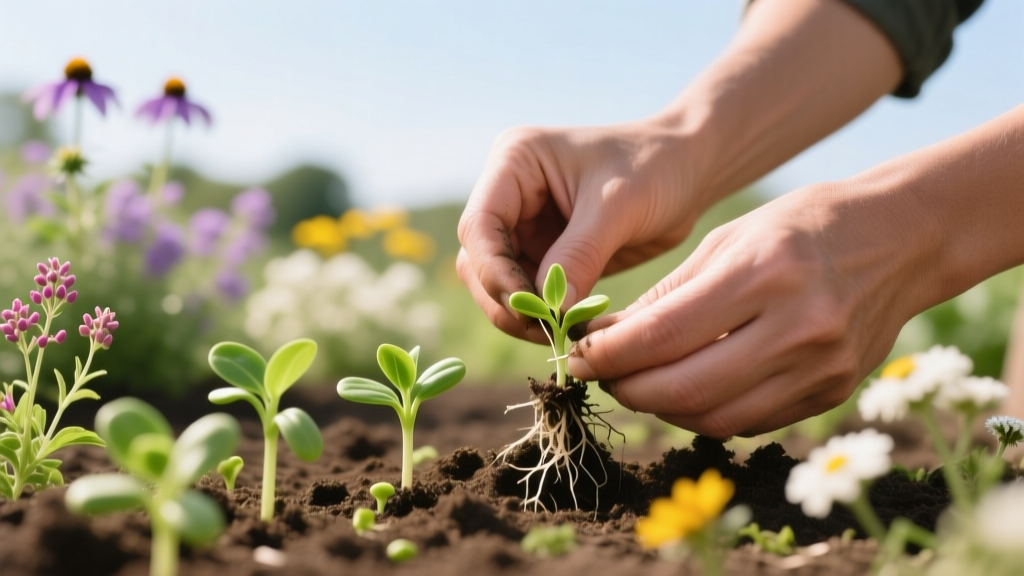
Thinning Pollinator Gardens Seedlings Without Waste
You step outside with coffee, ready to admire your pollinator bed… and it looks like someone spilled a jar of chia seeds. Hundreds of tiny seedlings—zinnias, cosmos, dill, milkweed—packed so tight they’re already stretching and flopping. You know you need to thin, but tossing “perfectly good plants” feels wrong. The good news: thinning doesn’t have to mean waste. With a few simple habits, you can turn extras into transplants, mulch, salad greens, and even more blooms—without wrecking your spacing.
I’ve thinned pollinator gardens in spring cold snaps, midsummer heat, and after surprise downpours that crust the soil like concrete. The method that works is always the same: thin early, keep roots intact when you plan to move seedlings, and match the aftercare (water + shade) to the weather. Below is a practical, no-guilt approach that keeps your bed healthy and makes use of nearly every seedling you pull.
Before You Thin: Know What “Crowded” Really Means
Most pollinator favorites are generous germinators. That’s great—until you’ve got seedlings competing for light and water in the top inch of soil. Crowding reduces airflow (hello, damping-off), encourages leggy growth, and usually leads to fewer flowers. Proper spacing is one of the simplest ways to increase bloom count.
A handy rule: thin when seedlings have 1–2 sets of true leaves (not the first smooth “seed leaves”). At this stage, roots are short enough to separate with minimal damage. If you wait until plants are 4–6 inches tall, thinning becomes uprooting-and-heartbreak season.
Quick spacing targets (common pollinator plants)
- Cosmos: 12–18 inches apart
- Zinnias (tall types): 10–12 inches apart (dwarf: 6–8 inches)
- Sunflowers (branching): 18–24 inches apart
- Dill/fennel: 8–12 inches apart
- Milkweed (Asclepias spp.): 18–24 inches apart
- Native wildflower mixes: aim for seedlings about 6–12 inches apart depending on species mix
If you’re working from a seed packet, follow that spacing even when it feels “too empty.” Pollinator plants fill in fast once heat arrives.
Watering: The Secret to Waste-Free Thinning
If I could give you one trick that saves the most seedlings, it’s this: water the bed 30–60 minutes before thinning. Moist soil holds together around roots; dry soil snaps roots off like brittle hair.
How much to water before thinning
- For average garden soil: apply about 0.25–0.5 inches of water (roughly 0.15–0.3 gallons per square foot)
- If soil is sandy and dries fast: closer to 0.5 inches
- If soil is already damp from rain: skip pre-watering and thin later in the day when the surface isn’t muddy
After thinning, water again with a gentle shower (watering can rose or hose nozzle set to “mist/shower”). You’re settling disturbed soil and preventing air gaps around roots of the seedlings that remain.
Post-thinning watering schedule (first week)
- Day 0 (thinning day): water lightly but thoroughly—moisten the top 2–3 inches of soil
- Days 1–3: check morning and late afternoon; water if the top 1 inch is dry
- Days 4–7: shift to deeper watering every 2–3 days (weather dependent)
Hot tip from experience: if you thin right before a 90°F+ day, you’ll lose more transplants. If you can, thin on a calm, mild day (around 60–75°F) or do it in the evening.
Soil: Loosen, Don’t Pulverize
Thinning without waste is easier in soil that crumbles gently instead of forming a crust. Crusted soil makes seedlings hard to separate and increases stem damage.
Ideal soil feel for thinning and transplanting
- Moist like a wrung-out sponge (not sticky mud, not dusty)
- Crumbly with visible organic matter
- No hard cap on the surface
If you get that surface crust after watering or rain, break it lightly with your fingertips or a small hand rake before thinning. You’re not “tilling,” just opening the top 1/4 inch so air and water can move.
For long-term improvement, top-dress beds with 1–2 inches of finished compost in early spring or fall. Compost helps seedlings root more evenly and reduces the need for aggressive watering.
Light: Thin Based on Sun Patterns, Not Just Inches
Most pollinator gardens are sun-loving, but your bed likely has microclimates: the south edge bakes, the north edge stays cooler, and a nearby shrub throws shade at 4 p.m. When thinning, keep the strongest seedlings in the best light spots for that plant.
- Full sun bloomers (zinnia, cosmos, sunflower): keep in areas with 6–8+ hours of direct sun
- Part-sun tolerant plants (some salvias, violets, certain natives): can handle 3–6 hours
If seedlings are already leaning, that’s a sign you waited a bit long or they’re shaded. Thin more aggressively in shadier sections to improve airflow and reduce stretch.
Feeding: Don’t Overdo It (Pollinators Prefer Steady Growth)
Seedlings don’t need heavy feeding. In fact, over-fertilizing makes lush growth that flops and can reduce flowering later. If you added compost, you may not need any fertilizer at all.
When to feed
- If growth is pale and slow after thinning (and the bed hasn’t had compost): apply a gentle feed at 1/2 strength about 10–14 days after thinning.
- For native perennials (milkweed, coneflower, bee balm): go light—compost top-dress is usually enough.
Practical options
- Compost tea/steeped compost water: mild, useful after transplant shock
- Balanced liquid fertilizer (e.g., 10-10-10): use at 1/2 label rate, once
- Avoid high-nitrogen lawn fertilizers near wildflowers
For guidance on fertilizer timing and avoiding excess nitrogen, many Extension resources emphasize that “more” is not better for flowering plants; steady growth and proper spacing matter most (University of Minnesota Extension, 2023).
The Two Best Thinning Methods (and When to Use Each)
There are two main ways to thin: snipping and pulling. The “best” choice depends on whether you want to save seedlings.
| Method | Best for | How it’s done | Survival rate for moved seedlings (typical) | Time per 10 sq ft (typical) |
|---|---|---|---|---|
| Snip at soil line | Fast thinning, minimal root disturbance | Use scissors to cut extras at the base | Not applicable (seedlings aren’t moved) | 5–10 minutes |
| Lift and transplant | Saving seedlings for other spots/pots | Use a dibber/spoon to lift with roots + soil plug | ~60–90% if done at true-leaf stage + shaded aftercare | 15–30 minutes |
Comparison analysis (real-world): In my own beds, when I transplant seedlings at the 2–3 inch stage on a mild evening and keep them shaded for 48 hours, survival is typically near the high end (around 80–90%). If I transplant at 5–6 inches on a hot day without shade, survival can drop closer to 50–60%. Snipping is nearly foolproof for the seedlings you keep, because it avoids root disturbance entirely.
“The best time to thin is early—when seedlings are small—because root disturbance is minimal and the plants you keep establish faster.” — University of Illinois Extension thinning guidance (2022)
Step-by-Step: Thin Without Waste (My Go-To Routine)
This routine works for straight rows, clumps, and wildflower patches.
- Water first (30–60 minutes ahead).
- Decide your “keepers”: choose stocky seedlings with short stems, good color, and no pinching at the base.
- Snip the smallest extras in tight tangles (fast and clean).
- Lift the best extras you actually have room to use elsewhere. Use a teaspoon, butter knife, or dibber to lift a small plug.
- Hold transplants safely: set them in a shallow tray with damp paper towel or a thin layer of moist potting mix; keep them shaded while you work (even 15 minutes in sun can wilt tiny roots).
- Re-firm soil around remaining seedlings with your fingertips.
- Water gently to settle.
- Provide temporary shade for transplants and stressed seedlings: an upside-down nursery pot, row cover, or a scrap of shade cloth for 24–48 hours.
What to Do With “Extra” Seedlings (So They Don’t Become Trash)
This is where pollinator gardeners can be creative. Not every seedling needs to become a plant in the ground. Some can become mulch, greens, or gifts.
Option 1: Transplant into gaps (same bed)
After thinning, you usually spot bare patches. Use your best extras to fill those, keeping mature spacing in mind. Water those spots a little more often for the first week.
Option 2: Pot up a “pollinator rescue tray”
Use cell packs or small pots with pre-moistened potting mix. Plant seedlings at the same depth they were growing. Label them—future you will not remember which green thread is cosmos and which is ammi.
- Keep in bright shade for 2 days, then morning sun only for 3–4 days
- Transplant out when roots hold the plug (often 7–14 days)
Option 3: Make micro-bouquet borders for neighbors
Thin zinnias, cosmos, and basil into small pots and give them away. If you’re trying to build pollinator habitat in your neighborhood, this is one of the fastest ways to do it.
Option 4: Eat the right ones (only if you’re sure)
Some thinnings are delicious—think arugula, lettuce, mustard greens, and sometimes dill. But don’t assume. Many ornamentals are not food crops.
- Edible thinnings: lettuce, kale, mustard, arugula, radish tops (young), dill (young)
- Do not eat: unknown seedlings, ornamentals you can’t confidently ID, anything treated with non-food-safe pesticides
Option 5: Chop-and-drop mulch
If you snip extras at soil line, leave the green bits as a thin mulch layer—especially in summer. Just don’t bury tiny seedlings. A light scatter is enough.
Three Real-World Scenarios (and Exactly What I’d Do)
Scenario 1: The wildflower mix came up like a lawn
Problem: You sowed a native mix and now it’s a carpet—impossible to space plant-by-plant without disturbing everything.
What works: thin in patches, not perfection.
- Wait until most seedlings are 2–3 inches tall so you can see variation
- Choose “islands” to keep: aim for open pockets about 6–12 inches across
- Snip aggressively inside overcrowded islands to improve airflow
- Water with a gentle shower for 5–10 minutes afterward (depending on nozzle output)
Waste-free angle: snipped greens become mulch right in place. Don’t try to transplant a whole mix unless you’re very patient—it’s usually not worth the root disturbance.
Scenario 2: You overseeded zinnias and now you’re terrified of losing blooms
Problem: Zinnias are up, but they’re packed at 1-inch spacing. If you leave them, you’ll likely get mildew and fewer flowers.
What works: snip first, transplant only the best.
- Thin to 10–12 inches for tall varieties (or 6–8 inches for dwarfs).
- Snip the weakest seedlings at soil line.
- Lift a few strong extras with a spoon and pot them up for a second bed.
- Water early in the day so leaves dry by evening—zinnias hate staying damp overnight.
Waste-free angle: extra zinnia starts make excellent “instant color” gifts once they hit 6–8 inches.
Scenario 3: Milkweed seedlings are too close, and you don’t want to disturb them
Problem: Milkweed can be touchy about root disturbance, especially once it starts forming deeper roots.
What works: thin early and snip more than you pull.
- Thin at the true-leaf stage; aim for 18–24 inches between plants
- Use scissors to snip extras rather than pulling (less disruption)
- If you must move one, do it when the seedling is under 3 inches and lift a generous soil plug
Waste-free angle: snipped milkweed seedlings can be left as a light mulch; the roots left behind add organic matter as they decompose.
Common Problems After Thinning (Symptoms + Fixes)
Seedlings wilt right after thinning
Symptoms: leaves droop within hours; stems look limp though soil is moist.
- Cause: root disturbance + sun/wind exposure
- Fix: water gently, then shade for 24–48 hours. For transplants, use a humidity dome effect (a clear tote propped open slightly) for one day—don’t cook them in direct sun.
Stems pinch off at the soil line (damping-off)
Symptoms: seedlings fall over as if “cut,” especially in dense patches.
- Cause: fungal disease favored by crowding, constant moisture, poor airflow
- Fix: thin more aggressively, water in the morning, avoid over-misting, and increase airflow. Remove affected seedlings. Damping-off is widely linked to overly wet conditions and overcrowding (Cornell Cooperative Extension, 2021).
Seedlings are tall, pale, and flopping (leggy growth)
Symptoms: long stems, small leaves, leaning toward light.
- Cause: not enough light + too much competition
- Fix: thin to recommended spacing, remove any shading objects if possible, and avoid high-nitrogen feeding. You can mound a little soil around some species (like tomatoes, not most flowers), but for most pollinator annuals, better light + spacing is the real cure.
Yellowing leaves a week after thinning
Symptoms: lower leaves turn yellow; growth slows.
- Cause: stress, soggy soil, or mild nutrient deficiency
- Fix: check drainage first. If the top 2 inches stay wet for days, back off watering. If drainage is fine and the bed hasn’t been amended, apply a 1/2-strength balanced liquid feed once.
Timing Tricks That Save the Most Seedlings
Thinning is less about technique and more about timing. Here are the small choices that make a big difference:
- Thin in the evening when temperatures drop below about 80°F. Overnight recovery is real.
- Avoid windy days. Wind strips moisture from tiny leaves faster than roots can replace it.
- Stage your thinning: for very dense sowings, do a first pass to 1-inch spacing, then a second pass a week later to final spacing. This keeps you from accidentally leaving big gaps.
- Keep a bucket of damp potting mix nearby for temporary “heel-in” storage of transplants while you work.
Keeping It Pollinator-Friendly While You Thin
Pollinator gardening is about more than flowers—it’s about avoiding practices that harm beneficial insects. If you’re thinning and you notice aphids, leafminers, or mildew, resist the urge to reach for broad-spectrum sprays.
- Use thinning to increase airflow (your best mildew prevention)
- Hand-squish aphids on a few stems or rinse with water—often enough on young plants
- If you use any product, confirm it’s labeled for the plant and avoid applying when bees are active (typically mid-morning through afternoon)
When you thin thoughtfully, you’re building a tougher planting: fewer stressed plants, better airflow, and steadier moisture—exactly what reduces pest and disease pressure without chemicals.
Thinning can feel like you’re undoing your own work, but it’s the opposite: you’re choosing the best plants and giving them room to become the nectar and pollen factories you actually planted for. Keep your scissors handy, water before and after, and treat “extras” like a resource. A pollinator bed with good spacing doesn’t look full in April—it looks full in July, when it matters.