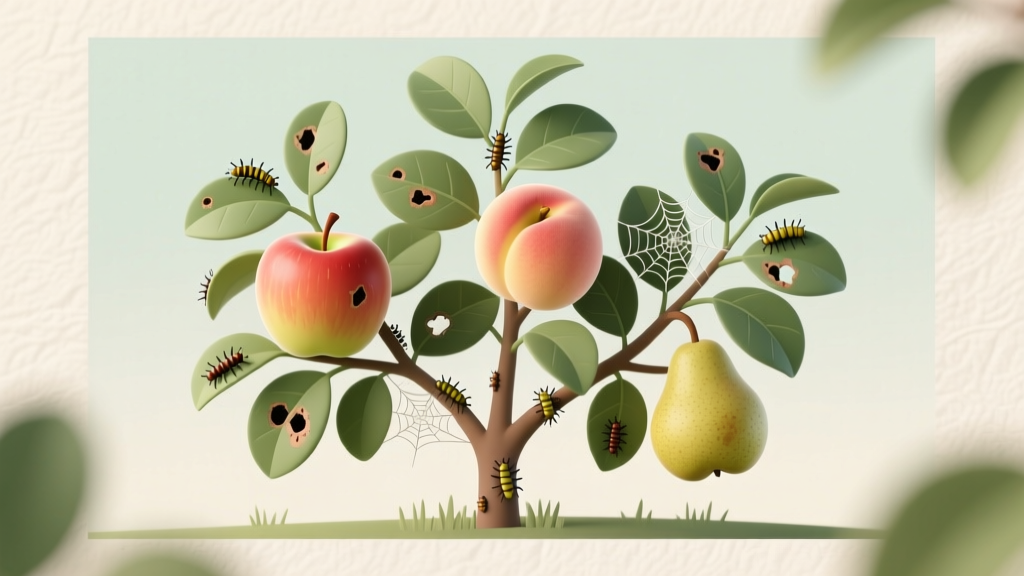
Common Fruit Trees Pests and How to Handle Them
You walk out one morning and your apple tree looks… dusty. Not pollen-dusty—more like it’s been sprinkled with flour and the leaves are curling like little spoons. Or you pick a “perfect” peach, slice it open, and find a wormy tunnel running right to the pit. Most home gardeners assume they missed a spray, or that fruit trees are just “high maintenance.” The truth is simpler and more empowering: most pest problems happen because the tree is stressed, the timing is off, or the wrong tool is being used for the specific pest.
I’ve watched healthy, well-watered trees shrug off aphids with barely a pause, while a drought-stressed tree in the same yard gets hammered. Pest control on fruit trees isn’t about blasting everything that moves. It’s about making your tree a tough target—and then using targeted actions when pests show up.
Start With the Tree: Watering, Soil, Light, and Feeding (Because Stressed Trees Attract Pests)
Watering: the easiest “pest prevention” you’re probably underdoing
Consistent moisture helps trees keep sap flowing, push new growth at the right time, and recover from leaf damage. Drought stress increases susceptibility to mites, scale, and aphids—plus it can lead to fruit cracking that invites secondary problems.
- Newly planted fruit trees: aim for 5–10 gallons per watering, 2–3 times per week for the first few months (adjust for soil type and heat).
- Established trees: deep water to moisten the top 12–18 inches of soil. In many home yards, that’s roughly 10–20 gallons once per week during dry stretches.
- Hot weather trigger: when daytime highs run above 90°F for several days, check soil moisture every 2–3 days.
Practical tip: Skip daily sprinkles. Use a slow hose soak under the dripline (where the outer leaves end). If you can push a screwdriver into the soil easily after watering, you’re getting depth.
Soil: pests love weak roots
Fruit trees do best in well-drained soil. Roots sitting in water invite rot, and a root-stressed tree becomes a beacon for borers and sap-feeding insects.
- Target soil pH for many fruit trees: 6.0–7.0 (apples often like ~6.0–6.5; stone fruits are commonly fine closer to 6.5–7.0).
- If water puddles longer than 6 hours after a hard soak, improve drainage (berm planting, raised bed, or soil structure work).
- Mulch: keep 2–4 inches of wood chips or shredded bark under the canopy, but keep mulch 6 inches away from the trunk to avoid rot and rodent damage.
Light: shade can worsen pest cycles
Most fruit trees need 6–8+ hours of direct sun for strong growth and good fruit quality. Dense shade keeps leaves damp longer—helping fungi—and reduces the tree’s ability to outgrow minor pest damage. If your tree gets less than 6 hours, you’ll need to be extra sharp with pruning and sanitation.
Feeding: too much nitrogen can invite aphids and soft growth
Over-fertilized trees push tender, sappy shoots—exactly what aphids and some caterpillars prefer. Underfed trees struggle to seal wounds (which matters for borers).
- Apply nitrogen in early spring around bud swell, not late summer.
- As a rough home-garden guideline, many gardeners use 0.1–0.2 lb of actual nitrogen per year of tree age for young trees, up to a reasonable cap (local recommendations vary by species and size).
- If shoots are growing more than 18–24 inches per year on mature apples/pears, ease off nitrogen.
Timing matters: feeding late (after mid-summer) can keep growth tender going into fall, which often increases overwintering pest survival and winter injury.
Know Your Enemy: Common Fruit Tree Pests (and What Actually Works)
The biggest mistake I see is treating “bugs” as one category. Different pests require different timing and methods. Here are the usual culprits in home orchards.
Aphids (green, black, woolly)
Symptoms: curled leaves, sticky honeydew, ants “farming” the shoots, distorted new growth. Woolly aphids look like cottony tufts on bark and pruning wounds.
What works:
- Blast with water: a firm spray from the hose, early in the day, repeated every 2–3 days for a week.
- Prune out hotspots: if one cluster is badly curled, remove it and trash it.
- Insecticidal soap or horticultural oil: coat the undersides of leaves; repeat in 7–10 days if needed.
- Control ants: use sticky barriers or manage nests; ants protect aphids from predators.
Don’t do this: broad-spectrum insecticides “just in case.” They often kill beneficials that would have cleaned up aphids for free.
Spider mites
Symptoms: fine stippling on leaves, bronzing, tiny webbing in hot/dry periods. Mites love dusty, droughty trees.
What works:
- Increase watering consistency and reduce dust (mulch helps).
- Rinse foliage with water during outbreaks.
- Use horticultural oil if populations build—spray coverage is everything.
Scale insects (San Jose scale, soft scales)
Symptoms: small bumps on twigs/bark; yellowing leaves; twig dieback; sometimes red halos on fruit (San Jose scale).
What works best is timing: dormant oil and crawler-stage control.
- Late winter/early spring: apply dormant horticultural oil when temperatures are above 40°F for at least 24 hours and no freeze is expected (follow label specifics).
- Late spring/summer: target the “crawler” stage (tiny mobile young). Use horticultural oil or labeled insect growth regulators where permitted.
- Prune: remove heavily infested twigs.
University of California Agriculture & Natural Resources notes that dormant oil applications can be effective against overwintering scale on deciduous fruit trees when applied correctly (UC ANR Integrated Pest Management, 2023).
Codling moth (apples, pears)
Symptoms: “wormy apples,” frass (sawdust-like droppings) at the calyx end, premature fruit drop.
What works (home scale):
- Sanitation: pick up fallen fruit weekly. Don’t compost infested fruit unless your compost gets reliably hot.
- Bagging fruit: once fruit reach about 3/4–1 inch diameter, bag individual apples/pears with paper bags or specialized fruit bags.
- Pheromone traps: hang at bloom or shortly after to monitor flight. Traps reduce mating pressure in small plantings and, more importantly, tell you when activity starts.
“The most effective treatments are those timed to egg hatch, not simply calendar dates.” — UC ANR IPM guidance on codling moth timing (UC ANR IPM, 2023)
For timing sprays, many regions use degree-day models; your local extension often publishes this. If you don’t have that, trapping plus fruit inspection is your best practical substitute.
Plum curculio (stone fruits, apples in some regions)
Symptoms: crescent-shaped scars on young fruit; fruit drop; larvae inside fruit.
What works:
- Daily drop cleanup during the early fruit period (those dropped fruit often hold larvae).
- Jarring method (small trees): early morning, spread a sheet and shake branches; destroy collected beetles.
- Targeted sprays timed soon after petal fall where the pest is established (follow local extension guidance for materials and timing).
Fruit flies and spotted wing drosophila (berries and some soft fruit; can affect cherries)
Symptoms: soft fruit collapses quickly; tiny punctures; larvae in ripening fruit.
What works:
- Harvest frequently—every 1–2 days during peak ripening.
- Don’t let “seconds” hang. Overripe fruit is a nursery.
- Use fine netting (mesh around 1 mm) once fruit begins to blush, if feasible.
Monitoring and sanitation are repeatedly emphasized in extension recommendations for SWD management (Penn State Extension article updates frequently; see Penn State Extension, 2022).
Peach tree borer (and other borers)
Symptoms: gummy sap mixed with sawdust (frass) at the base of trunk; weakening tree; dieback.
What works:
- Inspect the trunk base every 2–3 weeks during warm season.
- Expose the crown: pull mulch back from the trunk flare; borers love protected, moist trunk bases.
- Physical removal: if you find a borer tunnel, you can sometimes kill larvae with a flexible wire carefully inserted (old-school, but effective on a single tree).
- Preventive trunk sprays (where labeled/appropriate) are timed to adult flight/egg-laying—this varies by region.
Comparison Table: Common Control Methods (What They’re Best For)
| Method | Best Targets | Best Timing | Typical Home-Garden Effort | Key Watch-Out |
|---|---|---|---|---|
| Dormant horticultural oil (2–4% solution; follow label) | Scale, overwintering mite eggs, some aphid eggs | Late winter before bud break; >40°F for ~24 hours | Medium (one thorough spray) | Can damage stressed trees or applied before freeze |
| Insecticidal soap | Aphids, soft-bodied insects | At first sign; repeat in 7–10 days | Medium (needs coverage) | Can burn leaves in heat; avoid spraying in full sun at 90°F+ |
| Fruit bagging | Codling moth, apple maggot (often), light scab protection | When fruit are 3/4–1 inch diameter | High (labor per fruit) | Missed fruit = pest reservoir |
| Pheromone traps | Codling moth monitoring, some mating disruption in small sites | Hang at bloom/early season | Low | Traps are for timing—alone may not “solve” heavy pressure |
| Sanitation (weekly fruit pickup) | Codling moth, plum curculio, fruit flies | From fruit set through harvest | Medium | Needs consistency; skipped weeks undo progress |
Real-World Scenarios I See Every Season (and How I Handle Them)
Scenario 1: “My apple tree drops half its fruit in June—and the rest are wormy.”
What’s likely happening: a mix of natural “June drop” plus codling moth or plum curculio activity. The giveaway is frass at the blossom end or tunneling inside dropped fruit.
What to do this week:
- Cut open 10 dropped fruits. If 3+ show larvae/tunneling, treat this like an active pest problem.
- Pick up drops twice per week for the next month.
- Hang a codling moth pheromone trap and check it every 3–4 days.
What to do next season: bag fruit when they’re 3/4–1 inch wide, or use trap data to time targeted control measures.
Scenario 2: “My peach tree oozes sap at the base and the canopy looks tired.”
What’s likely happening: peach tree borer (or a related borer). The sap/frass combo at the trunk base is classic.
Steps that usually save the tree:
- Pull mulch and weeds back 6–8 inches from the trunk so the base stays dry and visible.
- Use a small knife to carefully lift bark at the gum site—if you see frass-packed galleries, remove larvae if possible.
- Improve tree vigor: deep water weekly during dry spells (10–15 gallons for a young tree, more for large trees depending on soil).
Extra note: Painting trunks or piling mulch against them doesn’t prevent borers; it often makes the problem worse by creating a protected egg-laying zone.
Scenario 3: “My citrus (or fig) is covered in ants and sticky leaves.”
What’s likely happening: aphids, mealybugs, or soft scale producing honeydew. Ants are there for the sugar and will defend pests from lady beetles and lacewings.
Fix it in this order:
- Stop the ants: use a sticky trunk barrier (on a wrap, not directly on bark) or bait stations along trails.
- Knock down the pest: horticultural oil gives good control on scales/mealybugs when coverage is thorough.
- Prune for airflow: thin dense interior shoots so beneficial insects can work.
Troubleshooting: Match the Symptom to the Fix
Leaves are curled tight, sticky, and covered with ants
Likely cause: aphids.
- Hose off shoots every 2–3 days for a week.
- Apply insecticidal soap in the evening; repeat in 7–10 days.
- Install ant control so predators can do their job.
Leaves look dusty/bronzed with tiny webbing in hot weather
Likely cause: spider mites.
- Deep-water and mulch to reduce drought stress (aim for 2–4 inches mulch depth).
- Rinse foliage mid-morning; avoid nighttime wetting if fungal disease is an issue.
- Use horticultural oil if mites persist; cover undersides.
Small bumps on twigs; twig tips dying back
Likely cause: scale.
- Plan a dormant oil spray when temps stay above 40°F (per label).
- Prune out heavily infested twigs before spraying.
- Check for “crawlers” later and treat promptly.
Fruit has a tiny hole with brown crumbly stuff near the blossom end
Likely cause: codling moth.
- Pick up fallen fruit weekly (minimum).
- Bag fruit at 3/4–1 inch diameter.
- Use pheromone traps to track flights and improve timing.
Gummy ooze with sawdust at the trunk base
Likely cause: borers.
- Expose the crown; remove mulch from trunk contact.
- Inspect every 2–3 weeks during warm months.
- Improve vigor (consistent deep watering; avoid trunk injuries).
Spray Smarter: Timing, Coverage, and Temperature Rules That Matter
If you spray at the wrong time, you can work hard and still lose fruit. If you spray at the right time with poor coverage, same story. A few rules keep you out of trouble:
- Spray in calm weather: wind under about 5–8 mph helps keep product on the tree.
- Avoid heat stress: many soaps and oils can cause burn when applied above 85–90°F or in full sun—spray in the evening or early morning and follow labels.
- Coverage beats strength: especially with oils/soaps, you’re contacting pests, not “poisoning” them from afar.
- Protect pollinators: never spray insecticides during bloom when bees are active. If a product is necessary, apply at dusk and only when blossoms are not present (again: label + local guidance).
Washington State University Extension emphasizes that correct identification and timing are central to successful home orchard pest management, especially for pests like codling moth and scale (WSU Extension publications, 2021).
Make Your Yard Less Welcoming to Pests (Without Turning It Into a Chemistry Project)
Long-term, your best “product” is a routine. Most heavy infestations are repeat problems because the off-season cleanup and early-season checks didn’t happen.
A simple seasonal checklist that actually works
- Late winter: prune for airflow; remove dead wood; plan dormant oil if scale/mites were present last year.
- At bloom: set pheromone traps (apples/pears). Do not spray insecticides.
- After petal fall: start weekly fruit drop pickup; inspect leaves for aphids on tender tips.
- Early summer: thin fruit (improves airflow and reduces touching fruit where pests hide). Bag fruit if you use that method.
- Harvest window: harvest frequently; remove damaged fruit immediately.
- Fall cleanup: rake up fallen fruit and leaves where practical; remove mummified fruit from branches.
If you take only one lesson from experienced orchardists, it’s this: most “pest control” is calendar habit. Ten minutes a week—checking shoot tips, turning over a few leaves, picking up drops—prevents the kind of outbreaks that demand big interventions later.
When you do need to act, pick the narrowest tool for the job: water spray for aphids, oil for scale, bagging for codling moth pressure, sanitation for fruit-infesting pests, and trunk-base vigilance for borers. Your trees will reward you with cleaner fruit—and you’ll spend more time harvesting and less time fighting mysteries.