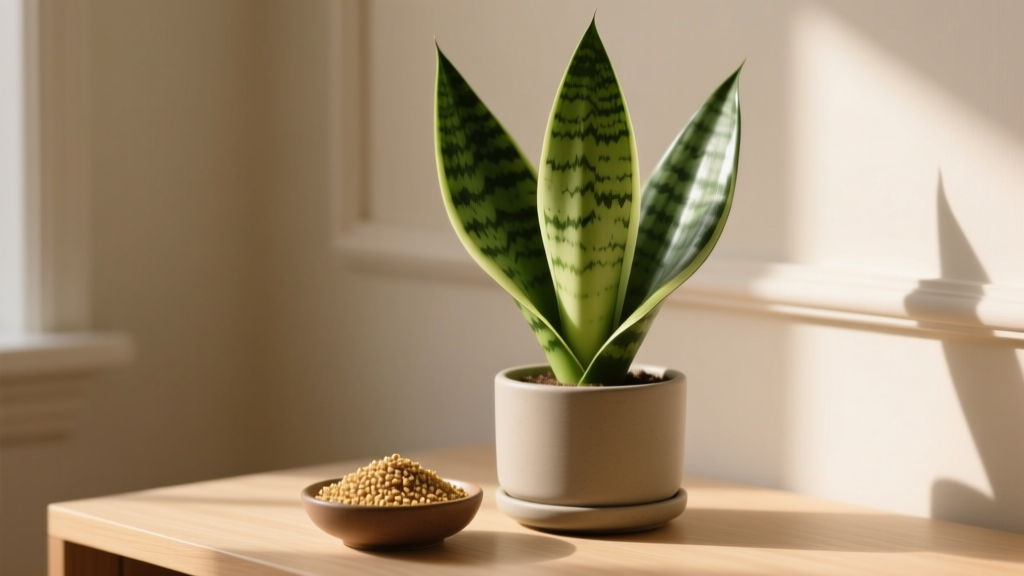
Cottonseed Meal for Acid-Loving Snake Plants
You repot a snake plant, it looks fine for a month, and then the leaves start to lose that crisp, upright “sword” posture. Tips brown. Growth stalls. You water less, then more, then swear off fertilizer entirely. Here’s the surprising part: a lot of snake plant “mystery decline” isn’t about water at all—it’s about a slow drift in the root zone that makes nutrients harder to use. Snake plants (Dracaena trifasciata, formerly Sansevieria) aren’t true acid lovers like blueberries, but they often grow better in a slightly acidic to neutral potting mix—especially indoors where minerals build up from tap water and slow-release fertilizers.
Cottonseed meal is one of those old-school amendments that can help—if you use it like a professional: small amounts, patient timing, and a soil mix that won’t turn into a soggy brick. It’s organic, mildly acidifying, and releases nitrogen slowly. Used wrong, it can invite fungus gnats or keep roots too wet. Used right, it’s a steady, gentle nudge that can bring a tired snake plant back to firm, clean growth.
This is the real-world, practical way to use cottonseed meal for snake plants—plus what to do when it doesn’t work, and what to try instead.
First: Are Snake Plants Really “Acid-Loving”?
Snake plants tolerate a range, but in containers they usually perform best when the potting mix is not overly alkaline. Most houseplant mixes land around pH 5.5–7.0. Problems crop up when pH creeps upward (hard water, frequent top watering without leaching, alkaline additives), which can lock up nutrients like iron and manganese—showing up as pale new growth and weak-looking leaves.
If you want a target: aim for a root-zone pH around 6.0–6.8. Cottonseed meal is traditionally considered mildly acidifying as it breaks down, and it supplies nitrogen with a slower release pattern than many synthetic fertilizers.
Two references worth keeping in mind:
- NC State Extension (2020) notes cottonseed meal is an organic fertilizer commonly used for acid-loving plants and provides nitrogen in a slow-release form. (NC State Extension publications on organic fertilizers, 2020)
- University of Massachusetts Amherst Soil & Plant Nutrient Testing Lab (2023) emphasizes that pH strongly affects nutrient availability and that container media can shift pH over time based on irrigation water and inputs. (UMass Amherst, 2023)
“Soil pH affects the availability of nutrients; when pH drifts too high or too low, plants can show deficiency symptoms even when nutrients are present.” — UMass Amherst Soil & Plant Nutrient Testing Lab guidance (2023)
What Cottonseed Meal Does (and Doesn’t) Do for Snake Plants
What it does
- Feeds slowly: Cottonseed meal is typically around 6-2-1 (N-P-K varies by brand). That nitrogen supports leaf growth without the “quick flush” you get from liquid synthetics.
- Mild acidification over time: As soil microbes break it down, it can gently lower pH.
- Supports steady growth in bright indoor light where snake plants actually want more nutrition than people think.
What it doesn’t
- It won’t fix overwatering. A snake plant sitting in wet, dense mix will rot no matter how “organic” the fertilizer is.
- It won’t correct a severe pH problem overnight. Expect weeks, not days.
- It’s not a micronutrient supplement. If your plant is pale from iron lockout, you may need a separate strategy.
Watering: Keep the Roots Dry-ish, Not Dust-Dry
Snake plants store water in their leaves and rhizomes. That’s why cottonseed meal needs extra caution: it’s organic material, and organic material plus constant moisture can invite gnats and sour smells.
A watering schedule that works in real homes
Use a simple rule: water only when the pot is dry deep down, not just on top.
- In spring/summer, many snake plants need water about every 14–21 days in average indoor conditions.
- In winter, it’s often every 21–35 days.
- Ideal room temperature range: 65–85°F (18–29°C). Growth slows below 60°F (16°C), and wet soil becomes risky.
How to water (step-by-step)
- Check moisture 2–3 inches down with your finger or a wooden skewer. If it comes out clean and dry, you’re good to water.
- Water thoroughly until you see runoff; then empty the saucer within 10 minutes.
- Every 6–8 weeks, “leach” the pot (run extra water through for 30–60 seconds) to flush mineral buildup—especially if you use hard tap water.
Real-world scenario #1: A snake plant in a low-light hallway gets watered every Saturday “because it’s on the calendar.” It grows fine for a while, then collapses at the base. The fix isn’t cottonseed meal—it’s cutting water frequency, moving it closer to brighter light, and repotting into a gritty mix.
Soil: Where Cottonseed Meal Helps—or Hurts
Cottonseed meal is easiest to use when your soil drains fast and dries predictably. If your mix stays damp for a week, adding an organic meal can push it into fungus gnat territory.
A snake-plant potting mix that plays well with cottonseed meal
Here’s a dependable blend:
- 50% high-quality cactus/succulent mix
- 25% perlite or pumice
- 25% fine orchid bark (or chunky bark fines)
That bark fraction improves airflow and gives microbes a better environment to break down cottonseed meal without the whole pot staying swampy.
Pot choice matters
- Choose a pot with a drainage hole—non-negotiable.
- Terracotta dries faster than plastic. If you’re using cottonseed meal and you tend to overwater, terracotta is your friend.
- Size: go only 1–2 inches wider than the root mass. Oversized pots stay wet too long.
Real-world scenario #2: A big snake plant gets “upgraded” into a pot twice the size with regular potting soil. Within 6 weeks, it’s limp. The solution is a smaller pot, gritty mix, and no fertilizer until new roots form. Cottonseed meal goes on the shelf until the plant is stable.
Light: The Hidden Driver of Fertilizer Success
If you feed a snake plant in dim light, you’re basically stocking the pantry when the stove is off. The plant can’t use the nitrogen quickly, and the soil stays biologically active longer—again, gnats and funk become more likely.
Best light targets
- Bright indirect light is ideal—near an east or bright north window, or a few feet back from a south/west window.
- Direct sun: gentle morning sun is fine; harsh afternoon sun can scorch. If leaves show pale, crispy patches, back it off.
If you use a grow light, aim for 10–12 hours per day at a moderate intensity. Under good light, cottonseed meal becomes more predictable because the plant is actively growing and can use the nutrients.
Feeding: How to Use Cottonseed Meal Without Making a Mess
Cottonseed meal is not a “mix it into every pot and forget it” fertilizer for snake plants. Think of it like seasoning—measured and timed.
When to apply
- Best window: March through September (active growth for most indoor plants).
- Avoid feeding in winter unless the plant is under strong grow lights and warm temperatures.
How much cottonseed meal to use (specific amounts)
For established snake plants in a fast-draining mix:
- 6-inch pot: 1 teaspoon (about 5 mL) as a top-dress
- 8–10-inch pot: 2 teaspoons
- 12-inch pot: 1 tablespoon
Apply at most every 8–10 weeks during the growing season. That’s usually 2–3 applications per year indoors.
Application method (step-by-step)
- Make sure the soil is already dry-ish, not freshly watered.
- Sprinkle the measured cottonseed meal evenly on the surface, keeping it 1 inch away from the plant base (avoid burying the crown).
- Scratch it lightly into the top 1/2 inch of mix with a fork—don’t disturb roots.
- Water lightly the next day (not a drench). The goal is to moisten the top layer so decomposition starts, without soaking the entire pot.
Odor and gnats: practical prevention
- Top with a thin layer (1/4 inch) of coarse sand, pumice, or fine gravel after applying meal. This dries the surface and discourages gnats.
- Use sticky traps for monitoring. If you see more than 5–10 gnats per trap per week, back off organic top-dressing and let the pot dry more thoroughly between waterings.
Comparison: Cottonseed Meal vs Other Feeding Methods (with real numbers)
| Feeding option | Typical N-P-K | Speed of release | Best application rate (snake plants) | Risk level (indoors) |
|---|---|---|---|---|
| Cottonseed meal | ~6-2-1 | Slow (weeks) | 1 tsp (6") to 1 Tbsp (12") every 8–10 weeks | Medium (gnats/odor if kept moist) |
| Liquid houseplant fertilizer | Commonly 10-10-10 or 20-20-20 | Fast (days) | 1/4 strength every 4–6 weeks in spring/summer | Medium-high (salt buildup, overfeeding) |
| Worm castings | ~1-0-0 (varies) | Gentle (slow) | 1–2 Tbsp top-dress 2–3x/year | Low-medium (can attract gnats if wet) |
| Slow-release pellets | Often 14-14-14 | Slow (2–4 months) | 1/4–1/2 label rate, applied once in spring | Medium (too strong for low light) |
My practical take: cottonseed meal is most useful for gardeners who (1) keep snake plants in brighter spots, (2) use fast-draining soil, and (3) prefer gentle nutrition over “instant green.” If your plant lives in low light, a tiny dose of dilute liquid fertilizer in summer is often safer than any organic top-dress.
Common Problems (and Exactly What to Do)
Symptom: Pale new growth, green veins, yellow between veins
Likely causes: pH drift upward, micronutrient lockout (iron/manganese), mineral buildup from tap water.
Fix:
- Leach the pot with clean water for 60 seconds (let it drain fully).
- Switch to filtered, rain, or distilled water for the next 4–6 weeks.
- If new growth stays pale, use a chelated iron product at label rate once, then reassess. Cottonseed meal can help long-term, but it’s not a quick iron fix.
Symptom: Mushy base, foul smell, leaves collapsing
Likely causes: rot from overwatering, dense soil, oversized pot. Cottonseed meal can worsen this by keeping microbial activity high in wet soil.
Fix (triage):
- Unpot the plant immediately.
- Cut away mushy roots/rhizome tissue with a sterile blade.
- Let cuts dry and callus for 24–48 hours in a warm, airy spot.
- Repot into a gritty mix in a pot only 1–2 inches wider than remaining roots.
- Do not fertilize for at least 6 weeks.
Symptom: Brown tips and crispy edges
Likely causes: irregular watering, salt buildup, too much direct sun, or fluoride/chlorine sensitivity from tap water (varies by region).
Fix:
- Trim brown tips cosmetically (follow the leaf’s natural point).
- Leach the soil every 6–8 weeks.
- Water deeply, then allow full dry-down—avoid “tiny sips” every few days.
- Move plant out of harsh afternoon sun if scorch is suspected.
Symptom: Fungus gnats after applying cottonseed meal
Likely causes: top layer stays moist, organic material decomposing, low airflow.
Fix (fast and effective):
- Stop feeding immediately and let the pot dry longer between waterings.
- Top-dress with 1/2 inch of coarse sand or pumice to dry the surface.
- Use yellow sticky traps for adults.
- If pressure is high, apply BTI (Bacillus thuringiensis israelensis) drenches per label weekly for 2–3 weeks.
Symptom: Dark, soft spots on leaves
Likely causes: cold damage (leaf cells collapse), or water sitting in the crown in cool temperatures.
Fix:
- Keep plants above 60°F (16°C), especially near drafty windows.
- Water in the morning so surfaces dry by night.
- Remove severely damaged leaves; they won’t “heal” where tissue has collapsed.
Three Real-World Feeding Scenarios (and How I’d Handle Each)
Case #1: Bright window, gritty soil, plant is healthy but slow
This is the ideal cottonseed meal situation. Apply 1 teaspoon (6-inch pot) or 2 teaspoons (8–10-inch pot) in spring, repeat once mid-summer. Expect firmer, slightly faster leaf production over the next 6–10 weeks. Don’t chase fast growth—snake plants reward patience.
Case #2: Low light apartment corner, plant survives but looks dull
I skip cottonseed meal here. Low light means slow metabolism; organics can linger and invite gnats. Instead:
- Move it closer to a window or add a grow light for 10–12 hours.
- Use a liquid fertilizer at 1/4 strength once in late spring and again in midsummer, then stop.
Case #3: Hard water area, white crust on soil, tips browning
Cottonseed meal can help counteract alkalinity over time, but first you need to get salts under control:
- Scrape off the top 1/2 inch of crusted mix and discard.
- Leach thoroughly, then switch water source (filtered/rain/distilled) for at least 1–2 months.
- After the plant stabilizes, apply cottonseed meal lightly (1 tsp for a 6-inch pot) once in summer.
Timing and Expectations: What You’ll See (and When)
Cottonseed meal is not a quick fix. In a warm room (70–80°F / 21–27°C) with decent light, you may notice:
- Within 2–4 weeks: slightly deeper green on newer leaves (subtle).
- Within 6–10 weeks: more consistent leaf firmness and new “pups” if the plant is mature and root-bound enough to reproduce.
- After 3–6 months: better overall vigor if pH and mineral issues were part of the problem.
If nothing improves by the 10-week mark, stop feeding and reassess basics: light level, pot size, drainage, and watering rhythm. Most snake plant issues trace back to those.
A Few Hard-Won Rules for Using Cottonseed Meal Indoors
- Use less than you think. For snake plants, underfeeding is safer than overfeeding.
- Never apply to already-wet, cold soil. That’s when odors and gnats explode.
- Don’t mix it deep into the pot. Top-dress lightly so you can monitor the surface and back off if needed.
- Match feeding to light. Bright plant = can use nutrients. Dim plant = fertilizer hangs around.
When cottonseed meal is used with restraint, it’s one of the gentlest ways to support steady snake plant growth and keep the root zone from drifting too alkaline over time. Treat it like a slow seasoning, not a rescue treatment, and your plant will repay you with sturdier leaves, cleaner color, and fewer “why is it sulking?” surprises.