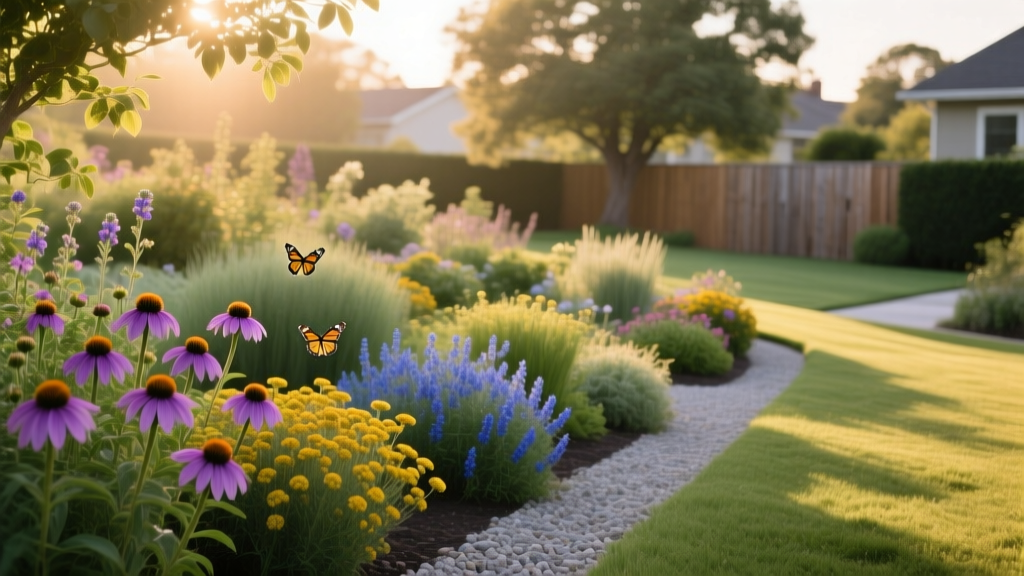
Main-Lining Pollinator Gardens for Even Canopy
The first time I tried to “help” my pollinator bed look tidier, I did what most of us do: I planted the tall stuff in back, the short stuff in front, and hoped for the best. By July, the bee balm was leaning into the coneflowers, the asters were hiding under floppy rudbeckias, and my carefully planned color blocks turned into one big thicket. The pollinators were happy—until a week of rain brought powdery mildew, and suddenly the bed was a maintenance problem.
Main-lining is a training and pruning strategy that solves that messy midseason collapse by building an even canopy—basically a level “roof” of blooms—so light and airflow reach everything. It’s borrowed from high-yield crop training (you may have heard the term in other circles), but used in a pollinator garden it becomes a practical way to reduce disease, prevent lodging (plants flopping over), and keep nectar plants accessible for bees, butterflies, and hummingbirds.
Done right, main-lining doesn’t make a pollinator bed sterile or rigid. It makes it readable, healthier, and easier to water. And yes—still buzzing with life.
What “main-lining” means in a pollinator garden
In plain terms, main-lining is intentional structure: you choose a few strong stems (the “mains”), encourage symmetrical branching, and remove or support growth that throws off the canopy. In a mixed planting, that can sound fussy, but it boils down to two habits:
- Early shaping: Pinch or cut back certain plants when they’re 6–12 inches tall to force branching and reduce height.
- Midseason management: Stake, corrall, or selectively thin so tall species don’t shade shorter bloomers and airflow stays open.
You’re not trying to make every plant the same height. You’re trying to make the blooming surface relatively even—so the bed functions like a wide landing pad for pollinators, not a staircase where the back row blocks the front.
“Good airflow is one of the most effective tools gardeners have to reduce foliar disease pressure—often more effective than any spray.” — Cornell Cooperative Extension, Home Gardening resources (2023)
Case studies: where main-lining pays off fast
Scenario 1: The suburban strip bed (hot, reflective heat). You’ve got a 3–4 foot deep bed along a driveway or sidewalk. Tall plants lean into the path. Main-lining here means earlier pinching (so you don’t create top-heavy stems), and sturdier supports because heat stress makes stems brittle.
Scenario 2: The cottage-style border (dense planting, lots of mildew). If you love packing plants in, you need structure more than most. Main-lining becomes selective thinning and disciplined watering at the base so leaves dry quickly.
Scenario 3: The windy rural bed (everything flops). Wind turns tall blooms into sails. Here, main-lining leans hard on a “Chelsea chop” timing and discreet corralling (twine rings, peony hoops, or brushy twig supports) so plants knit together without smothering each other.
Scenario 4: The new garden with young perennials. First-year perennials often grow unevenly. Main-lining helps you avoid that “one plant ate the garden” look by limiting dominance early, while you let slower plants establish.
Planning an even canopy: pick your anchors and your fillers
Before you pinch anything, identify:
- Anchor plants (structural, usually 24–48 inches tall): coneflower (Echinacea), bee balm (Monarda), Russian sage (Salvia yangii), Joe-Pye weed (Eutrochium), tall garden phlox.
- Fillers (12–24 inches): coreopsis, blanket flower (Gaillardia), shorter salvias, yarrow, asters.
- Edge/ground layer (6–12 inches): creeping thyme, strawberry, sedums, low asters, self-heal (Prunella).
Main-lining works best when you decide a target canopy height for each bed zone. In many home gardens, a practical goal is 24–30 inches for the main bloom layer—tall enough for impact, short enough to avoid constant staking.
A quick comparison: main-lining vs “let it grow” vs heavy staking
| Approach | Typical peak height control | Airflow / disease risk | Labor timing | Best for |
|---|---|---|---|---|
| Main-lining (pinch + selective thinning + light supports) | Reduces height by ~20–40% for pinch-responsive plants | Improves airflow; fewer mildew outbreaks in dense beds | Early season (May–June) + quick midseason check-ins | Mixed pollinator beds you want tidy and high-performing |
| Let it grow (minimal intervention) | Uncontrolled; tall plants often lodge after storms | Lower airflow; higher mildew risk in humid summers | Low early work; higher cleanup later | Wild areas, large meadows, low-traffic zones |
| Heavy staking (lots of individual stakes) | Good height control but plants can look “trussed up” | Mixed; staking can crowd stems if tied tight | Midseason emergency work (July storms) | Formal borders, specimen plants, show gardens |
Those “20–40%” height reductions are realistic for many pinchable perennials and annuals (like asters, mums, some salvias, basil, zinnias). The tradeoff is a bloom delay—often 7–14 days—but you get more branching and a sturdier plant.
Light: keeping bloom density without shading out your understory
Most pollinator favorites want 6–8+ hours of direct sun. But “full sun” isn’t just about the top of the plant. If your canopy is uneven, lower leaves sit in shade, stay damp, and become disease magnets.
Main-lining light rules I actually use:
- Don’t let any plant cast deep shade on its neighbor for more than 2–3 hours during peak sun (late morning to midafternoon).
- If the bed has only 4–6 hours of sun, keep the canopy lower (18–24 inches) and thin more aggressively for airflow.
- Place high-nectar “landing pad” plants (like coneflower and blanket flower) where they get the strongest sun; shade-tolerant pollinator helpers (like some native grasses and woodland edge plants) can take the margins.
If you’re gardening in heat zones where afternoon sun is brutal, a slightly uneven canopy can protect the soil from baking. In that case, you still main-line—just aim for a gentle slope instead of a perfectly level “tabletop.”
Soil: structure first, fertility second
Even canopy starts at the roots. Floppy growth is often a soil structure issue: too rich, too wet, too shallow, or compacted. Pollinator beds don’t need pampering, but they do need consistent drainage and enough organic matter to buffer moisture.
Targets that work in real yards:
- Soil pH: Most pollinator perennials are happy around 6.0–7.0.
- Compost: Mix in 1–2 inches of finished compost before planting (or as a topdress in spring). More than that every year can push overly lush, weak growth.
- Mulch: Keep mulch at 2–3 inches, pulled back from crowns by an inch to prevent rot.
If your bed is heavy clay, you’ll get better results improving drainage (compost, leaf mold, and time) than adding lots of fertilizer. Excess nitrogen is one of the fastest ways to create tall, floppy, aphid-prone stems.
For science-backed soil basics, the USDA NRCS Soil Quality guides (2020) and many university extension programs emphasize organic matter and aggregation as key to water infiltration and root health.
Watering: the part most people do “right,” but at the wrong time
When gardeners complain that their pollinator bed is floppy, mildew-prone, or uneven, I often find this pattern: frequent light watering that keeps roots shallow and leaves humid. Main-lining works best when watering supports deep roots and dry foliage.
How much to water (and how to tell)
For established beds, a good baseline is 1 inch of water per week from rain + irrigation, applied deeply. In hot spells above 90°F, many sunny beds need 1.5 inches weekly, especially on sandy soil.
- Deep soak schedule: 1–2 waterings per week, not daily sprinkles.
- Time of day: Morning, so foliage dries fast.
- Where to aim: At soil level (drip lines or soaker hoses make main-lining much easier).
Practical test: Push a trowel in 6 inches. If it’s dry at that depth, water. If it’s damp, wait.
Watering adjustments for main-lined canopies
An even canopy shades soil more uniformly, which can reduce evaporation. After you main-line and plants bush out, you may be able to reduce watering frequency slightly—but keep the depth the same.
For pollinator habitat irrigation guidance, see Xerces Society recommendations on watering native plantings (2022), which emphasize establishment watering and then deeper, less frequent irrigation to promote drought resilience.
Feeding: keep blooms sturdy, not lush
If you want an even canopy, go easy on nitrogen. I’d rather see a pollinator bed a little lean than overfed and floppy.
My reliable feeding approach:
- Spring: Topdress with 1 inch compost or apply a slow-release balanced organic fertilizer at label rate (often around 2–4 lbs per 100 sq ft, depending on product).
- Early summer (optional): If plants are pale or growth is stalled, use a light feed with something like a 3-4-4 or 4-4-4—avoid high-N lawn-type fertilizers.
- Mid-to-late summer: Skip heavy feeding. If you feed hard in July, you often get weak stems and delayed hardening before fall.
For nutrient best practices and soil testing, many extension services recommend testing every 3–5 years and fertilizing based on results. One widely cited reference is the University of Minnesota Extension soil testing guidance (2023), which stresses that “more” fertilizer isn’t better and can increase disease and runoff risk.
Main-lining step-by-step: building the canopy without wrecking bloom time
This is where it gets practical. Different plants respond differently, so you’ll use a few techniques depending on what’s in your bed.
1) Early-season pinch (best for many perennials and annuals)
Use this when plants are 6–12 inches tall and actively growing.
- Find the main stem tip and pinch or snip it just above a leaf node.
- For vigorous plants, repeat once more 2–3 weeks later.
- Aim for symmetry: if one side races ahead, pinch that side only.
Good candidates: asters, mums, salvias (many types), basil, zinnias, coleus (if included), some phlox depending on cultivar. Not great candidates: plants with a single flower stalk you don’t want to sacrifice (some lilies), or slow growers in their first year.
2) The “Chelsea chop” (controlled cutback for sturdier stems)
Traditionally timed around late May (near the Chelsea Flower Show in the UK), but the real timing cue is pre-bud, strong growth.
- Cut back selected plants by 1/3 to 1/2.
- Stagger it: cut back only the front half of a clump to extend bloom season.
- Expect bloom delay of 7–14 days on the cut stems.
Use this on plants that consistently flop: tall sedum (‘Autumn Joy’ types), some rudbeckias, sneezeweed (Helenium), and hardy asters.
3) Selective thinning (the secret to airflow)
If mildew is your recurring headache, thinning beats spraying. In early summer:
- Remove a few interior stems at the base to open the plant like a vase.
- Target weak, crossing, or crowded stems first.
- Don’t take more than 20–25% of total stems at once on stressed plants.
4) Gentle supports that disappear
Main-lining is not “no support ever.” It’s support early so you don’t fight it later.
- Peony hoops installed when plants are 10–14 inches tall.
- Brush supports (twiggy branches) for a natural look in cottage beds.
- Ring-and-twine corrals for sprawling plants—set stakes and run twine at 18–24 inches.
The trick is installing supports before plants lean. If you wait until after a thunderstorm, you’ll break stems trying to “put the toothpaste back in the tube.”
Common problems (and how to fix them without guessing)
Problem: Plants are tall and floppy, but leaves look lush and green
Symptoms: Long internodes, weak stems, lots of leafy growth, fewer blooms; plants fall outward after rain.
Likely causes: Too much nitrogen, too much shade at the base, overwatering, or no early pinching.
Fix:
- Skip fertilizer for the rest of the season; switch to compost-only next spring (1 inch topdress).
- Thin interior stems for airflow.
- Use a midseason corral at 18–24 inches to prevent total collapse.
- Next year, pinch at 6–10 inches and/or do a Chelsea chop by 1/3.
Problem: Powdery mildew keeps showing up by mid-summer
Symptoms: White/gray powder on leaves, usually starting low; leaves may yellow and drop.
Likely causes: Crowding, overhead watering, poor airflow, susceptible varieties (bee balm is notorious).
Fix:
- Thin stems to create visible gaps through the plant.
- Water in the morning at soil level; avoid wetting foliage.
- Remove the worst infected leaves (don’t compost if disease is severe).
- When replanting, choose resistant cultivars and give them room—often 18–24 inches spacing for monarda types helps.
Extension resources repeatedly emphasize cultural controls (spacing, airflow, watering practices) as primary disease prevention; see Cornell Cooperative Extension mildew management guidance (2023) for home garden best practices.
Problem: One species is dominating and shading everything else
Symptoms: A tall plant creates a “wall,” blooms only at the top, smaller plants fade out or stop flowering.
Likely causes: Aggressive growers (some goldenrods, mints, tall asters), rich soil, or planting too close.
Fix:
- Cut the bully back by 1/2 in early summer (pre-bud) to reset canopy height.
- Lift and divide in early spring or fall; replant only what fits your space.
- Use discreet edging or root barriers for spreaders (especially mint-family plants).
Problem: You pinched, and now bloom time is “off”
Symptoms: A gap in flowering, or blooms shifted later than expected.
Likely causes: Pinching too late (after buds formed) or pinching everything at once.
Fix:
- Next year, stagger pinches: do 1/3 of a clump, then another 1/3 a week later.
- Mix early, mid, and late bloomers so you’re not dependent on one flush.
- Keep notes: timing varies by region; what’s “late May” for me may be early June for you.
How main-lining changes maintenance through the season
Once your canopy is even, a lot of chores get easier:
- Deadheading: More accessible—blooms are at a consistent height.
- Weeding: Less bare soil (especially if you use a low ground layer), but you still need early-season weeding before plants knit together.
- Watering: More consistent soil shading reduces hot spots; drip lines can run more evenly.
- Pollinator activity: You often see more “workable” foraging—bees can move laterally across the bed instead of diving into a jungle.
I’ll also say this plainly: main-lining is a mindset shift. You stop reacting to chaos in July and start steering growth in May.
Three practical canopy recipes you can copy
Recipe 1: Sunny 4' x 8' pollinator bed (aim for a 24–30" canopy)
Back/center anchors (pinch once at 8–10"): coneflower, bee balm (mildew-resistant cultivar if possible), tall salvia.
Mid layer (pinch optional): coreopsis, gaillardia, shorter asters.
Edge: creeping thyme or low sedum, plus spring bulbs for early forage.
Supports: peony hoops at 12 inches tall on the floppers.
Recipe 2: Humid-climate border (prioritize airflow)
Space a little wider than you want in year one: 18–24 inches between bigger perennials. Thin early. Water only at the base. Use a Chelsea chop on plants that become mildew magnets when they crowd.
Recipe 3: Windy site bed (prevent lodging)
Go heavier on early cutbacks: reduce height by 1/3 on the tallest plants. Install corrals at 18 inches before the summer storms. Choose sturdy-stemmed species (many native grasses and some salvias excel here) and avoid overfeeding.
If you try main-lining this season, start small: pick 3 plants that always misbehave, and shape only those. Once you see how much easier it is to water, deadhead, and keep blooms upright, you’ll naturally expand the approach. An even canopy isn’t about controlling nature—it’s about giving your plants and pollinators a healthier stage to work on, all summer long.