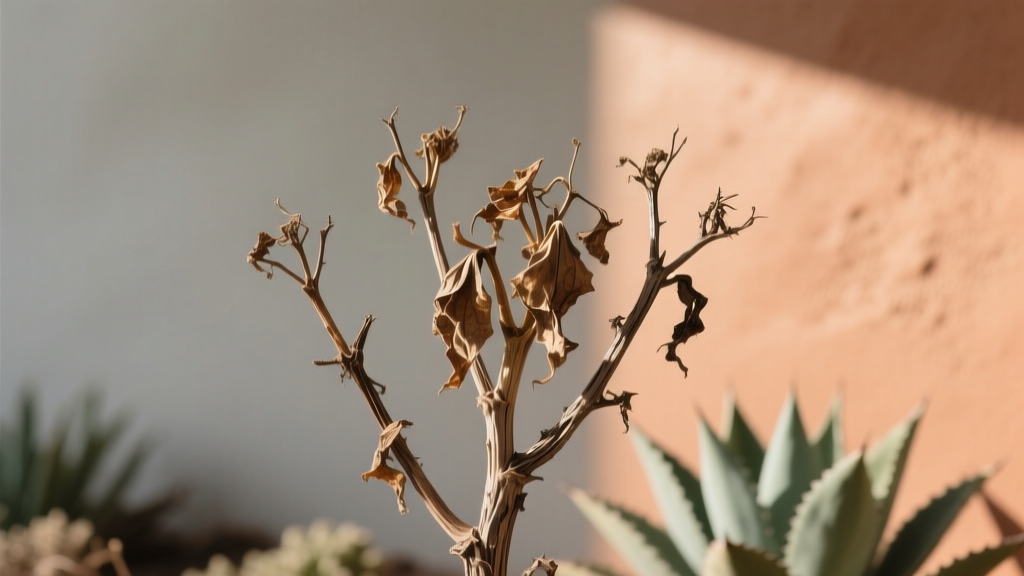
Defoliation Guide for Drought-Tolerant Plants
You finally get a break from a heat wave, step into the yard, and your “tough” plants look like they’ve been through a paper shredder. The lavender is half-brown, the rosemary has crispy tips, and your agave has a few sad, sagging leaves that weren’t there last week. The instinct is to prune hard, strip leaves, and “reset” everything. Sometimes that works. Sometimes it’s exactly how people finish off a plant that was about to recover on its own.
Defoliation—removing some or many leaves—can be a smart drought strategy, but only when you use it like a scalpel, not a chainsaw. Drought-tolerant plants survive by holding onto resources and controlling water loss. If you remove too much leaf area at the wrong time, you can force the plant to spend its emergency savings on regrowth instead of root repair and long-term survival.
This guide focuses on practical, home-gardener defoliation decisions for drought-tolerant ornamentals and edibles: when to remove leaves, how much is safe, and how to pair defoliation with the right watering, soil, light, and feeding. I’ll also walk through real situations I see constantly—new plantings, heat waves, and container plants that get missed.
Defoliation: what it is (and what it’s not)
Defoliation is deliberate leaf removal to reduce transpiration, remove damaged tissue, improve airflow, or rebalance a plant after stress. It is not the same as routine pruning for shape, and it’s not a substitute for watering. For drought-tolerant plants, defoliation is usually a triage tool: you’re helping a stressed plant stop bleeding water while it rebuilds roots and stabilizes.
“Plants need leaves to recover. Removing foliage can reduce water loss, but excessive defoliation reduces photosynthesis and slows the recovery you’re trying to speed up.” — University of California Agriculture & Natural Resources guidance on drought impacts and plant recovery (UC ANR, 2021)
A good rule of thumb I use in home landscapes: remove what is dead, diseased, or truly nonfunctional first, then pause. Drought-tolerant plants often look worse than they are. Their survival plan is to shed some leaves, close stomata, and wait.
When defoliation helps—and when it backfires
Situations where defoliation is useful
- Heat scorch or windburn: crisped leaf margins that won’t green back up.
- Transplant shock during hot weather: reducing leaf area can help a small rootball support the top growth.
- Fungal issues triggered by overhead watering: selectively removing dense inner foliage improves airflow.
- Water restrictions: modest thinning can lower weekly water demand while you ride out a dry spell.
Situations where defoliation often backfires
- Right before or during extreme heat: stripping leaves exposes stems and crowns to sunburn.
- On succulents/cacti: removing “leaves” (pads, blades) is a major wound and can invite rot.
- When a plant is already severely dehydrated: it may not have enough internal moisture to heal pruning wounds.
- When the real issue is roots: compaction, root rot, or girdling roots won’t be fixed by leaf removal.
If you remember one thing: defoliation is safest after you’ve corrected the water situation (even if that’s just a deep soak), and when temperatures are moderate.
How much to remove: a practical threshold
For most drought-tolerant shrubs (lavender, rosemary, sage, teucrium, lantana), keep defoliation moderate:
- Light cleanup: remove 5–15% of foliage (dead tips, scorched leaves).
- Moderate thinning: remove up to 20–30% of foliage if the plant is actively growing and well-watered.
- Avoid severe stripping: removing more than 35% at once is where recovery becomes unpredictable in hot, dry conditions.
For trees and large shrubs, stay even more conservative. Many university extension resources caution against heavy canopy reduction as a drought “solution” because it can trigger weak regrowth and sunburn on newly exposed bark. The general principle—don’t remove large fractions of canopy during stress—aligns with extension guidance (Texas A&M AgriLife Extension, 2023).
Step-by-step: safe defoliation during drought stress
This is the method I use when I’m trying to help a plant survive a dry stretch without pushing it into a death spiral.
- Pick the timing: work early morning. Avoid days above 90°F (32°C). If a heat wave is coming, wait.
- Hydrate first: deep-water the root zone the day before you prune. For shrubs, that’s typically 5–10 gallons applied slowly over the drip line.
- Sanitize tools: wipe blades with 70% isopropyl alcohol between plants (especially if you suspect disease).
- Remove the obvious losses: fully brown, crispy leaves; broken stems; mushy tissue (on non-succulents).
- Thin, don’t scalp: take small amounts from multiple spots. Keep a shaded interior; don’t hollow the plant out.
- Stop at 20–30%: unless you’re dealing with a specific disease outbreak and you have a plan.
- Aftercare: water deeply again 48–72 hours later, then return to a drought-appropriate schedule.
One more hard-won tip: don’t “pretty it up” all in one go. Drought recovery is measured in weeks, not weekends. You can always remove more later; you can’t put leaves back on.
Watering: pair defoliation with the right soak schedule
Drought-tolerant plants generally do best with deep, infrequent watering rather than frequent sips. After defoliation, the plant’s demand drops, but its need to rehydrate roots and heal wounds remains.
Deep-watering targets (use these as starting points)
- Established shrubs in-ground: 5–10 gallons per plant per watering, every 7–14 days in hot weather, depending on soil.
- New plantings (first 8–12 weeks): 2–5 gallons every 3–5 days until roots expand. Drought-tolerant doesn’t mean “no water while establishing.”
- Containers: water until you get steady runoff for 10–20 seconds. In heat above 95°F (35°C), you may need to check daily.
If you can, use a soil probe or even a long screwdriver to test moisture. If it slides in easily down 6 inches, you’ve likely wetted the active root zone for many perennials and smaller shrubs. Sandy soils may need more frequent watering; clay holds longer but must be soaked slowly to prevent runoff.
Method A vs Method B: the data-driven comparison
| Approach | Typical watering pattern | Root outcome | Defoliation risk | Best use case |
|---|---|---|---|---|
| A: Deep, infrequent soak | 5–10 gallons every 7–14 days (in-ground shrubs) | Encourages deeper rooting (better drought resilience) | Lower (plant has reserves and hydrated tissues) | Established landscape plants on drip or hose soak |
| B: Frequent light watering | 1–2 gallons every 1–2 days | Shallow roots near surface (more heat stress) | Higher (tissues stay borderline dehydrated; pruning wounds heal slower) | Short-term stopgap in extreme heat or very sandy soil |
In plain terms: if you’re going to defoliate, you want the plant on Plan A whenever possible. Plan B keeps things alive, but it tends to create fragile root systems that crash the moment a watering is missed.
Soil: the hidden driver of leaf drop and recovery
Most drought-tolerant plants fail because of soil mistakes—either the soil drains too slowly (roots suffocate and rot) or it drains too fast with no water-holding capacity (plants yo-yo between drought and flood).
Quick soil checks that matter
- Drainage test: Dig a hole 12 inches deep, fill with water, let it drain, then refill. If water is still standing after 4 hours, drainage is poor for many Mediterranean herbs and succulents.
- Mulch depth: Keep organic mulch 2–3 inches deep, pulled back 3–6 inches from crowns and trunks to prevent rot.
- Compaction check: If you can’t push a trowel in easily when soil is moist, roots are struggling. Aerate gently around the drip line (not right at the stem).
Defoliation won’t fix soggy roots. If a drought-tolerant plant is dropping leaves but the soil stays wet, treat that as a drainage problem first.
Light and heat: don’t expose bark and crowns by accident
One of the biggest mistakes I see: gardeners thin a shrub, then the next week the inner stems sunburn. Drought-tolerant plants often have foliage specifically positioned to shade woody tissue.
Light guidelines during recovery
- After defoliation, protect from afternoon blast: If temps are consistently above 90°F (32°C), give temporary shade (30–40% shade cloth) for 7–14 days.
- Containers heat up faster: Move pots so they get morning sun and afternoon shade during heat spikes.
- Watch reflective heat: South- and west-facing walls can add 10–20°F of radiant heat near the plant canopy.
For agave, aloe, and many cacti: a “cleaned up” look can be dangerous if it exposes the core to harsh sun. Remove only fully dead lower leaves/blades and leave anything that still provides shade unless it’s rotting.
Feeding: keep it light, and time it right
Drought stress and fertilizer are a bad mix. Nitrogen pushes soft new growth that needs more water and burns easily. After defoliation, your goal is steady recovery, not a growth spurt.
Feeding rules that keep you out of trouble
- Skip fertilizer during active drought stress: wait until the plant is holding turgor and putting out some new growth.
- If you feed, go mild: use a balanced slow-release at 1/2 label rate, or top-dress with 1/2 inch of compost (kept away from the crown).
- Best timing: early spring or early fall when nights cool below 65°F (18°C) and plants can grow without constant heat stress.
Extension recommendations commonly emphasize avoiding heavy fertilization during stress and focusing on proper irrigation and mulching first (University of California ANR, 2021; Texas A&M AgriLife Extension, 2023).
Common problems that lead to defoliation decisions (and how to read them)
Not all leaf loss is drought. Here are the patterns I use to decide what to remove and what to leave.
Symptom: crispy leaf edges, browning tips, leaves dropping from the inside out
- Likely cause: drought stress, hot wind, inconsistent watering.
- Do this: remove fully crisp leaves; keep partially green ones. Deep-water and add 2–3 inches mulch.
- Avoid: hard pruning during heat; it can trigger sunburn and more dieback.
Symptom: yellowing leaves that feel soft, soil stays wet, plant looks “thirsty” anyway
- Likely cause: root stress from poor drainage or overwatering (oxygen deprivation can mimic drought symptoms).
- Do this: stop watering until the top 2–3 inches dry; improve drainage; consider raising the plant or replanting in a mound.
- Defoliation note: keep it minimal—remove only mushy or diseased foliage. The plant needs leaves to rebuild roots.
Symptom: sudden leaf drop after a deep soak following a long dry spell
- Likely cause: rebound stress; salts moving through the root zone; rapid change in soil moisture.
- Do this: switch to slower, staged watering: half the volume, wait 30–60 minutes, then apply the rest. This reduces runoff and shock.
- Defoliation note: wait 7–10 days before removing anything beyond dead leaves. Let the plant show you what’s truly lost.
Three real-world scenarios (and what to do)
Scenario 1: Newly planted lavender in summer starts browning from the base
This is classic establishment stress. Lavender is drought-tolerant once rooted, but a new planting with a small rootball can’t keep up.
- Action plan:
- Water with 2–3 gallons every 3 days for the next 2 weeks, then stretch to every 5 days.
- Remove only fully brown stems/leaves. Keep green growth even if it looks sparse.
- Check soil: lavender hates sitting wet. If the hole drains slowly (standing water after 4 hours), replant on a mound.
Once you see new growth at tips and the plant holds color through midday, you can lightly shape it—think 10–15% thinning, not a haircut.
Scenario 2: Rosemary hedge gets scorched after 100°F days and hot wind
Rosemary often looks ruined after extreme heat, then surprises you with regrowth weeks later—if you don’t overreact.
- Action plan:
- Deep soak the root zone with 10 gallons per 4–5 feet of hedge, applied slowly.
- Wait 7 days, then snap-test stems: green and flexible means alive; brittle and brown inside means dead.
- Prune out dead stems back to living wood. Aim to remove no more than 25–30% total canopy.
- Mulch and give temporary shade cloth on the hottest side for 10–14 days.
Don’t fertilize right after. Let it stabilize, then feed lightly in cooler weather.
Scenario 3: Agave with drooping lower leaves after weeks of drought
With agave, those lower leaves are water storage and sun protection. Removing too many can expose the core and slow recovery.
- Action plan:
- Remove only leaves that are fully brown, collapsed, or obviously rotting at the base.
- Water once, deeply but carefully: wet soil around the plant, not into the crown. In-ground, a slow soak of 2–5 gallons can be enough depending on size and soil.
- Do not water again until soil is dry several inches down (often 2–3 weeks in many climates).
If the plant is in a pot that bakes on concrete, move it off the hot surface and into bright shade for a week. That one change can stop the downward slide.
Troubleshooting: specific defoliation mistakes and fixes
Problem: “I stripped a shrub and now the stems are sunburned”
- Symptoms: bark bleaches, cracks, or turns reddish-brown on exposed sides.
- Fix: provide shade cloth (30–40%) immediately for 2–3 weeks. Water deeply on schedule. Avoid more pruning until new foliage shades the stems again.
- Next time: thin gradually, leaving enough foliage to protect inner wood.
Problem: “After pruning, the plant wilted worse”
- Symptoms: drooping even in morning; leaves curling; no perk after watering.
- Fix: check root zone moisture down 6 inches. If dry, do a slow deep soak. If wet, stop watering and address drainage. Add temporary shade for 7–10 days.
- Next time: water the day before pruning and keep defoliation under 20% when plants are stressed.
Problem: “I removed dead leaves, but more keep browning every week”
- Symptoms: rolling decline, tip dieback, patchy browning.
- Fix: stop chasing it with more pruning. Reassess:
- Is water reaching the drip line or just the base?
- Is mulch piled against stems?
- Is there reflected heat from a wall or rock?
- Action: adjust watering to deep soak, move irrigation outward, correct mulch placement, and wait 2–4 weeks before further pruning.
Plant-by-plant notes: drought-tolerant favorites and how they handle defoliation
Mediterranean shrubs (lavender, rosemary, sage, santolina)
These tolerate selective thinning well, especially in mild weather. They hate soggy soil more than they hate drought. Remove dead stems, but avoid cutting into old, leafless wood on lavender—regrowth can be slow or nonexistent. With rosemary, you can usually prune back to living wood once you confirm it’s green inside.
Woody ornamentals (oleander, bottlebrush, pittosporum)
These can rebound, but heavy defoliation during heat can trigger sunburn and weak shoots. Use staged pruning: remove the worst 10–15% now, then another round after 3–4 weeks if recovery is steady.
Succulents (agave, aloe)
Minimal defoliation. Dead lower leaves can be removed for hygiene, but keep enough to shade the plant body. Focus on correct watering intervals and drainage.
Citations and further reading you can trust
Two solid, practical reference points that align with what home gardeners see on the ground:
- University of California Agriculture & Natural Resources (UC ANR). Drought and landscape plant management (2021).
- Texas A&M AgriLife Extension. Tree and shrub care during drought and heat (2023).
Extension guidance tends to repeat a theme that’s worth adopting: protect the root zone, water correctly, and prune conservatively during stress. Defoliation is a tool—but it’s not the first tool you reach for.
If you’re standing there with pruners in hand, start small. Remove what’s unquestionably dead, give the plant a deep soak on a sensible schedule, and let it show you where life still is. Drought-tolerant plants are survivors by design—our job is to help them spend their reserves wisely, not force them into a sprint when they’re already running on fumes.