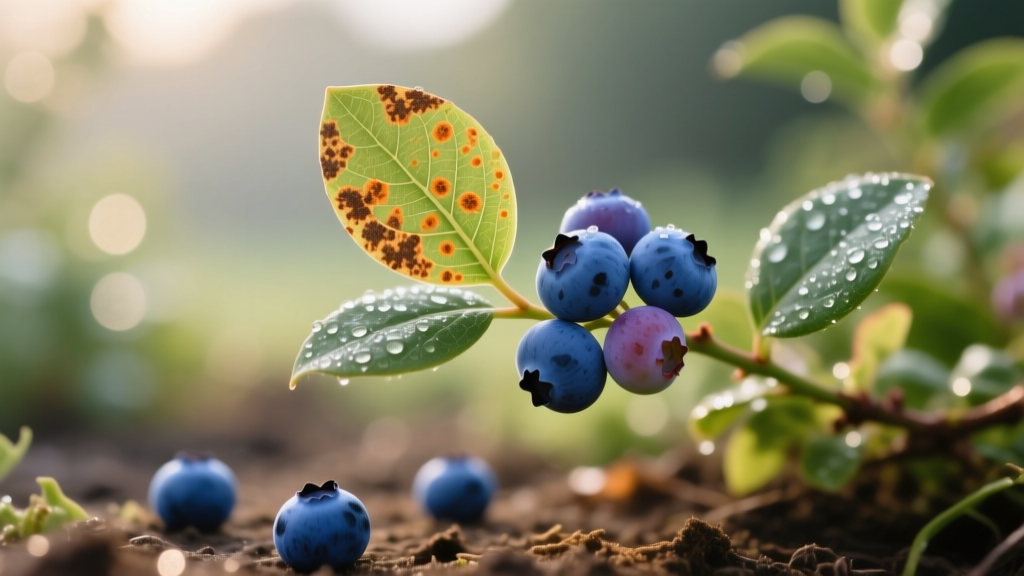
How to Handle Rust Fungus on Blueberries
You walk out to check your blueberry bushes in mid-summer, and the leaves look like they’ve been sprinkled with cinnamon. Flip a leaf over and it’s worse: tiny orange pustules that rub off on your fingers like rust dust. A week later, those leaves start dropping, and the bush looks thin and tired—right when it should be packing energy into next year’s buds.
Blueberry rust is one of those problems that can go from “huh, that’s odd” to “why is my plant defoliating?” in a hurry. The good news: most home gardeners can get ahead of it with a mix of sanitation, smarter watering, a few pruning habits, and (when needed) well-timed fungicides. The trick is knowing what you’re looking at and acting early.
Rust on blueberries is most often caused by rust fungi in the Pucciniastrum group in many regions, and it thrives when leaves stay wet for long stretches. If you’ve had warm days, cool nights, heavy dew, and overhead watering, you’ve basically rolled out the welcome mat.
Spotting blueberry rust early (and not confusing it with other issues)
Rust symptoms can overlap with nutrient problems and leaf spot diseases, so it pays to do a quick, hands-on check. Don’t guess from a distance—flip leaves over.
Classic symptoms of rust
- Small yellow spots on the top of the leaf that expand over time.
- Orange to rusty-brown pustules on the underside of the leaf (these can smear when rubbed).
- Premature leaf drop starting from the lower or inner canopy.
- Reduced vigor: fewer new canes, smaller berries next season if defoliation is severe.
Quick “rust vs. lookalikes” check
| Problem | Top of leaf | Underside of leaf | What gives it away | Best first move |
|---|---|---|---|---|
| Rust fungus | Yellow spotting, sometimes mottled | Orange/rust pustules that rub off | Powdery “rust” residue on fingers | Remove infected leaves, reduce leaf wetness |
| Septoria leaf spot | Small brown spots with lighter centers | Similar spots; no orange pustules | Spots look “target-like,” no powder | Sanitation + improve airflow |
| Nitrogen deficiency | Overall pale green/yellowing | No pustules | Uniform color change, starts on older leaves | Correct feeding (after confirming soil pH) |
| Spider mites | Stippling (tiny pale dots) | Fine webbing sometimes | Webbing + stippling, not orange dust | Rinse foliage + miticide/soap if needed |
“Most foliar fungi are management problems, not mysteries—reduce the hours of leaf wetness and you reduce the infection window.” — Extension plant pathology guidance summarized from University of Florida IFAS materials (2022)
What triggers rust on blueberries (so you can break the cycle)
Rust spores need living leaf tissue and the right microclimate. The pattern I see in home gardens is pretty consistent: lush, dense bushes + overhead sprinklers + morning shade that slows drying.
Here are the biggest drivers:
- Long leaf-wetness periods (think 8–12 hours of wet leaves from dew, rain, or sprinklers).
- Warm, humid weather, often in the 65–77°F (18–25°C) range depending on the species and region.
- Dense canopies that trap humidity and reduce airflow.
- Susceptible varieties (some southern highbush types can be more prone in rust-favorable climates).
- Carryover inoculum: infected leaves left under the bush can keep the pressure high.
Rust management is mostly about shaving down that infection pressure. You don’t need perfection—just fewer favorable hours for the fungus.
Watering: the fastest way to make rust better (or worse)
If you change only one thing, change how you water. Rust loves wet foliage, and blueberries don’t need wet leaves to thrive. They need evenly moist soil and good drainage.
How much to water (realistic home-garden targets)
During active growth and fruiting, most blueberries do well with about 1–2 inches of water per week from rain + irrigation. In hot spells, that may mean watering 2–3 times per week rather than one heavy soak—especially in sandy soil.
Best watering method to reduce rust
- Drip irrigation or a soaker hose under mulch: keeps leaves dry.
- Water early morning if you must wet foliage, so leaves dry fast.
- Avoid evening watering that leaves the canopy wet overnight.
Scenario #1: Overhead sprinklers on a timer
What happens: Sprinklers run at 7 p.m., leaves stay wet until late morning, rust spreads fast.
Fix:
- Switch to drip or move the sprinkler pattern so it doesn’t hit foliage.
- If sprinklers are your only option, run them at sunrise and shorten the cycle.
- Mulch to reduce evaporation so you aren’t forced to water as often.
Soil: keep the plant strong so it can outgrow damage
Rust is easier to manage when the bush is growing steadily (not stressed, not over-pushed). Soil pH and drainage are the big levers for blueberries.
Soil pH and texture targets
- pH: aim for 4.5–5.5. Above that, nutrient uptake drops and plants weaken.
- Organic matter: blueberries like a humus-rich root zone; work toward 3–5% organic matter or more in the bed.
- Drainage: roots hate standing water. If water sits longer than 24 hours after a rain, improve drainage or raise the bed.
Soil stress doesn’t cause rust directly, but it makes defoliation more damaging. A healthy bush can lose some leaves and keep going. A weak bush spirals.
Mulch that actually helps
Use 2–4 inches of pine bark fines, pine needles, or aged wood chips. Mulch stabilizes moisture (less watering), reduces splash (less spore movement), and supports a cooler, healthier root zone.
Light and airflow: the underrated rust control
Rust loves a still, damp canopy. Sun and airflow shorten leaf-wetness time—often more than any spray.
Sunlight target
Give blueberries at least 6–8 hours of direct sun. Morning sun is especially valuable because it dries dew quickly.
Spacing and pruning for airflow
- Space bushes roughly 4–6 feet apart (variety dependent) so air can move through.
- Prune annually in late winter to remove:
- dead wood
- twiggy growth in the center
- 1–2 of the oldest canes if the bush is crowded
Scenario #2: The “privacy hedge” blueberry row
What happens: Bushes planted 2–3 feet apart form a dense wall. Inside leaves stay damp; rust pops up every year.
Fix: Thin the canopy hard enough that you can “see daylight” through the plant. If the row is permanently crowded, consider removing every third bush to reset spacing. It feels drastic, but it’s often cheaper than repeated crop loss and spraying.
Feeding: avoid the two extremes that make rust worse
With blueberries, feeding mistakes are usually one of two types: too much nitrogen (lush, tender growth that stays wet longer) or too little nutrition because pH is off.
Practical fertilizer timing and amounts
For established plants, a common home-garden approach is to apply an acid-forming fertilizer in split doses:
- Early spring: about 1–2 ounces of ammonium sulfate per plant (or equivalent) when buds begin to swell.
- 4–6 weeks later: repeat the same amount if growth is слаб or leaves are pale (and pH is in range).
Stop nitrogen after early summer in most climates. Late feeding can push tender growth that’s more vulnerable and doesn’t harden off well.
Always follow product labels and adjust for plant size—an older, 6-foot bush is not the same as a 2-gallon baby plant.
Scenario #3: “I fertilized heavily and the rust exploded”
What happens: A big nitrogen push creates dense, succulent foliage. The plant looks great for two weeks, then rust spreads like wildfire.
Fix: Back off nitrogen, focus on pruning for airflow, and confirm soil pH with a real test. If pH is too high (say 6.2), correct that first—otherwise fertilizer won’t perform the way you expect.
Step-by-step: what to do the moment you see rust
Early action is the difference between a few spotted leaves and a half-bare bush.
- Confirm it’s rust. Flip leaves and look for orange pustules underneath.
- Remove the worst leaves. Hand-pick heavily infected leaves and bag them. Don’t compost if your compost pile doesn’t reliably heat up.
- Clean up leaf litter. Rake and remove fallen leaves beneath the bush.
- Fix watering. Switch to drip/soaker, water in the morning, avoid wet foliage.
- Open the canopy. If the bush is dense, thin lightly now (save major pruning for late winter).
- Decide on spraying based on severity. If it’s spreading weekly, consider a fungicide program.
Fungicides: when they’re worth it, and how to time them
If rust shows up late and stays mild, you can often manage it with sanitation and better drying conditions. If it arrives early and spreads fast—especially on young plants—fungicides can prevent defoliation.
University guidance generally emphasizes prevention and timing. The North Carolina State Extension notes that fungicides work best when applied before disease becomes severe and when paired with cultural controls (NC State Extension publication, 2023). Similarly, University of Florida IFAS resources stress reducing leaf wetness and using fungicides as part of an integrated approach (UF/IFAS Extension materials, 2022).
Organic-leaning options (often preventative)
- Copper-based fungicides: can help prevent spread, but can also cause phytotoxicity if overused or applied in hot weather. Avoid spraying when temperatures are above about 85°F unless the label allows it.
- Sulfur: used more for other blueberry diseases; check label for rust and temperature restrictions (sulfur can burn foliage in heat).
Conventional options (often stronger, label-dependent)
Homeowner-available products vary by state/country. Look for fungicides labeled for blueberries and for rust or leaf spot diseases, and rotate modes of action to reduce resistance. If you’re unsure, take a leaf sample to your local Extension office and ask what’s currently recommended for your area.
Timing that works in the real world
- Start sprays when you first see symptoms or when your garden historically gets rust and conditions are favorable (warm + humid + frequent dew).
- Repeat at 7–14 day intervals depending on label, rainfall, and how fast new growth is coming.
- After heavy rain (around 1 inch or more), you may need to reapply sooner if the label indicates wash-off risk.
Comparison analysis: sanitation-only vs. integrated control (with numbers)
Here’s the straight talk: sanitation-only can work when rust pressure is low. But in humid climates or in years with persistent dew, you may need an integrated approach to keep leaves on the plant long enough to fuel next year’s crop.
| Approach | What you do | Best timing | Typical cost | Expected result in a humid year |
|---|---|---|---|---|
| A) Sanitation only | Pick infected leaves weekly; rake leaf litter; improve watering | Start at first spots; repeat for 3–6 weeks | $0–$20 | Often slows rust; may still see 20–40% leaf loss if weather stays wet |
| B) Integrated (sanitation + pruning + targeted sprays) | All sanitation steps + thin canopy + fungicide at 7–14 day intervals | Early detection through mid-season | $25–$80 | Usually keeps leaf loss under 5–15% when timed well |
Those percentages aren’t promises—they’re a practical range I see in home gardens. Your results depend on how early you act and whether leaves are drying by mid-morning most days.
Common problems that make rust harder to control
Problem: Leaves stay wet all morning
Symptoms: Rust spreads from the lower canopy upward; new spots appear after every foggy/dewy stretch.
Fix:
- Prune lightly to open the interior.
- Remove weeds around the base to improve airflow.
- If possible, relocate containers or trim nearby shrubs so blueberries get morning sun.
Problem: Repeated reinfection year after year
Symptoms: Plants look fine in spring, then rust appears around the same month every year.
Fix:
- Do a fall cleanup: remove fallen leaves and fruit debris.
- Refresh mulch to 2–4 inches after cleanup to reduce splash and keep weeds down.
- Plan a preventative spray at the usual onset window next season (if rust has been severe).
Problem: Yellow leaves but no orange pustules
Symptoms: Leaves yellow evenly or between veins; underside is clean.
Fix:
- Test soil pH; target 4.5–5.5.
- If pH is high, correct pH first before adding more fertilizer.
- Check irrigation water source—some well water is alkaline and slowly pushes pH up.
Problem: You sprayed, but rust kept spreading
Symptoms: New infections show up 7–10 days later; older leaves continue to deteriorate.
Fix:
- Make sure the product is labeled for blueberries and includes rust/leaf disease on the label.
- Improve coverage: spray until leaves are evenly coated, including the undersides (where rust pustules form).
- Rotate fungicide modes of action if using conventional products (don’t repeat the same chemistry all season).
- Address the real driver: wet leaves. Sprays can’t outwork nightly wet foliage forever.
Seasonal game plan (what to do and when)
Late winter (dormant season)
- Prune to open the canopy; remove weak, crossing, and oldest canes.
- Plan spacing fixes before growth starts (this is when moving or removing a plant is least painful).
Spring (bud break through bloom)
- Set up drip irrigation before the first hot spell.
- Apply first split fertilizer dose (modest, not heavy).
- Scout weekly—rust is easier to stop when you see the first handful of spots.
Summer (fruiting through post-harvest)
- Maintain even moisture: about 1–2 inches/week.
- Remove heavily infected leaves early in an outbreak.
- If rust is progressing, begin sprays and stick to a 7–14 day rhythm per label.
Fall
- Rake and remove fallen leaves (this matters more than most folks think).
- Mulch after cleanup.
- Make notes: when did rust first appear, and what was the weather like? Those notes help you time prevention next year.
When to worry (and when not to)
If rust shows up in late summer after harvest and you only see a few leaves affected, you can often manage it with leaf removal and better watering habits. But if a young plant loses a big chunk of its leaves in early summer, that’s when I get serious—because defoliation can stunt growth and reduce next year’s flower bud set.
A practical threshold: if you’re seeing rust on more than 10–15% of leaves and it’s spreading week to week, treat it like an active outbreak—sanitation plus airflow improvements, and consider fungicide support if your climate stays humid.
Rust is aggravating, but it’s also predictable. Dry the leaves, open the canopy, keep the plant steadily growing in acidic soil, and you’ll turn it from a yearly crisis into a minor maintenance chore—more like pulling a few weeds than losing a season.
Sources: North Carolina State Extension plant disease management guidance for blueberries (2023); University of Florida IFAS Extension resources on blueberry foliar disease management and cultural controls (2022).