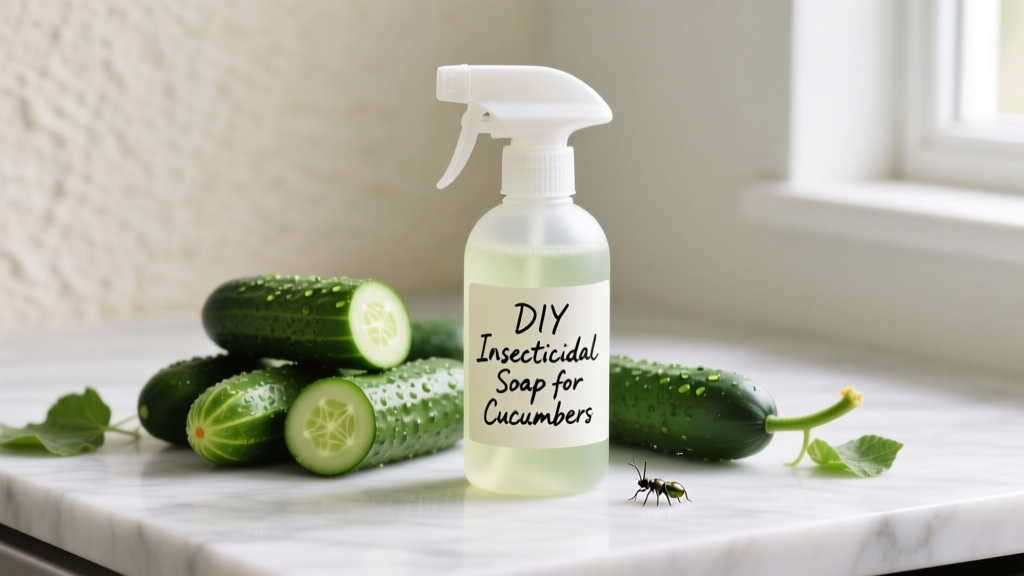
DIY Insecticidal Soap Spray for Cucumbers
You walk out to the cucumber patch on a warm morning, coffee in hand, and something feels off. The leaves look a little “dusty,” curled at the edges, and when you flip one over, it’s crawling—aphids clustered along the veins, maybe a few spider mites throwing fine webbing between leaf ribs. Yesterday the plants looked fine. Today, they look like they’re losing a fight.
This is exactly the moment when a simple DIY insecticidal soap spray can save your cucumber crop—if you mix it correctly, apply it at the right time, and pair it with good cucumber care (watering, light, soil, feeding). I’ve seen gardeners spray once, declare it “didn’t work,” and give up—when the real problem was harsh sun application, wrong soap, or spraying without hitting the undersides of leaves where the pests live.
Let’s get practical: you’ll get a reliable soap recipe, a comparison of options, and a troubleshooting playbook for real-life cucumber situations.
Before You Spray: Make Sure Your Cucumber Care Isn’t Inviting Pests
Soft-bodied pests like aphids and spider mites love stressed cucumbers. In my garden, outbreaks spike after inconsistent watering, nitrogen-heavy feeding, or a heat wave that turns leaf undersides into mite nurseries. Insecticidal soap is a tool—not a substitute for solid growing conditions.
Watering: Keep Cucumbers Steady (Not Flooded, Not Thirsty)
Cucumbers want consistent moisture. The goal is even growth, because stress makes leaves more vulnerable and pushes plants to produce tender, pest-friendly growth.
- Weekly target: about 1 to 1.5 inches of water per week from rain + irrigation (more in extreme heat or sandy soils).
- Best method: drip irrigation or a soaker hose; overhead watering can encourage foliar disease.
- Timing: water early morning so foliage dries quickly if it gets splashed.
- Heat rule of thumb: if daytime highs exceed 90°F for several days, expect to water more frequently (often every 1–2 days in containers or sandy beds).
Practical check: push your finger 2 inches into the soil near the plant. If it’s dry at that depth, water deeply. If it’s damp, wait.
Soil: Drainage + Organic Matter = Fewer Problems
Cucumbers grow fast and have a lot of leaf area. They do best in soil that holds moisture but drains well.
- Target soil pH: roughly 6.0–6.8.
- Compost: mix in 1–2 inches of finished compost before planting.
- Avoid “rich but soggy” beds: waterlogged soil weakens roots and sets the stage for wilts and stress-related pest flare-ups.
Light: Full Sun Helps Plants Outgrow Damage
Cucumbers perform best with 8+ hours of direct sun. If you’re in a very hot climate, some afternoon shade can reduce heat stress—but too little light makes thin, tender growth that pests love.
Feeding: Don’t Overdo Nitrogen
Over-fertilized cucumbers put on lush, soft growth—and aphids throw a party. Feed steadily, not aggressively.
- At planting: incorporate compost and, if needed, a balanced fertilizer.
- Once flowering starts: shift away from heavy nitrogen; choose a more balanced or slightly lower-N fertilizer.
- Timing: a light feeding every 3–4 weeks in the ground (containers may need more frequent, diluted feeding).
What Insecticidal Soap Actually Does (And What It Doesn’t)
Insecticidal soap works by disrupting the outer membranes of soft-bodied insects—especially aphids, whiteflies, spider mites (it’s less reliable on mites than on aphids), and young scale crawlers. It must contact the pest to work. It does not provide long residual control like some synthetic insecticides.
“Insecticidal soaps work only when wet and must contact the insect to be effective.” — University of Minnesota Extension (2022)
This contact-only nature is why application technique matters more than most gardeners think.
DIY Insecticidal Soap Spray Recipe (Safe, Effective, Repeatable)
I’m going to give you two workable recipes: a simple soap-and-water mix, and an optional version with a small amount of oil for better coverage. Stick with the simple recipe first if your plants are stressed or temperatures are high.
Recipe A: Basic DIY Soap Spray (Best Starting Point)
- Water: 1 quart (32 oz) of clean water (distilled is ideal if you have hard water)
- Soap: 1 teaspoon (5 mL) of true liquid castile soap or a pure soap labeled as such
Mixing steps:
- Add water to a clean spray bottle.
- Add the measured soap.
- Gently invert the bottle a few times (avoid making a foam bomb).
Why this concentration? Many plant injury reports trace back to overly strong mixes. You can increase slightly if needed, but start here.
Recipe B: Soap + Oil (Better Coverage, Slightly Higher Risk of Leaf Burn)
- Water: 1 quart (32 oz)
- Soap: 1 teaspoon (5 mL)
- Light horticultural oil or neem oil: 1 teaspoon (5 mL)
Notes from the field: Oil can help the spray spread and cling, but it also increases the chance of phytotoxicity (leaf burn), especially in hot sun or on drought-stressed cucumbers. If your daytime temperatures are above 85°F, I usually skip the oil.
Soap Choice Matters More Than Brand Loyalty
Use a product that is truly soap (fatty acid salts), not a detergent. Avoid “degreasers,” heavy fragrances, and products with added disinfectants.
For a grounded reference point, Washington State University Extension notes that insecticidal soaps are typically potassium salts of fatty acids and that coverage is critical for control (WSU Extension publication, 2020).
Comparison: DIY Soap vs Store-Bought Insecticidal Soap vs Neem
If you like to compare tools before you commit, here’s how the common options stack up in real garden use. The numbers below are typical-use ranges; always follow the label for commercial products.
| Option | Typical Mix Rate | Works Best On | Residual Effect | Phytotoxicity Risk | Cost (Typical) |
|---|---|---|---|---|---|
| DIY Soap (Recipe A) | 1 tsp soap per 32 oz water | Aphids, whiteflies; some mite suppression with repeat sprays | None (contact-only) | Low–Moderate (higher if too strong or sprayed in heat) | Low (pennies per quart) |
| Store-Bought Insecticidal Soap | Often 2–5 Tbsp per gallon (varies by label) | Aphids, whiteflies, mealybugs; consistent results | None (contact-only) | Low when used per label | Moderate |
| Neem Oil (as insecticide/miticide) | Commonly 1–2 Tbsp per gallon (varies) | Some insects + mites; also some disease suppression | Short (days), degrades in sun | Moderate–Higher in heat; oil burn possible | Moderate |
My take: For cucumbers, I like DIY soap as a first strike for aphids and whiteflies, and I’m more cautious with neem during hot spells. For spider mites, soap helps but may not finish the job without repeat sprays and improved watering/humidity management.
How to Spray Cucumbers So It Actually Works
Most failures come down to timing, coverage, or heat. Here’s the method I use when I want results without damaging leaves.
Best Timing (This Alone Prevents a Lot of Leaf Burn)
- Spray in the early morning or late evening.
- Avoid spraying when temperatures are above 85°F or when plants are in direct intense sun.
- Don’t spray drought-stressed plants. Water first, then spray later when the plant is hydrated.
Step-by-Step: Application That Hits the Pests
- Test first: spray 2–3 leaves and wait 24 hours. If you see spotting or burn, dilute your mix or switch products.
- Target the undersides: lift leaves and spray where aphids and mites actually live.
- Spray to wet, not drip: coat the leaf surfaces until evenly wet, but don’t leave it running off in streams.
- Repeat: apply every 4–7 days for 2–3 rounds to catch newly hatched pests.
- Rinse option: if you’re worried about sensitivity, you can rinse plants with plain water after 1–2 hours. You may reduce effectiveness slightly, but you’ll also reduce leaf injury risk.
Pay Attention to Water Quality
Hard water can reduce soap effectiveness and increase residue. If your spray dries leaving a white film, try distilled water or rainwater next time.
Common Cucumber Pest Problems Soap Helps (And What It Won’t Fix)
Aphids: Clusters, Sticky Leaves, Ants
Symptoms: curled new growth, sticky honeydew, ants farming aphids, black sooty mold starting on sticky areas.
Soap plan:
- Spray undersides and growing tips thoroughly.
- Repeat every 5–7 days until pressure drops.
- Control ants (a ring of sticky barrier on trellis legs can help), because ants protect aphids from predators.
Whiteflies: Tiny Moths That Explode in Population
Symptoms: when you disturb the plant, a cloud of tiny white insects lifts off; leaves yellow and weaken over time.
Soap plan:
- Spray leaf undersides where nymphs feed.
- Add a yellow sticky trap nearby to monitor adults (not a cure, but a good gauge).
- Repeat every 4–5 days during peak pressure.
Spider Mites: Speckling and Fine Webbing
Symptoms: tiny pale speckles (“stippling”), bronzing leaves, fine webbing on undersides; problems get worse in hot, dry weather.
Soap plan (realistic expectations): soap can knock mites back, but it rarely eliminates them in one go.
- Spray undersides meticulously.
- Repeat every 4 days for 3 treatments in heavy infestations.
- Reduce plant stress: water consistently; consider shading cloth during extreme heat; avoid blasting nitrogen.
What Soap Won’t Solve: Beetles and Borers
Insecticidal soap is not a great tool for cucumber beetles (striped or spotted) or squash vine borers. Those require different tactics like row covers early on, hand-picking, traps, or targeted organic insecticides labeled for those pests.
Three Real-World Scenarios (And Exactly What To Do)
Scenario 1: “I Sprayed Once and Nothing Happened”
This is the classic. With contact sprays, a single application rarely ends the story.
- Likely cause: you didn’t hit the undersides, or you didn’t repeat to catch new hatchlings.
- Fix: re-spray in 4–7 days, aiming underneath leaves. Use a hand mirror or crouch and look—if you can’t see spray coverage where pests are, it won’t work.
- Upgrade: if aphids are packed into curled tips, gently open or remove the worst-infested leaves so spray can reach the colony.
Scenario 2: “My Leaves Got Brown Spots After Spraying”
Soap burn is real, and cucumbers can be touchy—especially in heat.
- Likely cause: sprayed above 85°F, used too-strong soap, used detergent, or added oil during hot sun.
- Fix: stop spraying for a few days, water consistently, remove only the worst damaged leaves (don’t defoliate heavily), then resume with a diluted mix (half-strength) and spray at dusk.
- Prevention: always do a 24-hour leaf test, especially when switching soap brands.
Scenario 3: “Aphids Keep Coming Back Every Week”
Recurring aphids often signal a bigger system issue: too much nitrogen, nearby host weeds, or no predator support.
- Check feeding: if you used a high-nitrogen fertilizer recently, pause it. Keep growth steady, not lush.
- Check weeds: remove nearby weeds that harbor aphids.
- Invite predators: avoid broad-spectrum insecticides. Let lady beetles, lacewings, and hoverflies do some work.
- Soap rhythm: spray every 5–7 days for 2–3 cycles, then back off to monitoring.
Troubleshooting: Symptoms and Fixes (Fast Diagnosis)
Symptom: Leaves Curling Upward, Sticky Feel, Ant Activity
- Most likely: aphids
- What to do today: spray undersides + tips, then manage ants
- What to do this week: repeat in 5–7 days; reduce nitrogen feed
Symptom: Pale Speckles, Dusty Look, Webbing Under Leaves
- Most likely: spider mites
- What to do today: water deeply; spray undersides in evening
- What to do this week: repeat every 4 days for 3 rounds; consider washing leaf undersides with a firm water spray between soap applications
Symptom: Yellowing Leaves, Tiny White Insects Fly When Touched
- Most likely: whiteflies
- What to do today: soap spray undersides; add sticky cards to monitor adults
- What to do this week: repeat every 4–5 days until numbers drop
Symptom: Leaf Holes and Ragged Edges, Beetles Seen in Morning
- Most likely: cucumber beetles (soap won’t do much)
- What to do: hand-pick in the cool morning; consider row cover when plants are young; use labeled controls if pressure is high
Common Problems Beyond Pests (Because Spraying Won’t Fix These)
Powdery Mildew Confused With Mites
Powdery mildew looks like white talcum on leaf surfaces; mites cause speckling and may show webbing underneath. Soap doesn’t control powdery mildew well. Improve airflow, avoid wetting leaves at night, and use a labeled fungicide option if needed.
Heat Stress and Bitter Cucumbers
When cucumbers cycle between dry and soaked, they often turn bitter. Stress also makes pest problems worse. Keep watering consistent, mulch with 2 inches of straw or shredded leaves, and harvest fruit promptly.
Safety Notes: Protect Your Plants, Pollinators, and Yourself
- Pollinators: even though soap is considered lower risk, don’t spray open flowers. Spray in the evening after bee activity slows.
- Leaf sensitivity: some cucumber varieties are more prone to spotting—always do a 24-hour test.
- Storage: mix small batches; a quart is usually plenty. Homemade mixes can separate or change over time.
- Personal safety: wear gloves and eye protection—soap in the eyes is no fun.
Feeding and Follow-Up After You Knock Pests Back
Once the pest pressure drops, help your cucumbers recover without pushing soft growth.
- Remove the most damaged leaves gradually (no more than about 20–25% of foliage at once).
- Water consistently for the next 7–10 days.
- If the plant looks pale and stalled, use a light feeding (half-strength) rather than a heavy dose.
For additional science-based guidance on insecticidal soaps and their contact-only action, see University of California Agriculture and Natural Resources guidance on soaps and oils for pests (UC ANR, 2019) and the University of Minnesota Extension note on correct coverage and timing (University of Minnesota Extension, 2022).
When you get the mix right, spray at the right time of day, and keep cucumbers growing steadily, insecticidal soap becomes one of those rare garden tools that feels almost too simple to work—until you watch a colony collapse over the next couple of days. Keep scouting twice a week, flip leaves over like it’s habit, and you’ll catch problems early enough that a humble quart bottle can protect an entire trellis of cucumbers.