Complete Guide to Garden Soil pH: How to Test, Adjust, and Optimize for Any Plant
Why Soil pH Matters More Than Fertilizer
Soil pH controls nutrient availability. Even if your soil is rich in nutrients, plants can't access them at the wrong pH. At pH below 5.5, phosphorus, calcium, and magnesium become locked up. Above 7.5, iron, manganese, and zinc become unavailable. Most garden plants thrive between pH 6.0-7.0, but some need specific ranges.
3 Ways to Test Your Soil pH
Method 1: Digital pH Meter ($15-30)
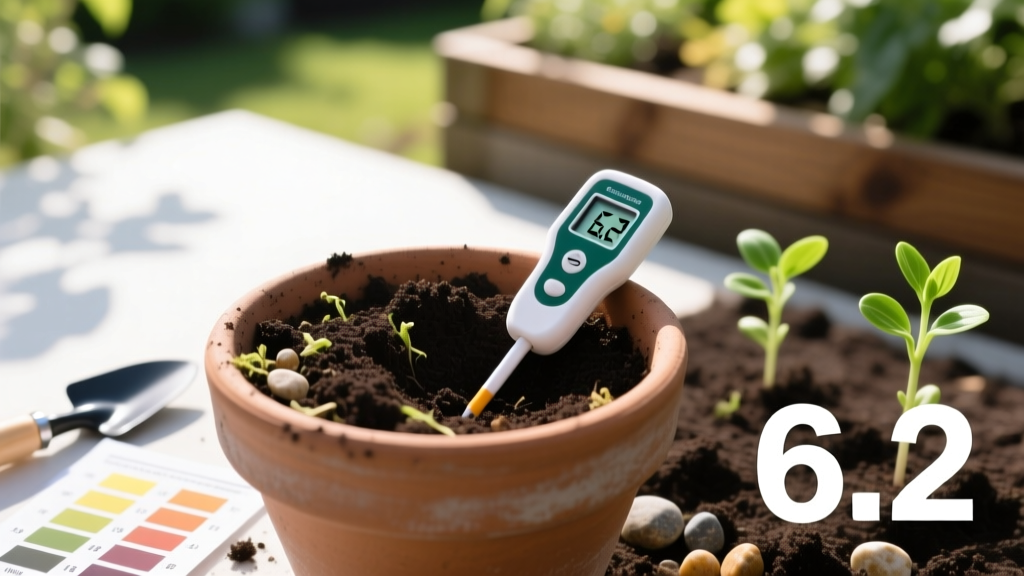
Insert probe into moist soil, wait 60 seconds, read the display. Calibrate with buffer solution monthly. Accuracy: ±0.2 pH. Best for frequent testing.
Method 2: DIY Pantry Test (Free)
Crude but effective for determining if soil is acidic or alkaline:
- Test for acidity: Put 2 tablespoons dry soil in a cup, add 1/2 cup baking soda solution. If it fizzes, soil is acidic (below 5.5).
- Test for alkalinity: Put 2 tablespoons soil in a cup, add 1/2 cup vinegar. If it fizzes, soil is alkaline (above 7.5).
- No reaction: Soil is near neutral (6.0-7.5).
Method 3: Lab Test ($15-30)
Send a soil sample to your local university extension service. They provide pH, nutrient levels, organic matter content, and specific amendment recommendations. Test every 2-3 years.
How to Raise Soil pH (Make It Less Acidic)
| Amendment | Application Rate | Speed | Duration |
|---|---|---|---|
| Garden lime (calcium carbonate) | 5 lbs per 100 sq ft to raise 1 pH unit | 2-3 months | 1-2 years |
| Dolomitic lime | 5 lbs per 100 sq ft (adds magnesium too) | 2-3 months | 1-2 years |
| Wood ash | 2 lbs per 100 sq ft (light application) | 1-2 weeks | 3-6 months |
| Crushed eggshells | Work into soil, slow-release | 6-12 months | Ongoing |
How to Lower Soil pH (Make It More Acidic)
| Amendment | Application Rate | Speed | Duration |
|---|---|---|---|
| Elemental sulfur | 1 lb per 100 sq ft to lower 1 pH unit | 3-6 months | 1-2 years |
| Aluminum sulfate | 5 lbs per 100 sq ft to lower 1 pH unit | 2-3 weeks | 6-12 months |
| Sphagnum peat moss | 2-3 inch layer mixed into soil | Immediate | 1-2 years |
| Coffee grounds | Thin layer as mulch (mildly acidic) | 1-2 months | Ongoing |
Optimal pH Ranges for Common Garden Plants
| Plant | Optimal pH | Tolerates |
|---|---|---|
| Tomatoes | 6.0-6.8 | 5.5-7.5 |
| Blueberries | 4.5-5.5 | 4.0-5.5 |
| Peppers | 6.0-6.8 | 5.5-7.0 |
| Lettuce | 6.0-7.0 | 5.5-7.5 |
| Carrots | 6.0-6.8 | 5.5-7.5 |
| Roses | 6.0-6.5 | 5.5-7.0 |
| Azaleas | 4.5-6.0 | 4.0-6.0 |
| Herbs (most) | 6.0-7.0 | 5.5-7.5 |
| Potatoes | 5.0-6.0 | 4.8-6.5 |
| Asparagus | 6.5-7.5 | 6.0-8.0 |
Signs Your Soil pH Is Wrong
- Yellowing between leaf veins (chlorosis): Usually iron deficiency from high pH
- Purple or reddish leaves: Phosphorus locked up by low pH
- Stunted growth despite fertilizing: Nutrients unavailable at wrong pH
- Blossom end rot: Calcium unavailable at low pH
- Aluminum toxicity: Stunted roots, blue-green leaf tint at very low pH
Final Thoughts
Test your soil pH before every planting season. It's the single most informative test you can run — more valuable than NPK levels. A $15 digital meter or free pantry test tells you exactly which amendments your soil needs, saving you money on unnecessary fertilizers and preventing years of frustration with poor plant performance.