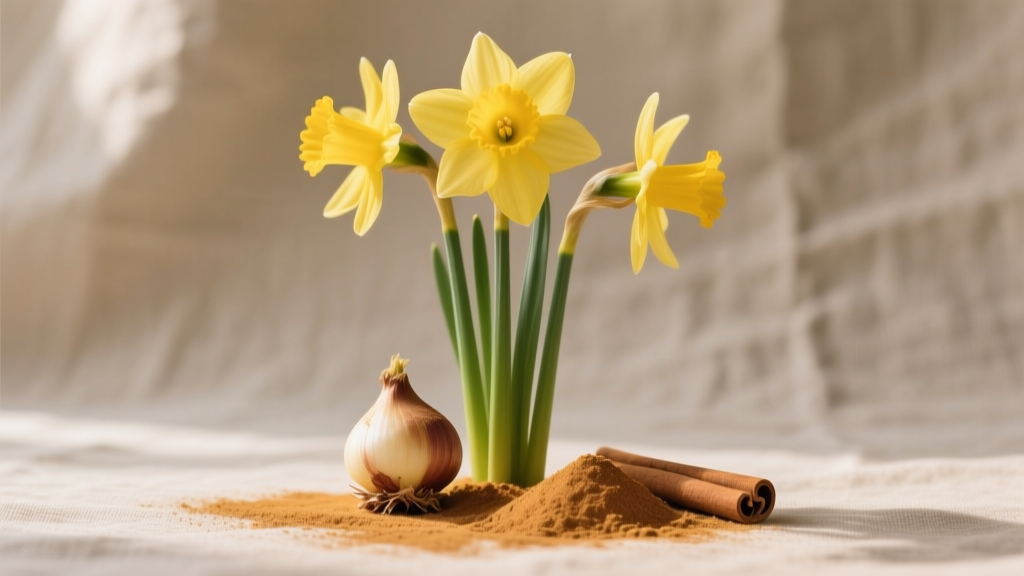
Cinnamon as Natural Fungicide for Daffodils
You plant daffodil bulbs in fall, wait all winter, and then—right when green tips finally push up—something looks off. A few shoots yellow and collapse at the base. Some bulbs feel soft when you investigate. Or you cut a flower to bring indoors and it flops overnight, the stem turning mushy. Most home gardeners blame cold snaps or “bad bulbs,” but very often it’s fungus or bacterial rot taking advantage of wet soil, injuries, or crowded clumps. Cinnamon won’t fix every disease under the sun, but used correctly it can be a handy, cheap tool for small-scale daffodil care—especially for wounds, minor rot prevention, and damping-off issues.
I’ve used cinnamon for years in the garden and potting bench for one main reason: it’s a dry, antimicrobial dust that helps seal small wounds and discourages some pathogens. It’s not a miracle cure, and it’s not a replacement for good drainage, sanitation, and proper watering—but it can tip the odds in your favor.
What cinnamon can (and can’t) do for daffodil fungus
Cinnamon (ground Cinnamomum spp.) contains compounds like cinnamaldehyde that show antifungal activity in lab and food-safety research. That doesn’t automatically translate into “works perfectly in garden soil,” but it explains why it can suppress some fungal growth on the surface of cut tissue and in small, contained environments (pots, propagation trays, bulb storage boxes).
“The best disease control is prevention: start with healthy plant material, avoid wounding, and keep moisture where you want it—not sitting around crowns and bulbs.” — Extension-style guidance echoed across many university plant pathology programs
Practical expectations:
- Good use: dusting freshly cut or nicked bulb tissue; dusting the base of a stem cut; light surface treatment for minor mold on stored bulbs; helping reduce damping-off pressure in seed-starting mixes (less relevant for daffodils but useful if you sow companion annuals nearby).
- Not enough: advanced basal rot, heavily infected bulbs, waterlogged beds, or systemic infections. If a bulb is soft, foul-smelling, and collapsing, cinnamon won’t reverse that.
- Not a sterilant: it’s a suppressive measure. You still need clean tools and decent airflow.
Two real references worth knowing as you decide how far to take “natural” methods:
- Oregon State University Extension (2021) notes that many so-called home remedies have limited evidence in field conditions and emphasizes sanitation and cultural control as first-line disease management.
- Royal Horticultural Society (RHS) advice pages (updated 2023) consistently stress drainage, removal of infected material, and avoidance of overwatering to reduce bulb rots and fungal issues in ornamentals.
Real-world scenarios: where cinnamon fits in daffodil care
Scenario 1: You nick bulbs while dividing a crowded clump. One slip of the spade and you’ve got a cut. That wound is an open door for rot organisms. Cinnamon can help dry and protect that surface while it calluses.
Scenario 2: You discover light mold on stored bulbs. Maybe you lifted bulbs after foliage died back or bought bulbs early and stored them too warm/humid. A thin, surface mold is common. Cinnamon can be part of a “dry clean-up” routine before re-storage.
Scenario 3: Potted daffodils keep getting mushy at the base. Containers are notorious for staying wet in cool weather, especially if the potting mix is too heavy. Cinnamon might reduce surface issues, but the real fix is changing watering habits and mix structure.
Watering: the rot trigger most gardeners underestimate
Daffodils (Narcissus) hate sitting wet during cool temperatures. Fungal and bacterial problems explode when soil stays saturated and oxygen-starved. For in-ground plantings, you can often let seasonal rain do the job.
How much to water (with numbers you can use)
- After planting bulbs: water once to settle soil—about 1 inch of water equivalent.
- Fall through winter (in-ground): usually 0 supplemental watering unless you’re in a dry climate with no rain for 2–3 weeks.
- Spring growth: if it’s dry, aim for 1 inch per week total (rain + irrigation), applied in one deep soak rather than daily sprinkles.
- Containers: water only when the top 1–2 inches of mix feels dry. In cool weather, that may be every 7–10 days, not every other day.
Troubleshooting watering-related symptoms
Symptom: Shoots yellow and fall over at the base; bulb feels soft.
Likely cause: basal rot encouraged by wet soil and poor drainage.
Do this:
- Stop watering immediately.
- Dig and inspect bulbs. Discard any that are soft, brown, and smelly (do not compost).
- Improve drainage before replanting: raise the bed by 3–6 inches or amend with sharp grit.
- Use cinnamon only on firm bulbs with small wounds or shallow surface spots (see treatment steps below).
Soil: where fungal problems begin (and where you can prevent them)
Daffodils perform best in soil that drains quickly but holds some moisture during active growth. The goal is oxygen around the bulb—especially at temperatures between 40–55°F, when pathogens can be active but the plant is slow.
Target soil conditions
- Drainage: water should soak in; no puddles lingering beyond 2 hours after irrigation.
- Planting depth: generally 6 inches deep for standard bulbs (measured from bulb base), or about 2–3× the bulb’s height.
- Spacing: 4–6 inches apart to reduce humidity pockets and crowding.
- Soil pH: daffodils tolerate a range, but many do well around 6.0–7.0.
Soil fixes that beat any “spray”
- Mix in 20–30% coarse mineral material (pumice, grit, or sharp sand) in heavy soils.
- In containers, use a potting mix that includes bark fines and perlite; avoid “moisture control” mixes for bulbs.
- Plant on slight mounds if your site is naturally wet.
Light and airflow: keep foliage dry, keep trouble down
Daffodils are happiest with 6+ hours of sun during spring. In partial shade they still bloom, but foliage can linger wetter longer, especially under shrubs or dense groundcovers.
Airflow matters because many fungal issues thrive when leaves stay damp. If you’re planting along a fence or tight border, don’t pack bulbs shoulder-to-shoulder. That 4–6 inch spacing really helps.
Feeding: strong bulbs resist disease better
Overfeeding—especially high nitrogen—can produce lush, softer growth that’s more prone to disease. Underfeeding can leave bulbs weak and more likely to rot during stress. Balanced, moderate nutrition is the sweet spot.
A practical feeding schedule
- At planting (fall): incorporate a bulb fertilizer or balanced slow-release at label rates, or work in 1–2 inches of compost (not against the bulb itself).
- Early spring (as shoots emerge): a light top-dress—roughly 1 tablespoon of granular bulb food per square foot (adjust to your product label). Water it in lightly.
- After flowering: don’t fertilize heavily; focus on letting leaves photosynthesize for 6 weeks after bloom. Remove spent flowers to prevent seed formation, but keep foliage until it yellows naturally.
How to use cinnamon on daffodil bulbs (step-by-step)
Think of cinnamon as a dry dressing—most effective when you’ve got a clean, firm bulb and a small wound or surface issue. It’s less effective in soggy soil, and it won’t penetrate deep infections.
1) Dusting freshly cut or nicked bulbs
- Clean your knife/pruners with 70% isopropyl alcohol before you start and between suspect bulbs.
- If you cut away a small soft spot, keep trimming until you hit firm, white tissue.
- Let the bulb sit in a dry, shaded spot for 30–60 minutes so the surface is not wet.
- Dust cinnamon over the wound in a thin layer—enough to coat, not cake.
- Allow the bulb to dry/callus for 12–24 hours before replanting or storing.
2) Treating light surface mold on stored bulbs
- Brush off loose soil and any papery outer layers that are obviously moldy.
- Wipe the bulb with a dry paper towel (avoid adding moisture).
- Dust a pinch of cinnamon into the storage container (not directly into the neck of the bulb).
- Store bulbs cool and dry: ideally 50–60°F with low humidity and airflow.
3) Cinnamon “tea” or spray (use with caution)
Gardeners often ask about cinnamon water. It can work as a mild surface deterrent, but it also adds organic matter and can clump. If you try it, keep expectations modest and don’t use it as a substitute for fixing soggy conditions.
- Mix 1 teaspoon ground cinnamon into 1 quart of warm water, let settle for 30 minutes, then strain through cloth.
- Use as a soil-surface drench for pots (not as a foliar spray) and only when the mix is already on the dry side.
- Repeat at most every 7–14 days if you see minor surface mold returning.
Comparison: cinnamon vs. other common options (with realistic expectations)
If you’re deciding between cinnamon, sulfur dust, and a conventional fungicide, here’s a grounded way to compare them for typical home daffodil situations.
| Method | Best use-case | Typical home-garden rate | How fast you’ll notice | Limitations |
|---|---|---|---|---|
| Cinnamon (dry dust) | Small wounds on firm bulbs; minor surface mold in storage | Thin dusting; ~1/8 tsp per bulb wound (approx.) | 24–72 hours (wound dries; mold slows) | Not systemic; weak in wet soil; inconsistent across pathogens |
| Sulfur dust (garden sulfur) | Surface fungal suppression; some storage rot prevention | Label-dependent; often a light coating | 24–72 hours | Can irritate skin/lungs; label restrictions; can harm beneficials if misused |
| Registered fungicide (ornamental use) | Recurring, identified fungal disease; high-value plantings | Follow label exactly (rates vary by product) | Often 3–7 days to see reduced spread | Requires correct diagnosis; potential environmental impacts; not for every gardener |
| Cultural control (drainage + watering changes) | Most bulb rot prevention | Raise bed 3–6 in; water 1 in/week in spring only | Improvement over a 2–8 week window | Takes effort; may require replanting |
Notice the pattern: cinnamon can help at the “small wound / surface mold” level, but cultural control is what keeps daffodils alive long-term.
Common daffodil problems (and where cinnamon helps)
Basal rot (Fusarium) and other bulb rots
Symptoms: bulb base turns brown; bulbs soften; foliage yellows early; plants are stunted or don’t emerge.
What’s really happening: pathogens thrive in warm storage, wet soil, and injured bulbs. Fusarium basal rot is a known daffodil issue, and once established it’s hard to cure.
What to do:
- Discard badly affected bulbs (bag and trash).
- Do not replant daffodils in the exact same soggy spot until drainage is improved.
- For slightly affected bulbs: trim to firm tissue, dust cinnamon, dry 12–24 hours, and plant in a better-draining location.
Botrytis (gray mold) on leaves/flowers
Symptoms: gray fuzzy mold, especially in cool, damp springs; spots on petals; collapsing flowers.
Solutions:
- Remove infected flowers and leaves promptly.
- Increase airflow: thin crowded clumps after bloom season.
- Avoid overhead watering late in the day; water at soil level in the morning.
- Cinnamon is not very reliable on established Botrytis outdoors; focus on sanitation and airflow. In a small indoor forcing setup, a light cinnamon dusting on the soil surface may reduce mold pressure.
Damping-off in companion seedlings near daffodils (beds and borders)
Symptoms: seedlings topple at soil line, thin and pinched stems.
Where cinnamon can help: dusting the soil surface of seed trays or pots after sowing can reduce surface fungal activity. Use a very light sprinkle—think “salted fries,” not “powdered donut.”
Better fix: bottom water, improve airflow, and don’t over-seed.
Troubleshooting: specific symptoms and the most likely fixes
When daffodils fail, the pattern usually points to one of a handful of causes. Here are the ones I see most often in home gardens.
Symptom: buds form but don’t open, then brown off
- Likely causes: weather stress; botrytis during damp spells; bulbs weakened by poor feeding the previous year.
- Fix: remove affected buds; avoid overhead watering; feed lightly next spring at emergence; let foliage ripen for 6 weeks after bloom.
Symptom: leaves are lush, but blooms are few or small
- Likely causes: too much shade; overcrowding; too much nitrogen; bulbs planted too shallow.
- Fix: move to a sunnier spot (aim for 6 hours sun); lift and divide every 3–5 years; avoid high-nitrogen lawn fertilizer drift; replant at 6 inches depth.
Symptom: bulbs look fine at planting, but rot over winter
- Likely causes: heavy soil + winter wet; planting in low spots; mulch piled too thick over poorly drained beds.
- Fix: improve drainage (raised bed by 3–6 inches); plant on slight berms; keep mulch to 1–2 inches over bulbs in wet climates; cinnamon only as a wound dressing, not a soil cure-all.
Three case notes from real gardens (what worked, what didn’t)
Case 1: The overwatered patio pot. A gardener watered a 12-inch container every 2 days through a cool March (daytime highs around 50°F). Shoots yellowed and collapsed. Cinnamon sprinkled on the soil did nothing because the mix stayed saturated. The fix was repotting into a faster-draining mix (added perlite and bark), cutting watering to about once every 7–10 days, and ensuring the pot had clear drainage holes.
Case 2: Dividing a clump after bloom. While lifting, several bulbs were nicked. The gardener trimmed ragged tissue, dusted cinnamon, let bulbs dry overnight (12–18 hours), and replanted in a slightly raised row. Losses were minimal. In this situation, cinnamon performed exactly as a practical “bandage” while the real win came from better drainage and careful handling.
Case 3: Bulbs stored too warm. A batch of purchased bulbs sat in a closed plastic tote in a garage hovering near 70°F for 3 weeks. Light mold appeared. After moving bulbs to a breathable crate at 55–60°F, brushing off mold, and dusting a small amount of cinnamon in the crate, the mold stopped spreading. A few bulbs still failed later—likely already compromised—showing cinnamon helps most when used early and paired with correct storage conditions.
Good habits that make cinnamon mostly unnecessary
Cinnamon is handy, but your best fungicide is still good gardening. If you want daffodils that come back for decades, focus on these routines:
- Plant only firm bulbs. If it squishes, toss it.
- Handle bulbs gently. Most rot starts at injuries.
- Keep beds draining. Fix the site before blaming disease.
- Clean tools. Alcohol or a disinfectant wipe between suspect plants is quick insurance.
- Don’t pamper with water. Daffodils aren’t houseplants—especially in winter.
If you like natural approaches, cinnamon can earn a spot on your potting bench next to the alcohol spray and a sharp knife. Use it for what it does well: drying and protecting small wounds and discouraging surface mold. Then put most of your energy into drainage, spacing, and watering discipline—the unglamorous basics that keep daffodils blooming year after year.
Sources: Oregon State University Extension (2021) guidance on home garden disease prevention emphasizes sanitation and cultural controls over untested remedies; Royal Horticultural Society (RHS) (updated 2023) general bulb and fungal management advice highlights drainage, removal of infected material, and avoiding overwatering as primary controls.