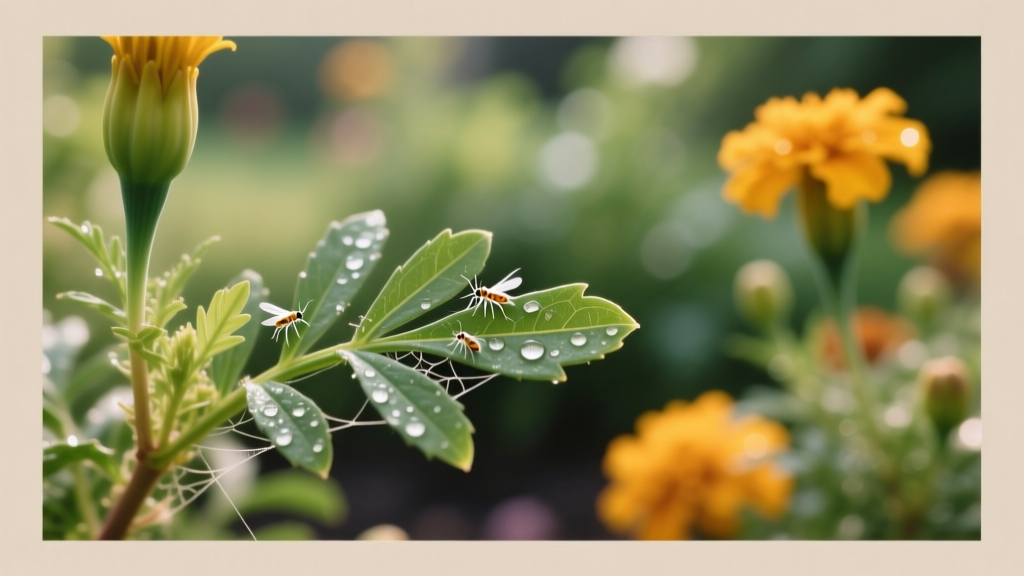
Getting Rid of Whiteflies on Marigolds
You step outside to deadhead your marigolds and something “dusts” up from the leaves—like tiny white flecks of ash. A few days later the plants look tired, leaves are sticky, and a black soot starts showing up on the lower foliage. That’s not summer heat doing damage. That’s whiteflies turning your marigolds into a nursery.
Whiteflies are small, sap-sucking insects that multiply fast in warm weather. They’re especially common when marigolds are grown close together, fertilized heavily, or tucked into hot, sheltered spots like patios and greenhouse benches. The good news: you can get ahead of them without poisoning your whole garden—if you act early and use a plan, not a single “miracle spray.”
This is a practical, master-gardener approach: tighten up marigold care (so plants resist stress), knock populations down mechanically, then use targeted treatments only as needed. Along the way, I’ll give you real-world scenarios, specific timings, and a few numbers you can actually use.
Know your enemy: what whiteflies do to marigolds
Whiteflies feed on the underside of leaves. They pierce leaf tissue and sip plant juices, weakening growth and causing pale, mottled leaves. They also excrete honeydew—sticky sugar water—which invites sooty mold.
Common whitefly symptoms on marigolds
- “Snowstorm” effect when you tap the plant: tiny white insects fly up and resettle.
- Sticky leaves (honeydew), often followed by black sooty mold.
- Yellowing or stippling, especially on older leaves first.
- Stunted growth and fewer blooms during heavy pressure.
- Ant activity—ants farm honeydew and may protect whiteflies from predators.
Whiteflies go through egg, nymph (“crawler”), and pupal stages before emerging as adults. Most sprays that “work” only hit adults; the hard part is interrupting the lifecycle so new adults don’t keep hatching every few days in warm weather.
“The most reliable whitefly control comes from combining sanitation, exclusion, and repeated contact sprays timed to the crawler stage—single treatments rarely hold.” — UC Agriculture & Natural Resources, Integrated Pest Management guidance (UC ANR IPM, 2023)
Quick check: confirm it’s whiteflies (not aphids, fungus gnats, or leafhoppers)
Before you treat, do a 60-second inspection.
- Tap test: Hold a sheet of white paper under a marigold branch and tap the stem. Whiteflies lift off like tiny moths and drift back down within seconds.
- Underside scan: Flip a few leaves. You’ll often see pale oval nymphs stuck flat to the leaf undersides.
- Sticky clue: Run a finger along the leaf. Honeydew feels tacky; leafhopper damage won’t.
If you only see tiny black flies hovering around soil, you likely have fungus gnats. If you see clusters of soft-bodied insects on stems and buds, those are aphids. The treatments overlap somewhat, but the timing and where you aim sprays matters.
Plant care that makes marigolds less inviting (watering, soil, light, feeding)
Whiteflies love stressed plants and crowded canopies. Strong marigolds won’t become “immune,” but they tolerate feeding better and recover faster—especially once you start knocking the insects back.
Watering: keep marigolds steady, not soggy
Marigolds prefer even moisture but hate wet feet. Drought-stressed plants put out tender, stressed growth that attracts sap-suckers; waterlogged plants slow down and become magnets for pests and disease.
- In-ground: Water deeply when the top 1–2 inches of soil are dry. In hot spells, that’s often every 3–5 days depending on soil type.
- Containers: Check daily in summer. Water when the top 1 inch is dry; in heat over 85°F (29°C), pots can need water every day.
- Avoid overhead watering late in the day—wet foliage overnight invites fungal problems, and whiteflies are protected under leaves anyway.
Practical tip: water at the soil line early morning. If you must use a hose nozzle, angle it up under the plant for a quick “leaf underside rinse” once or twice a week (more on that in the control section).
Soil: drainage first, fertility second
Marigolds aren’t fussy, but they do best in loose, well-drained soil. Heavy nitrogen and rich, wet soil can create lush foliage that whiteflies adore.
- Amend compact beds with 1–2 inches of compost worked into the top 6–8 inches of soil.
- Target soil pH around 6.0–7.0 if you’re optimizing.
- For pots, use a quality potting mix; avoid garden soil in containers (it compacts and stays wet).
Light: full sun is your ally
Marigolds bloom and toughen up in sun. Whiteflies also like warmth, but dense shade creates soft growth and poor airflow—perfect for pests.
- Aim for 6–8 hours of direct sun.
- Space plants so air moves: generally 8–12 inches apart for French marigolds, 12–18 inches for taller African types.
Feeding: don’t overdo nitrogen
One of the most common “why won’t my whiteflies go away?” situations is over-fertilizing. Soft, nitrogen-pushed growth is like dessert for sap-suckers.
- If you fertilize, choose something balanced like 5-5-5 or slightly lower nitrogen.
- Apply at half strength every 3–4 weeks in containers; in beds, compost is often enough.
- Avoid high-nitrogen lawn fertilizer drift—keep it off flower beds.
Texas A&M AgriLife Extension notes that excessive nitrogen can increase susceptibility to certain pests by promoting tender growth (Texas A&M AgriLife Extension publication, 2021). You’ll see this play out in real time with whiteflies.
3 real-world scenarios (and what actually works)
Scenario 1: Patio containers that explode with whiteflies in July
Container marigolds on a hot patio often get the “triple whammy”: heat reflected off concrete, inconsistent watering, and still air. Whiteflies build fast when temperatures sit between 75–95°F (24–35°C).
- Move pots so they get morning sun and a bit of afternoon protection.
- Water consistently; don’t let pots swing from bone-dry to soaked.
- Use yellow sticky cards at canopy height (1 per pot or 1 per 2–3 pots) to monitor adults.
Scenario 2: Marigolds as border plants near tomatoes/peppers
Whiteflies don’t respect plant labels. If your nearby tomatoes, peppers, or hibiscus are infested, marigolds become collateral damage.
- Inspect the whole bed, not just the marigolds.
- Control whiteflies on the “source plant” first, or you’ll keep reinfesting.
- Prune out heavily infested lower leaves on all plants (bag and trash them).
Scenario 3: Greenhouse/indoor starts with whiteflies before planting out
This is where whiteflies are hardest—protected environment, warm temps, and no wind or predators. If you plant infested starts outside, you carry the problem into the garden.
- Isolate infested trays immediately.
- Use sticky cards and a hand vacuum (yes, really) to reduce adults.
- Plan for repeated treatments every 4–7 days for at least 3 rounds.
Step-by-step: an integrated plan that gets rid of whiteflies
You’ll get the best results by stacking tactics. Here’s a proven sequence that works for home gardens.
Step 1: Prune and sanitize (same day)
- With clean snips, remove the worst leaves—especially those coated in nymphs on the undersides.
- Bag clippings immediately (don’t compost heavily infested material unless your compost gets hot consistently).
- Rinse sticky honeydew off remaining leaves with a gentle spray of water.
Don’t strip the plant bare. Aim to remove no more than 25–30% of foliage at once so the plant can recover.
Step 2: Knock down adults with water (2–3 times per week)
A firm, targeted spray of water to the undersides of leaves is underrated. It’s not a standalone cure, but it cuts adult numbers and dislodges crawlers.
- Spray early morning so leaves dry quickly.
- Focus on the underside of leaves for 10–20 seconds per plant.
- Repeat every 2–3 days during the first 2 weeks.
Step 3: Use sticky traps to monitor (and slightly reduce) adults
Yellow sticky cards won’t solve an infestation alone, but they tell you if you’re winning.
- Place traps just above the canopy.
- Replace when dusty or covered—typically every 2–4 weeks.
- If trap counts rise after treatment, you need another round.
Step 4: Apply a targeted spray (repeat on a schedule)
For marigolds in home gardens, the most practical options are insecticidal soap, horticultural oil, neem (as an oil), and in tough cases, a carefully chosen systemic for ornamentals (always follow label directions and consider pollinator safety).
Here’s the key: most contact sprays need thorough coverage of the leaf undersides and repeat applications because eggs and pupae are protected. Purdue Extension emphasizes that whiteflies are often best managed with repeated applications and good coverage, especially under leaves (Purdue Extension publication, 2020).
| Method | Best target stage | Typical repeat interval | Heat/plant stress risk | Notes (what I see in real gardens) |
|---|---|---|---|---|
| Water spray (hose) | Adults, crawlers | Every 2–3 days | Low | Great starter move; won’t reach deep infestations alone. |
| Insecticidal soap | Adults, crawlers, soft nymphs | Every 4–7 days | Medium in heat | Works when you hit undersides; can burn leaves above 85–90°F if sprayed in sun. |
| Horticultural oil (summer oil) | Eggs (some), nymphs, adults (smothering) | Every 7–10 days | Medium-high in heat | Excellent coverage tool; avoid spraying drought-stressed plants or during high heat. |
| Neem oil (as oil spray) | Mostly nymphs/adults via coverage; some growth disruption | Every 7 days | Medium | Slower; best as part of a routine, not a rescue. |
| Systemic insecticide (label-specific) | Nymphs/adults feeding on plant sap | Weeks (per label) | Low to plant; higher ecological concern | Can be effective for severe infestations on ornamentals; consider pollinators and avoid on plants in bloom visited by bees. |
Comparison analysis with actual data: water + soap vs. oil routine
If I’m choosing between two common home-garden routines, I look at speed, effort, and plant safety.
- Routine A (fast knockdown): Water spray every 2–3 days + insecticidal soap every 5 days for 15 days (3 soap applications). In practice, you often see a noticeable drop in adult “clouds” after the first 7 days, if coverage is good.
- Routine B (steady smothering): Horticultural oil every 7 days for 21 days (3 oil applications). This tends to suppress multiple stages but can scorch foliage if applied when temperatures exceed 90°F (32°C) or if plants are drought-stressed.
For most summer marigolds, Routine A wins because you’re using water as a no-risk “reset” and soap as a targeted follow-up—less chance of leaf burn during heat waves. Routine B is excellent in mild weather (60–80°F / 16–27°C) or in protected areas where you can control timing and avoid midday heat.
How to spray so it actually works (this is where most folks miss)
- Spray in the early morning or early evening when temps are below 85°F (29°C).
- Hit the undersides until the leaves glisten—whiteflies live there.
- Test first: Spray a small section and wait 24 hours to check for leaf burn, especially with oils.
- Repeat on schedule: If you wait “until you see them again,” you’re giving eggs time to hatch and reset the infestation.
Feeding, pruning, and spacing tweaks that stop repeat infestations
Once you’ve knocked whiteflies down, your job is to make the marigolds less of a whitefly hotel.
Prune for airflow (and to expose leaf undersides)
- Thin crowded stems so you can see into the plant.
- Remove yellowing lower leaves—they’re often the first to be coated in honeydew and nymphs.
- Deadhead regularly so plants don’t stall and get weak.
Dial fertilizer back
If you’ve been feeding weekly and you’re battling whiteflies, pause fertilizing for 2–3 weeks. Let the plant firm up. When you resume, go lighter.
Control ants if they’re present
If ants are running up and down stems, they may be protecting whiteflies for honeydew. Use ant baits near (not on) pots or along bed edges, and prune away plant-to-wall “bridges.” When ants back off, natural predators have a better chance.
Common problems that travel with whiteflies
Sooty mold: black coating on leaves
What you’ll see: Black, soot-like film on leaves, usually below heavy feeding areas.
What to do:
- Control whiteflies first (or the mold will return).
- Rinse leaves with plain water; for stubborn residue, use a mild solution of 1 teaspoon gentle liquid soap in 1 quart of water, then rinse (avoid strong detergents).
- Remove heavily coated leaves if they aren’t bouncing back.
Leaf yellowing: stress vs. feeding
What you’ll see: Pale leaves, sometimes with stippling; plant looks tired despite watering.
What to do:
- Check soil moisture at 2 inches deep before adding more water.
- Inspect undersides for nymphs; if present, treat on a repeat schedule.
- After whiteflies are controlled, feed lightly once with a balanced fertilizer to support new growth.
Bud drop or fewer blooms
What you’ll see: Plants stay green but bloom less; buds dry up.
What to do:
- Reduce nitrogen inputs.
- Increase sun exposure if possible (aim for 6+ hours).
- Remove whitefly pressure and deadhead twice a week for 2 weeks to push a new flush.
Troubleshooting: match the symptom to the fix
“I sprayed once and they came right back”
Likely cause: Eggs and pupae survived; adults re-emerged. Coverage missed undersides.
Fix: Commit to 3 treatments spaced 4–7 days apart, plus water sprays in between. Spray from below, not сверху.
“My marigold leaves scorched after spraying”
Likely cause: Oil/soap applied in heat or direct sun; plant was drought-stressed; product too concentrated.
Fix:
- Spray when temps are <85°F (29°C).
- Water the plant the day before (not immediately before) treatment if soil is dry.
- Use label rates; don’t “double it for extra strength.”
- Switch to water-spray + soap, or try a different product labeled for ornamentals.
“They’re mostly on the plant next door, but my marigolds keep getting hit”
Likely cause: Reinfestation from a nearby host plant (tomato, pepper, hibiscus, cucurbits, houseplants moved outside).
Fix: Treat the source plant, add sticky cards between plantings, and consider a temporary physical barrier (even relocating pots 10–15 feet can help).
“My marigolds are covered—do I just pull them?”
If: Plants are near the end of their season, stunted, and coated in sooty mold, removal can be the most satisfying control.
Do it right: Bag plants, don’t shake them through the garden, and clean up leaf litter. Then replant with fresh starts and wider spacing, and begin monitoring with sticky cards from day one.
Prevention that actually prevents (not just wishful thinking)
- Start monitoring early: Hang sticky cards when nighttime temps stay above 55–60°F (13–16°C).
- Quarantine new plants: Keep new nursery plants separate for 7–10 days and inspect undersides before mixing them into beds and containers.
- Space plants properly and avoid letting marigolds form a tight, shaded hedge.
- Don’t pamper with nitrogen—steady growth beats lush growth when pests are around.
- Encourage beneficial insects: Small-flowered plants (alyssum, dill allowed to bloom) can support predators and parasitoids that keep whiteflies from getting out of hand.
One of the surprising facts about whiteflies is that the garden often swings in your favor once you stop feeding the problem. When you cut excess nitrogen, open up airflow, and stay consistent with underside coverage for 2–3 weeks, marigolds usually rebound quickly—often throwing a fresh set of blooms right when you thought they were done.
If you want a simple rule to remember: don’t let whiteflies have three calm weeks in a row. Interrupt them every few days with water, every week with a properly timed spray if needed, and keep the marigolds growing steadily—not in feast-or-famine cycles.
Sources: UC Agriculture & Natural Resources Integrated Pest Management (UC ANR IPM), whitefly management guidance (2023). Purdue Extension, whitefly control principles and coverage emphasis (2020). Texas A&M AgriLife Extension, relationship between nitrogen/tender growth and pest susceptibility (2021).