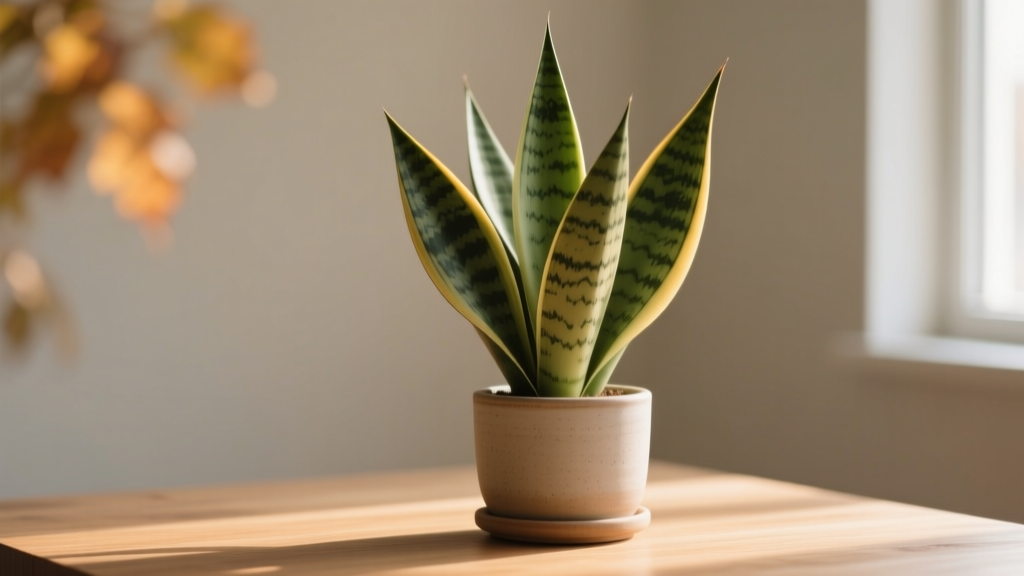
When to Cut Back Snake Plants in Fall
Every fall I get the same message from friends and readers: “My snake plant has a few floppy leaves and brown tips—should I cut the whole thing back before winter?” It’s a fair question, because a lot of houseplants benefit from a seasonal haircut. Snake plants (Sansevieria/Dracaena trifasciata), though, play by different rules. If you cut too much at the wrong time, you don’t “refresh” the plant—you simply remove stored water and energy and leave wounds that heal slowly in cool, low-light months.
Here’s the practical truth: you usually don’t cut back a snake plant for fall the way you would a geranium or a pothos. You do selectively remove damaged leaves, deal with rot, and tidy the plant if it needs it. The timing matters, and so does the method. This guide will walk you through exactly when fall pruning is helpful, when it’s risky, and how to pair pruning with watering, light, soil, and feeding so the plant actually improves—not just looks shorter.
What “cut back” really means for snake plants
Snake plants don’t branch like many houseplants. Each leaf is essentially a long-lived storage organ. When you cut a leaf, it doesn’t grow back from that cut edge; the plant replaces it by pushing new leaves from the rhizome (the underground stem) when conditions are right. That’s why “cutting back” is rarely the goal. Instead, fall cleanup is about three things:
- Removing leaves that are soft, rotting, badly bent, or broken.
- Reducing the chance of fungal issues by cleaning up damaged tissue.
- Resetting care habits going into lower light and slower growth.
If your plant is healthy and just a little messy at the tips, you can usually leave it alone until brighter spring growth returns.
When to cut back snake plants in fall (and when to wait)
The best fall window
If you’re going to prune in fall, aim for early fall, when your home is still relatively warm and bright—often September to early October in much of the Northern Hemisphere. The plant will seal cuts faster when daytime indoor temps are around 68–80°F (20–27°C).
Once indoor temps regularly drop below 65°F (18°C) at night near windows, healing slows. That doesn’t mean you can’t remove a rotting leaf in November—just that “cosmetic pruning” becomes less useful and slightly riskier.
Prune now if you see these signs
- Mushy, translucent leaf base (possible rot). Remove immediately.
- Collapsed leaves that won’t stand even after watering adjustments.
- Mechanical damage (a cracked leaf that’s oozing or folding).
- Pest hotspots (mealybugs tucked at the base)—pruning helps access and treatment.
Wait (don’t cut back) if the plant is doing this
- Normal slow growth as days shorten.
- Minor brown tips from past underwatering or low humidity.
- A few scars from bumping the leaves—purely cosmetic.
A surprising fact many home gardeners miss: snake plants are CAM-adapted succulents that hold water in their leaves and rhizomes. Removing a lot of leaf mass in fall can reduce the plant’s ability to buffer against winter care mistakes (especially irregular watering).
“For succulents and succulent-like houseplants, it’s better to remove only what’s dead or diseased—heavy pruning during low-light seasons can slow recovery and invite rot at fresh cuts.” — North Carolina State Extension, Houseplants guidance (2022)
Comparison: tidy-up pruning vs. hard cutbacks (with real outcomes)
Home gardeners often try one of two approaches in fall. Here’s how they stack up in real life.
| Approach | What you do | Best timing | Expected result in 4–12 weeks | Risk level |
|---|---|---|---|---|
| Tidy-up pruning | Remove 1–3 damaged leaves at the base; trim only dead tip tissue | Early fall (Sept–Oct), or anytime for rot | Plant looks cleaner; minimal stress; new growth typically waits until spring | Low |
| Hard cutback | Cut many leaves halfway down for “shape” | Best avoided in fall | Leaves don’t regrow from cuts; cut edges brown; plant may stall | Medium–High |
| Division + pruning | Divide rhizomes, remove weak leaves, repot | Late spring to summer; only do in fall if urgent (rot) | Can rebound well in warm bright homes; otherwise slow recovery | Medium |
Data point to remember: a hard-cut leaf edge typically stays blunt and can brown back 1–5 mm as it dries. That’s normal healing, but it’s rarely the “neat look” people expect.
How to cut back correctly (step-by-step)
If you’ve decided pruning is warranted, do it cleanly. Jagged tears and dirty blades are what turn a simple cleanup into a lingering problem.
- Sanitize your blade: Wipe pruning shears or a knife with 70% isopropyl alcohol.
- Identify the target: Choose leaves that are soft, broken, folded, or fully brown at the base.
- Cut at the base: Follow the leaf down to the soil line and cut as close to the rhizome as you can without gouging it.
- For brown tips only: Trim just the dead portion, following the leaf’s natural point. Expect a thin brown edge later—don’t keep chasing it with more cuts.
- Let wounds dry: Keep the plant dry for 3–5 days after removing any leaf with a thick, juicy base (especially if you suspect rot).
- Resume watering carefully: Only when the mix is dry several inches down (details below).
One more practical note: don’t mist or “spray to help heal.” Moisture sitting in crevices is exactly what rot organisms like.
Watering in fall: the real reason people think they need to prune
Most fall snake plant problems are watering problems wearing a pruning costume. As light drops, the plant uses water more slowly, so the same summer schedule can push it into rot.
A solid fall watering rule
In fall, water only when the potting mix is dry at least 2–3 inches down. For many homes, that works out to roughly:
- Every 3–5 weeks in bright rooms
- Every 5–8 weeks in average light
When you water, water thoroughly until you get a little drainage, then empty the saucer. A typical 6-inch pot might take about 1–2 cups (240–475 mL) depending on soil and root mass. The goal isn’t a precise volume—it’s full wetting followed by a proper dry-down.
Case 1: “My plant got floppy in October, so I cut leaves—and it got worse.”
This is a classic. Floppy leaves in fall are often from overwatering + low light, not “too many leaves.” Cutting removes storage tissue but doesn’t fix the wet soil. If the base is still firm, skip pruning and do this instead:
- Move the pot to brighter light (within a week you’ll often see improved posture).
- Pause watering for 2–3 weeks.
- Check drainage and potting mix (see soil section).
If the base is mushy, prune the affected leaf immediately and adjust soil and watering.
Soil and potting: fall is for checking drainage, not “refreshing” soil
Snake plants fail in winter because they’re sitting in a moisture-holding mix that never fully dries. In fall, your job is to make sure the root zone can breathe.
What snake plants want
- A pot with a drainage hole (non-negotiable).
- A fast-draining mix: cactus/succulent mix boosted with mineral grit.
A reliable home blend is:
- 2 parts cactus/succulent potting mix
- 1 part perlite or pumice
If you’re using a standard houseplant mix, cut it with at least 30–40% perlite/pumice to prevent soggy conditions.
Should you repot in fall?
If the plant is healthy: usually no. Repotting is a growth-triggering event, and fall is when growth slows. Better to wait until spring unless you have a real problem:
- Soil stays wet longer than 10–14 days after watering.
- A sour/musty smell from the pot.
- Visible rot, or roots are black and sloughing.
University guidance commonly emphasizes matching irrigation to reduced light and growth. For example, Colorado State University Extension notes that overwatering is a primary cause of houseplant decline indoors, especially under lower winter light (Colorado State University Extension, 2023).
Light in fall: the simplest way to prevent pruning-worthy problems
In fall, light intensity drops fast—especially once the sun angle changes. A snake plant that was “fine in the corner” in July may start stretching or softening by October.
Actionable light targets
- Best: bright indirect light near an east or south window.
- Avoid: pressing leaves against cold glass; keep the pot 6–18 inches back from the window if nights are chilly.
- If using a grow light: aim for 10–12 hours/day in fall and winter.
Case 2: “It’s by a window, but leaves are wrinkled and tips brown.”
If it’s right against the glass, the plant may be getting cold stress at night. Snake plants tolerate normal home temps, but they dislike prolonged chills. If you suspect cold:
- Move it back from the window by 12 inches.
- Keep it in a room that stays above 60°F (16°C).
- Don’t fertilize until spring.
Cold-stressed tissue often looks dull, gray-green, or slightly translucent—don’t rush to cut it unless it turns mushy.
Feeding in fall: when fertilizer makes things worse
Fertilizer doesn’t “help a plant through winter.” If anything, feeding in low light can lead to weak, soft growth or salt buildup—both of which create more ugly tips that tempt you to prune.
Practical feeding schedule
- Stop routine feeding by early September in most homes.
- Resume in spring when you see new growth, typically March–May.
If you do feed (say your plant is under strong grow lights year-round), use a balanced fertilizer at 1/4 strength no more than once every 6–8 weeks.
Salt buildup symptom: crispy brown tips plus a whitish crust on the soil surface. Fix: flush the pot with clean water equal to about 2–3 times the pot volume, letting it drain fully, then return to a drier schedule.
Common problems that trigger fall pruning (and what to do instead)
Brown tips
What you see: dry, crispy tip ends, often a thin line of brown along the edge after trimming.
Most common causes: inconsistent watering, salt buildup, old mechanical damage.
Fix:
- Trim only the dead tissue (cosmetic).
- Switch to watering when dry 2–3 inches down, not by calendar.
- Flush salts if crusting is present.
Soft, mushy base (rot)
What you see: leaf base turns translucent, yellowing, collapses; soil may smell sour.
Fix (act fast):
- Unpot the plant and inspect rhizomes and roots.
- Cut away mushy tissue with a sanitized blade.
- Let healthy pieces dry for 24–48 hours before repotting in dry, gritty mix.
- Wait 5–7 days to water after repotting (longer if your home is cool).
Alabama Cooperative Extension also highlights that houseplants are commonly overwatered indoors, and allowing media to dry adequately between waterings is key to preventing root diseases (Alabama Cooperative Extension System, 2021).
Leaves falling outward / “splaying”
What you see: the rosette opens up; leaves lean and won’t stay upright.
Likely causes: low light, pot too large staying wet, or the plant is simply heavy and crowded.
Fix:
- Increase light exposure.
- Check pot size: snake plants prefer snug pots. If the pot diameter is more than about 2 inches wider than the root mass, consider downsizing in spring.
- Use a heavier pot (terra cotta or ceramic) to stabilize tall cultivars.
Mealybugs at the base
What you see: white cottony clusters where leaves meet, sticky residue, slowed growth.
Fix:
- Isolate the plant immediately.
- Remove badly infested leaves at the base (this is one time pruning helps).
- Swab remaining pests with 70% alcohol; repeat every 7 days for 3–4 rounds.
Three real-world fall scenarios (and the right move)
Scenario A: You’re bringing a porch snake plant indoors for winter
Outdoor summer conditions often mean more light and faster drying. Indoors, everything slows down.
- Do: Inspect for pests, wipe leaves, remove only broken/diseased foliage.
- Don’t: Repot and prune heavily on the same day.
- Pro move: Give it 10–14 days to adjust indoors before making major changes unless rot is present.
Scenario B: The plant is huge, crowding the pot, and you want to “reduce” it for space
Instead of cutting leaves in half (which looks worse later), use one of these:
- Divide in spring and keep the best section.
- Remove entire outer leaves at the base (1–2 at a time) to slim the clump without leaving blunt stubs.
Scenario C: One leaf cracked from being bumped, but the rest is healthy
If the leaf is still mostly firm and upright, you can leave it. If it folds and creates a crease that stays wet-looking:
- Cut the whole leaf off at the base.
- Keep the plant dry for 3–5 days.
- Increase airflow and light slightly.
Fall pruning checklist (quick, practical)
- Prune in early fall when possible; avoid heavy cuts after mid-fall.
- Remove only damaged, diseased, or pest-infested leaves at the base.
- Skip “shaping” cuts—snake plant leaves won’t regrow from a cut edge.
- After pruning fleshy tissue, keep dry for 3–5 days.
- Reduce watering frequency; expect 3–8 weeks between waterings depending on light.
- No routine fertilizer until spring.
If you take one lesson into fall: snake plants aren’t impressed by a haircut. They’re impressed by bright light, dry soil between waterings, and a potting mix that drains like it means it. Do that, and you’ll prune less every year—because there will be less to fix.