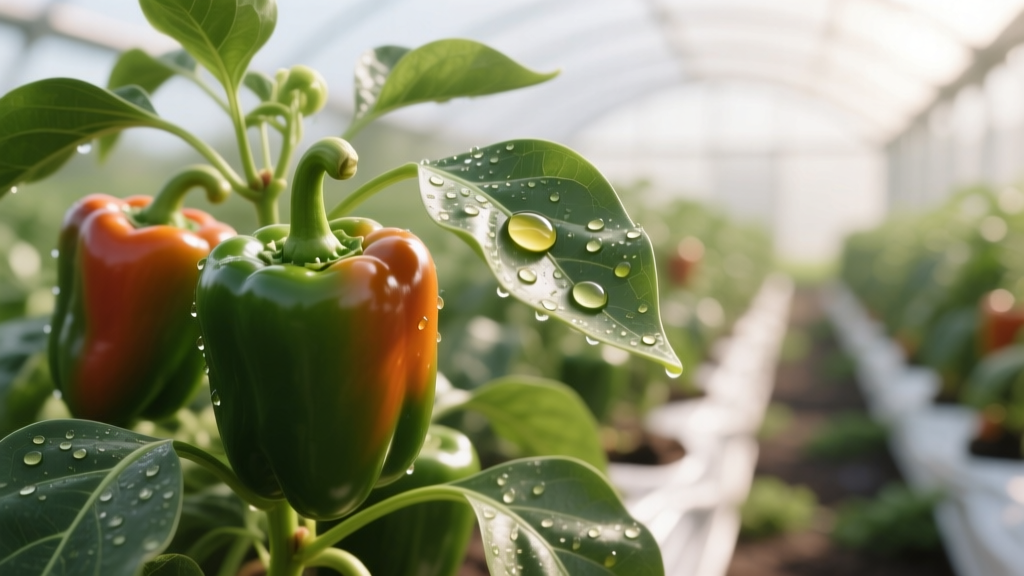
Foliar Feeding Peppers: Pros and Cons
The first time most gardeners try foliar feeding on peppers, it’s usually out of mild panic: the plants are flowering, the leaves are a little pale, and the fruit set looks like it’s stalling. You mix a little fertilizer, mist the leaves at sunset, and by the next week the plants look greener—so it must be working, right? Sometimes it is. Other times you’ve just added leaf burn, invited disease, or masked a root-zone problem that will keep limiting your harvest.
Foliar feeding can be a useful tool for peppers, but it’s not a magic shortcut. Think of it like an IV drip for a dehydrated patient: it can stabilize the situation, but it won’t fix the underlying cause if the soil, watering, or roots are off. The goal of this guide is to help you decide when foliar feeding makes sense, when it’s a waste of effort, and how to do it safely—with specific rates, timing, and troubleshooting based on what I see home gardeners run into every season.
What foliar feeding actually does (and what it can’t do)
Foliar feeding means applying nutrients dissolved in water directly to the leaves. Leaves can absorb certain nutrients through stomata and the cuticle, especially when solutions are dilute and conditions are mild. That’s the upside: it can deliver small amounts of nutrients quickly.
The limits matter:
- It’s a supplement, not a replacement. Peppers do most of their nutrient uptake through roots. Foliar sprays can’t provide the bulk nitrogen, potassium, calcium, and water a fruiting pepper requires for weeks on end.
- It won’t fix poor watering. If your soil swings from bone-dry to soggy, foliar feeding won’t prevent blossom drop or blossom-end rot.
- It won’t correct soil pH issues fast. If pH is off, roots can’t access nutrients well. Leaves may green up temporarily, then problems return.
“Foliar fertilization is best used to correct nutrient deficiencies quickly, but it should not substitute for sound soil fertility practices.” — University of Minnesota Extension (2023)
That’s the sweet spot: quick correction and targeted support, while you correct the real cause at the root zone.
Watering: the make-or-break factor for pepper nutrition
If you take only one lesson from years of pepper troubleshooting, take this: nutrient problems are often watering problems wearing a disguise. Roots need oxygen to function, and nutrients only move to roots in water.
How much water peppers need (and how to tell)
In hot weather, a mature pepper plant in the ground often needs roughly 1 to 1.5 inches of water per week (rain + irrigation), sometimes more in sandy soil. In containers, you may water daily during heat waves.
Use a simple check that beats guesswork:
- Push your finger or a trowel 2–3 inches into the soil.
- If it feels barely damp and crumbly, water.
- If it’s wet and sticky, wait—roots need air.
Timing matters for foliar sprays
If you foliar feed, do it when leaves can absorb without stress:
- Best time: early morning (after dew dries) or evening.
- Avoid: spraying in full sun above 85°F—that’s when leaf burn and rapid evaporation spike.
- Don’t spray before a rainy night if you can help it; you’ll wash off product and keep leaves wet longer than they should be.
Soil: set the stage so foliar feeding is “extra,” not essential
If peppers are chronically yellowing, stunting, or dropping blossoms, the fix usually starts with soil structure and pH, not a sprayer. Peppers like well-drained soil rich in organic matter.
Target pH and soil prep
Aim for a soil pH of 6.0–6.8. Outside that range, nutrient availability and root performance drop. A basic soil test every 2–3 years is the best money you’ll spend on peppers.
Before planting (or as a top-dress midseason), incorporate:
- 1–2 inches of finished compost into the top 6–8 inches of soil (in beds).
- Mulch with 2–3 inches of straw or shredded leaves to stabilize moisture and temperature.
University extension guidance consistently emphasizes that nutrient uptake problems often trace back to root-zone conditions and pH management rather than lack of fertilizer. For example, Penn State Extension notes peppers perform best in well-drained soils with adequate organic matter and appropriate fertility management (Penn State Extension, 2022).
Light and temperature: why foliar feeding sometimes “works” in shade and fails in heat
Peppers want full sun: 6–8+ hours daily. In too much shade, plants are greener but weaker, with fewer flowers and slower nutrient use. Foliar feeding can make leaves look better, but it won’t create energy for fruiting.
Temperature affects both leaf absorption and fruit set:
- Best growth is often in the 70–85°F daytime range.
- Extended heat above 90°F commonly causes blossom drop—no foliar mix fixes that directly.
Feeding strategies: foliar vs soil feeding (and when each wins)
Here’s the practical way to think about it: soil feeding builds the pantry; foliar feeding is a quick snack. For peppers, you usually want a steady soil plan, and foliar feeding only when there’s a clear reason.
| Factor | Foliar feeding | Soil feeding |
|---|---|---|
| Speed of visible response | Often 2–7 days for minor deficiencies | Often 7–21 days depending on soil moisture/biology |
| Best for | Quick correction (iron, magnesium), temporary support | Long-term nutrition (N-P-K, calcium supply through steady uptake) |
| Risk | Leaf burn, clogged stomata, disease if leaves stay wet | Salt buildup, overfertilizing, runoff if misapplied |
| Coverage requirement | Must coat leaf surfaces evenly; undersides help | Must reach the root zone; water in to move nutrients |
| Efficiency | Low total nutrient delivery per application | High total nutrient delivery (supports heavy fruiting) |
Real-world scenario #1: “My peppers look pale after heavy rain”
This is one of the few times foliar feeding can shine. After several inches of rain, nitrogen can leach (especially in sandy beds), and roots can be sluggish from low oxygen.
What I do:
- Let the soil drain until it’s damp, not waterlogged.
- Apply a light soil feed (because peppers need bulk nutrients): for example, a balanced fertilizer applied at 1 tablespoon per gallon as a soil drench for container plants, or follow label rates for beds.
- If leaves are still pale, use a gentle foliar spray at 1/4 to 1/2 strength once, then wait a week before repeating.
The foliar spray is a bridge; the soil feed does the real rebuilding.
Real-world scenario #2: “I have blossoms but no fruit in hot weather”
When daytime highs stay above 90°F and nights don’t cool down, peppers often drop blossoms or fail to set fruit. Many gardeners respond by spraying bloom boosters and micronutrients.
What actually helps more than foliar feeding:
- Water consistently (no drought cycles).
- Mulch to cool roots.
- Provide light afternoon shade (30% shade cloth can help during heat spikes).
- Avoid heavy nitrogen—lush growth can worsen blossom drop.
A foliar spray won’t overcome heat-related pollination and plant stress. If you spray anyway, keep it very mild and avoid wet foliage at night.
Real-world scenario #3: “I’m getting blossom-end rot and someone told me to spray calcium”
This is the classic pepper trap. Blossom-end rot is tied to calcium delivery to developing fruit, but it’s most often triggered by inconsistent watering and root stress—not a lack of calcium in the soil.
Foliar calcium sprays can help in some cases, but here’s the hard truth: calcium doesn’t move easily from leaves to fruit. Many extension publications emphasize the primary fix is steady soil moisture and root function, not relying on foliar calcium. Clemson University’s guidance on blossom-end rot points strongly to moisture management as the key control measure (Clemson Cooperative Extension, 2020).
What works best:
- Keep soil evenly moist; don’t let pots dry hard.
- Mulch 2–3 inches deep in beds.
- Avoid overfertilizing with nitrogen (it drives fast growth that outpaces calcium delivery).
- If you choose a foliar calcium product, use it as a supplement, not the “fix,” and apply in the cool part of the day at label rates.
How to foliar feed peppers safely (step-by-step)
If you’re going to spray, do it like a careful craftsperson—small, consistent, and mindful of conditions. Most foliar feeding mistakes come down to concentration, timing, and coverage.
Mixing rates that won’t scorch your plants
For home gardens, a safe starting point is:
- Mix at 1/4 strength of the label’s standard dilution for foliar use.
- Never exceed 1% solution (10 mL per liter) for most general fertilizers unless the label specifically allows it.
- If using Epsom salt (magnesium sulfate) for suspected magnesium deficiency, a common garden rate is 1 tablespoon per gallon as a foliar spray. Use it sparingly—once, then reassess in 7–10 days.
Always read the label: some products are made for soil only and can burn foliage.
Application technique that actually works
- Choose the right time: morning or evening; aim for 60–80°F if possible.
- Use a fine mist and spray to the point of wetting, not dripping.
- Hit the undersides of leaves when you can—more stomata live there.
- Skip stressed plants in midday heat or drought; water first, spray later.
- Don’t combine everything in one tank. Start simple (one product) to avoid chemical interactions and leaf burn.
How often to spray
For peppers, less is usually more. A practical schedule:
- Deficiency correction: 1 spray, then evaluate in 5–7 days; repeat once if needed.
- Ongoing foliar “maintenance”: usually unnecessary if soil feeding is right. If you insist, keep it to every 2–3 weeks at low concentration.
Common problems foliar feeding can cause (and how to avoid them)
This is where “foliar feeding” earns its mixed reputation. When it goes wrong, it goes wrong fast.
Leaf burn (scorch) after spraying
Symptoms: brown crispy edges, spotting, bleached patches within 24–48 hours.
Most common causes:
- Solution too strong
- Spraying in sun/heat (above 85°F)
- Using soap/oil products or mixing incompatible products
What to do:
- Rinse foliage with plain water within a few hours if you catch it early.
- Remove severely damaged leaves if they’re attracting disease.
- Next time, cut concentration in half and spray only in cool conditions.
Increased fungal and bacterial issues
Symptoms: leaf spots spreading after repeated evening sprays; greasy-looking lesions; yellow halos; leaf drop.
Why it happens: foliar feeding keeps leaves wet—especially if you spray at dusk and nights are humid.
What to do:
- Switch to morning spraying so leaves dry quickly.
- Improve airflow: prune lightly, stake plants, avoid crowding.
- Water at soil level, not overhead, to reduce leaf wetness overall.
Green leaves, weak plant, poor fruiting
Symptoms: lush foliage, slow flowering, delayed fruit set.
Likely cause: too much nitrogen—sometimes from frequent foliar feeds or “growth” formulas.
What to do:
- Stop foliar feeding for 2–3 weeks.
- Use a more balanced soil approach and avoid high-N products.
- Focus on steady moisture and full sun to push flowering.
Troubleshooting by symptom: what peppers are telling you
Peppers are pretty honest if you know what to look for. Use symptoms to decide whether foliar feeding is appropriate—or a distraction.
Pale new leaves with green veins (interveinal chlorosis)
- Likely issue: iron deficiency (often from high pH or cool, wet roots)
- First fix: check soil moisture and drainage; verify pH if possible
- Foliar option: chelated iron spray at label rates; spray once, reassess in 7 days
Yellowing older leaves first
- Likely issue: nitrogen deficiency or root stress
- First fix: soil feed with a balanced fertilizer; ensure consistent watering
- Foliar option: light foliar feed at 1/4–1/2 strength as a short-term boost
Leaf curl and sticky residue
- Likely issue: aphids/whiteflies, not nutrition
- First fix: inspect undersides; hose off; consider insecticidal soap (separately from fertilizer sprays)
- Foliar feeding? Skip it until pests are controlled—spraying fertilizer on a pest problem often worsens stress
Blossom drop with healthy-looking leaves
- Likely issue: heat/cold swings, inconsistent moisture, or excess nitrogen
- First fix: stabilize watering; mulch; provide temporary shade during extreme heat
- Foliar feeding? Usually not the lever that moves this problem
A practical pepper feeding plan that reduces the need for foliar sprays
If you want fewer emergencies, build a boring, steady routine. Peppers reward consistency more than heroics.
For in-ground peppers
- Before planting: compost + a balanced fertilizer per soil test (best), or per label rate.
- After first flush of fruit set: side-dress lightly, then water in.
- Maintain mulch at 2–3 inches and water to keep soil evenly damp.
For container peppers (where foliar feeding is most tempting)
Containers leach nutrients faster and dry out more quickly—so gardeners reach for foliar sprays. A better baseline:
- Use a quality potting mix and a container fertilizer plan.
- During heavy fruiting, many gardeners get best results with a regular feed at 7–14 day intervals at label rates (or lower, more frequently).
- Flush the pot with plain water every 4–6 weeks to reduce salt buildup (water until it runs freely out the bottom for a minute).
When containers are managed well, foliar feeding becomes an occasional tool instead of a weekly habit.
When I actually recommend foliar feeding peppers
Here are the times I reach for the sprayer—and the times I don’t.
- I do recommend it when a specific deficiency is likely (iron chlorosis, magnesium issues) and you’re also correcting the root cause (pH, drainage, watering).
- I do recommend it after weather events (extended rain, cool spells) when roots are sluggish and plants need a gentle nudge.
- I don’t recommend it as a routine schedule “just because,” especially in humid climates where leaf wetness equals disease.
- I don’t recommend it as the primary answer to blossom-end rot, blossom drop, or pest problems.
If you take this approach—use foliar feeding as a targeted, limited intervention—you’ll get the benefits without turning your pepper patch into a chemistry experiment. Most seasons, the best pepper plants aren’t the most sprayed. They’re the ones with steady moisture, warm soil, full sun, and a simple feeding plan that matches the plant’s pace.
When your peppers look “off,” pause before you mix a spray. Check the soil moisture at 2–3 inches deep, look for pests under leaves, and think back to the last week of weather. Fix the basics first. Then, if you still see a clear nutrient symptom, a mild foliar feed can be the right tool—used carefully, at the right time, and only as long as you need it.
Sources: University of Minnesota Extension (2023); Penn State Extension (2022); Clemson Cooperative Extension (2020).