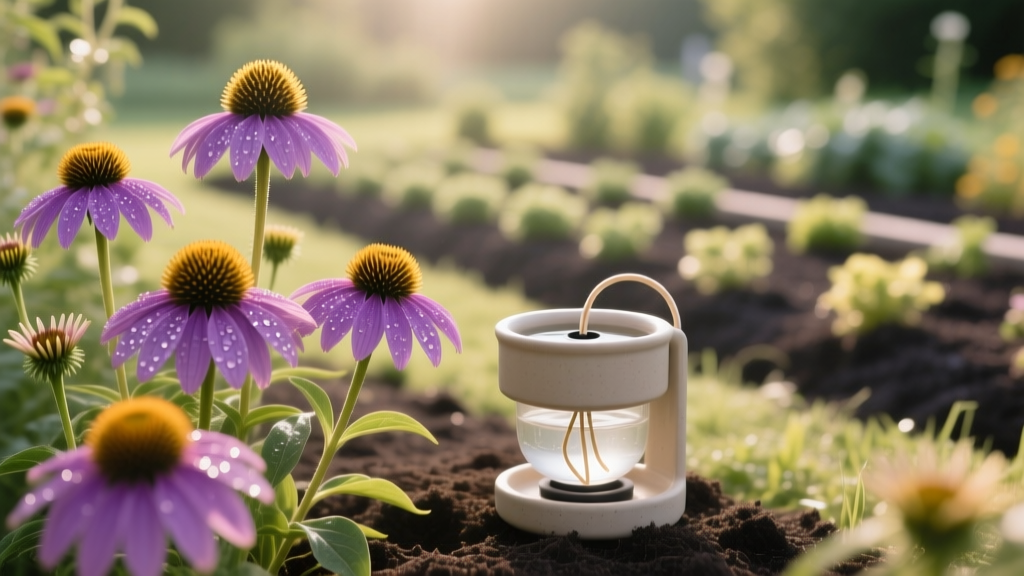
How to Create a Self-Watering Setup for Coneflowers
It’s the third day of a heat wave, your hose feels like it’s blowing hot air, and your coneflowers (Echinacea) are doing that familiar midday slump—petals drooping, leaves a little dull, and the whole plant looking like it’s asking for a drink. Then you water… and by tomorrow afternoon it’s doing it again. The surprise for a lot of home gardeners is this: coneflowers are “drought-tolerant,” but they don’t always look good getting to drought tolerance the hard way—especially their first year, or in containers, or in fast-draining beds.
A self-watering setup isn’t about pampering coneflowers. It’s about delivering water slowly and consistently at the root zone so the plant can keep blooming instead of yo-yoing between “parched” and “flooded.” Done right, it also cuts disease pressure, reduces runoff, and makes your garden far less dependent on your daily schedule.
This is the exact kind of project that pays you back every summer: fewer emergency waterings, steadier growth, and blooms that don’t stall when the weather turns harsh.
What Coneflowers Actually Need From Water (and Why “Self-Watering” Helps)
Coneflowers prefer a deep, occasional soak over frequent splashes. That said, the “right” schedule changes based on plant age, soil texture, heat, and whether you’re growing in ground beds or containers.
- New plantings (first 4–6 weeks): Aim for consistently moist soil—not soggy—while roots establish.
- Established plants in the ground: Often thrive with about 1 inch of water per week total (rain + irrigation), delivered in one or two deep sessions.
- Containers: Dry much faster; self-watering is a game-changer here.
The slow-release nature of a reservoir (or drip line) reduces stress. You’re not forcing the plant to cycle between extremes, which is when you see leaf scorch, stalled flowering, and weak stems.
“Frequent light watering encourages shallow roots; deep, less frequent watering promotes deeper rooting and improves drought tolerance.” — Colorado State University Extension, Watering Established Landscapes (2020)
Choose Your Self-Watering Method: Reservoir vs. Wicking vs. Drip
There are several practical ways to “self-water” coneflowers. The best one depends on whether your plants are in the ground or pots, and how hands-off you want the system to be.
| Method | Best For | Typical Watering Interval | Approx. Cost (DIY) | How It Delivers Water |
|---|---|---|---|---|
| Self-watering container (reservoir + wick) | Pots, patios, balconies | 3–7 days (weather dependent) | $10–$40 per pot | Soil wicks water upward from a bottom reservoir |
| In-ground olla (buried clay pot) | Garden beds, drought-prone areas | 4–10 days | $15–$60 each | Seepage through porous clay at root zone |
| Drip irrigation + timer | Rows, borders, multiple plants | Set schedule (e.g., 1–3x/week) | $30–$150+ | Emitters apply water slowly at soil level |
| DIY bottle spike (short-term) | Vacations, temporary help | 1–3 days | $0–$10 | Slow drip from a bottle into soil |
If you want my practical rule: containers do best with a real reservoir-style self-watering pot, and in-ground beds do best with either an olla or drip irrigation. Bottle spikes are fine for emergencies, but they’re inconsistent in heat and clog easily.
Build a Self-Watering Setup for Coneflowers (3 Proven Options)
Option 1: DIY Self-Watering Container (Perfect for Patio Coneflowers)
This is the cleanest “set it and forget it” method for pots. Coneflowers in containers are the ones that most often look crispy by July, even if you’re watering regularly.
You’ll need:
- One container at least 14–18 inches wide (coneflowers have serious roots)
- A slightly smaller inner pot or perforated platform (to create a false bottom)
- Wicking material (poly rope, cotton cord, or strips of microfiber cloth)
- Overflow hole drilled 1.5–2 inches up from the bottom
- Potting mix (more on mix in the soil section)
Step-by-step:
- Drill an overflow hole 1.5–2 inches from the bottom edge. This prevents root rot during heavy rain.
- Create the reservoir space by setting a perforated platform or inverted nursery pot in the bottom.
- Add 2–4 wicks that hang into the reservoir and extend up into the soil zone (at least 6–8 inches into the mix).
- Fill with potting mix, firm lightly, and plant your coneflower at the same depth it grew before.
- Water from the top the first time until water runs out the overflow hole. This “primes” the wicks.
- Fill the reservoir through a corner gap or a fill tube. Refill when it’s empty.
Real numbers that matter: In hot weather above 90°F, a 5-gallon reservoir may only last 2–4 days for a blooming coneflower in full sun. In milder weather (70–80°F), it may last 5–7 days.
Option 2: Ollas for In-Ground Coneflowers (Low-Tech, High Reliability)
If you garden in a place where water disappears fast—sandy soil, raised beds, windy sites—ollas are a quiet miracle. You bury an unglazed clay vessel near the root zone, fill it, and the soil draws moisture through the porous walls as needed.
How to install an olla:
- Choose an unglazed clay olla or two unglazed pots sealed rim-to-rim.
- Dig a hole so the olla sits with only the neck/lid above soil level.
- Place it 6–10 inches from the coneflower crown (close enough to feed roots, not so close it disturbs the crown).
- Backfill firmly to eliminate air gaps (air gaps reduce wicking).
- Fill with water, cover with a lid to reduce evaporation and mosquitoes.
Spacing tip: A medium olla typically serves about a 2–3 foot diameter root zone depending on soil texture. In heavy clay, the wetting zone spreads wider; in sand, it’s tighter.
Research-backed? The concept is old, but still supported by modern water-efficiency discussions. The University of California Agriculture and Natural Resources notes that drip and targeted irrigation reduce waste compared to overhead watering, especially in hot periods (UC ANR Publication, 2021).
Option 3: Drip Irrigation + Timer (Best for Borders and Mass Plantings)
If you’ve got a row of coneflowers (or a mixed pollinator border), drip is the most scalable. The “self-watering” magic comes from a timer and slow delivery right to the soil.
Basic setup:
- 1/2-inch mainline tubing along the bed
- 1/4-inch drip lines or emitters at each plant
- Battery or solar timer at the spigot
- Filter (especially if you’re on a well)
Emitter guideline: For coneflowers, a common starting point is 1 gallon per hour (GPH) emitters. Run them long enough to wet soil 6–10 inches deep—that’s where you’re building drought resilience.
Sample schedule (adjust for your conditions):
- New transplants: 30–45 minutes, 2–3 times per week (first month)
- Established plants: 60–90 minutes, 1 time per week (normal summer weather)
- Heat wave (90°F+ for several days): 60 minutes, 2 times per week
These are starting points, not commandments. The goal is consistent moisture at depth, with the surface allowed to dry slightly between cycles.
Soil Setup: The Part Most “Self-Watering” Systems Get Wrong
Self-watering fails when the soil mix is wrong. Coneflowers hate sitting in stagnant water, and a reservoir system can create that problem if the soil is too fine or too water-retentive.
Targets to aim for:
- In-ground beds: Well-drained soil with compost added sparingly. Coneflowers do well around pH 6.0–7.0.
- Self-watering containers: A chunky, aerated mix that still wicks.
Practical container mix (by volume):
- 50% high-quality potting mix
- 25% pine bark fines or orchid bark (for air)
- 25% perlite or pumice (for drainage)
If you use straight potting soil in a self-watering container, it often compacts by midseason, wicks poorly, and you’ll see a weird combo: wet bottom, dry top, unhappy plant.
For in-ground beds, the best improvement is often 2 inches of compost worked into the top 6–8 inches—once. Don’t keep adding thick compost layers year after year around coneflowers; you can push them toward floppy growth.
Soil drainage matters for disease control too. The Missouri Botanical Garden notes Echinacea prefers well-drained soil and full sun for best performance (Missouri Botanical Garden Plant Finder, 2023).
Light and Heat: Self-Watering Isn’t a Substitute for Sun
Coneflowers bloom best with 6–8 hours of direct sun. In partial shade, they’ll survive, but they often stretch, lean, and flower less—then gardeners try to “fix it” with more water. That usually makes things worse.
Three common light situations:
- Full sun, reflected heat (south-facing wall): Self-watering containers help, but expect to refill more often. Mulch the surface with 1 inch of shredded bark to slow evaporation.
- Morning sun/afternoon shade: Great for hotter climates. You’ll water less frequently and still get solid blooms.
- Dappled shade: Expect fewer blooms. Keep watering conservative to avoid mildew issues.
Feeding Coneflowers: Don’t Overdo It (Especially With Steady Moisture)
A self-watering setup improves nutrient availability because the root zone stays more evenly moist. That’s good—until you fertilize like you’re feeding tomatoes.
Simple feeding plan:
- In-ground established plants: Often none needed. A light top-dress of compost in spring is plenty.
- Containers: Use a slow-release fertilizer at planting, something like a balanced blend (e.g., 10-10-10) at the label rate for container size.
- If growth is pale: Use a half-strength liquid feed once, then reassess in 10–14 days.
Overfeeding leads to floppy stems and fewer long-lasting blooms. If your coneflowers are tall but can’t stand up, fertilizer is often the culprit—water just made the problem show up faster.
Common Problems (and How Self-Watering Changes Them)
Self-watering reduces some issues (like drought stress) and can increase others (like soggy roots) if mismanaged. Here’s what I see most often.
Problem: Drooping in the Afternoon (but perky in the morning)
Likely cause: Normal heat response, especially above 85–90°F. Not always a watering emergency.
What to do:
- Check soil moisture 2–3 inches down. If it’s cool and slightly moist, leave it alone.
- Mulch to reduce surface evaporation.
- For containers, ensure the reservoir isn’t empty by mid-day during heat spells.
Problem: Yellowing Lower Leaves + Soft Stems
Likely cause: Overwatering or poor aeration (common in self-watering pots without an overflow hole).
Fix:
- Confirm an overflow hole exists at 1.5–2 inches above the base.
- Switch to a chunkier mix (add bark + perlite).
- Let the reservoir run dry for a day, then refill—don’t keep it constantly topped off if the plant is struggling.
Problem: Powdery Mildew (white film on leaves)
Likely cause: Humid air + poor airflow, sometimes worsened by too much nitrogen and shade.
Fix:
- Thin nearby plants to improve airflow; aim for 12–18 inches spacing depending on variety size.
- Water at soil level only (drip/olla/reservoir helps).
- Avoid heavy fertilizing; remove badly infected leaves to reduce spread.
Problem: Slow Blooming, Lots of Leaves
Likely cause: Too much fertilizer, too much shade, or constantly wet soil.
Fix:
- Reduce feeding; do not add more nitrogen.
- Increase sun exposure if possible.
- Shift drip schedules to deeper, less frequent watering.
Troubleshooting Your Self-Watering Setup (Symptom-by-Symptom)
When a self-watering system “fails,” it’s almost always one of a few predictable issues. Here’s a practical diagnostic list you can use without fancy tools.
Symptom: The reservoir empties in 24 hours
- Cause: Extreme heat/wind, undersized reservoir, or a leak.
- Solution:
- Move containers out of wind tunnels.
- Increase reservoir size or add a second wick.
- Check for cracks and ensure the overflow hole isn’t acting like a drain because the container is tilted.
Symptom: Reservoir stays full but plant wilts
- Cause: Wicking failure (soil too coarse at wick zone, or wick not in contact).
- Solution:
- Top-water thoroughly to re-prime wicks.
- Re-seat wicks so they extend at least 6–8 inches into the soil.
- Use a mix that wicks (not pure bark/perlite).
Symptom: Fungus gnats around pots
- Cause: Constantly damp top layer, often from fine potting mix.
- Solution:
- Let the top 1 inch dry between refills.
- Add a thin layer of coarse mulch (like pine fines) on the surface.
- Use yellow sticky traps temporarily to knock down adults.
Symptom: Coneflower crowns rot in winter (in mild/wet climates)
- Cause: Excess winter wet, heavy soil, mulch piled on crown.
- Solution:
- In fall, pull mulch back from the crown (leave a donut, not a volcano).
- Improve drainage; avoid keeping ollas full late in the season.
- In containers, ensure overflow holes remain open and pots aren’t sitting in saucers of water.
Three Real-World Setups (and What I’d Do Differently in Each)
Here are three scenarios that come up constantly, with specific approaches that work.
Scenario 1: First-Year Coneflowers in a New Sunny Bed
You planted 10 coneflowers this spring, the bed is still settling, and your soil is fluffier than you expected (and dries fast).
- Best method: Drip line with 1 GPH emitters, 1–2 per plant depending on spacing.
- Schedule: 45 minutes, 2–3x/week for the first month; then taper to 60–90 minutes once weekly if rainfall is normal.
- Extra step: Add 2 inches of mulch, but keep it 2 inches away from crowns.
Scenario 2: Coneflowers in Containers on a Hot Deck
Full sun, reflected heat, and pots that bake from the sides. You can’t realistically hand-water twice a day in July.
- Best method: Self-watering container with an overflow hole and chunky mix.
- Container size: At least 14–18 inches wide; bigger is easier to keep stable.
- Routine: Refill reservoir every 2–4 days when temperatures exceed 90°F; top-water once every 2–3 weeks to flush salts.
Scenario 3: Established Coneflowers That Keep Flopping Over
They’re watered reliably, they’re tall, and they fall apart in bloom—especially after summer storms.
- Likely issue: Too much nitrogen and/or too much shade, plus rapid growth from steady moisture.
- Fix plan:
- Stop fertilizing for the season.
- Water deeply but less often (don’t keep soil constantly moist).
- Consider a discreet support ring when plants reach 18–24 inches tall.
- If shade is the culprit, move or divide in early fall or spring.
Method Comparison With Actual Numbers: Olla vs. Drip for a Small Coneflower Patch
If you’re choosing between an olla and drip for, say, a 4-plant cluster, here’s how the math often shakes out in a typical hot stretch.
- Drip example: 4 plants, each with one 1 GPH emitter, run 60 minutes = 4 gallons per watering. Twice per week in heat = 8 gallons/week.
- Olla example: One 2-gallon olla refilled 2–3x/week in heat = 4–6 gallons/week, delivered right at the roots with minimal evaporation.
That doesn’t make ollas “better” universally—drip scales up easily and can be automated for an entire border—but for small clusters, ollas can be both efficient and nearly foolproof.
Small Habits That Make Self-Watering Work All Season
Once your setup is built, the ongoing success comes down to a few simple routines.
- Check depth, not surface: Every week, feel soil 3–4 inches down. Adjust schedules based on that, not on how dusty the top looks.
- Flush containers occasionally: Every 2–4 weeks, water from the top until it drains out the overflow. This prevents fertilizer salts from building up.
- Keep crowns dry-ish: Don’t bury coneflower crowns in mulch or soggy compost.
- Winter adjustments: In rainy winters, empty reservoirs and don’t leave pots sitting in trays of water.
The payoff is steady bloom and sturdier plants. Coneflowers don’t need constant moisture, but they do respond beautifully to consistency—especially when summer weather gets dramatic. If you build the system with drainage in mind, match it to your soil, and watch how fast your setup empties during hot spells, you’ll have coneflowers that look like you’ve been home watering all week—even when you haven’t.
Sources: Colorado State University Extension (2020); University of California Agriculture and Natural Resources, irrigation efficiency publications (2021); Missouri Botanical Garden Plant Finder (2023).