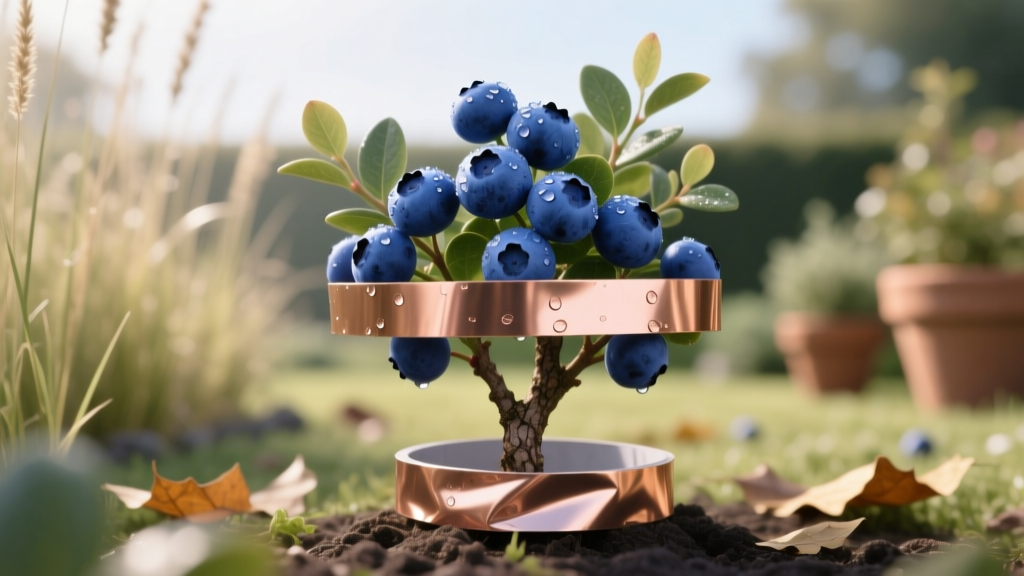
Copper Tape Barrier for Blueberries
The first time I tried copper tape around a blueberry bed, I did it out of pure frustration: every spring, my young bushes would leaf out beautifully… and then overnight the tender shoots looked like someone took pinking shears to them. Slugs. Not a few—dozens. Hand-picking after dark helped, but it felt like bailing a boat with a teacup. Copper tape wasn’t a magic spell, but when it’s installed correctly and paired with solid blueberry care, it can be the difference between “barely hanging on” and “loaded with berries.”
Here’s the grounded truth: copper tape works best as a barrier system, not a cure-all. If your blueberries are stressed (wrong pH, soggy soil, droughty roots), they’ll still struggle—even if you stop every slug in the neighborhood. So this guide covers the copper barrier itself and the plant care basics that make the barrier worth installing.
What copper tape actually does (and what it doesn’t)
Copper tape is used as a perimeter barrier to discourage slugs and snails from crossing. When a slug’s moist body contacts copper, it can create an unpleasant reaction that makes the slug turn away. In real gardens, results vary because performance depends on:
- Continuity: one gap = one entry point
- Cleanliness: soil splash and algae can bridge the barrier
- Placement: tape on rough bark or uneven wood fails faster
- Pressure: high slug populations overwhelm any single method
Colorado State University Extension notes that copper bands can deter slugs and snails when properly installed, but they’re most effective as part of an integrated approach (Colorado State University Extension, 2020). The University of Minnesota Extension similarly emphasizes integrated management—sanitation, habitat reduction, and targeted control—over relying on one tactic (University of Minnesota Extension, 2021).
“No single method gives complete control. The best results come from combining barriers with habitat modification and regular monitoring.” — University Extension guidance on slug management (University of Minnesota Extension, 2021)
Real-world scenarios: when copper tape shines (and when it flops)
I’ve seen copper tape work beautifully in some blueberry setups and disappoint in others. These three cases come up a lot in home gardens:
Scenario 1: Raised blueberry bed next to lawn (high slug pressure)
What happens: Slugs commute from irrigated lawn into the raised bed at night. Copper tape on the bed’s outer rim can reduce crossings dramatically—if the rim is clean, smooth, and continuous.
Extra step that matters: Mow a 18–24 inch dry buffer strip and avoid evening watering near the bed. Less moisture = fewer slug “highways.”
Scenario 2: Container blueberries on a deck (barrier is easy)
What happens: Container rims are perfect for copper tape, and you can elevate pots so slugs have fewer routes. This is one of the best use-cases.
Most common failure: Tape applied to dusty plastic or textured fabric pots—adhesive lets go within weeks. Wipe with isopropyl alcohol first and use tape designed for outdoor use.
Scenario 3: In-ground blueberries with heavy mulch and drip irrigation (mixed results)
What happens: Mulch keeps roots happy but also shelters slugs. Copper tape placed around individual stems is usually useless (too many bridges). A perimeter barrier can help, but soil splash and mulch contact quickly compromise it.
Better approach: Use copper tape on a solid edging (metal or smooth composite) that stands 4–6 inches above soil, and keep mulch pulled back 2 inches from the edging.
Installing copper tape the way it actually works
If you’ve tried copper tape and shrugged it off, odds are the installation failed—not the concept. Here’s the method that holds up in weather.
Where to place the tape
- Raised beds: apply on the outside vertical face near the top edge, not flat on the top where watering and debris collect.
- Containers: apply around the pot’s rim or upper sidewall where it stays dry and clean.
- Edging/perimeter fence: apply to smooth edging that fully surrounds the planting area.
How wide should the tape be?
Use 2-inch wide tape when possible. Narrow tape (1/2–1 inch) is easier for slugs to bridge with debris and for you to accidentally nick while weeding.
Step-by-step: a dependable install
- Pick a dry day (no rain forecast for 24 hours) so adhesive bonds well.
- Clean the surface: wipe with a damp cloth, then dry. For pots and metal edging, wipe with isopropyl alcohol.
- Measure and cut: plan for a 1–2 inch overlap at joints—no butt seams.
- Apply slowly, pressing firmly as you go. Avoid wrinkles; wrinkles catch dirt.
- Seal problem joints (optional but helpful): a thin bead of outdoor silicone at overlaps keeps water and grit out.
- Keep it clear: trim leaves, mulch, and irrigation lines so nothing touches the tape and creates a bridge.
Maintenance schedule (this is the part people skip)
- Weekly for the first month: check for lifted corners and debris bridges.
- After heavy rain: wipe off mud splash so the tape stays exposed.
- Every 6–8 weeks: quick cleaning with a damp cloth; replace sections that have peeled.
Comparison: copper tape vs other slug control methods (with real numbers)
If slugs are hammering blueberries, I rarely recommend only one tactic. Here’s how common options stack up in practical home-garden terms.
| Method | Typical application rate / setup | Works best when | Weak spot | Time to see change |
|---|---|---|---|---|
| Copper tape barrier | 2-inch tape; continuous perimeter with 1–2 inch overlaps | Raised beds, containers, solid edging | Fails with gaps, mud splash, mulch bridges | 1–7 days |
| Iron phosphate bait | Scatter pellets per label; often reapply every 1–2 weeks during wet periods | High pressure areas; works in mulch | Needs reapplication; can be less effective in heavy rain | 2–5 days |
| Hand-picking at night | 10–15 minutes after dark, 2–3 nights/week | Small plantings; when you’re consistent | Labor-intensive; misses hidden juveniles | Immediate, but temporary |
| Habitat reduction | Remove boards, dense groundcover; pull mulch back 2 inches from stems | Long-term control; reduces breeding sites | Can conflict with moisture conservation in hot climates | 2–4 weeks |
When you want a quick, visible shift, pair copper tape with iron phosphate bait during peak slug season. Copper reduces new arrivals; bait reduces the resident population. This “barrier + knockdown” pairing is often what turns the corner in real gardens.
Watering blueberries when you’re also managing slugs
Blueberries have shallow, fibrous roots. They hate drying out, and they hate waterlogged soil. Slugs, meanwhile, love consistently damp surfaces. Your job is to keep the root zone evenly moist without turning the bed surface into a nightly slug spa.
How much water?
A good baseline is 1–2 inches of water per week from rain + irrigation during the growing season. In hot, windy weather or sandy soil, you may need more frequent watering in smaller doses.
- New plants (first year): water 2–3 times per week if rain is scarce; aim to moisten the top 6–8 inches of soil.
- Established bushes: deep watering 1–2 times per week is often enough, adjusting for heat and soil type.
Timing matters (for slugs and disease)
Water in the morning. Evening watering leaves surfaces wet overnight, which encourages slugs and can increase foliar disease pressure. Drip irrigation is ideal because it keeps foliage dry and limits surface wetness.
Troubleshooting watering problems
- Symptom: Leaves wilt midday but recover at night.
Likely cause: Heat stress and shallow drying.
Fix: Add a second short irrigation cycle during heat waves; increase mulch depth to 2–4 inches (keep it from touching the copper barrier). - Symptom: Yellowing leaves, weak growth, soggy soil smell.
Likely cause: Poor drainage / overwatering.
Fix: Improve drainage (raised bed, add pine bark fines), reduce irrigation frequency, and avoid saucers under containers.
Soil for blueberries: where most “slug problems” actually start
Stressed blueberries leak opportunities—thin growth, sparse leafing, and weak recovery from pest damage. The biggest lever you can pull is soil pH and structure.
Target pH and how to hit it
Blueberries prefer acidic soil. Most home gardens run too neutral. Aim for a soil pH of 4.5–5.5. North Carolina State Extension states blueberries grow best in strongly acidic soils and commonly recommends this range (North Carolina State Extension, 2023).
- Test first (lab test is best).
- If pH is high, use elemental sulfur as directed by your soil test. As a rough ballpark, lowering pH in clay takes more sulfur than in sandy soil—don’t guess if you can avoid it.
- Build soil with pine bark fines, peat moss (where appropriate), or aged pine needles to improve acidity and drainage.
Drainage and mulch
Blueberries like consistent moisture but not “wet feet.” If water puddles for more than 4 hours after a rain, you’ll fight root issues forever. Raised beds or mounded rows can be a game-changer.
Mulch is also non-negotiable for blueberries—2–4 inches of pine bark or wood chips helps stabilize moisture and temperature. Just be intentional: thick mulch can increase slug habitat. Keep it pulled back from the copper tape and from the crown of the plant.
Light: enough sun to outgrow damage
Blueberries fruit best in full sun: 6–8+ hours of direct light. In light shade, plants may survive but grow slower, and any slug chewing becomes more consequential because the plant can’t replace tissue quickly.
Quick light fixes that pay off
- Prune overhanging branches to open the bed to morning sun (morning sun also dries dew faster).
- If containers are mobile, shift them to a brighter spot before bloom and fruit set.
- Keep weeds down—weed cover holds moisture and gives slugs daytime shelter.
Feeding blueberries without pushing weak, slug-prone growth
Overfeeding is a common mistake. Too much nitrogen can produce lush, tender growth—exactly what slugs prefer. Underfeeding, on the other hand, leaves plants unable to recover.
What to use
Use an acid-forming fertilizer labeled for blueberries/azaleas, or ammonium sulfate where appropriate. If you’re using compost, keep it modest and make sure it isn’t raising pH.
When and how much
- Timing: Feed in early spring at bud swell, then again about 6 weeks later if growth is weak. Avoid late-season nitrogen after mid-summer in many climates; it can push tender growth going into cold weather.
- Amount: Follow the product label for plant age/size. For young blueberries, it’s often better to split the total into two smaller doses than dump it all at once.
Feeding troubleshooting
- Symptom: Pale leaves with green veins (interveinal chlorosis).
Likely cause: High pH causing iron unavailability (not always lack of iron).
Fix: Test pH; correct with sulfur over time. Foliar iron can help temporarily, but pH is the root issue. - Symptom: Fast, floppy growth with lots of chewing damage.
Likely cause: Too much nitrogen and/or too much shade.
Fix: Reduce nitrogen; improve sun exposure; reinforce slug controls.
Common problems on blueberries (and how copper tape fits in)
Copper tape is mainly about slugs/snails, but blueberries deal with a whole lineup of issues. Here’s how I sort them in the garden.
Problem: Ragged holes in leaves, chewed shoots, slime trails
Diagnosis: Slugs/snails, especially if damage is worse after rainy nights.
What to do (stack these):
- Install copper tape barrier correctly (continuous, clean, no bridges).
- Remove hiding spots: boards, dense weeds, stones touching the bed.
- Spot-treat with iron phosphate bait during wet spells.
- Night patrol: check 1–2 hours after dark for a week to knock population down fast.
Problem: Leaves turning red in summer, slow growth
Diagnosis: Often pH stress, drought stress, or root issues (not just “it’s fall early”).
Fix: Confirm soil pH (target 4.5–5.5), adjust watering to consistent moisture, and improve drainage if needed.
Problem: Fruit shrivels or drops, stems look healthy
Diagnosis: Irregular watering during fruit fill, heat stress, or bird pressure (birds can make it look like fruit drop).
Fix: Maintain steady moisture at 1–2 inches/week, mulch 2–4 inches, and consider netting before berries blush.
Troubleshooting copper tape: specific failures and fixes
If copper tape “doesn’t work,” the reason is usually visible once you know what to look for.
Symptom: Slugs inside the barrier anyway
- Cause: A gap at a seam or corner.
Fix: Overlap seams by 1–2 inches; patch corners with a second layer. - Cause: Mulch, leaves, or irrigation tubing touching the tape (a bridge).
Fix: Create a clean strip so nothing touches the tape; stake or reroute drip lines. - Cause: Slugs already living inside the bed/container.
Fix: Hand-pick for 7 nights or use iron phosphate bait inside the protected zone for a short period.
Symptom: Tape peels off after rain or heat
- Cause: Applied to dirty, damp, or textured surface.
Fix: Clean and dry thoroughly; choose a smoother mounting surface (metal edging or rigid plastic band). - Cause: Cheap indoor-grade tape.
Fix: Use outdoor-rated copper tape with strong adhesive; in harsh climates, add mechanical support (staples on wood edges, or a clamp band on pots—without piercing the tape in a way that creates gaps).
Symptom: Copper turns dark/green and seems “inactive”
Cause: Oxidation is normal outdoors. The tape doesn’t need to look shiny to function, but grime can reduce contact.
Fix: Wipe gently with a damp cloth. Avoid coating it with oils or sealants—those can create a slick bridge for debris.
Putting it all together: a practical seasonal plan
If you want a system that holds up year after year, use this rhythm.
Early spring (before rapid growth)
- Check soil pH; aim for 4.5–5.5.
- Refresh mulch to 2–4 inches, keeping it off crowns and away from the barrier.
- Install or repair copper tape on a dry day with 24 hours rain-free if possible.
Late spring to early summer (peak tender growth)
- Water in the morning; maintain 1–2 inches/week total moisture.
- Scout at night once a week; increase to 3 nights/week during rainy stretches.
- Use iron phosphate bait strategically if chewing starts to show.
Mid to late summer (fruit fill and harvest)
- Keep irrigation steady—this is when drought stress shows up as small berries and drop.
- Keep the copper line clean; fruiting season often coincides with irrigation tweaks and more garden traffic.
- Don’t overfeed with nitrogen—focus on consistency, not force-feeding.
Copper tape can be a strong ally for blueberries, especially in raised beds and containers, but it earns its keep only when you treat it like a maintained barrier, not a one-time sticker. Pair it with morning watering, acidic well-drained soil, and steady feeding, and your bushes will have the vigor to shrug off minor pest damage and still reward you with a real harvest. That’s the goal—less midnight slug patrol, more bowls of berries on the counter.