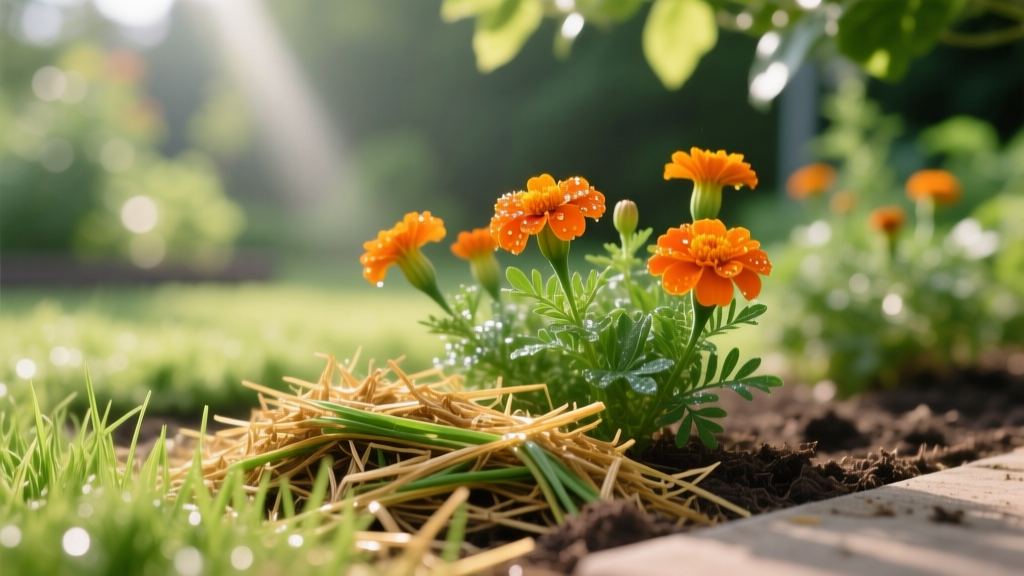
Grass Clippings as Mulch for Marigolds
It usually happens right after you mow: you’ve got a wheelbarrow of fresh grass clippings, a row of marigolds that bake in afternoon sun, and a guilty feeling about throwing “good organic matter” away. Then you remember hearing that grass clippings can “burn plants” or turn into a slimy mat—and you hesitate.
Here’s the hard-won truth from real gardens: grass clippings can be one of the best mulches for marigolds if you use them the right way. Used wrong, they can absolutely cause problems—sour smells, fungus, even stressed plants from trapped moisture and lack of airflow. Used right, they steady soil moisture, reduce weeds, and feed soil life without spending a dime.
This guide walks you through how to mulch marigolds with grass clippings safely, how it changes watering and feeding, and how to troubleshoot the common “uh-oh” moments that show up in real beds and containers.
What grass-clipping mulch actually does for marigolds
Marigolds (Tagetes spp.) are tough annuals, but they’re at their best when the soil stays evenly moist—not soggy, not bone-dry. A thin mulch layer reduces evaporation and shields the soil surface from heat spikes. In summer beds, I’ve seen mulched marigolds keep flowering while unmulched ones stall and sulk after a hot, windy stretch.
Grass clippings are “green” material: they break down faster than straw or wood chips, and they contain nitrogen. That’s helpful for soil biology, but it’s also why fresh, thick layers can mat down, heat up, and smell as they decompose anaerobically.
“Fine-textured materials like grass clippings can mat and restrict air and water movement; apply in thin layers and allow clippings to dry to reduce matting.” — University of Minnesota Extension (2022)
That advice lines up with what gardeners see on the ground: it’s not that grass clippings are bad; it’s that they’re easy to overapply.
Before you spread: safety checks that matter
Not all clippings belong around your flowers. Do these quick checks first—this is where most mulch mistakes start.
1) Make sure the clippings are “clean”
- Skip clippings from lawns treated with herbicides (especially “weed-and-feed” products). Many labels advise keeping clippings off gardens for a period of time. If you can’t confirm what was used, don’t gamble.
- Avoid clippings from weedy lawns if seed heads are present. If your mower bag is full of seed stalks, you’ll be planting weeds.
2) Dry them a bit (usually 24–48 hours)
Fresh clippings clump. If you can, spread them in a thin layer on a tarp or driveway and let them wilt for 1–2 days. They should feel slightly dry and fluffy, not wet and sticky.
3) Keep mulch off stems
Marigolds don’t like having their stems constantly moist. Leave a clear donut around each plant—1–2 inches of bare soil around the stem is a simple rot-prevention habit.
How to apply grass clippings around marigolds (step-by-step)
If you remember only one rule, make it this: grass clippings should go on in thin layers.
- Weed first. Pull existing weeds so you’re not insulating them. Mulch prevents new weeds better than it kills established ones.
- Water the bed deeply. Mulch locks in moisture—so trap a good soak underneath it. Aim to moisten soil down 4–6 inches.
- Apply a thin layer: spread clippings 1 inch deep (fluffed, not packed). If you only have fresh clippings, start at 1/2 inch.
- Let that layer dry and shrink. In a few days it will settle. Add another 1/2–1 inch if needed.
- Stop at 2 inches total. For marigolds, 1–2 inches is the sweet spot. Thicker than 3 inches is where matting, odor, and fungus become common.
Timing note: I like applying clippings in the morning after watering, so the top can dry by afternoon. If you mulch right before a cool, wet spell, clippings stay wet longer and mat more easily.
Watering marigolds with grass-clipping mulch
Mulch changes your watering schedule. The top inch of soil won’t crust over as fast, so you’ll water less often—but when you do water, do it thoroughly. Shallow sprinkles encourage shallow roots, and mulch can hide that problem until plants suddenly wilt on a hot day.
Practical watering targets
- In-ground marigolds: aim for about 1 inch of water per week total from rain + irrigation during warm weather. In a heat wave above 90°F, many beds need 1.5 inches weekly.
- New transplants (first 7–10 days): keep soil evenly moist; check daily. Mulch helps, but don’t let it trick you into neglect.
- Containers: grass clippings are trickier because pots need airflow. Use a very thin layer—1/2 inch—or skip mulch and rely on consistent watering.
How to check moisture under mulch
Don’t guess by looking at the mulch. Stick your finger through it:
- If the soil is dry at 2 inches deep, it’s time to water.
- If it’s cool and slightly damp at 2 inches, wait.
Mulch can reduce evaporation significantly. Penn State Extension notes that mulch helps conserve soil moisture and moderate soil temperatures (Penn State Extension, 2023). That’s exactly why mulched marigolds tend to keep blooming more steadily through summer stress.
Soil and bed prep: get this right and mulch works better
Grass clippings are not a substitute for decent soil. Marigolds want soil that drains well and isn’t overly rich in nitrogen.
Soil texture and drainage
- Best soil: loam or sandy loam that drains after rain within a few hours.
- Heavy clay beds: keep grass clipping layers especially thin (1 inch max) to avoid holding too much moisture at the surface.
Soil pH and fertility basics
Marigolds are forgiving, but they do well in a moderately fertile range. If you soil test, a pH around 6.0–7.0 is generally comfortable for most garden annuals. If you haven’t tested, don’t panic—just avoid over-fertilizing.
One compost boost does wonders: mix in 1–2 inches of finished compost before planting or as a side-dress early in the season. Then use grass clippings as the moisture-stabilizing blanket on top.
Light and temperature: how mulch helps (and when it hurts)
Marigolds bloom best in full sun: 6–8 hours daily. In partial shade they’ll grow, but flowering slows, and damp conditions around the base become more likely—especially with mulch.
Grass clippings shine in hot weather because they reduce soil temperature swings. In beds that hit 95°F and windy afternoons, a thin mulch layer can be the difference between steady growth and daily wilting.
But in cool, rainy periods (think spring cold snaps or a week of storms), clippings can stay wet. In those conditions, pull mulch back a bit to let the soil surface breathe.
Feeding marigolds when you use grass clippings
Grass clippings contain nitrogen, but they don’t act like an instant fertilizer for your marigolds. They feed soil microbes first, and nutrients are released gradually as they break down.
A simple feeding plan that won’t overdo it
- At planting: mix compost in soil; avoid high-nitrogen granular fertilizers.
- Mid-season (about 4–6 weeks after planting): if plants are pale and flowering slows, use a light application of a balanced fertilizer (for example, something like 5-5-5), following label rates. Go lighter than you think.
- Avoid too much nitrogen: it causes lush leaves and fewer flowers—a common marigold complaint.
If your clippings are from a heavily fertilized lawn, consider using them more sparingly. Excess nitrogen can push leafy growth at the expense of blooms.
Comparison: grass clippings vs other mulches for marigolds
Home gardeners usually choose between what’s free (clippings, leaves) and what’s easy (bagged bark). Here’s how they compare in a typical marigold bed.
| Mulch type | Recommended depth for marigolds | How long it lasts | Weed suppression | Risk level (common issues) | Best use case |
|---|---|---|---|---|---|
| Grass clippings (dried/wilted) | 1–2 inches | 3–6 weeks (breaks down fast) | Good when layered | Medium (matting/odor if >3 inches or too wet) | Summer beds, frequent mowing, quick soil improvement |
| Shredded leaves | 2–3 inches | 2–4 months | Very good | Low–Medium (can mat if whole leaves) | Fall/spring mulching, gardeners with leaf supply |
| Straw (seed-free) | 2–3 inches | 2–3 months | Good | Medium (can harbor slugs; may contain seeds) | Vegetable-style beds, hot climates |
| Fine bark/wood chips | 2 inches (keep away from stems) | 6–12 months | Very good | Low (can tie up nitrogen at surface if mixed into soil) | Long-term beds, low-maintenance landscapes |
Comparison analysis with real numbers (watering frequency)
In a sunny bed during an 88–95°F week, here’s a realistic pattern many gardeners see with the same soil and irrigation style:
- No mulch: watering needed about every 2 days to keep marigolds perky.
- 1–2 inches grass clippings: watering often stretches to every 3–4 days.
- 2 inches wood chips: watering often stretches to every 4 days (sometimes 5 in heavier soil).
Your exact schedule depends on wind, soil texture, and plant spacing, but those intervals are a practical starting point for observation.
Common problems (and what to do about them)
Most mulch trouble comes from one of three things: too thick, too wet, or too close to stems. Here are the problems I see most with grass clippings around marigolds.
Problem: slimy, stinky mulch (anaerobic breakdown)
Symptoms: clippings form a dark mat, smell sour, feel slimy, and water beads off instead of soaking in.
What’s happening: the layer is too thick and wet, so oxygen can’t move through. That favors anaerobic bacteria.
Fix:
- Rake off the worst of the mat and compost it (mix with dry leaves or cardboard).
- Loosen the remaining mulch with a hand rake.
- Reapply only 1 inch of wilted clippings, maximum.
- Water less frequently but more deeply so the surface isn’t constantly wet.
Problem: marigolds wilt even though soil seems damp
Symptoms: midday droop; soil under mulch feels cool; plants perk up at night.
What’s happening: could be heat stress (normal), or roots staying too shallow due to frequent light watering.
Fix:
- Check moisture at 4 inches deep, not just the surface.
- Switch to deep watering: soak the root zone to 6 inches when you water.
- Provide temporary shade cloth during extreme heat above 95°F for a few days if plants are newly planted.
Problem: fungus or rot near the base
Symptoms: stem darkening near soil line, mushy tissue, or sudden collapse.
What’s happening: mulch touching stems + consistently wet conditions.
Fix:
- Pull mulch back 2 inches from stems immediately.
- Let the soil surface dry slightly between waterings.
- Thin crowded plants to improve airflow; marigolds planted 8–12 inches apart dry faster and get fewer issues.
Problem: more slugs or pill bugs
Symptoms: ragged holes, chewed petals, damage near soil line; pests hiding under mulch.
What’s happening: cool, damp mulch creates hiding places.
Fix:
- Keep mulch thinner (1 inch), and avoid mulching during long rainy spells.
- Water in the morning so the surface dries by night.
- Use simple traps: boards laid nearby and checked at dawn, or iron phosphate bait if damage is severe.
Troubleshooting by symptom (quick, specific answers)
Symptom: yellow leaves, lots of greenery, few flowers
- Likely cause: too much nitrogen (from fertilizer, rich compost, or heavy grass clipping use).
- Do this: stop fertilizing for 2–3 weeks, keep clippings to 1 inch, and deadhead spent blooms to push flowering.
Symptom: white fuzzy growth on clippings or soil surface
- Likely cause: saprophytic fungi breaking down organic matter (usually harmless), but it indicates constant moisture.
- Do this: fluff mulch with a hand rake, reduce thickness, and water less often. If stems are affected, pull mulch back from plants.
Symptom: mushrooms popping up
- Likely cause: moist organic layer + active decomposition.
- Do this: simply remove mushrooms if you don’t like them. They’re not harming marigolds; they’re a sign the mulch is breaking down.
Three real-world scenarios (and how to handle each)
Scenario 1: A hot, sunny border bed that dries out fast
You’ve got marigolds along a driveway or south-facing foundation. The soil bakes, and you’re tired of watering every day.
- Apply 1 inch of wilted clippings, wait 3–4 days, then top up to 2 inches.
- Water deeply every 3–4 days instead of daily sprinkles.
- Keep mulch pulled back 1–2 inches from stems to avoid rot when you do water.
Scenario 2: A rainy stretch and clay soil (mulch starts to smell)
This is where people decide “grass clippings don’t work.” The real issue is oxygen. Clay soil already holds water; thick clippings can seal it.
- Rake off any layer thicker than 1 inch.
- Let the surface breathe for a few days; resume mulching with a very thin layer once the weather dries.
- If you can, side-dress with 1 inch compost and keep clippings as a light topper rather than the main mulch.
Scenario 3: Containers on a patio (gnats and soggy tops)
Potted marigolds look great—until the potting mix stays wet and fungus gnats move in.
- Use no more than 1/2 inch of dried clippings, or skip mulch entirely.
- Let the top 1 inch of potting mix dry between waterings.
- Water early in the day; empty saucers so pots don’t sit in water.
Best practices that keep grass-clipping mulch working all season
If you want the benefits without the mess, these habits make all the difference.
- Apply in layers, not heaps. Reapply small amounts every mowing rather than dumping a thick blanket.
- Mix with a “brown” if you have it. A simple blend of clippings with shredded leaves (roughly 50/50 by volume) resists matting and smells less.
- Edge awareness: keep clippings from blowing onto marigold foliage; clumps stuck on leaves can cause spotting.
- Deadhead weekly. Mulch supports steady moisture, and deadheading keeps flowering steady—together they make marigolds look professionally maintained.
Common questions gardeners ask when they try this once (and get nervous)
“Will grass clippings make my marigolds too leafy?”
Not by themselves at a 1–2 inch mulch depth. Problems usually show up when you also add high-nitrogen fertilizer or pile clippings thickly and repeatedly. If blooms slow and leaves explode, cut back feeding and reduce mulch thickness.
“Do I need to compost grass clippings first?”
Not necessarily. Wilting them 24–48 hours is often enough. Composting is great if you want a cleaner, more stable material, but it isn’t required for success.
“Can I mulch seedlings with clippings?”
Wait until seedlings are sturdy—usually when they’re 4–6 inches tall. Tiny seedlings can be overwhelmed by mulch contact and excess moisture.
Grass clippings are one of those garden “freebies” that reward restraint. Keep the layer thin, keep it off the stems, and pay attention after rain. Do that, and your marigolds will stay cooler, need fewer emergency waterings, and keep pumping out color when summer is at its most stubborn.
Sources: University of Minnesota Extension (2022), Mulching landscape plants guidance on managing fine-textured mulches; Penn State Extension (2023), mulch benefits for moisture conservation and soil temperature moderation.