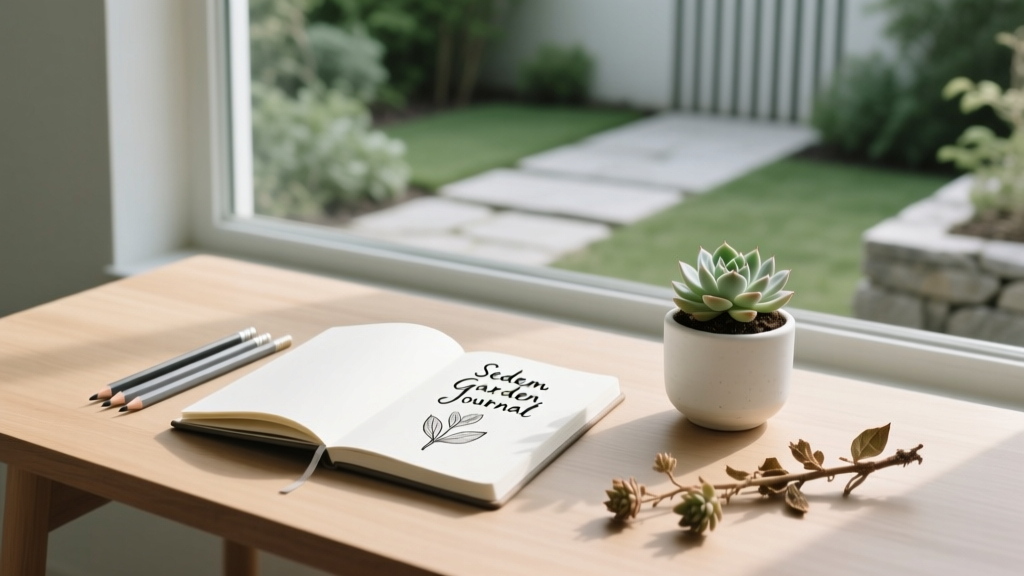
How to Keep a Garden Journal for Sedum
You know that moment when your sedum looks flawless all summer—tight, blue-green rosettes or fat little “jelly beans”—and then one rainy week later it’s suddenly flopping open, stretching, or turning mushy at the base? Most gardeners assume they “did something wrong” and start changing everything at once. The real problem is simpler: they don’t know what changed first. A garden journal turns sedum care from guesswork into a repeatable system—because sedum responds fast to light, water, and temperature swings, and it tells the truth if you’re tracking the right details.
This article shows you exactly how to keep a sedum-focused garden journal that improves your watering, soil, light, feeding, and troubleshooting decisions. I’ll share the specific numbers I log, what patterns to look for, and how to compare methods with real data so you can stop losing plants to “mystery” issues.
What to Record (and Why Sedum Makes Journaling Worth It)
Sedum is forgiving—until it isn’t. It can cruise for months on neglect and then collapse quickly when conditions stack up (too little sun + too much water + warm nights). Journaling is how you catch those stacks early.
Here’s the core idea: you’re not journaling “because it’s nice.” You’re collecting cause-and-effect evidence. Keep it short, but specific.
Your sedum journal: the five essential data points
- Date + location: “May 10, front bed, south wall” or “June 2, pot on patio table.”
- Weather snapshot: high/low temperature and rainfall (or “0.4 in rain”).
- Light exposure: hours of direct sun (estimate) and any shade changes.
- Watering details: how much and how often (not “watered a bit”).
- Plant observations: color, firmness, stretch, bloom timing, pests, and rot signs.
If you want one “master gardener” habit that pays off quickly: add photos from the same angle every 2 weeks. Sedum changes are easiest to spot in pictures—especially stretching, flop, and subtle color fade.
Tools that make journaling painless
Pick one method and stick to it for 1 season (at least 12 weeks). Consistency beats perfection.
- Notebook + pen: fastest in the garden; tape seed packets and labels right onto pages.
- Notes app: great for quick entries; add a template you can copy/paste.
- Spreadsheet: best for comparing methods (I’ll show a simple table below).
“Keeping records of watering, weather, and plant response is one of the most effective ways for gardeners to refine irrigation practices and reduce plant stress.” — University of Minnesota Extension (2023)
Watering: Turn “Drought-Tolerant” Into a Measurable Routine
Sedum is drought-tolerant once established, but that phrase causes two common mistakes: (1) people water too often “just a little,” or (2) they ignore new plantings that actually need a ramp-up period. Your journal helps you water deeply, then back off at the right time.
What to write down every time you water
Record these as numbers whenever possible:
- Amount: for pots, note ounces or liters (example: 12–16 oz per 10-inch pot). For beds, note minutes with a hose on a gentle flow (example: 2 minutes at the base per plant).
- Frequency: “Every 7 days” is meaningful; “sometimes” isn’t.
- Soil moisture check: “Top 2 inches dry” (use your finger or a chopstick for pots).
- Time of day: morning watering reduces fungal issues in humid climates.
Baseline watering targets (use these as your starting entries)
Use your journal to adjust, but start with a sensible baseline:
- New sedum in the ground: water once every 5–7 days for the first 3 weeks if you’re not getting regular rain; then taper.
- Established sedum in the ground: during summer drought, deep water every 10–14 days, then let it dry.
- Sedum in pots: typically every 7–10 days in warm weather; in heat waves (above 90°F), you may shift to every 4–6 days depending on pot size and sun.
These ranges line up with the general principle emphasized by extension guidance: water deeply and infrequently for succulents, and prioritize drainage. (See Colorado State University Extension, 2020, on succulents and watering practices.)
Comparison analysis: deep-and-rare vs. frequent sips
If you’re willing to run a simple test for 6 weeks, your journal can settle the “how often should I water?” debate for your yard.
| Method | Schedule (example) | Total water over 6 weeks (10-inch pot) | Typical journal observations |
|---|---|---|---|
| A: Deep-and-rare | 16 oz every 7 days | 96 oz (2.84 L) | Leaves stay firm; tighter growth; less algae/gnats; fewer mushy stems |
| B: Frequent sips | 4 oz every 2 days | 84 oz (2.48 L) | Top stays damp; more fungus gnat activity; higher rot risk; softer growth in low light |
Notice Method B can use slightly less total water, yet still cause more problems because the soil never really dries. Your journal should track dry-down time: how long it takes the pot or bed to go from wet to “top 2 inches dry.” If it’s taking more than 4–5 days in a pot, you’re set up for rot.
Soil and Drainage: The Part People Skip Until Plants Rot
Most sedum failures I see are drainage failures, not “bad luck.” Your journal is where you record what your soil actually does after watering and rain—not what the bag label promised.
What to record about soil (once per season, then after changes)
- Soil type: sandy/loamy/clay, plus how it behaves (cracks? stays sticky?).
- Drainage test result: dig a hole about 12 inches deep, fill with water, let it drain, then refill. If the second fill drains in under 2 hours, you’re in good shape for sedum; if it takes 4+ hours, plan on raised beds or gritty amendments.
- Potting mix recipe: write the ratio (example: 50% succulent mix, 25% pumice, 25% pine bark fines).
Practical soil notes that matter for sedum
For journal shorthand, I like entries like: “Bed 1: clay loam, puddles after 1-inch rain” or “Pot mix: dries in 3 days at 78°F.” Those statements predict the next problem before it happens.
General extension advice consistently points to drainage as the cornerstone of succulent success. (North Carolina State Extension, 2022, emphasizes matching plants to drainage and avoiding waterlogged soils.)
Light: Track Hours, Not Hunches
Sedum will tolerate a range of conditions, but it looks best—and resists rot better—when light is strong. In a journal, “bright shade” is too vague. Give yourself a number.
What to log for light
- Direct sun hours: for example, “6+ hours direct sun” vs “2 hours morning sun.”
- Seasonal shade shifts: “Maple leafed out June 1; lost 3 hours afternoon sun.”
- Indoor light distance: if overwintering, note distance to a grow light (example: 8–12 inches from LEDs).
Light targets you can test
For many upright sedums (like ‘Autumn Joy’/Hylotelephium types), 6+ hours of sun keeps stems sturdier. For small stonecrops in pots, strong light helps maintain tight form and color. Your journal should connect light changes with these symptoms:
- Stretching/leggy growth: usually too little light.
- Flopping open: can be low light, too much nitrogen, or overly rich soil—journaling reveals which changed first.
- Sunscald (bleached patches): can happen after a sudden move from shade to full sun; note when you relocated plants.
Feeding: Less Fertilizer, More Notes
Sedum doesn’t need heavy feeding. Overfeeding is one of the fastest ways to get floppy growth—especially in taller varieties. The journal prevents “I fertilized because I felt like it” decisions.
What to record with fertilizer
- Product + analysis: example “10-10-10” or “fish emulsion.”
- Dilution rate: example “half-strength.”
- Timing: record month and plant stage (new growth, pre-bloom, etc.).
Practical feeding schedule to log
- In-ground sedum: if growth is steady, skip fertilizer. If you must, apply a light, balanced fertilizer once in spring when shoots are 2–4 inches tall.
- Container sedum: one light feeding in late spring can help, especially if you water frequently and nutrients leach out. Use half-strength and record the response over the next 14 days.
If you see sudden flopping after feeding, your journal should flag it immediately: “Fed June 1 → by June 12 stems softer, opening up.” That’s the kind of clarity that saves a planting next season.
Common Problems: Journal-First Troubleshooting (Symptoms → Cause → Fix)
When sedum struggles, your plant is giving you clues. Your journal provides the timeline—what changed before the symptom showed up.
Symptom: Mushy base or blackening stems
Most likely causes: overwatering, poor drainage, or a potting mix that stays wet too long—often combined with warm nights above 65°F.
What to check in your journal:
- Did you water again before the top 2 inches dried?
- Was there a rainy spell (example: 1 inch in 2 days)?
- Did you move the pot into shade (slower dry-down)?
Fix:
- Stop watering until the mix is dry at least 2 inches down.
- Cut healthy stems above any mush; let cut ends callus for 24–48 hours, then re-root in a gritty mix.
- Improve drainage: add pumice/perlite or switch to a faster-draining mix; for beds, raise the planting area by 4–6 inches if water pools.
Symptom: Flopping, splaying, or “open” growth
Most likely causes: low light, too much fertilizer, or overly rich soil with frequent moisture.
What to check in your journal:
- Sun hours dropped (tree leaf-out, new fence shade, pot moved)?
- Fertilizer applied in the last 2–3 weeks?
- Watering frequency increased during cloudy weather?
Fix:
- Increase direct sun exposure by 2 hours if possible (do it gradually over 7 days to avoid sunscald).
- Skip feeding for the rest of the season if you already fertilized.
- For taller sedums, consider the “Chelsea chop”: cut stems back by 1/3 in late spring to encourage sturdier branching; log the date and results.
Symptom: Wrinkled leaves, limp growth, slow recovery after watering
Most likely causes: underwatering, roots damaged from earlier overwatering, or rootbound pots.
What to check in your journal:
- How many days since the last deep watering?
- Did the plant recently experience rot (even mild)?
- Is the pot drying in 1–2 days during hot weather?
Fix:
- Water deeply once; for a 10-inch pot, try 16 oz and note how long leaves take to firm up (often 24 hours if roots are healthy).
- If it doesn’t rebound, unpot and check roots. Trim dead roots and replant into fresh gritty mix.
- If rootbound, move up 1 pot size (example: 8-inch to 10–12 inch) and record the transplant date.
Symptom: Powdery coating on leaves or dull, patchy look
Most likely causes: powdery mildew (more common with poor airflow) or residue from overhead watering in hard-water areas.
What to check in your journal:
- Were nights cool (50–60°F) with humid days?
- Did you start overhead watering or misting?
- Did spacing change (plants filled in, airflow dropped)?
Fix:
- Switch to base watering.
- Thin or divide crowded clumps; log how much you removed.
- If mildew persists, treat early and record product, rate, and results after 7–10 days. (Always follow label directions.)
Real-World Scenarios: How a Sedum Journal Solves Actual Garden Headaches
Here are three situations I see constantly. Each one becomes solvable when you’ve got even basic notes.
Scenario 1: The patio pot that rots every July
You swear you’re barely watering, yet rot shows up mid-summer. Your journal reveals the pattern: July brings warm nights (above 70°F) and you started watering “a little” every other day because the surface looked dry. But the lower mix stayed damp for 6 days because the pot was in afternoon shade.
Journal-driven fix: move the pot to morning sun, switch to deep watering once weekly (measure 16 oz), and change the mix to increase grit. Track dry-down time; your goal is “top 2 inches dry in 3–4 days.”
Scenario 2: The border sedum that flops after a “helpful” feeding
A tall sedum clump looked pale, so you fertilized with a high-nitrogen lawn product nearby. Two weeks later it’s sprawling like it can’t hold itself up.
Journal-driven fix: you now have the timeline: fertilizer event → soft growth. Next spring, you either skip feeding or apply a light, balanced fertilizer once when shoots are 2–4 inches tall, and you record it. You also note sun exposure; if it’s under 6 hours, you prioritize light rather than fertilizer.
Scenario 3: The sedum that “shrivels” even though you water
Common with sedum that suffered mild root rot earlier. Your notes show: a rainy stretch in May, then the plant never quite bounced back. Now in August it wrinkles quickly, but watering doesn’t plump it up.
Journal-driven fix: you unpot, find compromised roots, and restart healthy cuttings. In the journal you mark: “May rain event; August restart from cuttings.” Next season you adjust drainage before May arrives.
How to Set Up a Sedum Journal Page (Template You Can Copy)
Keep one page (or one note) per sedum planting: “Front bed sedum,” “Blue spruce stonecrop pot,” “Green roof tray,” etc. Here’s a structure that works without turning journaling into homework.
Header (one-time setup)
- Plant name: sedum type if known (or “unknown stonecrop”).
- Location: bed/pot size and placement.
- Soil/mix: include your ratio if in a pot.
- Sun: estimated direct sun hours at summer peak.
Weekly entry (5 minutes)
- Weather: highs/lows, rain amount (even rough).
- Water: date + amount + why you watered (dry check result).
- Growth: tight/leggy, color notes, bloom stage.
- Problems: pests, rot, scorch, flop—be blunt.
- Next action: one clear step (move pot, hold water, take cuttings, etc.).
Common Pests and What to Log So You Can Actually Beat Them
Sedum is relatively pest-resistant, but it’s not immune. When pests do show up, they often follow stress (low light, soggy soil, overcrowding). Don’t just write “bugs.” Write what you saw and where.
Aphids (often on flower stems)
- Log: date, severity (light/medium/heavy), which stems.
- Action: blast with water in the morning; if needed, insecticidal soap. Recheck in 3 days.
Mealybugs (more common on indoor or sheltered pots)
- Log: first sighting location (leaf axils, pot rim).
- Action: dab with 70% isopropyl alcohol on a cotton swab; isolate the plant; recheck weekly for 4 weeks.
Slugs/snails (groundcovers, shady beds)
- Log: feeding pattern (ragged holes) and weather (wet week).
- Action: hand-pick at dusk; iron phosphate bait as needed; improve airflow and reduce mulch touching stems.
Sources Worth Trusting (and Why They Matter for Journalers)
When you’re recording data, it helps to anchor your decisions in reliable guidance—especially around watering and plant stress.
- University of Minnesota Extension (2023) guidance on irrigation practices and recordkeeping for reducing plant stress.
- Colorado State University Extension (2020) recommendations for watering succulents: deep, infrequent watering and strong drainage.
- North Carolina State Extension (2022) plant health guidance emphasizing proper drainage, site matching, and airflow to reduce disease pressure.
Use these as guardrails, then let your journal refine the details for your yard—because your microclimate (heat reflecting off a wall, wind exposure, how fast your pots dry) is the part no general article can perfectly predict.
After one full growing season of notes, you’ll start seeing your sedum patterns: the week it stretches, the conditions that trigger rot, the light threshold that keeps it tight, and the watering rhythm that works in your soil. That’s when sedum becomes the easy plant it’s supposed to be—because you’re no longer guessing. You’re managing it like you’ve been growing it for years.