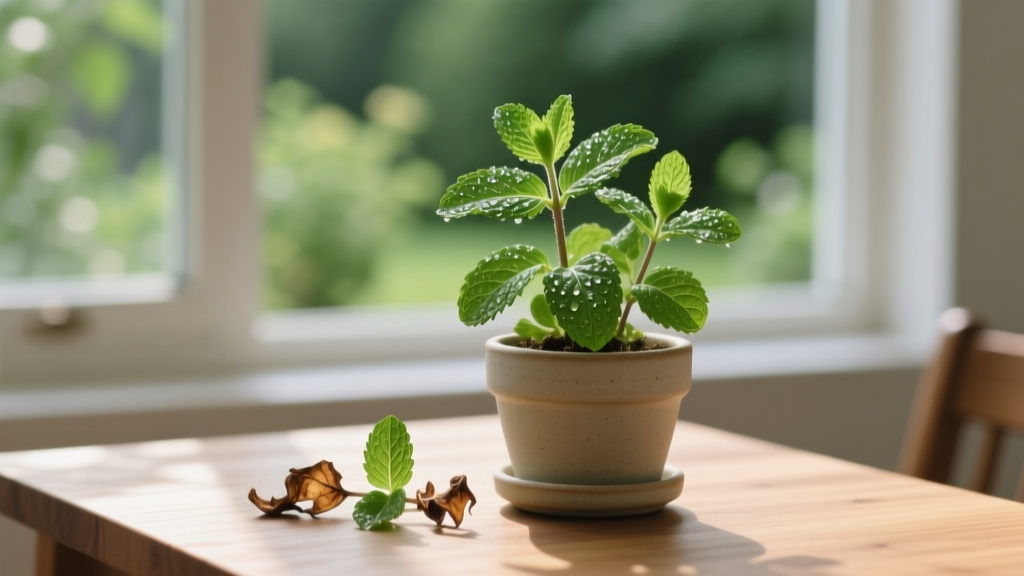
How to Revive a Dying Mint
You go out to snip mint for iced tea and find a sad surprise: stems flopped over like wet noodles, lower leaves yellowing, and the top growth looking dusty and tired. Mint is supposed to be “unkillable,” right? Here’s the truth I’ve learned the hard way: mint is tough, but it’s not magic. Most dying mint is reacting to one of three things—water stress, root trouble, or light/heat mismatch—and once you pinpoint which one you’re dealing with, revival is usually fast.
This guide walks you through the same triage I use in my own garden: diagnose first, then fix with specific moves (and measurable targets) so you’re not guessing. You’ll also get real-world rescue scenarios, a method comparison table, and symptom-based troubleshooting.
First: Triage Your Mint in 3 Minutes
Before you change anything, take a quick look. Mint often declines because we “fix” the wrong problem (like watering more when the roots are rotting). Do this fast check:
- Touch the soil 2 inches down. Is it soggy, dry, or evenly moist?
- Inspect the stems. Are they firm or mushy/black at the base?
- Flip a few leaves. Any tiny webbing, speckling, sticky residue, or insects?
- Check the light. Is it baking in afternoon sun or stuck in deep shade?
- Smell the pot. Sour/rotten smell usually means oxygen-starved roots.
If you only remember one thing: mint recovers best after a hard reset—cutback + corrected watering + fresh airflow around the roots.
Watering: The #1 Reason Mint Looks Like It’s Dying
Mint likes consistent moisture, not extremes. In containers especially, it can go from “fine” to “collapsed” in a single hot day, then get overwatered the next day in a panic. Your goal is a steady rhythm.
How much water does mint actually need?
Instead of watering on a schedule, water based on soil moisture. Use the “2-inch test”:
- If the soil is dry 2 inches down, water thoroughly.
- If it’s cool and moist at 2 inches, wait.
When you do water, do it properly:
- Containers: Water until you see steady drainage from the bottom (usually 10–20% runoff). Empty saucers so the pot doesn’t sit in water.
- In-ground: Aim to moisten the root zone to about 6–8 inches deep. That typically means 1 inch of water per week total from rain + irrigation (more in heat, less in cool weather).
For timing: water early morning whenever possible. Leaves dry faster, and roots get a full day to use moisture.
Signs of underwatered mint vs overwatered mint
These two can look similar from a distance. Up close, they’re different problems with different fixes.
| What you see | Likely cause | What the soil feels like (2 inches down) | Best fix in the next 24 hours |
|---|---|---|---|
| Whole plant droops; leaves feel thin/crispy; edges brown | Underwatering / heat stress | Dry, warm, dusty | Deep soak; move to bright shade for 48 hours; mulch 1–2 inches |
| Droop + yellowing; some leaves fall; stems may darken near soil line | Overwatering / poor drainage | Wet, cold, sometimes sour-smelling | Stop watering; improve drainage; consider repotting into airy mix |
| Wilts during the day but perks up at night | Heat/light stress (not always lack of water) | Often moist | Provide afternoon shade; water in morning; avoid hot reflective spots |
Quick rescue: wilted mint in a pot
This is the most common “my mint is dying” moment—especially in summer.
- Move the pot to bright shade immediately (east side of the house is perfect).
- Check soil at 2 inches. If dry, water until it drains freely.
- After drainage stops, don’t water again until the top 1–2 inches dry out.
- Clip the worst stems back by about 1/3 to reduce demand while roots recover.
If the plant perks up within 2–6 hours, you were dealing with water/heat stress. If it stays limp and the soil is wet, it’s probably root trouble—keep reading.
Soil and Drainage: Mint Loves Moisture, But It Needs Air
Healthy mint roots are creamy-white and smell earthy. Unhealthy roots turn tan/brown, smell sour, and stop feeding the plant. The culprit is usually a potting mix that holds too much water or a container with poor drainage.
University guidance consistently emphasizes well-drained soil for herbs. For example, Purdue University Extension notes that herbs generally require soils that drain well and that overwatering increases disease risk (Purdue University Extension, 2020). Mint tolerates moisture better than many herbs, but it still needs oxygen at the roots.
Best soil texture for mint (container and in-ground)
- Container mix: Use a quality potting mix and “open” it up with extra perlite or pine bark fines so it doesn’t stay swampy. A practical ratio is 3 parts potting mix : 1 part perlite.
- In-ground: Mint grows best in loam that holds moisture but doesn’t puddle. If water stands for more than 4 hours after irrigation or rain, drainage is too slow.
Repotting a struggling mint (the reset button)
If your mint is in a pot and looks worse after watering—or never dries out—repotting is often the fastest save.
- Pick a pot with drainage holes; for most household mint, a 10–12 inch pot is a good working size.
- Slide the plant out and inspect roots. Trim any black, mushy roots with clean scissors.
- Rinse the pot (or switch pots). Old, soggy soil can harbor pathogens.
- Replant into fresh, airy mix (try 3:1 potting mix to perlite).
- Water once to settle soil, then wait until the top 1–2 inches dry before watering again.
“Most ‘mysterious’ mint failures in containers come down to oxygen-starved roots—wet soil isn’t the same thing as hydrated roots.” — practical note echoed across herb culture recommendations, including extension guidance on avoiding chronic overwatering (Purdue University Extension, 2020)
Light and Temperature: When “Full Sun” Is Too Much
Mint can grow in full sun, but many home gardens accidentally create extreme conditions: pots on hot concrete, south-facing walls that radiate heat, or windy balconies that dry pots in hours.
Mint is happiest with 4–6 hours of sun or bright, dappled light. In climates where afternoons hit 85–95°F, mint often performs better with morning sun and afternoon shade.
Light problems that mimic disease
- Scorched patches or bleached leaves: too much intense sun, especially after a move from indoors to outdoors.
- Leggy, floppy growth: not enough light; stems stretch and can’t hold themselves up.
- Daily wilting in summer even with moist soil: heat load is too high—shade is the fix, not more water.
Hardening off indoor mint
If your mint lived on a windowsill and you moved it outside, treat it like a seedling. Sudden sun can burn leaves in a day.
- Day 1–2: 1–2 hours of morning sun, then shade.
- Day 3–5: 3–4 hours morning sun.
- Day 6–7: increase toward your target exposure (often 4–6 hours).
Feeding: How to Fertilize Mint Without Making It Worse
Mint doesn’t need heavy feeding. Too much nitrogen makes lush, weak growth that flops, attracts aphids, and becomes more disease-prone. If your mint is dying, fertilizing is rarely step one—fix water and roots first.
Once growth resumes (new shoots appearing), feed lightly:
- Container mint: Use a balanced liquid fertilizer at 1/4 to 1/2 strength every 3–4 weeks during active growth.
- In-ground mint: A thin top-dressing of compost (1/2 inch) in spring is often enough.
If you want a specific benchmark: many extension recommendations for culinary herbs lean toward modest fertility and avoiding overfeeding to protect flavor and reduce pest issues (University of Maryland Extension, 2023).
Comparison: fast “green-up” feeding vs slow soil-building
If your mint is pale and stalled after you’ve corrected watering, here’s how the two common approaches compare.
| Method | What you use | How fast you’ll see change | Risk level | Best for |
|---|---|---|---|---|
| A: Liquid feed (quick) | Balanced liquid fertilizer at 1/4–1/2 strength | 5–10 days for greener new growth | Medium (overfeeding can cause weak growth) | Container mint with pale new leaves and normal roots |
| B: Compost top-dress (steady) | 1/2 inch finished compost on soil surface | 2–4 weeks gradual improvement | Low | In-ground mint, long-term vigor, flavor-focused growing |
Common Problems That Make Mint Decline (and How to Fix Them)
Mint gets blamed for “dying” when it’s actually being chewed, sucked dry, or infected under the canopy. Here are the usual suspects.
1) Spider mites (especially indoors or on hot patios)
Symptoms: tiny pale speckles on leaves, dull look, fine webbing between leaf nodes, leaves drying from the edges.
Fix:
- Rinse the plant thoroughly, especially leaf undersides, every 3 days for 2 weeks.
- Increase humidity and airflow (mites love hot, still air).
- If needed, use insecticidal soap, following label directions; spray undersides and repeat on the schedule provided.
2) Aphids
Symptoms: curled new growth, sticky honeydew, ants farming on stems, clusters of green/black insects on tips.
Fix:
- Pinch off the worst infested tips and discard.
- Blast with a firm stream of water in the morning; repeat every few days.
- Keep nitrogen modest—overfed mint becomes aphid candy.
3) Root rot / crown rot (the silent killer in pots)
Symptoms: wilting despite wet soil, yellowing leaves, blackened stem bases, sour smell, slow or no new growth.
Fix:
- Stop watering immediately.
- Unpot and inspect roots; trim mushy sections.
- Repot into fresh airy mix; ensure free drainage.
- Water sparingly until you see new growth.
4) Rust and leaf spot diseases
Symptoms: orange/brown pustules (rust) or dark spots with yellow halos (leaf spots), especially in humid weather and crowded growth.
Fix:
- Harvest and thin the plant—improve airflow by cutting back 30–50%.
- Water at the soil line, not over the leaves.
- Remove and trash heavily spotted leaves (don’t compost if disease is active).
Many plant pathology resources emphasize sanitation and leaf-dryness as the first line of defense for foliar diseases (University of Minnesota Extension, 2022).
Real-World Rescue Scenarios (What I’d Do, Step by Step)
Mint problems tend to repeat. Here are three common cases and the exact approach that works.
Scenario 1: “My mint collapsed overnight in a pot during a heat wave”
What’s happening: The plant transpired faster than the roots could supply water. Dark pots and hard surfaces can turn roots into an oven.
Rescue plan:
- Move to bright shade immediately for 48 hours.
- Deep water once; ensure drainage. If soil is hydrophobic (water runs down the sides), bottom-water for 20–30 minutes then drain well.
- Trim back by 1/3 to reduce stress load.
- Add 1 inch of mulch (even shredded leaves) to slow evaporation.
Scenario 2: “Mint indoors looks pale, droopy, and keeps getting worse when I water”
What’s happening: Low light + slow evaporation + cool indoor conditions often lead to chronic overwatering and root decline.
Rescue plan:
- Move it to the brightest window you have (or under a grow light 12–14 hours/day).
- Let the top 1–2 inches dry before watering again.
- If it’s been wet for days, repot into a lighter mix and a pot with proper drainage holes.
- Hold fertilizer until you see fresh new shoots.
Scenario 3: “In-ground mint is yellowing and spreading, but looks tired and patchy”
What’s happening: Mint can exhaust its own space—dense mats shade themselves, airflow drops, and older stems decline. Sometimes the center dies out while edges run.
Rescue plan:
- Cut the patch back hard to 2–3 inches tall.
- Top-dress with 1/2 inch compost and water it in.
- Divide and replant the healthiest outer runners, spacing clumps about 12 inches apart for airflow.
- Mulch lightly and keep evenly moist for 10–14 days while it re-roots.
Troubleshooting by Symptom (Fast Answers That Actually Work)
Use this section when you don’t have time to read the whole plant like a detective.
Symptom: Leaves turning yellow from the bottom up
- Most likely: overwatering, low light, or roots sitting in a saucer of water.
- Fix: Let the top 1–2 inches dry; increase light; ensure drainage; repot if soil stays wet longer than 4–5 days.
Symptom: Brown crispy edges and dry, curling leaves
- Most likely: underwatering, hot sun, wind exposure, or a rootbound pot.
- Fix: Deep soak; shade from afternoon sun; repot to a 10–12 inch container if roots are circling tightly.
Symptom: Blackened stems at soil line
- Most likely: crown rot / rot from constant wetness.
- Fix: Take healthy cuttings from upper stems (see next section), discard rotted base, repot into fresh mix, and water sparingly.
Symptom: Slow growth, weak flavor, long bare stems
- Most likely: not enough light or the plant is overdue for a cutback.
- Fix: Give 4–6 hours of sun (or bright light), then harvest aggressively—cut stems back to just above a leaf node, removing up to 1/2 the plant to force branching.
When Mint Is Too Far Gone: Save It with Cuttings
If the base is rotting or the plant is infested beyond comfort, don’t wrestle with it—clone it. Mint roots readily in water, and this is often the cleanest reboot.
- Snip 4–6 inch healthy stem tips (avoid flowering stems if you can).
- Strip leaves from the bottom 2 inches.
- Place stems in clean water; change water every 2–3 days.
- When roots reach about 1–2 inches long (often 7–14 days), pot up into fresh mix.
- Keep in bright shade for 3–5 days after potting, then increase light.
This method also helps you “reset” a mint variety that you love without bringing along soil-borne problems.
Prevent the Next Crash: Simple Habits That Keep Mint Lush
Once your mint rebounds, you can keep it in the sweet spot with a few low-effort habits:
- Harvest weekly during active growth. Regular cutting prevents woody, flop-prone stems.
- Avoid tiny pots. Small containers overheat and dry fast; aim for 10–12 inches wide for a stable moisture buffer.
- Water deeply, then wait. Mint likes a soak-and-dry rhythm, not daily sips.
- Give afternoon shade in hot spells (especially above 90°F).
- Refresh soil yearly for container mint—new mix fixes compaction and drainage drift.
If your mint right now looks rough, don’t be shy about cutting it back. Mint is one of those plants that rewards decisive action. Get the roots breathing, get the moisture steady, and in a couple of weeks you’re usually back to fragrant, tender shoots—the kind you can pinch without thinking twice.
Sources: Purdue University Extension (2020); University of Maryland Extension (2023); University of Minnesota Extension (2022).