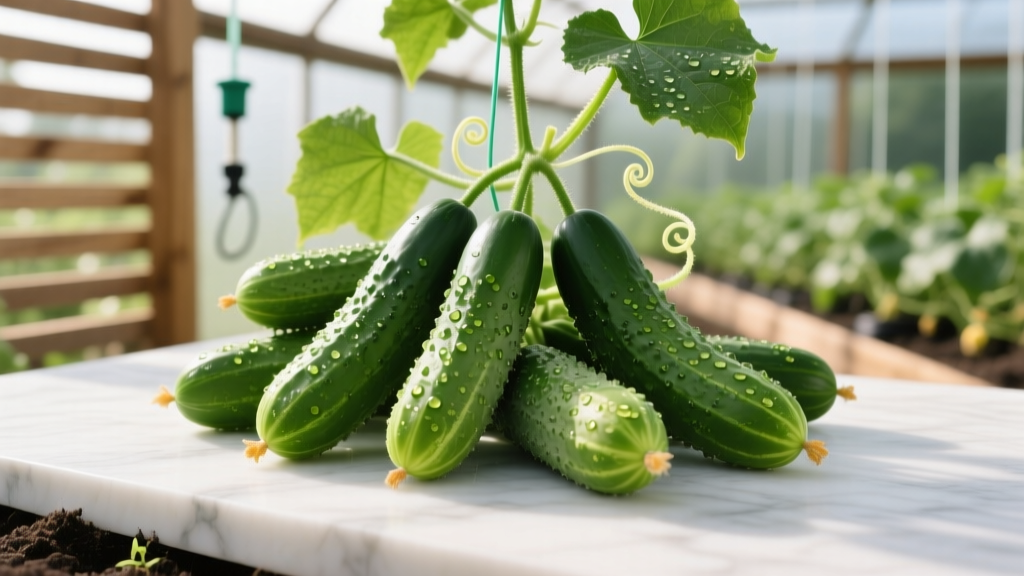
Boosting Growth in Cucumbers: Proven Methods
You plant cucumbers with big hopes, and for a few weeks they look fine—then they just stall. The vines sit there, leaves stay small, flowers drop, and the fruits that do form are skinny, pale, or bitter. I’ve seen this play out in raised beds, in-ground rows, and even lush-looking container gardens. The surprising part: cucumbers usually aren’t “hard” to grow—they’re just unforgiving when one key need is off by a little.
If you want faster growth and heavier harvests, you don’t need gimmicks. You need to get four basics dialed in: steady moisture, warm soil, strong light, and correctly timed feeding. Then you need to troubleshoot fast when the plant starts sending signals. Let’s walk through what actually moves the needle in a home garden.
Start with a quick growth checklist (before you change anything)
When a cucumber vine is slow, I ask these questions first. They pinpoint the problem in minutes:
- Is the soil staying evenly moist to 6–8 inches deep, or swinging from dry to soggy?
- Are nights staying above 55°F and soil above 65°F where the roots sit?
- Are plants getting 8+ hours of direct sun (not “bright shade”)?
- Did you add nitrogen heavily early on and skip potassium later?
- Are there lots of male flowers but few female flowers (little “baby cucumber” behind the blossom)?
Keep those in mind as you read—because boosting growth is rarely one magic trick. It’s correcting the limiting factor.
Watering: the #1 growth lever (and the easiest to mess up)
Cucumbers are mostly water. When moisture is inconsistent, the plant can’t expand cells quickly, and growth stalls. Uneven watering also triggers bitterness and misshapen fruit.
How much to water (with real numbers)
A good target is 1–1.5 inches of water per week from rain + irrigation during active growth, more during hot, windy weather. Many Extension programs recommend around 1 inch/week as a baseline for vegetable gardens, adjusted for heat and soil type (University of Minnesota Extension, 2023).
For practical garden math:
- Raised beds often need smaller, more frequent irrigations because they drain faster.
- Sandy soil: water more often, less each time.
- Clay soil: water less often, deeper each time (avoid staying saturated).
A “deep-and-steady” schedule that works
Here’s a reliable approach for most home gardens:
- Water early in the day.
- Soak the root zone so moisture reaches 6–8 inches deep (a trowel check tells the truth).
- Repeat when the top 1 inch is dry (stick your finger in; don’t guess from the surface color).
In mid-summer, that often means watering every 2–3 days in raised beds and every 3–5 days in-ground—assuming mulch is used.
Drip irrigation vs overhead: growth and disease tradeoffs
Overhead watering “works,” but it raises leaf wetness and can accelerate fungal and bacterial issues. Drip or soaker hoses deliver water where cucumbers want it—at the roots—while keeping foliage drier.
| Watering Method | Best Use | Typical Frequency (Summer) | Disease Risk | Growth Impact (Home Garden Reality) |
|---|---|---|---|---|
| Drip irrigation | Beds, rows, trellised cucumbers | 30–90 min, 2–4×/week (adjust to soil) | Lower (drier leaves) | Most consistent growth; fewer stress dips |
| Soaker hose | Dense plantings, mulched beds | 45–120 min, 2–3×/week | Low to medium | Strong growth if hose coverage is even |
| Overhead sprinkler | Quick watering, large areas | 20–40 min, 2–5×/week | Higher (wet foliage) | Can be fine, but disease often reduces vigor |
Case: “My cucumbers look healthy but grow painfully slow”
This is common in raised beds with good compost but inconsistent watering. Leaves look green, but the plant is in stop-start mode. Fix: lay a soaker hose under mulch and water on a schedule for two weeks. Growth often visibly improves within 7–10 days once the root zone stays evenly moist.
Soil: warmth, drainage, and fertility (in that order)
Cucumbers don’t sprint in cold soil. They also don’t tolerate “wet feet.” Give them warm, airy soil that holds moisture without turning swampy.
Soil temperature targets
Cucumbers are warm-season plants. For steady growth:
- Plant outdoors when soil is at least 65°F.
- They grow faster when soil is closer to 70–85°F.
- Growth slows sharply when nights dip below 55°F.
These temperature sensitivities are widely reflected in Extension guidance for cucurbits (Clemson Cooperative Extension, 2021).
Soil structure: drainage + moisture-holding
Ideal cucumber soil is loamy and crumbly. If you squeeze a handful and it forms a hard, sticky ball, you’re going to fight slow roots.
To improve structure:
- Add 1–2 inches of finished compost and mix into the top 6–8 inches before planting.
- Mulch after soil warms (straw, shredded leaves, or untreated grass clippings) to a depth of 2–3 inches.
- If soil stays wet, plant on a slight mound 4–6 inches high to keep roots aerated.
pH and nutrient availability
Cucumbers generally perform best in slightly acidic to neutral soil. Aim for a pH around 6.0–6.8. If you haven’t tested soil in the last 2–3 years, it’s worth doing—especially if plants are stunted despite good watering and sun.
“Most vegetable garden problems are really soil problems in disguise—poor structure, low organic matter, or nutrients out of balance.” — University Extension soil management guidance (University of Minnesota Extension, 2023)
Light and heat: cucumbers need real sun, not “bright” shade
If cucumbers get less than full sun, they’ll still live—but they won’t pump out long vines and heavy fruit loads. For strong growth:
- Give cucumbers 8–10 hours of direct sun if possible.
- Absolute minimum for decent production is often 6 hours, but expect slower growth and fewer fruits.
Trellising boosts growth (and reduces disease)
Trellising isn’t just for saving space. It improves airflow and light exposure, which helps leaves stay productive longer. It also keeps fruit cleaner and easier to spot before it gets oversized and slows the plant down.
Simple trellis setup:
- Install a sturdy trellis 5–6 feet tall (cattle panel, netting on T-posts, or a strong A-frame).
- Plant cucumbers 12 inches apart for trellised vines (or 18–24 inches for large slicers).
- Gently guide vines weekly; don’t force brittle stems in midday heat.
Case: “My cucumbers are lush but not flowering much”
This often happens when plants get plenty of nitrogen and moderate shade—lots of leaves, not many flowers. Move containers to a sunnier spot (or prune back nearby plants casting afternoon shade). Also switch feeding from nitrogen-heavy to a bloom/fruit-leaning fertilizer (more on that next).
Feeding cucumbers: timing matters more than “more fertilizer”
Cucumbers are hungry, but overfeeding is one of the fastest ways to get giant vines and disappointing fruit. The trick is giving enough nitrogen early, then shifting toward potassium and steady micronutrients during flowering and fruiting.
A practical feeding plan (garden-friendly, not fussy)
Use one of these approaches, based on how you garden.
Option A: Organic bed approach
- Before planting: Mix in compost (see soil section) plus an organic all-purpose fertilizer (for example, something around 4-4-4) at label rate.
- At first flowering: Side-dress with a balanced organic fertilizer or a “tomato” style blend that’s lower N and higher K (for example 3-4-6), lightly scratched into soil and watered in.
- Every 2–3 weeks during harvest: Apply a light feeding if growth slows and leaves pale, especially in sandy soil or containers.
Option B: Water-soluble approach (fast correction)
If plants are clearly hungry (pale leaves, slow vine extension), a water-soluble feed is the fastest reset.
- Use a general vegetable fertilizer at half strength the first time.
- Apply every 7–14 days during heavy fruiting, watching leaf color and growth.
- If vines get dark green and overly leafy with few flowers, back off nitrogen and switch to a bloom/fruit formula.
Comparison analysis: heavy nitrogen vs balanced feeding
Here’s what I see repeatedly in home gardens when feeding choices differ.
| Feeding Strategy | Typical Vine Growth | Flowering/Fruiting | Common Downside | Best Use |
|---|---|---|---|---|
| High nitrogen early and continued (e.g., frequent lawn-type fertilizer) | Fast leaf growth; long internodes | Often delayed; fewer female flowers | Powdery mildew pressure + flower drop | Rarely ideal for cucumbers |
| Balanced early, then slightly higher potassium at bloom (e.g., 4-4-4 then 3-4-6) | Steady vine growth with thicker stems | Earlier, heavier set; better fruit fill | Needs consistent watering to match uptake | Most home gardens |
Don’t forget calcium and magnesium (especially in containers)
If you’re growing in pots, nutrients leach faster. A container cucumber that looks “stuck” often has enough NPK but is missing secondary nutrients. Use a complete fertilizer that includes calcium and magnesium, or amend with products appropriate to your soil test. Avoid guessing with lime unless you know your pH—raising pH too far can lock up nutrients.
Common growth blockers (and what to do about them)
Cucumber problems tend to show up as leaf symptoms, flower issues, or fruit defects. The faster you respond, the more the plant rebounds.
Troubleshooting: symptoms and solutions
Symptom: lots of flowers, but no cucumbers forming
- Likely cause: Mostly male flowers early (normal), poor pollination, or stress from heat/water swings.
- Fix:
- Wait: many varieties produce male flowers first for 1–2 weeks.
- Encourage pollinators: avoid spraying insecticides; plant small flowers nearby.
- Hand-pollinate in the morning: use a small paintbrush to move pollen from male to female flowers.
- Stabilize watering and mulch to reduce stress.
Symptom: bitter cucumbers
- Likely cause: Drought stress or uneven moisture; sometimes variety genetics.
- Fix:
- Keep moisture consistent (target 1–1.5 inches/week).
- Mulch 2–3 inches deep once soil is warm.
- Harvest fruits on time (overmature fruit can increase bitterness and slow the plant).
Symptom: curled, distorted leaves; sticky residue
- Likely cause: Aphids feeding under leaves; sometimes virus pressure they spread.
- Fix:
- Blast undersides with a strong water spray every 2–3 days for a week.
- If needed, use insecticidal soap in the evening and re-check in 3–5 days.
- Remove badly infected leaves to slow populations.
Symptom: white powdery coating on leaves
- Likely cause: Powdery mildew, common late in the season and worsened by poor airflow.
- Fix:
- Trellis plants and prune only enough to improve airflow (don’t scalp the plant).
- Avoid overhead watering late in the day.
- Use labeled fungicides if needed (sulfur or potassium bicarbonate products), starting at first signs. Always follow label instructions.
Symptom: sudden wilting even though soil is moist
- Likely cause: Bacterial wilt (often from cucumber beetles) or stem/root damage.
- Fix:
- Check for cucumber beetles (yellow/black striped or spotted) and manage promptly.
- Remove and discard severely wilted plants (don’t compost if bacterial wilt is suspected).
- Replant in a different spot next season and use row cover early to exclude beetles (remove at flowering for pollination).
For pest and disease patterns in cucurbits—including cucumber beetles and bacterial wilt—Extension references are consistent that prevention and early management are key (Clemson Cooperative Extension, 2021).
Three real-world scenarios (and what actually worked)
Scenario 1: Cool spring, eager gardener, stunted seedlings
You transplant cucumbers because the calendar says “spring,” but soil is still cool. The plants sit for weeks, leaves look dull, and growth is painfully slow.
- What worked: Wait for soil 65°F+, or use black plastic/landscape fabric to warm soil for 10–14 days before planting. In short seasons, start seeds indoors 3–4 weeks before the last frost and transplant carefully without disturbing roots.
Scenario 2: Big green vines, few fruits
You’ve got a jungle—beautiful leaves, long runners, but not much fruit set.
- What worked: Stop high-nitrogen feeding, switch to a fertilizer with higher potassium, increase sun exposure, and harvest any oversized fruits immediately. Oversized cucumbers tell the plant “mission accomplished,” and production slows.
Scenario 3: Container cucumbers that dry out daily
Containers can grow excellent cucumbers, but they punish inconsistency. One hot day can set plants back a week.
- What worked: Use a pot at least 10–15 gallons per plant, add mulch on top of the potting mix, and water until it runs out the bottom. In heat waves above 90°F, check moisture morning and late afternoon. Feed lightly every 7–10 days with a complete fertilizer (not just nitrogen).
Small practices that make a big difference
Once the basics are right, these habits push cucumbers from “okay” to “loaded.”
- Harvest often: Pick slicing cucumbers when they’re roughly 6–8 inches long (or per variety). Picklers are often best at 3–5 inches. Frequent harvest keeps vines producing.
- Mulch after warm-up: Mulch too early in cold soil can slow growth. Wait until soil is consistently warm, then apply 2–3 inches.
- Don’t crowd them: For vining cucumbers on the ground, give roughly 36–60 inches between rows and enough spacing for airflow. Tight spacing invites mildew and slows productivity.
- Keep leaves dry when possible: Water at soil level to reduce leaf diseases that sap vigor.
- Scout twice a week: Flip leaves, check growing tips, and look for beetles and aphids before they explode.
When growth still lags: a simple 7-day reset plan
If your cucumbers are stalled right now, do this for one week and watch for a change in new growth color and vine extension.
- Day 1: Deep water in the morning to wet soil 6–8 inches down.
- Day 1: Add 2 inches of mulch (if soil is already warm).
- Day 2: Check sun: remove shading if feasible; aim for 8+ hours.
- Day 3: Feed lightly (half-strength soluble feed or a modest side-dress) if leaves are pale or growth is slow.
- Day 4: Inspect undersides of leaves for aphids; check for cucumber beetles at dawn.
- Day 5: Train vines onto a trellis; improve airflow.
- Day 6–7: Harvest any fruit that’s oversized; remove yellowing lower leaves only if they’re diseased.
Cucumbers respond fast when you remove the limiting factor. When you see the newest leaves coming in a healthy green and the vine tips extending again, you’re back in business—just keep conditions steady. That’s the real “secret” to boosting growth: fewer stress swings, warmer roots, and feeding that matches the plant’s stage.
Sources: University of Minnesota Extension (2023) vegetable watering and soil management guidance; Clemson Cooperative Extension (2021) cucurbit planting, temperature needs, and common pest/disease considerations.