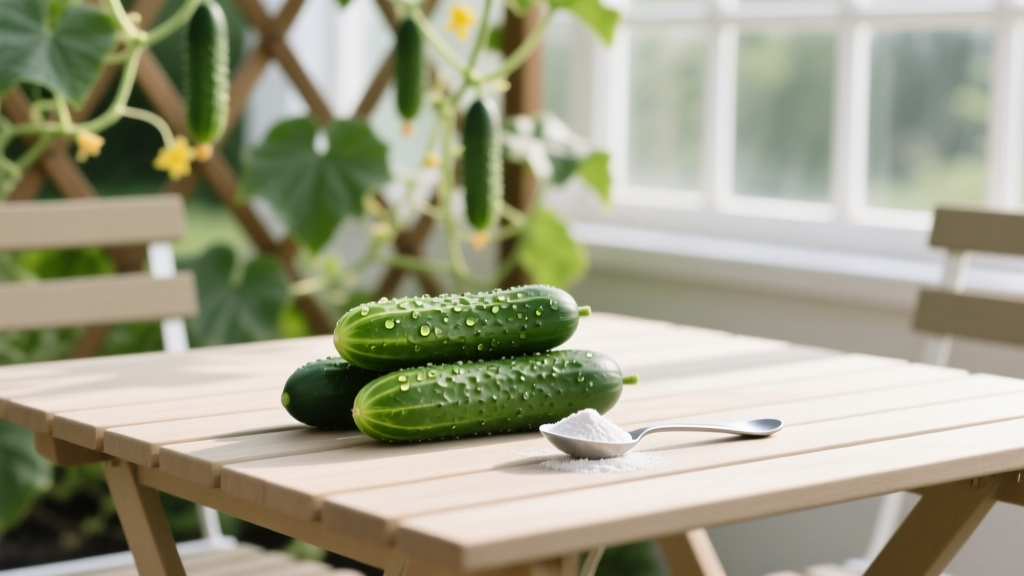
How to Use Diatomaceous Earth on Cucumbers
You walk out to check your cucumber vines in the morning, and the leaves look like lace—tiny holes everywhere. Flip a leaf over and you’ll find the culprits: cucumber beetles, flea beetles, or a mess of ants farming aphids like they own the place. You spray with water, you squish what you can, and two days later the damage is worse. This is the moment diatomaceous earth (DE) earns its keep—if you use it correctly and at the right time.
Diatomaceous earth isn’t a magic dust you toss around once and forget. It’s a tool: sharp-edged microscopic fossil particles that scratch and dry out soft-bodied insects. It works best as a dry barrier and as a targeted application—not as a blanket “fix everything” treatment. Used wrong, it disappoints. Used well, it can meaningfully reduce pest pressure on cucumbers without harsh residues.
One important caveat up front: only use food-grade diatomaceous earth in the garden. Pool-grade DE is heat-treated and can be hazardous to handle. Also, DE can harm beneficial insects if you dust blooms and pollinator pathways—so we’ll work around cucumber flowers and apply with intention.
What Diatomaceous Earth Actually Does (and What It Doesn’t)
DE kills by physical action, not poison. The particles abrade the waxy protective layer of many insects and cause dehydration. That’s why it must be dry to work. After rain, overhead watering, or heavy dew, DE becomes far less effective until it dries again—and even then it often clumps and stops being a good “dust.”
It tends to work best on:
- Ants (including those protecting aphids)
- Flea beetles and small crawling beetles (variable success)
- Slugs/snails (works as a barrier, though it breaks down fast when wet)
- Some soft-bodied pests that crawl through treated zones
It is not great for:
- Flying pests that don’t crawl through dust (many adult beetles fly in, feed, and leave)
- Established aphid colonies tucked under curled leaves (better controlled with water spray, insecticidal soap, or biologicals)
- Anything after rain unless you reapply
“Diatomaceous earth is only effective when it is dry, and it works best when applied as a fine layer rather than a pile.” — University Extension guidance on physical controls for garden insects (University of Minnesota Extension, 2020)
Before You Dust Anything: Set Cucumbers Up to Resist Pests
If cucumbers are stressed, pests hit harder and diseases move in faster. DE is most useful when the plant is growing steadily—so let’s cover the core care pieces that keep cucumbers vigorous.
Watering: Keep Growth Steady (and Avoid Powdery Mildew Triggers)
Cucumbers like consistent moisture. Erratic watering (bone dry, then soaked) makes them bitter, stresses the plant, and invites pests.
- A practical target is 1–1.5 inches of water per week during fruiting, from rain + irrigation.
- Water in the morning so leaves dry quickly.
- Aim for soil moisture down to about 6 inches deep—cucumbers are shallow-rooted but spread wide.
- If you can, use drip irrigation or a soaker hose to keep leaves drier (helpful for disease and for keeping DE functional longer).
DE timing note: If you overhead-water, your DE will wash off. Plan DE applications for after watering and when leaves will stay dry for at least 24 hours.
Soil: Loose, Fertile, and Well-Drained Wins
Healthy soil grows cucumbers that can outpace moderate pest pressure. Cucumbers prefer rich soil that drains well and warms up quickly.
- Ideal soil pH is roughly 6.0–6.8.
- Work in 1–2 inches of finished compost before planting.
- Mulch with straw or shredded leaves once the soil is warm (helps stabilize moisture and reduces stress).
DE + soil reality: Sprinkling DE into soil is not a substitute for good structure or nutrition. In garden beds, it doesn’t “fix” drainage problems the way compost and organic matter do.
Light and Temperature: Don’t Fight the Plant
Cucumbers need strong sun to grow fast enough to tolerate a bit of leaf chewing.
- Give them 8+ hours of direct sun for best production.
- Most cucumbers grow best when daytime temps are around 70–85°F.
- Hold off planting outdoors until soil is at least 60°F; cold soil slows growth and invites trouble.
Feeding: Avoid Overdoing Nitrogen
Over-fertilized cucumbers can become pest magnets—lush, tender growth is exactly what aphids and beetles like. Feed steadily, not aggressively.
- At planting, mix compost into the bed and consider a balanced fertilizer (example: 5-5-5) according to label rates.
- Once vines start running, side-dress with compost or a light feeding every 3–4 weeks if growth is pale or slow.
If you’re getting lots of leaves and few flowers, ease off nitrogen and make sure the plant isn’t shaded.
Safety and Product Basics: Use the Right DE the Right Way
Use food-grade diatomaceous earth only. Even then, the dust is irritating to breathe and can bother eyes.
- Wear a dust mask or respirator and eye protection on windy days.
- Apply when air is calm—early morning after dew dries or late afternoon works well.
- Keep DE off cucumber flowers to reduce harm to pollinators.
Label language varies by product, but the physical reality is the same: a thin, even film works better than piles. Piles clump, blow away, and don’t create a consistent barrier.
How to Apply Diatomaceous Earth on Cucumbers (Step-by-Step)
Method 1: Soil Barrier Ring (Best for Ants, Slugs, and Crawlers)
This is my most reliable DE use on cucumbers: a dry barrier that crawling pests must cross.
- Pick your window: choose a stretch of dry weather—ideally 24–48 hours without rain or overhead watering.
- Clear the ground: pull mulch back 2–3 inches from the stem base so DE contacts soil, not damp mulch.
- Dust a ring: apply a thin ring 1–2 inches wide around each plant or a continuous band along the row.
- Keep it dry: water with drip/soaker hose underneath mulch, not over the DE band.
- Reapply as needed: after rain, heavy dew, or irrigation splash.
When it shines: You see ants marching up stems to tend aphids, or slugs chewing fruit on the ground. Break the traffic pattern and you often break the outbreak.
Method 2: Targeted Leaf Dusting (Use Carefully)
Leaf dusting can help with flea beetles and some crawling pests, but this is where gardeners overdo it and accidentally dust blooms.
- Inspect first: identify where pests are feeding (usually young leaves and undersides).
- Use a hand duster: apply a very light coat—think “barely visible,” not whitewashed.
- Avoid flowers: do not dust open blooms. If needed, gently cover blossoms with your hand while applying nearby.
- Apply in calm weather: wind ruins coverage and increases inhalation risk.
- Recheck in 48 hours: if pest pressure is unchanged, switch tactics (row cover, hand-picking, soap spray, or trap crops).
Important: University guidance commonly recommends minimizing broad dusting because it can impact beneficials. Use targeted dusting only where you see pests, and keep it off pollinator-heavy zones. For integrated pest management principles in home gardens, see UC IPM resources (University of California Agriculture and Natural Resources, 2023).
Method 3: Vine Base and Trellis Points (Sneaky, High-Value Spots)
Ants and some beetles use “highways”: trellis ties, stakes, and the vine base. A tiny amount of DE at these choke points can do more than dusting half the garden.
- Dust a thin band at the base of the trellis where it meets soil.
- Dust around stake entry points and at the soil line.
- If ants are climbing, dust the ground where the ant trail is concentrated (not the whole bed).
DE vs Other Cucumber Pest Controls (With Actual Tradeoffs)
Here’s the honest comparison: DE is great in the right conditions, mediocre in the wrong ones. The table below reflects typical home-garden performance when used correctly.
| Method | Best Targets | Works When Wet? | Typical Reapply Interval | Notes for Cucumbers |
|---|---|---|---|---|
| Diatomaceous earth (food-grade) | Ants, slugs, some crawling insects | No | After rain/irrigation; often every 3–7 days in humid weather | Keep off blooms; thin layer works best |
| Insecticidal soap | Aphids, whiteflies, mites (contact) | Yes (during application) | Every 4–7 days until controlled | Must hit pests directly; spray undersides; avoid hot sun (>85°F) to reduce leaf burn |
| Floating row cover | Cucumber beetles, flea beetles (exclusion) | Yes | Install once; remove for flowering/pollination | Very effective early season; must be sealed at edges |
| Hand-picking + soapy water jar | Cucumber beetles, squash bugs (early) | Yes | Daily during outbreaks | Best in the morning when beetles are sluggish |
If you want one “method A vs method B” takeaway with measurable reality: DE (A) often needs reapplication every 3–7 days in humid/rainy stretches, while row cover (B) is a one-time install that can block beetles for weeks—until flowering forces you to remove it. That’s why I treat DE as a tactical tool, not the foundation of cucumber protection.
Common Cucumber Problems Where DE Helps (and Where It Doesn’t)
Cucumber Beetles: Use DE as Backup, Not Your Only Plan
Symptoms: chewed leaves, scarred fruit, beetles visible (spotted or striped). They can also spread bacterial wilt.
What DE can do: reduce crawling movement and annoy beetles enough to slow feeding in dry weather, especially on small plants.
What works better as your primary move:
- Row cover from planting until first flowers open
- Hand-picking early morning into soapy water
- Trap crop strategy (some gardeners use Blue Hubbard squash nearby to concentrate pests)
DE tactic: dust a soil band + lightly dust the lower stems and undersides of the most-chewed leaves, avoiding flowers. Reapply after rain.
Aphids + Ants: Break the Partnership
Symptoms: sticky honeydew, curled leaves, ants running up and down vines, clusters of green/black aphids under leaves.
DE works best here when you focus on the ants. Ants protect aphids from predators, so stopping ants often allows lady beetles and lacewings to clean up.
Action plan:
- Blast aphids off with a sharp water spray in the morning.
- Apply DE as a dry soil barrier around stems and ant trails.
- Repeat the water spray every 2–3 days for a week if needed.
Slugs and Snails: Good Barrier, Short Lifespan
Symptoms: ragged holes, slime trails, fruit damage where cucumbers touch soil.
DE can help as a perimeter barrier, but it fails quickly with dew and rain. Combine it with:
- Mulch management (avoid thick, wet mulch right against stems)
- Evening scouting and hand removal
- Boards or traps you can flip in the morning
Real-World Scenarios (What I’d Do in Your Shoes)
Scenario 1: Rainy Week + Beetle Damage Exploding
You applied DE, then it rained twice. Now you’re seeing fresh chewing daily.
- Stop relying on DE until the weather breaks. Wet conditions neutralize its biggest strength.
- Use a row cover if plants are not flowering yet, or hand-pick beetles in the morning.
- Once you get a dry 48-hour window, reapply DE as a soil band and light targeted dusting.
Scenario 2: Greenhouse/High Tunnel Cucumbers with Ants
Protected culture stays drier—this is where DE can really perform.
- Trace ant trails and dust DE at trail chokepoints and bed edges.
- Apply a 1–2 inch band around plant bases and trellis posts.
- Combine with aphid removal (water spray or insecticidal soap). DE alone won’t reach hidden aphids well.
Scenario 3: Patio Containers Getting Flea Beetles
Container cucumbers are close to the house, and you want low-tox control.
- Move containers so leaves aren’t brushing walls/railings (pests hide and hop from surfaces).
- Dust a thin DE ring on the soil surface, keeping it away from where you water.
- Try a light leaf dusting on the worst-hit leaves only, and recheck after 48 hours.
- If damage continues, switch to physical exclusion (fine mesh) or insecticidal soap for aphids/mites.
Troubleshooting: Symptoms and Fixes (No Guesswork)
Problem: “I used DE and nothing changed.”
- Likely cause: DE got wet (rain, irrigation, heavy dew) or you applied it too thick and it clumped.
- Fix: Reapply in a thin layer during a dry spell; switch to soil bands and chokepoints instead of dusting everything.
- Reality check: If the pest is flying in (adult beetles), DE may only help a little. Use row cover or hand-picking as the main tool.
Problem: “My cucumber flowers are dusty and I’m not seeing pollinators.”
- Likely cause: You dusted too broadly and hit blooms. DE can harm pollinators by abrasion/dehydration.
- Fix: Gently rinse flowers with water early in the day, then stop dusting near blooms. Focus DE on the soil barrier and vine base instead.
Problem: “Leaves look burned or speckled after dusting.”
- Likely cause: Heavy dust buildup plus sun/heat stress, or you’re actually seeing mite stippling (DE won’t fix mites unless you hit them directly, and even then results vary).
- Fix: Rinse leaves with water, improve airflow, and inspect undersides with a hand lens. If mites are present, use strong water sprays and consider insecticidal soap, applied in cooler parts of the day (avoid spraying when temps are above 85°F).
Problem: “DE keeps washing away from the soil.”
- Likely cause: Overhead watering or splash from irrigation.
- Fix: Switch to drip/soaker hose, or place DE in protected spots (under the canopy edge, at trellis bases). Pull mulch back so the DE sits on soil and stays drier.
Best Practices I Rely On (So DE Actually Earns Its Space in the Shed)
If you remember a handful of rules, you’ll avoid 90% of DE disappointment:
- Dry beats dusty. DE’s power is dryness—apply when leaves and soil surface are dry.
- Thin layer, not piles. A barely visible film is more effective than clumps.
- Target chokepoints. Soil rings, trellis bases, and ant trails give you the most return for the least dust.
- Protect pollinators. Keep DE off cucumber blooms; apply late afternoon after bee activity drops, and avoid flowers entirely.
- Pair it with one stronger tactic. Row cover early season, water sprays for aphids, and hand-picking for beetles often outperform DE alone.
For science-backed pest management principles, the University of California’s Integrated Pest Management program emphasizes monitoring, correct identification, and choosing the least-disruptive effective control first (UC IPM, 2023). And multiple Extension resources note DE’s dependence on dry conditions for effectiveness (University of Minnesota Extension, 2020).
If you use DE like a careful gardener—dry weather, thin coating, strategic placement—it can absolutely help you keep cucumbers productive. Use it like powdered hope tossed in the wind, and it’ll vanish with the next watering. The goal isn’t to “dust the problem away”—it’s to stack small advantages until your cucumbers are growing faster than the pests can eat them.