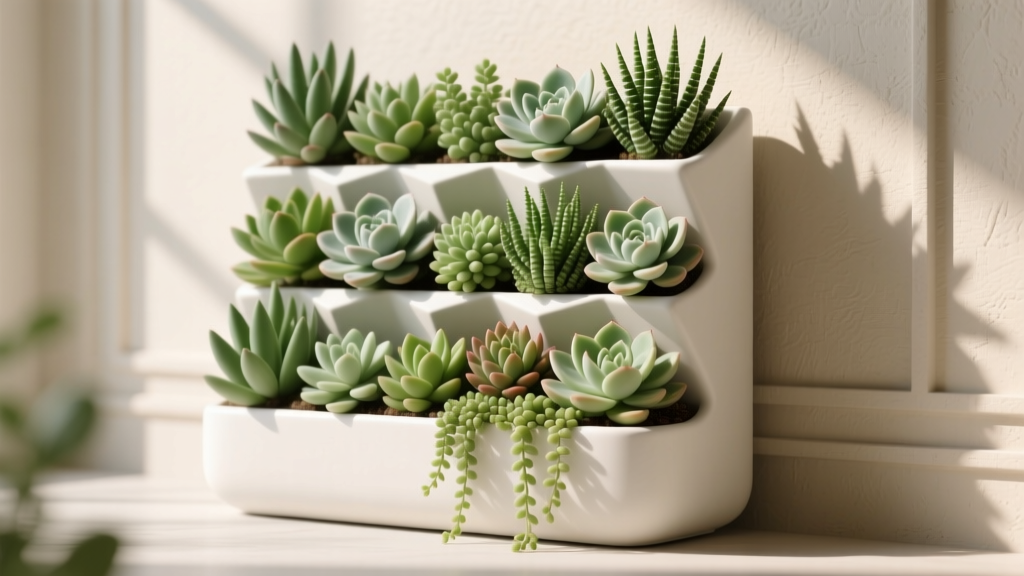
How to Interplant Succulents for Space Efficiency
The first time most people try to “pack” succulents together, it looks amazing for about three weeks. Then one rosette suddenly turns mushy, another gets stretched and pale, and the whole bowl starts smelling like wet potting mix. The surprise isn’t that succulents can’t be interplanted—it’s that they can, and they can thrive—but only when you plan for airflow, root space, and uneven thirst in a tight footprint.
I’ve built interplanted succulent bowls that stayed crisp for 2+ years, and I’ve also watched a gorgeous, crowded arrangement collapse after one generous watering. Space efficiency with succulents is absolutely doable, but it’s less about squeezing plants in and more about designing a tiny ecosystem that dries predictably.
What “Interplanting” Means for Succulents (and Why It’s Tricky)
Interplanting succulents means growing multiple species in the same container (or very close together in a bed) so they share soil volume and light footprint. The benefit is obvious: you can fit 6–12 plants where you used to grow 2–3. The challenge is also obvious: one container has one watering schedule and one soil mix—yet the plants often want different things.
The goal is to group succulents with similar needs, then build the pot so moisture and airflow behave in your favor. That means choosing plants by thirst and light tolerance, controlling soil particle size, and planting with deliberate gaps—even when the arrangement “looks sparse” on day one.
Three Real-World Interplanting Scenarios (and What Works)
Scenario 1: A 10-inch shallow bowl on a bright windowsill
Indoor light is weaker than most people think. Even a sunny window can be marginal in winter. In this situation, interplanting works best with slow-growing, lower-thirst plants that don’t demand scorching sun.
- Good candidates: Haworthia, Gasteria, smaller Aloe, compact Crassula (like ‘Baby’s Necklace’), Sansevieria ‘Hahnii’ (now Dracaena trifasciata cultivars).
- Avoid: high-light Echeveria that stretch indoors, and thirsty jungle cacti mixed with desert species.
Scenario 2: A 24-inch outdoor trough in full sun (6–8 hours)
This is where interplanting really shines. With strong sun and airflow, you can plant more densely because the soil dries faster. The biggest mistake here is using peat-heavy potting soil that stays wet at the bottom.
- Good candidates: Sedum, Sempervivum, hardy Graptopetalum, many Echeveria in warm climates, smaller Agave (where safe).
- Watch for: heat reflected off walls—containers can hit 120°F (49°C) at the root zone in extreme sun, stressing roots even when the plant “looks fine.”
Scenario 3: A mixed succulent bed in the ground with drip irrigation nearby
If your succulents share space with irrigated ornamentals, interplanting can still work—but you need separation strategies.
- Use “dry islands”: create raised mounds 4–6 inches above surrounding grade, built from gritty mix and topped with gravel mulch.
- Keep drip emitters away: place emitters 8–12 inches from succulent crowns so water doesn’t pool at the base.
Planning: Group by Thirst, Not Just Looks
The fastest way to lose an interplanted container is mixing plants that want different drying cycles. You can absolutely mix genera—but do it with intent.
Quick compatibility rules I actually use
- Match drying speed: Pair plants that prefer the soil to dry in about the same time (for many succulents, that’s 4–10 days outdoors in warm weather; longer indoors).
- Match light: Don’t force shade-tolerant Haworthia to live beside sun-hungry Echeveria in full noon sun, or the Haworthia will scorch while the Echeveria finally looks happy.
- Separate “gulpers”: Aloe and some Crassula can handle slightly more frequent watering than many Echeveria. Put them in the same container only if your soil is very fast-draining.
Soil: The Foundation of Space-Efficient Planting
In a crowded pot, roots share moisture longer. That means the soil must drain and aerate better than a single-plant pot. If there’s one lever that makes interplanting succeed, it’s soil texture.
A gritty mix that behaves predictably
A practical target is a mix that’s roughly 50–70% mineral (pumice, perlite, coarse sand, crushed granite) and 30–50% organic (potting soil or coconut coir-based mix). Indoors, I push mineral higher because drying is slower.
- Indoor bowls: 70% pumice/perlite + 30% potting mix
- Outdoor troughs: 60% pumice/perlite + 40% potting mix
Extension guidance repeatedly emphasizes drainage and aeration for cacti/succulents in containers. North Carolina State University Extension notes the need for a well-drained medium for succulents and cacti to prevent root problems (NCSU Extension, 2023). Similarly, University of Minnesota Extension highlights how poor drainage contributes to root rot and recommends fast-draining mixes for container plants (University of Minnesota Extension, 2022).
Container depth matters more than people think
Shallow containers look great, but they dry differently. A 3–4 inch deep bowl dries quickly on top and stays wetter underneath if the soil is fine-textured. If you interplant in shallow pots, use larger particles (pumice 1/8–1/4 inch) and avoid peat-heavy blends.
Topdressing: pretty, helpful, but not magic
A 1/2 inch layer of gravel topdressing reduces soil splash and helps keep leaves cleaner. It can also slightly slow evaporation. In humid homes, that can be a downside—so don’t use topdressing to “solve” overwatering. Use it for stability and cleanliness.
Light: Spacing Rules Change with Sun Intensity
When gardeners complain that interplanted succulents are “crowding each other,” it’s often a light issue in disguise. In low light, plants stretch and lean, which causes rubbing, trapped moisture, and weak growth.
Indoor light targets
- Bright window: aim for 4–6 hours of direct sun (south or west exposure in many homes), or bright indirect all day.
- Grow lights: place many LED grow lights 8–12 inches above the plant tops for 10–12 hours/day. Adjust based on heat and plant response.
Outdoor light targets
- Full sun troughs: many succulents color up best with 6+ hours sun, but newly planted arrangements need a 7–10 day hardening period to prevent sunburn.
- Hot climates: give afternoon shade when temperatures regularly exceed 95°F (35°C), especially for thin-leaved rosettes.
“Most losses in succulent containers are not from ‘too much sun’—they’re from low light plus slow-drying soil, which keeps tissues soft and vulnerable.” — container-growing note summarized from common extension recommendations on drainage and light management (NCSU Extension, 2023)
Interplanting Methods: Tight Cluster vs Pocket Planting (with Data)
There are two main ways home gardeners interplant succulents for space efficiency. Both work—but they behave differently with water and airflow.
| Method | How it’s done | Typical plant spacing | Dry-down speed (relative) | Best use case |
|---|---|---|---|---|
| Tight cluster planting | Plants set close together in one shared soil mass | Leaves nearly touch; 0.5–1 inch gap at crowns if possible | Slower (shared canopy traps humidity) | Outdoor troughs with strong sun/airflow; hardy sedums |
| Pocket planting | Create individual “pockets” of extra-mineral mix around sensitive plants | 1–2 inches between crowns; pockets act like micro-zones | Faster around crowns; more forgiving | Indoor bowls; mixed genera with different thirst |
If you want an actual performance comparison: in my own containers, tight clusters indoors usually require watering about every 18–28 days (because drying is slow), while pocket planting in the same light often allows a safer rhythm around 14–21 days because the crown zones stay drier. Outdoors in summer, both can drop to 5–10 days depending on heat and wind.
Step-by-Step: How to Interplant Succulents Without Creating Rot Traps
Here’s the process I use when I need maximum plants in minimum space—without gambling the whole pot.
- Choose a container with a drain hole. If it has no drainage, use it as a cachepot and keep plants in a draining nursery pot inside.
- Pre-dry your plants. If you’ve just watered or bought freshly watered plants, wait 3–5 days so tissues are firm and less prone to damage.
- Mix soil with enough mineral content. Aim for 60–70% mineral indoors; 50–60% outdoors.
- Dry-fit the arrangement. Set plants on top of the soil before planting. Rotate until taller plants won’t shade rosettes.
- Plant with crown clearance. Keep the base (crown) of each plant slightly above the soil line. Leave 1/2 inch of breathing room where you can.
- Add a stabilizing topdressing. Use 1/4–1/2 inch gravel to keep leaves off damp soil.
- Wait before the first watering. After planting, hold off 5–7 days (indoors) or 3–5 days (outdoors) so broken roots can callus.
Watering: One Pot, Many Plants—So You Water to the Slowest Drinker
When succulents share a container, watering should be based on the plant that needs water least often (usually the most rot-prone or the one in the shadiest spot). This is where most “space-efficient” pots fail: one thirsty-looking plant convinces you to soak everybody.
Practical watering rhythms (adjust to your conditions)
- Indoors (bright window): water about every 2–4 weeks.
- Outdoors (warm season): water about every 5–14 days.
- Cool season / low light: stretch to 4–6 weeks if soil stays damp.
How much water?
Instead of “a splash,” water thoroughly—then let it dry. For a 10-inch bowl with drainage, a typical thorough watering might be 300–600 mL (about 1.25–2.5 cups), applied slowly until water runs out the bottom. If it doesn’t drain freely, your soil is too fine or the hole is blocked.
The fingertip test is not enough in crowded pots
The top inch can be bone-dry while the center stays wet. Better options:
- Wooden skewer: insert to the bottom; if it comes out cool/damp or with soil clinging, wait.
- Pot weight: learn the “dry weight” by lifting right after planting dry, then after watering.
- Moisture meter: helpful if you use it correctly—check multiple spots, especially the center.
Feeding: Keep It Light or You’ll Outgrow Your Space Plan
Fertilizer is not your friend when you’re trying to keep a tight arrangement tidy. Overfeeding makes succulents softer, faster-growing, and more prone to flopping and rot.
A simple feeding plan that won’t cause problems
- Frequency: once in spring and once in midsummer (outdoors), or once in spring (indoors).
- Strength: 1/4 of the label rate using a balanced fertilizer (for example, 10-10-10 or similar).
- Skip feeding: during winter low light, or when plants are stressed by heat above 95°F (35°C).
If you’re using fresh potting mix, it often contains slow-release nutrients—so you may not need fertilizer for the first 3–6 months.
Common Problems in Interplanted Succulents (and How to Fix Them Fast)
Crowded plantings amplify small issues. Here are the big ones I see, with specific symptoms and actions.
Problem: Mushy leaves at the base (rot starting)
- Symptoms: translucent, soft lower leaves; plant wobbles; sour smell; soil stays damp longer than 10–14 days indoors.
- Likely causes: soil too organic; watering too soon after planting; crowns buried; too little light.
- Fix:
- Unpot and remove the rotting plant immediately (rot spreads via wet soil).
- Cut back to firm tissue; let callus 2–4 days.
- Replant into a drier, grittier pocket (increase mineral content by 20%).
- Delay watering 7 days and increase light/airflow.
Problem: Stretching (etiolation) and leaning into neighbors
- Symptoms: elongated stems, wider gaps between leaves, pale color, rosettes tilting hard toward window.
- Likely causes: insufficient light, especially indoors in winter.
- Fix:
- Move to stronger light or add a grow light 10–12 hours/day.
- Rotate the pot 1/4 turn weekly for even growth.
- For badly stretched plants, behead and re-root; let cut stem callus 2–3 days before sticking into dry mix.
Problem: Leaves shrivel even though you watered
- Symptoms: wrinkled leaves, limp rosettes, but soil stays wet; roots may be brown or sparse.
- Likely causes: root rot (can’t absorb water), or hydrophobic peat pockets where water runs around the root ball.
- Fix:
- Check roots. If mushy, trim to healthy tissue.
- Repot into gritty mix and wait 5–7 days to water.
- If peat is hydrophobic, bottom-water once for 10 minutes to re-wet evenly, then return to normal soak-and-dry.
Problem: Mealybugs hiding where plants touch
- Symptoms: white cottony clusters in leaf axils; sticky residue; distorted new growth.
- Likely causes: tight plant contact and low airflow; bringing home infested nursery plants.
- Fix:
- Isolate the container.
- Dab pests with 70% isopropyl alcohol on a cotton swab.
- Repeat every 7 days for 3 cycles.
- If infestation persists, unpot and treat plants individually; replace the top 1 inch of soil.
Troubleshooting by Pattern: What the Container Is Telling You
When you interplant, the container behaves like a system. Look for patterns across multiple plants.
If only the center plants struggle
- Pattern: center stays wetter; airflow is lower; light is blocked.
- Do this: remove one plant to create a “chimney gap” 1–2 inches wide; swap in a rock or decorative gravel pocket. You’ll be shocked how much this improves drying.
If only the plants near the rim shrivel
- Pattern: rim dries faster due to heat/wind; roots are shallow.
- Do this: tuck a slightly thirstier species at the edge (Sedum, some Crassula), and keep the most rot-prone plants closer to the center where moisture is steadier—but maintain crown clearance.
If everything looks dull and slow for months
- Pattern: low light + cool temps; watering too frequent; soil staying cold and damp.
- Do this: extend watering interval to 4–6 weeks, increase light, and keep indoor temps around 65–75°F (18–24°C) if possible.
Design Tricks for Space Efficiency That Don’t Sacrifice Plant Health
Space efficiency isn’t just “more plants.” It’s also using form and growth habit to fill gaps without crowding crowns.
Use growers and fillers intentionally
- Spillers: Sedum morganianum (burro’s tail) or trailing Senecio (if you can give bright light) can drape over edges, freeing the center for rosettes.
- Slow anchors: Haworthia, Gasteria, compact Aloe stay polite for longer.
- Seasonal color without bulk: small echeverias can be rotated in and out as they grow—treat them like living cuttings.
Plan for growth: your “finished look” is month 4–6, not week 1
If you plant so tightly that everything touches on day one, you’re guaranteeing trapped moisture and bruised leaves. I like a starting rule: leave 10–20% visible soil/topdressing space. It will fill in.
Maintenance: How to Keep an Interplanted Pot Looking Sharp
Interplanted arrangements stay attractive when you do small, regular tune-ups instead of big rescues.
- Every 2 weeks: remove dead leaves (they hold moisture and shelter pests).
- Monthly: inspect tight contact points for mealybugs and soft spots.
- Every 3–6 months: re-level topdressing and check that crowns haven’t sunk.
- Yearly (or when crowded): lift and replant divisions/cuttings; refresh at least 1/3 of the soil with fresh gritty mix.
Once you get the hang of it, interplanting succulents becomes a satisfying rhythm: you’re not “stuck” with an overgrown pot—you’re curating it. You’ll swap a stretched rosette for a fresh cutting, open a gap for airflow, and adjust the watering pace with the seasons. That’s the real secret to space efficiency: not cramming more plants into a container, but building a planting that dries reliably and can be edited as it grows.
Sources: North Carolina State University Extension (NCSU Extension), succulent/cactus container culture guidance, 2023. University of Minnesota Extension, houseplant/container drainage and root rot prevention guidance, 2022.