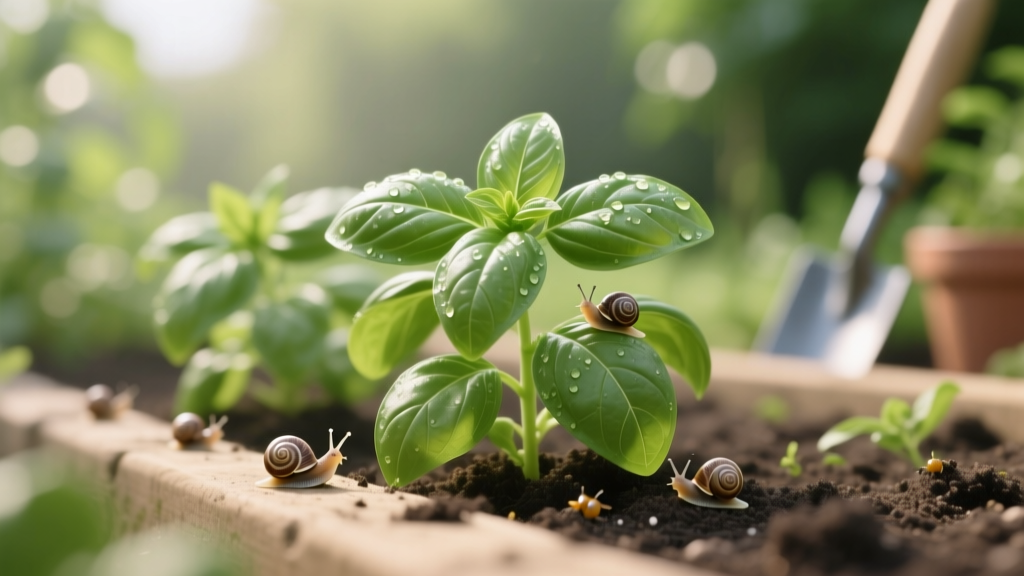
Slug and Snail Control for Basil
You go out at dusk to pick basil for dinner and the plants look fine—until you flip a leaf and see the lacework. By morning, the tender tops are ragged, seedlings are clipped off at soil level, and there’s that unmistakable silver slime trail across the pot rim. Basil can go from “lush” to “lunch” in a single wet night when slugs and snails are active.
The frustrating part is that basil often grows exactly where slugs thrive: irrigated beds, mulched containers, and lush microclimates near patios. The good news is you can control them without turning your herb patch into a chemistry experiment—if you combine timing, habitat tweaks, and a couple of proven tools.
This guide is written the way I’d walk a neighbor through fixing the problem: first stop the bleeding, then change the conditions that invite mollusks, then keep pressure low all season.
Know Your Enemy: Why Basil Is a Magnet
Slugs and snails are most active when it’s cool and damp—typically at night, early morning, and during rainy spells. Basil, with its soft, high-moisture leaves, is basically salad greens to them. Seedlings and fresh transplants are especially vulnerable because a single slug can remove the growing tip in one pass.
One detail many gardeners miss: slugs don’t need standing water. They need humidity and hiding spots. A shaded bed with thick mulch, boards, dense groundcover, and daily watering creates a 24/7 shelter-and-buffet situation.
Watering Practices That Reduce Slug Pressure (Without Stressing Basil)
Water management is your quiet superpower. Basil wants consistent moisture, but slugs want wet surfaces and long periods of leaf wetness.
Best watering timing
- Water in the morning (ideally before 10 a.m.). This gives soil time to soak and the surface time to dry before slug activity peaks after dusk.
- Avoid evening irrigation when possible—especially during humid weeks.
How much water does basil actually need?
In garden beds, basil typically does well with about 1 inch (2.5 cm) of water per week from rain plus irrigation, adjusted for heat and soil type. Containers dry faster; in hot spells you may water daily, but you can still avoid making nighttime conditions perfect for slugs by watering early.
Watering technique (small changes, big impact)
- Water at the base (drip line, soaker hose, or careful hand-watering). Wet leaves don’t help basil and do help slugs.
- Let the top 1 inch of soil dry slightly between waterings (not bone dry, just not constantly wet).
- If you mulch, keep mulch pulled back 2–3 inches from basil stems to reduce hiding spots right at the plant crown.
Soil, Mulch, and Bed Setup: Make the Area Less Welcoming
Basil grows best in a loose, fertile soil that drains well. Conveniently, “well-drained” also makes life harder for slugs, which prefer damp, compressed zones.
Soil structure
- Aim for soil that drains within a few hours after watering. If puddles linger the next morning, you’re running a slug hotel.
- Improve heavy soil with compost (not fresh manure) and, if needed, a raised bed. Even a 6–8 inch raised bed can shift the moisture balance.
Mulch choices (and how to use them without inviting slugs)
Mulch is not “bad,” but some mulches are better than others for basil when slugs are present.
- Thick, cool mulches (heavy wood chips, dense leaf mold) can increase slug shelter.
- Lighter mulches (thin straw, chopped leaves used sparingly) can be workable if kept back from stems.
Practical rule: if you can press your fingers into the mulch and it feels cool and wet at noon, it’s probably staying damp all night too. Reduce depth to about 1 inch near basil, and reserve thicker mulch for pathways.
Light and Airflow: A Simple Fix Many People Skip
Basil wants sun, and slugs want shade. That overlap is smaller than most gardens make it.
- Give basil 6–8 hours of direct sun. Morning sun is especially helpful because it dries the surface quickly.
- Space plants to allow airflow: about 10–12 inches apart for typical Genovese types. Overcrowding traps humidity under leaves.
- Keep basil pruned (pinch above a node) so plants are bushy but not a tangled mat touching the soil.
Feeding Basil Without “Over-Tenderizing” It for Slugs
Overfeeding—especially with high nitrogen—can make basil extra lush and tender, which slugs adore. You want steady growth, not soft, watery foliage.
- Work in compost at planting time (a 1–2 inch layer incorporated into the top soil is usually plenty).
- If using liquid fertilizer in containers, go light: something like a balanced fertilizer at half strength every 2–3 weeks is often enough.
- Avoid heavy late-day foliar feeding; keep leaves dry by nightfall.
Common Problems: Telling Slug Damage from Other Basil Issues
Before you treat, confirm the culprit. Basil can look “chewed” for several reasons.
Slug/snail signs
- Irregular holes with smooth edges, especially on lower leaves
- Seedlings severed near the soil line
- Silvery slime trails on leaves, soil, pots, or edging
- Damage that worsens after rainy nights or heavy irrigation
Look-alikes
- Flea beetles: many tiny “shot holes,” usually on upper leaves; no slime.
- Earwigs: ragged holes, often with black droppings; they hide in damp crevices too, but trails are absent.
- Cutworms: seedlings cut at soil line, but usually one clean cut; inspect soil around the base.
Control Methods Compared (with Real-World Numbers)
You’ll get the best results by combining methods: quick knockdown + habitat reduction + ongoing monitoring.
| Method | How fast it works | Typical effort | Best use case | Notes / data points |
|---|---|---|---|---|
| Hand-picking at night | Immediate | 10–15 minutes nightly for 1 week | Small beds, containers, sudden outbreaks | Most effective 1–2 hours after dark with a flashlight |
| Iron phosphate bait | 2–7 days | Low | Ongoing pressure, edible crops | Reapply after heavy rain; scatter thinly, don’t pile |
| Beer traps | 1–3 nights | Medium | Monitoring + localized reduction | Needs refreshing every 1–2 days; can attract more from nearby |
| Copper tape/barriers | Immediate barrier effect | Medium (setup) | Containers, raised beds, greenhouse benches | Works best when kept clean and unbridged by leaves/soil |
| Habitat cleanup (boards, thick mulch, weeds) | 1–2 weeks | Medium | Long-term control | Reduces hiding spots; pairs well with baiting |
Step-by-Step: A Practical 7-Day Basil Rescue Plan
If your basil is actively being chewed, do this for one week. It’s the fastest way I know to turn the tide without overcomplicating things.
- Night 1–3: Hand-pick. Go out 1–2 hours after dark with a flashlight. Check under leaves, around stems, under pot rims, and along edging. Drop slugs/snails into a container of soapy water.
- Day 1: Dry the “ring” around plants. Pull mulch back 2–3 inches from basil stems. Remove boards, stones, and debris within 12 inches of the plants.
- Day 1: Switch watering to morning-only. If you must water in hot weather, do it early and water the soil, not the leaves.
- Day 2: Apply iron phosphate bait. Sprinkle lightly according to label directions in the evening when the ground is dry (or drying). Focus on the perimeter of the basil patch and damp hiding zones.
- Day 4: Re-check and re-pick. You should see fewer. Keep removing survivors and egg-laying adults (larger snails especially).
- Day 5–7: Add barriers for high-value plants. Use copper tape on container rims or a barrier around a small raised bed, making sure no leaves touch over the edge.
What the Research and Extensions Actually Recommend
Extension guidance tends to be refreshingly practical: reduce shelter, water smart, trap or pick, and use bait thoughtfully when needed.
“Most mollusc problems can be reduced by eliminating daytime hiding places and using baits judiciously when conditions favor activity.” — UC IPM, Pests in Gardens and Landscapes: Snails and Slugs (University of California Agriculture and Natural Resources, 2023)
The University of Minnesota Extension emphasizes integrated tactics—sanitation, trapping, barriers, and baits—as the most reliable way to manage slugs and snails in home gardens (University of Minnesota Extension, 2022).
For edible gardens, iron phosphate baits are commonly recommended because they are effective and generally considered lower-risk for many non-target concerns when used as directed (UC IPM, 2023).
Real-World Scenarios (and What Actually Works)
Scenario 1: Container basil on a shaded patio gets shredded overnight
This is classic. The pot stays damp, the rim is a highway, and the underside of the pot is a cool cave.
- Fix: Elevate pots on “feet” or a stand so the base dries and you can see activity.
- Add copper tape around the rim, but first wipe the rim clean so it sticks well.
- Water in the morning and dump saucers that hold water overnight.
- Hand-pick for 3 nights in a row—containers are small enough that this is very effective.
Scenario 2: Basil seedlings in a raised bed keep disappearing at the base
Seedlings vanishing is often slugs (sometimes cutworms). Check at night. If you see slime and irregular feeding, treat as slugs.
- Fix: Use iron phosphate bait around (not on) seedlings and reduce thick mulch right near the row.
- Consider temporary collars (a short ring of plastic bottle) as a physical guard while plants are under 6 inches tall.
- Water early and avoid keeping the bed surface constantly wet.
Scenario 3: A lush basil patch in the ground looks fine… until a rainy week
Rain flips the switch. You can go from “no problem” to heavy damage in 48 hours when nights are cool and wet.
- Fix: After rain, do one evening of hand-picking plus a light bait application along bed edges.
- Open the canopy: prune basil to lift lower leaves off the soil and improve airflow.
- Clear hiding spots in a 2–3 foot radius—slugs travel from nearby cover.
Troubleshooting: Symptoms and Targeted Fixes
Symptom: Holes mostly in lower leaves; top looks okay
- Likely cause: Slugs feeding from the ground up.
- Do this tonight: Hand-pick after dark; pull mulch back from stems; add bait along the outside of the plant’s drip line.
- Do this this week: Prune the lowest leaves so they don’t touch soil.
Symptom: Seedlings clipped cleanly at soil level
- Likely causes: Slugs/snails or cutworms.
- Confirm: Look for slime trails and irregular chewing; dig gently around the cut stem for a curled cutworm.
- Solution: If slime is present, use iron phosphate bait + nighttime scouting. If cutworms are present, use collars and remove worms by hand.
Symptom: Damage is worst in one corner of the bed
- Likely cause: A nearby harbor—boards, dense weeds, groundcover, a damp downspout area.
- Solution: Clean that corner first. Add bait between the hiding area and the basil. You’re intercepting traffic.
Symptom: You’re baiting but still seeing fresh chewing
- Common reasons: Bait washed away, applied too lightly/too late, or slugs are feeding elsewhere first.
- Solution: Reapply after heavy rain (per label). Apply in the evening when surfaces are drying, not during a downpour. Combine with hand-picking for 2–3 nights to knock down adults quickly.
Using Baits Safely Around Herbs
For basil, I prefer iron phosphate-based products because they’re widely recommended for edible gardens when used according to label directions (UC IPM, 2023). A few practical pointers:
- Less is more: Scatter bait thinly. Piles get moldy and don’t improve control.
- Place strategically: Around the perimeter of the basil area and near hiding spots, not on the leaves.
- Reapply timing: After significant rain or overhead watering that dissolves granules.
If you have pets or wildlife concerns, read product labels carefully. Even “safer” options deserve respect in a home garden.
Barriers and Traps: What Helps, What’s Overhyped
Copper barriers
Copper tape can work nicely on containers and small raised beds. The key is maintenance: keep it clean, and don’t let leaves drape over it (slugs will use the leaf as a bridge).
Beer traps
Beer traps catch slugs, but they’re maintenance-heavy and can draw slugs from nearby. If you use them, treat them as a short-term tool:
- Bury a container so the rim is about 1 inch above soil (to reduce beetle bycatch).
- Empty and refresh every 1–2 days.
- Place traps a short distance away from basil (think 3–6 feet), so you lure slugs away, not into the plant.
DIY abrasives (egg shells, coffee grounds, diatomaceous earth)
These can help in dry conditions, but they’re unreliable in wet weather—the exact time slugs are worst. Consider them “bonus points,” not your main strategy.
Long-Term Prevention: Keep Basil Productive All Season
Once you’ve stopped the immediate damage, prevention is mostly about keeping your garden from staying damp and sheltered at night.
- Weekly 5-minute check: Lift a pot, check under a board, look along bed edges. Catch problems early.
- Prune basil regularly: Harvest tops every 7–10 days. An airy plant dries faster and gives slugs fewer hiding folds.
- Edge control: Keep grass and weeds trimmed around basil beds—slugs commute from those zones.
- Rotate and reset: If a bed is chronically sluggy, grow basil in containers for a season while you clean up the bed’s shelter issues.
Basil should be a generous plant—something you snip constantly, not something you babysit. Once you adjust watering timing, tighten up habitat, and use one reliable control method (hand-picking or iron phosphate bait) during high-pressure weeks, you’ll usually find the damage drops to a tolerable level. And when you walk out at dusk for a handful of leaves, you’ll be thinking about pesto again—not slime trails.
Sources: University of California Agriculture and Natural Resources, UC IPM “Snails and Slugs” (2023). University of Minnesota Extension, “Slugs and snails” (2022).