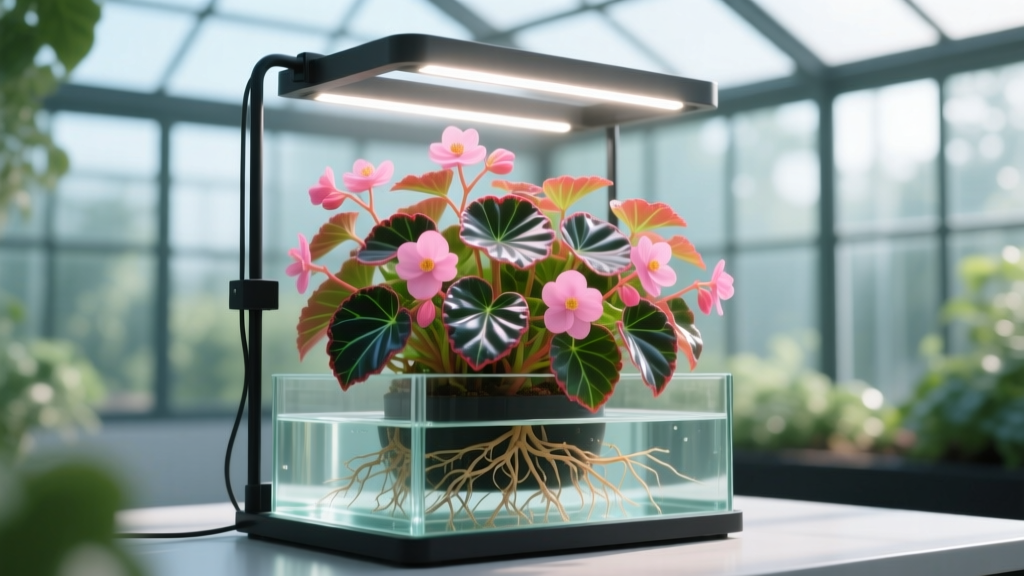
How to Grow Begonias in Hydroponics
The first time most people try begonias in hydroponics, it goes like this: the plant looks fabulous for 10–14 days, then the leaf edges brown, stems get soft, and you’re staring at a pot of mush wondering how a “houseplant” could fail so fast in clean water. The surprise is that begonias aren’t hard in hydroponics—they’re just picky about oxygen at the roots, gentle feeding, and stable temperatures. Get those three right, and you can grow thick, glossy foliage and steady blooms without fungus gnats, soggy soil, or guessing when to water.
This is the method I use when I want reliable indoor color (rex begonias, cane types, and many wax begonias do beautifully), especially in winter when soil stays wet too long. Below you’ll find practical numbers, step-by-step setups, and troubleshooting that matches what actually happens in home systems.
Pick the right begonia and the right hydroponic style
Not every begonia behaves the same. Thick-stemmed cane begonias tolerate a wider range of moisture than delicate rhizomatous types, and rex begonias can thrive hydroponically if you keep their crowns from staying wet. You’ll get the fastest success if you start with:
- Cane begonias (e.g., ‘Lucerna’ types): sturdy, forgiving, great in semi-hydro setups.
- Wax begonias (Begonia semperflorens-cultorum): compact, steady bloomers; great for kratky or ebb-and-flow.
- Rex begonias (Begonia rex-cultorum): dramatic foliage; best in semi-hydro with excellent airflow and conservative feeding.
Hydroponics also isn’t one single thing. For begonias at home, you’ll usually be choosing between a passive setup (semi-hydro or kratky) and an active one (DWC with air, ebb-and-flow). Here’s how they compare with real, usable targets.
| Method | Best for | Target water/air behavior | Maintenance level | Notes for begonias |
|---|---|---|---|---|
| Semi-hydro (LECA + reservoir) | Indoor cane/rex begonias | 1–2 in (2.5–5 cm) reservoir at bottom; roots above stay airy | Low–moderate | Most forgiving; excellent oxygenation if you don’t overfill. |
| Kratky (non-circulating) | Wax begonias, small plants | Air gap develops as solution drops; no pump | Low | Works best if you start with small plants and stable temps (65–75°F / 18–24°C). |
| DWC with air stone | Fast growth, larger containers | Constant aeration; roots in solution | Moderate | Great growth, but warm water can trigger root rot quickly. |
| Ebb-and-flow (flood & drain) | Multiple plants, mixed collections | Flood 2–4 times/day for 10–15 minutes | Moderate–higher | Strong choice if you already run a system; keeps roots oxygenated. |
If you’re starting from scratch: semi-hydro in LECA is the sweet spot for begonias—simple, clean, and less likely to drown roots.
Light: bright, not blistering
Begonias in hydroponics still follow the same light rules as potted plants, but they can respond faster because water and nutrients are always available. Too much light plus strong feed equals leaf scorch. Too little light equals lanky stems and dull color.
Targets that work in real rooms
- Bright indirect light at an east window, or filtered south/west light behind a sheer curtain.
- If using LEDs: aim for 10–14 hours/day on a timer.
- Keep most begonias 12–18 inches (30–45 cm) below mid-strength grow lights; adjust based on leaf response.
Scenario #1: Winter window grower. If your begonia looks fine in October but stretches and drops lower leaves in January, it’s usually day length and intensity—not your nutrients. Add a simple LED bar and run it for 12 hours. You’ll see tighter internodes in 2–3 weeks.
Watering in hydroponics: it’s about oxygen, not frequency
“Watering” in hydroponics really means managing the root zone: water level, oxygen, and cleanliness. Begonias hate stagnant, low-oxygen conditions—especially when water is warm.
Water temperature and oxygen
Keep nutrient solution at 65–72°F (18–22°C). Above 75°F (24°C), dissolved oxygen drops and root-rot organisms become more aggressive. This isn’t just theory—warm, low-oxygen water is the classic trigger for sudden collapse in DWC.
“Root pathogens are favored by warm temperatures and low dissolved oxygen; keeping solution cool and well-aerated is a primary prevention strategy.” — Cornell University Cooperative Extension greenhouse guidance (2020)
Water level rules (by method)
- Semi-hydro (LECA): Keep a reservoir of 1–2 inches (2.5–5 cm) at the bottom. Do not fill to the crown.
- Kratky: Start with solution touching the net pot bottom, then let the level drop naturally to create an air gap. Don’t keep topping off to the brim.
- DWC: Keep solution about 1 inch (2.5 cm) below the net pot once roots are established, and run an air stone 24/7.
How often to change the solution
For home systems, change the nutrient solution every 10–14 days. Top off with plain water (pH-adjusted) in between. This keeps salts from creeping up and prevents “mystery problems” like leaf-tip burn that appears even when you swear you haven’t fed heavily.
Scenario #2: Vacation-proof setup. If you’re gone for a week, semi-hydro is your friend. Fill to the correct reservoir height, and the plant can coast. With DWC, make sure the air pump is reliable; a failed pump can cause damage in 24–48 hours in warm rooms.
“Soil” for hydroponic begonias: choose an airy medium and keep crowns dry
Begonias don’t need soil, but they do need structure and air around their roots. The goal is to anchor the plant while leaving plenty of oxygen pockets.
Best media options
- LECA (expanded clay pebbles): Excellent for semi-hydro. Rinse thoroughly until water runs mostly clear.
- Coco chips + perlite (50/50): Good for ebb-and-flow; holds moisture but still breathes.
- Rockwool: Works, but beginners often keep it too wet; also watch pH drift.
Transitioning a begonia from soil to hydro (step-by-step)
- Pick a healthy plant with no mushy stems or fungus issues.
- Remove from pot and rinse roots gently in lukewarm water. Don’t scrub; just tease soil away.
- Trim dead or black roots with sterile scissors.
- Place in LECA and position the crown slightly above the top layer so it stays dry.
- Fill reservoir to 1–2 inches (2.5–5 cm) and wait.
- For the first 7–10 days, run a weaker nutrient mix (details below). The plant is adjusting.
Expect some “transition leaf loss,” especially with rex begonias. If new growth emerges firm and colorful, you’re winning—even if two older leaves sulk.
Feeding begonias in hydroponics: gentle, consistent, and measurable
Overfeeding is the most common hydro begonia mistake. Begonias generally prefer a lighter nutrient strength than fruiting crops. You want steady growth, not force-feeding.
Nutrient strength (EC/PPM) targets
- Newly transitioned plants: EC 0.6–1.0 (roughly 300–500 ppm on a 500-scale meter).
- Established vegetative growth: EC 1.0–1.4 (about 500–700 ppm).
- Heavy bloomers (wax types) under strong light: EC 1.2–1.6 (about 600–800 ppm), if leaves stay clean-edged.
These are practical home ranges, not lab absolutes. If you’re seeing browned tips, back off by 0.2–0.4 EC and refresh the reservoir.
pH targets
Aim for a solution pH of 5.8–6.2. If you’re consistently at 6.8+, you’ll see nutrient lockout symptoms (yellowing between veins, weak growth) even when your EC looks fine.
Colorado State University Extension notes that nutrient availability is strongly influenced by pH, with many elements becoming less available as pH rises out of the preferred range (Colorado State University Extension, 2023).
Feeding schedule you can stick to
- Every 10–14 days: full reservoir change with fresh nutrients.
- Mid-cycle: top off with pH-adjusted water only (unless EC drops significantly).
- Monthly: rinse LECA or flush the system to reduce salt buildup.
Scenario #3: The “my plant was fine until I fertilized” case. This usually happens when someone mixes nutrients for tomatoes and gives the same strength to begonias. If leaves curl down, tips brown, and growth stalls within a week of feeding, drain and refill at EC 0.8–1.0. Begonias recover surprisingly well once the root zone is stable again.
Temperature and humidity: the quiet drivers of success
Hydro makes plants grow faster, and fast growth is sensitive to environmental swings.
- Air temperature: 65–75°F (18–24°C) is the comfort zone for most begonias.
- Night minimum: try not to dip below 60°F (15.5°C) for prolonged periods.
- Humidity: 45–60% is a sweet spot—enough to prevent crispy edges, not so high that mildew moves in.
If you run high humidity (60%+), prioritize airflow. A small oscillating fan across the room (not blasting the leaves) prevents stagnant pockets that invite mildew.
Common problems (and fixes that actually work)
When begonias fail in hydroponics, symptoms move fast. Use the plant’s timing: “overnight collapse” is usually roots; “slow decline over weeks” is often light, salts, or pH.
Symptom: Leaf edges brown and crispy
- Most common causes: EC too high, salt buildup, low humidity, or hot light.
- Fix:
- Check EC; if above 1.6, dilute or replace solution.
- Do a full change and rinse medium.
- Raise humidity toward 50–60% or move the plant 6–12 inches farther from the light.
Symptom: Stems turn soft/mushy near the base
- Most common causes: crown staying wet, water level too high, warm solution, poor oxygen.
- Fix:
- Lower reservoir to 1–2 inches (semi-hydro) and keep crown dry.
- Keep solution 65–72°F; move reservoir off warm surfaces.
- In DWC, add/upgrade aeration and never let waterline sit against the stem.
- Trim mushy tissue and propagate healthy cuttings as insurance.
Symptom: Yellow leaves, especially between veins (interveinal chlorosis)
- Most common causes: pH too high (iron/manganese less available), or nutrient mix too weak for new growth.
- Fix:
- Measure pH; bring to 5.8–6.2.
- If EC is below 0.6 and the plant is actively growing, raise to 1.0–1.2.
- Refresh solution—old solution drifts.
Symptom: Leaves droop but medium is wet (classic hydro confusion)
- Most common causes: oxygen-starved roots or root rot, not thirst.
- Fix:
- Inspect roots: healthy roots are white to tan and firm; rotting roots are brown/black and slimy.
- Remove rotten roots, rinse, and restart in fresh solution at EC 0.6–0.8.
- Improve aeration (air stone) or switch to semi-hydro if you keep seeing this in DWC.
Symptom: Powdery mildew on leaves
- Most common causes: high humidity + low airflow + cool nights.
- Fix:
- Increase airflow and keep leaves dry.
- Remove heavily infected leaves.
- Use a labeled houseplant-safe fungicide or a horticultural oil spray, testing on a leaf first (rex types can be sensitive).
Comparison analysis: semi-hydro vs DWC for begonias (with practical numbers)
If you’re torn between semi-hydro and DWC, here’s the grounded tradeoff. In my experience, begonias reward stability more than maximum growth rate.
- Growth speed: DWC often pushes faster growth when solution stays at 65–70°F and aeration is strong. Semi-hydro is slightly slower but steadier.
- Risk window: In DWC, a warm spell that bumps solution to 78°F can trigger a rapid decline in 2–4 days. Semi-hydro has more oxygen buffering because much of the root mass lives in air spaces.
- Maintenance: DWC needs constant aeration and closer monitoring. Semi-hydro typically needs a reservoir top-off and a change every 10–14 days.
For most home growers with mixed indoor conditions (heat vents, sunny windows, day/night swings), semi-hydro is the method that forgives you when life gets busy.
Three real-world setups that work
1) Apartment windowsill (semi-hydro LECA)
Use a clear inner pot with holes and an opaque cachepot. Keep a 1–2 inch reservoir, and place the plant in bright indirect light. Set a reminder to change solution every 2 weeks. This setup is quiet, clean, and doesn’t need pumps.
2) Shelving unit with LEDs (wax begonias in kratky)
For small wax begonias, kratky jars or bins work if your room stays 65–75°F. Start with solution just touching the net pot, then let the air gap form. Don’t chase the water level upward—roots need that gap. Use EC around 1.0–1.2.
3) Plant room (DWC for cane begonias)
If you already run DWC successfully for other plants, cane begonias can look spectacular. The key is water temperature control: keep solution under 72°F, run strong aeration, and keep the stem base above the waterline. Change solution every 10–14 days without fail.
Preventive habits that save begonias
- Measure, don’t guess: a basic pH pen and EC meter prevent most slow-motion problems.
- Keep crowns dry: especially rex and rhizomatous types—rot often starts where wet media touches the crown.
- Go easy on nutrients: begonias are not heavy feeders; stable EC beats big swings.
- Quarantine new plants: pests like thrips and mites don’t care if you grow in water or soil.
One last practical note: begonias are excellent “tell” plants. When they’re happy, leaves feel firm, color is crisp, and new growth emerges without distortion. When something’s off in hydroponics, they usually show it within a week—fast enough that you can correct course if you’re checking solution level, pH, and temperature regularly.
Once you’ve dialed in a stable reservoir, gentle feeding (EC around 1.0–1.4 for most), and bright light for 10–14 hours, hydroponic begonias stop being temperamental and start being dependable. And that’s the real win: you trade the uncertainty of soggy soil and fungus gnats for a system you can measure and adjust with confidence.
Sources: Cornell University Cooperative Extension greenhouse guidance on root health and oxygenation (2020); Colorado State University Extension on pH effects on nutrient availability in plant production (2023).