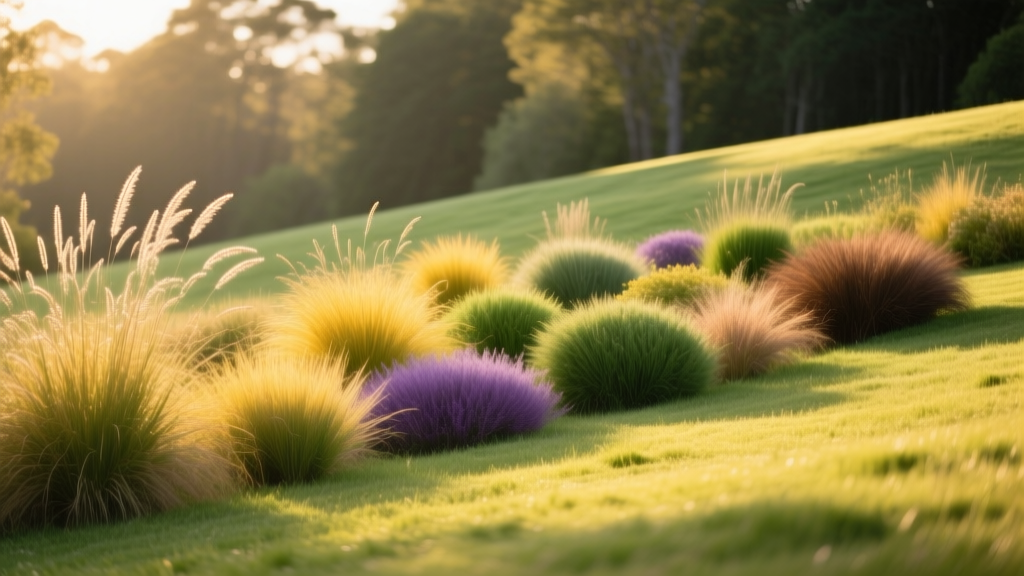
Native Grass Garden: Replace Your Lawn With 15 Low-Maintenance Native Grasses
Why Replace Your Lawn?
Average American lawns consume 30-60% of household water, require weekly mowing (gas mowers produce 5% of US air pollution), and support exactly zero wildlife. Native grasses need no mowing, no fertilizer, no pesticides, minimal water once established, and provide habitat for dozens of species.
15 Best Native Grasses by Region
Northeast/Midwest:
- Little Bluestem (Schizachyrium scoparium) — 2-4 ft, blue-green turning copper-red in fall. Drought tolerant. Full sun.
- Prairie Dropseed (Sporobolus heterolepis) — 2-3 ft, fine-textured, fragrant (smells like cilantro/coriander). Full sun.
- Switchgrass (Panicum virgatum) — 3-6 ft, upright, excellent winter interest. Tolerates clay and wet soil.
- Sideoats Grama (Bouteloua curtipendula) — 1-3 ft, distinctive oat-like seed heads. Full sun, drought tolerant.
- Pennsylvania Sedge (Carex pensylvanica) — 6-12 inches, shade-tolerant lawn replacement. Spreads by rhizomes.
Southeast:
- Muhly Grass (Muhlenbergia capillaris) — 2-4 ft, stunning pink fall plumes. Heat and drought tolerant.
- Inland Sea Oats (Chasmanthium latifolium) — 2-4 ft, shade-tolerant, graceful flat seed heads.
- Florida Gamma Grass (Tripsacum floridanum) — 2-3 ft, drought tolerant, good for rain gardens.
West/Southwest:
- Blue Grama (Bouteloua gracilis) — 1-2 ft, eyelash-like seed heads. Extremely drought tolerant.
- Deer Grass (Muhlenbergia rigens) — 3-4 ft, architectural form. Native to California/Southwest.
- California Fescue (Festuca californica) — 1-2 ft, blue-green, shade tolerant. Perfect for under oaks.
- Purple Three-Awn (Aristida purpurea) — 1-2 ft, purple seed heads. Thrives in poor, dry soil.
Northwest:
- Tufted Hairgrass (Deschampsia cespitosa) — 2-3 ft, delicate seed heads. Tolerates wet soil.
- Roemer's Fescue (Festuca roemeri) — 1-2 ft, fine blue blades. Drought tolerant once established.
- June Grass (Koeleria macrantha) — 1-2 ft, early-season green-up. Full sun, well-drained soil.
How to Convert Lawn to Native Grass
Step 1: Remove Existing Turf
- Sheet mulching (easiest): Cover lawn with overlapping cardboard, top with 4-6 inches of wood chips. Wait 3-6 months. Grass dies and decomposes.
- Solarization: Cover with clear plastic for 6-8 weeks in summer. Heat kills grass and weed seeds.
- Sod cutter: Rent for $75/day. Fast but removes topsoil with the grass.
Step 2: Prepare Soil
Native grasses prefer UNIMPROVED soil. Do NOT add fertilizer or compost — rich soil causes floppy growth and weak stems. Simply loosen the top 6 inches and remove any remaining turf roots.
Step 3: Plant
- Plugs (easiest): Buy 4-inch pots, plant 12-18 inches apart. Fill in over 1-2 seasons.
- Seed (cheapest): Sow in fall or early spring. Rake into soil surface, water daily until established. Expect patchy first year — full coverage by year 2-3.
Maintenance Schedule
| Season | Task |
|---|---|
| Spring | Cut back dead grass to 4-6 inches before new growth (leave it standing all winter for wildlife) |
| Summer | Nothing — native grasses thrive on neglect |
| Fall | Enjoy fall color and seed heads. Leave standing for winter interest and bird food. |
| Winter | Leave standing — provides cover for overwintering insects and bird food |
Wildlife Benefits
- Native grasses host 20-50 species of butterfly and moth caterpillars (bird food)
- Seed heads feed sparrows, finches, and juncos through winter
- Clumps provide nesting sites for bumblebees and overwintering habitat for fireflies
- Deep root systems (6-15 feet) filter water, prevent erosion, and sequester carbon
Final Thoughts
Start by converting a small section of lawn — maybe a strip along the fence or a corner of the yard. Plant 5-10 plugs of Little Bluestem and Prairie Dropseed. By the second year, you'll have a beautiful, waving meadow that needs watering once a month, mowing once a year, and supports dozens of species. That's a better return on investment than any lawn.