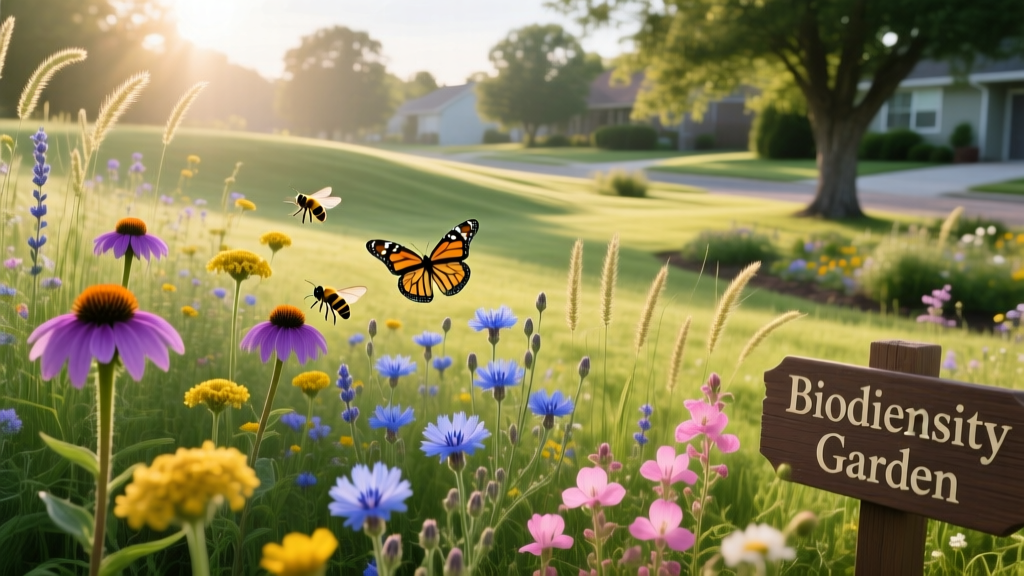
Native Wildflower Meadow: Convert Your Lawn to a Low-Maintenance Biodiversity Haven
Why Convert Your Lawn?
A typical American lawn uses 10,000 gallons of water per year beyond rainfall, requires weekly mowing, chemical fertilizers, and supports zero biodiversity. A native wildflower meadow uses no irrigation after establishment, needs mowing once per year, feeds hundreds of pollinator species, and sequesters more carbon than turfgrass. The conversion takes one season of work and then maintains itself.
Site Assessment
| Factor | Ideal for Meadow | Workaround |
|---|---|---|
| Sun | Full sun (6+ hours) | Choose shade-tolerant natives (woodland edge species) |
| Soil | Average to poor (most natives thrive in low fertility) | Avoid rich soil — favors aggressive weeds |
| Slope | Flat to moderate | Erosion control blankets on steep slopes |
| Size | Minimum 200 sq ft | Even 50 sq ft supports pollinators |
Step 1: Kill the Lawn (Choose One Method)
Sheet Mulching (Best — 3-6 months)
- Mow grass as short as possible
- Cover with overlapping cardboard (no gaps)
- Add 4-6 inches of compost on top
- Wait 3-6 months (start in fall for spring planting)
Solarization (Fastest — 6-8 weeks in summer)
- Mow short, water deeply
- Cover with clear plastic (not black — clear heats more)
- Seal edges with soil
- Leave 6-8 weeks in full summer sun
Herbicide (Last Resort)
Apply glyphosate, wait 2 weeks, apply again if needed. Wait 3 weeks before planting. Not recommended if avoidable.
Step 2: Choose Your Seed Mix
Recommended Mix Structure
- 60% native wildflowers (bloom succession spring-fall)
- 30% native grasses (structure, bird food, winter interest)
- 10% nurse crop (annual rye — protects soil while perennials establish)
Regional Seed Sources
- Prairie Moon Nursery (Midwest/East)
- Prairie Nursery (Midwest)
- Native American Seed (Southwest)
- Theodore Payne Foundation (California)
- Ernst Conservation Seeds (East)
Step 3: Plant (Fall or Early Spring)
- Rake soil surface to create seed-to-soil contact
- Mix seed with sand (1:4 ratio) for even distribution
- Broadcast seed by hand in two passes (perpendicular directions)
- Press seed into soil (walk over it or use a lawn roller) — do NOT bury
- Water lightly if planting in spring (fall planting relies on natural rain/snow)
Year 1: Establishment
- Weeds will dominate — this is normal. Most natives invest in roots, not tops.
- Mow at 6-8 inches height when weeds exceed 12 inches (prevents weed seeding)
- Hand-pull aggressive invaders (thistle, bindweed) before they seed
- Water during extended drought (first year only)
Year 2+: Maintenance
- Mow ONCE per year (late February or early March before new growth)
- Leave cut material on site for 1 week (seeds drop back), then remove
- No fertilizer needed (fertility encourages weeds over natives)
- Spot-treat invasive species if they appear
- Overseed thin areas every 2-3 years
Biodiversity Impact
| Lawn | Native Meadow |
|---|---|
| 1 plant species | 30-60+ plant species |
| 0 pollinator species | 100+ bee and butterfly species |
| 0 bird species (feeding) | 20+ bird species (seeds + insects) |
| 10,000 gal irrigation/year | 0 gal after Year 1 |
| Weekly mowing | Annual mowing |
Final Thoughts
A meadow takes patience — Year 1 looks like a weed patch, Year 2 shows the first flowers, Year 3 reveals the full design. But once established, it requires less work than a lawn while supporting an entire ecosystem. Start with 200 square feet and expand as you see what works in your conditions.