Taking Hardwood Cuttings from Bamboo
You’ve got a bamboo clump that’s finally doing what bamboo does best—growing like it owns the place. Then a friend asks for a piece, or you want to thicken a screen without paying nursery prices. You take a few “sticks,” pot them up, and… nothing. Weeks go by. The canes stay green for a while, then yellow, then collapse. It’s frustrating because bamboo looks like it should root easily.
Here’s the surprising part: most bamboos don’t behave like shrubs when you try to root “hardwood cuttings.” A section of mature culm (cane) often won’t root at all unless it includes the right tissue and the right conditions. For many home gardeners, what succeeds is closer to a culm segment with viable nodes or (more reliably) a rhizome division—but you can still get good results from hardwood-style culm cuttings if you set them up correctly and pick the right bamboo.
This is the practical, hard-won approach: what to cut, when to cut it, how to keep it alive long enough to root, and what to do when it stalls.
First: know what “hardwood cutting” means with bamboo
With woody shrubs, a hardwood cutting is a dormant, leafless stem piece that roots from the cambium. Bamboo is different. Bamboo culms are hollow (in most species), segmented, and they don’t have the same woody cambium response. New roots and shoots typically originate from nodes and rhizomes, not from random internode tissue.
So, when gardeners say “hardwood cuttings from bamboo,” they usually mean one of these:
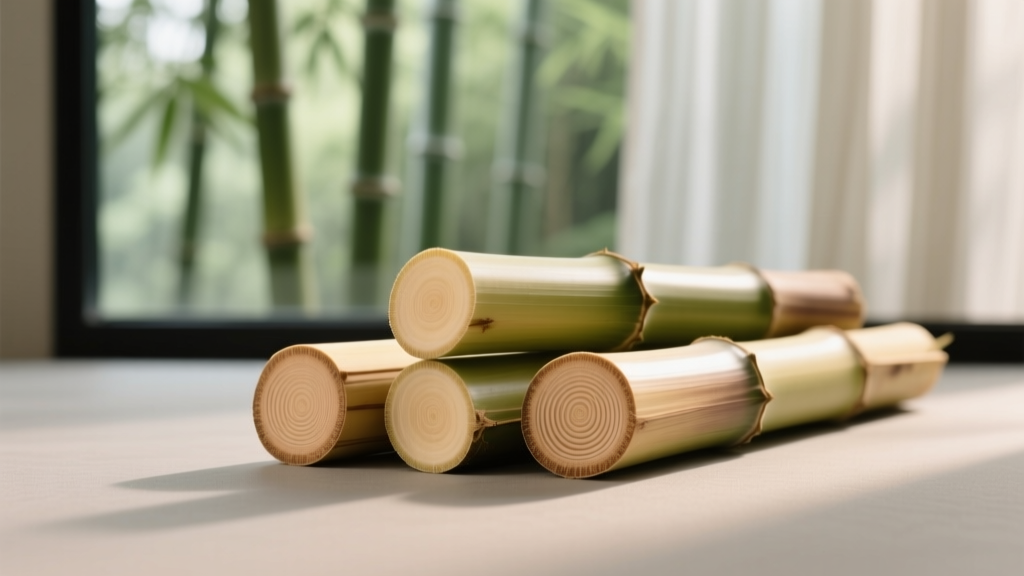
- Culm (cane) sections with 2–3 nodes (best chance when taken from 1–2 year old culms).
- Branch cuttings with swollen node bases (more common in clumping types; can be successful with careful humidity control).
- Rhizome divisions (not a cutting in the classic sense, but the most dependable way to propagate bamboo at home).
If your goal is reliable propagation, rhizome division wins. If your goal is learning and experimenting or you’re working with a bamboo known to respond to culm segments, hardwood-style cuttings can work.
“Bamboo is most commonly propagated by division; segments of rhizome with culms attached establish more reliably than culm cuttings alone.” — Royal Horticultural Society advice on bamboo propagation (RHS, 2023)
Timing: when to take bamboo “hardwood” cuttings
I get the best results when I cut when the plant is physiologically ready to recover but not pushing new growth too hard.
- Best window (temperate climates): late spring to early summer, when night temperatures are consistently above 12°C (54°F).
- Acceptable window: late summer/early fall if you can keep cuttings warm (root-zone around 20–25°C (68–77°F)).
- Avoid: mid-winter hardwood attempts outdoors; bamboo isn’t “dormant hardwood” in the shrub sense, and cold + wet is a rot recipe.
Why warmth matters: bamboo roots respond strongly to warm, moist—but airy—conditions. Many failures are simply cold media plus overwatering.
For general propagation conditions, Extension guidance repeatedly emphasizes warm root zones and controlled moisture for successful rooting (NC State Extension, 2022).
Pick the right parent culm (this is where most folks go wrong)
If you take cuttings from an old, thick culm because it “looks strong,” you often get a cutting that sits there like a broom handle until it rots. Aim for:
- Culm age: about 1–2 years old (still vigorous, nodes more responsive).
- Diameter: don’t chase the fattest canes; in many gardens, 1–3 cm culms root more readily than very thick culms.
- Node health: choose sections with plump nodes and visible branch buds.
- Species note: clumping bamboos (often Bambusa, Fargesia) tend to be more forgiving in gardens; running bamboos (Phyllostachys) are frequently easier by rhizome division.
Tools and prep (clean cuts reduce heartbreak)
Have everything ready before you cut so the pieces don’t sit drying in the sun.
- Sharp pruning saw or loppers
- Bypass pruners for trimming branches
- Isopropyl alcohol (70%) for wiping blades between plants
- Rooting hormone (optional, but helpful)
- Pots: 2–5 liter containers with drainage
- Propagation mix (details below)
- Clear plastic tote, humidity dome, or large plastic bag
Step-by-step: taking and setting bamboo culm cuttings (2–3 node method)
This method is what most home gardeners mean by “hardwood bamboo cuttings.” It can work—especially with attentive moisture control and warmth.
- Select a 1–2 year old culm early in the day, when it’s hydrated.
- Cut sections with 2–3 nodes. Total length often ends up around 20–45 cm depending on internode spacing.
- Keep orientation: mark the top end with a pen or a slightly angled cut. Planting upside down is an easy mistake.
- Trim branches back to 2–5 cm stubs at nodes (too much leafy growth dehydrates the cutting).
- Seal the top cut (optional but useful): a dab of melted candle wax or pruning sealer reduces drying.
- Apply rooting hormone to the lower node area (especially helpful in cooler conditions).
- Plant depth: bury at least one full node, and ideally set the cutting so 1–2 nodes are in the media and one is above.
- Water in until water drains freely, then let the pot drain completely—no standing water.
- Create humidity (but not swamp): cover with a dome or bag with a couple of vent holes.
- Heat: aim for a root-zone temperature of 20–25°C (68–77°F). A seedling heat mat is often the difference between success and rot.
Expectations: if it’s going to work, you often see bud swelling or new shoots within 4–10 weeks. Rooting may lag behind top growth, so don’t “pot up” just because you see a little green.
Watering: the tightrope between dehydration and rot
Bamboo cuttings fail for two opposite reasons: they dry out, or they stay wet and rot. You’re aiming for evenly moist media with plenty of air.
How often to water (practical schedule)
- Week 1–2: check moisture daily. Water only when the top 1–2 cm of mix feels barely damp (not wet). In many homes, that’s every 2–4 days.
- Week 3–8: reduce checks to every other day. Water deeply, then let drain.
- Under a humidity dome: you’ll water less. Condensation is not a guarantee of correct moisture—feel the mix.
Symptoms you’re overwatering
- Nodes turn brown/black
- Sour smell from the pot
- Culm becomes soft or mushy at soil line
Fix: increase air (more perlite, more drainage holes), vent the dome, and let the surface dry slightly between waterings. If rot has started, cut back to firm tissue and re-set in fresh mix—don’t reuse the same soggy potting media.
Soil (propagation mix): airy beats rich every time
Don’t use heavy garden soil. It holds too much water and too little oxygen—exactly what culm segments dislike.
A propagation mix that works
- 50% perlite
- 40% coco coir or fine pine bark
- 10% compost (optional; skip if you struggle with fungus/gnats)
If you prefer bagged mixes, cut a standard potting mix with at least 30–50% perlite. Your goal is a mix that drains in seconds, not minutes.
Pot size and depth
Use a container deep enough to keep one node well-buried while still allowing space for roots. A 15–20 cm deep pot is a good start for most culm segments.
Light: bright shade is your friend
New cuttings can’t replace water lost from leaves/culm surfaces until they root. Strong sun cooks them.
- Best light: bright, indirect light or morning sun only (roughly 2–4 hours gentle sun).
- Indoors: a bright window plus a grow light 12–14 hours/day can work well, especially with bottom heat.
- Avoid: hot afternoon sun on a covered dome—temperatures can spike fast and collapse the cutting.
Feeding: don’t fertilize until you have roots
Fertilizer doesn’t “help it root” when there are no roots; it often fuels rot and salt stress. Wait until you can confirm rooting.
- When to start feeding: after you see new growth and feel resistance when you gently tug, usually 6–12 weeks.
- What to use: a balanced liquid feed at 1/4 strength every 2 weeks.
- Slow-release option: a light sprinkle (about 1/4 the label rate) only after a clear root system is present.
Once established, bamboo is a heavier feeder than many shrubs, and nitrogen drives cane and leaf growth. But during propagation, restraint is what gets you there.
Method comparison: culm cuttings vs branch cuttings vs rhizome division
If your goal is to produce a plant you can rely on, it helps to pick the propagation method that matches your patience and setup. Here’s a practical comparison based on typical home-garden conditions.
| Method | What you take | Best season | Typical time to establishment | Success rate (home garden) | Notes |
|---|---|---|---|---|---|
| Culm “hardwood” segments | 2–3 node cane sections | Late spring–early summer | 8–16 weeks | Low–moderate (often 20–60%) | Needs warmth and airy mix; species-dependent |
| Branch cuttings | Branches with node bases | Warm months | 6–12 weeks | Moderate (30–70%) | Works better for some clumping bamboos; humidity control crucial |
| Rhizome division | Rhizome + roots + 1–3 culms | Spring or early fall | 4–8 weeks for recovery | High (70–95%) | Most reliable; requires digging and access to parent clump |
Those success-rate ranges reflect what I see repeatedly in real gardens: culm segments can work, but divisions are consistently dependable when done carefully.
Three real-world scenarios (and what actually works)
Scenario 1: You’ve got clumping bamboo in a small yard and want “one more plant” for a gap
Go for a modest rhizome division if you can access the base. Take a piece with roots attached and 1–2 culms. Replant immediately, water deeply, and shade it for 2 weeks. If digging is impossible (tight bed, utilities nearby), try branch cuttings under humidity with bottom heat.
Scenario 2: You inherited a running bamboo patch and want to propagate while controlling spread
Do not start by making cane cuttings from random culms. Use rhizome sections harvested from the edge where rhizomes are actively growing. Cut rhizomes into 20–30 cm pieces with at least one viable bud. Pot them in a deep container and keep them contained—running bamboo is easiest to multiply by moving rhizome pieces around, which is also how it escapes.
Scenario 3: You’re trying to root culm segments indoors because your outdoor weather is too cold
Indoors can be excellent if you control temperature and airflow. Use a heat mat set to keep media around 22°C (72°F), bright light for 12–14 hours, and a vented dome. Most indoor failures come from stale, wet air—so vent daily and keep the mix airy.
Common problems (with symptoms and fixes)
Problem: The cutting stays green but never buds out
- Likely causes: too cold, nodes not viable, cutting taken from old culm, mix too dry.
- Fix: raise root-zone temperature to 20–25°C; re-check that at least one node is buried; move to brighter (not hotter) light; keep evenly moist.
- Reality check: some bamboo simply won’t root from culm hardwood segments reliably—switch to division if you’ve tried for 12 weeks with no movement.
Problem: New shoots appear, then collapse within 1–2 weeks
- Likely causes: top growth outpacing roots, low humidity, sun stress.
- Fix: increase humidity (dome or bag), reduce direct sun, and keep the medium consistently moist (not wet). Pinch back overly ambitious new growth to reduce demand.
Problem: Blackened nodes, foul smell, mushy base
- Likely causes: rot from waterlogged media, poor sanitation, cold + wet conditions.
- Fix: discard badly rotted cuttings. For early rot, recut to firm tissue, dust with fungicide or cinnamon (mild help), and reset in fresh, drier, airier mix. Increase ventilation and warmth.
Problem: White fungus on the surface of the mix
- Likely causes: organic-rich mix staying too wet; low airflow.
- Fix: scrape off the top 1 cm, top-dress with perlite, and vent the dome daily. Reduce watering frequency.
Problem: Leaves yellow on a cutting that has sprouted
- Likely causes: low nitrogen after rooting, or waterlogging (roots suffocating).
- Fix: first check drainage and smell the soil. If the mix is sour or soggy, correct watering. If roots look healthy, begin feeding at 1/4 strength every 2 weeks.
Aftercare: hardening off and planting out
When your cutting has rooted, the next failure point is moving it too fast into harsh conditions.
How to confirm roots (without wrecking them)
- Gently tug the culm: resistance suggests roots.
- Look for sustained new growth over 3–4 weeks, not just one flush.
- If you must check, slide the root ball out carefully—don’t pull on the cane.
Hardening off (7–10 days)
- Day 1–3: outside in bright shade for 2–3 hours, then back in.
- Day 4–6: increase to 4–6 hours, introduce gentle morning sun.
- Day 7–10: leave out most of the day, avoid hot afternoon sun at first.
Planting into the garden
- Hole size: at least 2× the pot width.
- Watering: deep soak right after planting, then keep evenly moist for 3–4 weeks.
- Mulch: 5–8 cm of mulch, but keep it a few centimeters away from the culm base to reduce rot.
Notes on safety and legality (running bamboo especially)
If you’re propagating running bamboo, check local rules and be a good neighbor. Some areas regulate planting or require containment because it spreads aggressively. Even if it’s not regulated where you live, it’s wise to install a root barrier or keep it in large containers.
Feeding and long-term care once established
After your new bamboo is truly growing (new culms or steady leaf production), you can treat it more like the hungry grass it is.
- Spring feed: nitrogen-forward fertilizer as new growth begins; many gardeners use a lawn-type fertilizer carefully, following label rates.
- Watering: during the first growing season, aim for roughly 2.5 cm (1 inch) of water per week from rain/irrigation, adjusting for heat and soil type.
- Mulch and leaf litter: bamboo appreciates its own fallen leaves; they recycle silica and organic matter back into the soil.
For general watering and establishment guidance for woody landscape plants and shrubs (useful parallels for newly planted bamboo divisions/cuttings), Extension publications emphasize deep, infrequent watering that moistens the root zone rather than frequent shallow sprinkling (University of California Agriculture and Natural Resources, 2020).
Citations (real sources)
- Royal Horticultural Society (RHS). “Bamboo: propagation by division” (2023).
- NC State Extension. Plant propagation and rooting fundamentals (2022).
- University of California Agriculture and Natural Resources (UC ANR). Establishment watering principles for landscape plants (2020).
If you try culm “hardwood” cuttings and they flop, don’t take it as a black mark on your gardening skills. Bamboo is just particular about where it’s willing to generate new roots. Start with warm media, an airy mix, viable nodes, and controlled moisture. And if you want the surest path to a new plant by the end of the season, grab a sharp spade and take a small rhizome division—you’ll feel like you finally learned the shortcut bamboo’s been keeping from you.