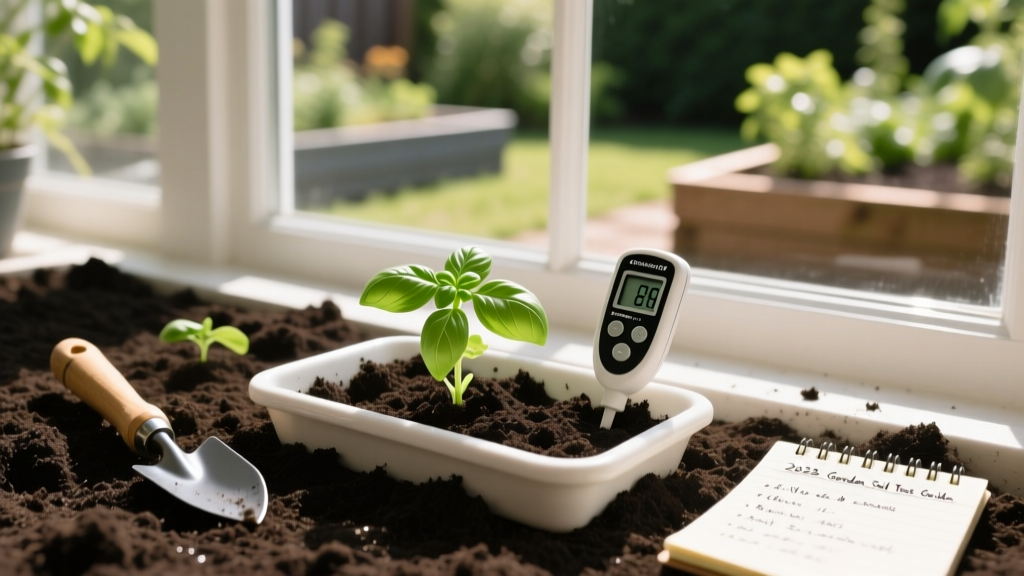
2026 Garden Soil Test Guide: What Your Soil pH Really Means for Plant Health
Why Soil Testing Is the Most Important Thing You'll Do This Year
Most garden problems aren't caused by pests or disease — they're caused by soil. Nutrient deficiencies, pH imbalances, and poor drainage are invisible problems that limit plant growth regardless of how much fertilizer you add. A $15 soil test can save you hundreds in wasted amendments and failed plantings.
Understanding Soil pH: The Master Variable
Soil pH controls nutrient availability. Even if your soil contains all the right nutrients, plants can't access them if the pH is wrong. Think of pH as a gatekeeper.
- pH below 6.0 (acidic): Phosphorus, calcium, and magnesium become unavailable. Iron and manganese become toxic.
- pH 6.0-7.0 (slightly acidic to neutral): The sweet spot for most vegetables and flowers. Maximum nutrient availability.
- pH above 7.5 (alkaline): Iron, manganese, zinc, and boron become locked up. Iron chlorosis (yellowing leaves) is common.
How to Test Your Soil pH at Home
Method 1: DIY Test Kit ($5-10)
Available at garden centers. Mix soil with water and indicator powder, compare color to chart. Accuracy: ±0.5 pH units. Good enough for general gardening.
Method 2: Digital pH Meter ($15-30)
Insert probe directly into moist soil. Wait 60 seconds for reading. Calibrate with buffer solution before each use. More consistent than color-based kits.
Method 3: Lab Test ($15-30)
Send a soil sample to your state university extension service. They test pH, N-P-K, organic matter, cation exchange capacity, and micronutrients. Results include specific amendment recommendations. This is the gold standard.
How to Collect a Representative Soil Sample
- Use a clean trowel to dig 6-8 inches deep in 5-10 spots across your garden
- Mix all samples in a clean bucket
- Take 2 cups of the mixed soil and let it air-dry
- Remove rocks, roots, and debris
- Submit the dry soil in the lab's provided bag
Interpreting Your Results
N-P-K: The Big Three
- Nitrogen (N): Drives leafy green growth. Deficiency: pale yellow leaves starting with oldest. Excess: lush foliage but few flowers/fruits.
- Phosphorus (P): Essential for root development and flowering. Deficiency: purple-tinged leaves, poor blooming. Excess: can lock up iron and zinc.
- Potassium (K): Overall plant vigor and disease resistance. Deficiency: brown leaf edges, weak stems. Excess: rare but can interfere with calcium uptake.
Secondary Nutrients and Micronutrients
- Calcium: Prevents blossom end rot in tomatoes and peppers. Add gypsum if deficient without raising pH.
- Magnesium: Central to chlorophyll. Add Epsom salt (1 tbsp/gallon) if leaves show interveinal yellowing.
- Iron: Most common deficiency in alkaline soils. Use chelated iron for immediate correction; lower pH long-term with sulfur.
How to Adjust Your Soil pH
To Raise pH (Make More Alkaline)
- Garden lime (calcium carbonate): 5 lbs per 100 sq ft raises pH by ~0.5 units. Work into top 6 inches in fall for spring planting.
- Dolomitic lime: Same as above but also adds magnesium. Use if your test shows low magnesium.
- Wood ash: Fast-acting but less predictable. Use sparingly (2 lbs per 100 sq ft). Also adds potassium.
To Lower pH (Make More Acidic)
- Elemental sulfur: 1-2 lbs per 100 sq ft lowers pH by ~0.5 units. Takes 3-6 months to work. Apply in fall.
- Iron sulfate: Faster than sulfur (3-4 weeks) but more expensive. Also corrects iron deficiency.
- Acidifying fertilizers: Ammonium sulfate and urea gradually lower pH with each application.
Soil Texture: Sand, Silt, and Clay
Your soil's texture determines drainage and nutrient retention. The ideal "loam" is roughly 40% sand, 40% silt, 20% clay.
- Sandy soil: Drains fast, leaches nutrients. Fix with compost and coconut coir.
- Clay soil: Holds water and nutrients but compacts. Fix with compost, gypsum, and coarse sand.
- The universal fix: Adding 2-4 inches of compost annually improves any soil texture over time.
Testing Frequency
Test your soil every 2-3 years for established gardens. Test annually if you're actively amending soil or starting a new garden bed. Test before each growing season for vegetable gardens.