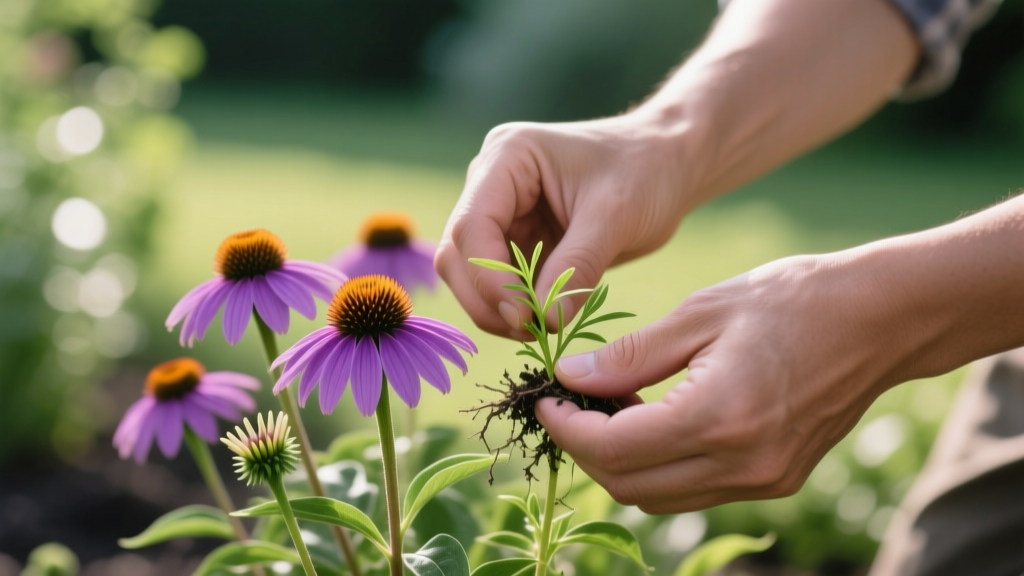
Removing Weeds Around Coneflowers Without Damage
You plant coneflowers for that tough, cheerful, “I can handle summer” look—then weeds move in like they paid rent. The tricky part is that coneflowers (Echinacea spp.) don’t just sit on the surface. They make a crown at soil level and send roots down and out, and that crown is exactly where crabgrass, chickweed, and creeping Charlie love to tangle. I’ve seen more coneflowers set back by “helpful” weeding than by drought.
Here’s the surprising fact: the most common way gardeners damage coneflowers isn’t overwatering or underfeeding—it’s mechanical injury from hoes, trowels, and aggressive pulling right at the crown. If you’ve ever snapped off a fresh Echinacea shoot while yanking a dandelion, you know the feeling. Let’s fix the weeds without sacrificing the flowers.
Know what you’re protecting: coneflower crowns, feeder roots, and new shoots
Coneflowers form a crown at or just above the soil surface. In spring, new shoots push up from that crown and are easy to break. Through the growing season, they also develop lots of fine feeder roots in the top few inches of soil—exactly where weed roots live, too.
Two rules I follow when weeding around coneflowers:
- Stay shallow: disturb only the top 1 inch of soil near the plant whenever possible.
- Give the crown breathing room: keep mulch and soil from piling against the crown—aim for a 2-inch “donut hole” of bare soil around the stem cluster.
Those two habits prevent the classic problems: severed feeder roots, buried crowns, and snapped shoots.
Real-world scenarios: choosing the right weed-removal approach
Weed removal isn’t one-size-fits-all. Your best method depends on soil moisture, weed type, coneflower age, and how tightly everything is packed.
Scenario 1: First-year coneflowers in spring with a carpet of chickweed
First-year plants have smaller root systems and fewer stems, so they’re easier to dislodge. Chickweed roots shallowly but mats densely. Here, I skip tools and do a careful “lift and tease” by hand after watering or rain, removing weeds in sections and tamping the coneflower back firmly.
Scenario 2: Established clump in midsummer with crabgrass and purslane
These weeds love heat and open soil. Mature coneflowers can handle more disturbance, but crabgrass crowns are tough. I use a sharp soil knife, cut crabgrass at the base (don’t yank), then mulch heavily to prevent regrowth.
Scenario 3: Perennial invaders (creeping Charlie, bindweed) wrapping through the clump
This is the “slow and steady” case. Pulling hard just breaks vines and leaves roots behind. I combine repeated hand-removal with targeted shielding and spot treatment (only when needed), plus a season-long strategy to thicken coneflower spacing and mulch coverage.
Watering: use moisture to make weeding safer
The easiest way to weed without damage is to work when the soil is slightly moist—not muddy, not bone-dry. Moist soil releases weed roots with less force, which means you’re less likely to yank a coneflower crown or snap new shoots.
Best timing and amounts
- Water 12–24 hours before weeding if soil is dry. Aim for about 0.5 inch of water (roughly 3 gallons per 10 sq ft), enough to soften the top few inches.
- Weed in the morning when plants are firm and temps are cooler (especially if it’s above 85°F in the afternoon).
- Avoid weeding right after heavy rain when soil smears—compaction and root tearing are more likely.
If you’re in a hot spell, remember: coneflowers are drought-tolerant once established, but they still appreciate deep watering during prolonged heat. Don’t confuse “tough” with “invincible.” Keeping them steady reduces stress so they recover quickly from any root disturbance.
Soil: protect the root zone while you remove weeds
Most coneflower damage happens in the top 2–4 inches of soil. That’s where feeder roots and weed seedlings compete. The goal isn’t to churn the soil; it’s to remove weeds while leaving soil structure intact.
What soil conditions make weeding risky?
- Loose, fluffy soil (often after fresh compost): plants can wiggle out more easily when you pull weeds.
- Heavy clay when wet: weed roots tear, and you end up pulling hard—right next to the crown.
- Crusted soil when dry: tools skid and slice coneflower roots.
A practical trick: the “two-finger brace”
When pulling any weed within 6 inches of a coneflower crown, brace the coneflower with two fingers at the base while you pull with the other hand. You’re not squeezing; you’re stabilizing. This single habit prevents the “whole plant rocked loose” problem.
Light and spacing: the quiet weed-control tools
Weeds thrive where light hits bare soil. Coneflowers prefer full sun—at least 6 hours daily—and when they’re planted with good spacing, they fill in without leaving big, bright gaps.
Spacing that reduces weeds without crowding
- Space most coneflowers 18–24 inches apart.
- If you’re dealing with chronic weeds, lean toward 18 inches so foliage shades soil sooner, but keep airflow in mind.
If your coneflowers are in part shade (say, 4–5 hours of sun), weeds often gain the upper hand because the flowers grow looser and leave openings. In that case, mulch and careful hand-weeding matter even more.
Feeding: avoid fertilizer moves that feed weeds more than flowers
Overfeeding is weed fuel. Coneflowers generally don’t need much fertilizer in decent soil. If you’re adding nitrogen-heavy products, you’ll often get a flush of lush weed growth—especially crabgrass and annual broadleaf weeds.
Simple feeding that doesn’t invite trouble
- In spring, top-dress with 1 inch of finished compost around (not on) the crown.
- If plants are pale and stunted, use a slow-release balanced fertilizer (for example, 5-5-5) at half the label rate.
As Iowa State University Extension notes, Echinacea performs best in well-drained soils and generally doesn’t require heavy fertilization; over-fertile conditions can encourage soft growth and additional problems (Iowa State University Extension, 2020).
Weed removal methods that protect coneflowers (with real data)
Below is the comparison I use when teaching gardeners: how effective a method is, how risky it is to your coneflowers, and how long it takes.
| Method | Best for | Damage risk near crown | Time per 10 sq ft | Weed control duration |
|---|---|---|---|---|
| Hand-pulling (moist soil) | Seedlings, shallow annuals | Low if braced; high if yanked dry | 10–20 minutes | 1–3 weeks (until new germination) |
| Soil knife / dandelion digger (shallow slicing) | Taproot weeds, crabgrass crowns | Medium (depends on depth control) | 8–15 minutes | 2–6 weeks |
| Hoeing | Open areas between plants | High within 6 inches of coneflowers | 5–10 minutes | 1–2 weeks |
| Mulching (2–3 inches) | Prevention, reducing new weeds | Low if kept off crown | 15–25 minutes (install) | 8–16 weeks (varies with breakdown) |
| Targeted spot treatment (shielded) | Persistent perennials, repeat offenders | Medium (drift/contact risk) | 5–10 minutes | 4–12+ weeks (depends on weed) |
Notice the pattern: prevention (mulch, spacing, shading) buys you time; precision tools beat force; and hoes are great until you get close to the plant you’re trying to protect.
“Mulches are most effective when applied 2 to 4 inches deep and kept away from the crowns of plants to reduce the chance of rot.” — Penn State Extension, Home Garden Mulches (2023)
Step-by-step: my safest workflow for weeding around coneflowers
This is the routine I use when I want clean beds and intact plants.
- Moisten first: Weed the day after a 0.5–1 inch rain, or water the area the evening before.
- Start with the biggest offenders: Remove tall weeds first so you can see the coneflower stems and crown clearly.
- Brace the crown: Place two fingers at the base of the coneflower stems.
- Pull low and slow: Grip weeds as close to soil level as possible and pull parallel to the soil surface—not straight up.
- Cut, don’t yank (when needed): For crabgrass, plantain, or thick taproots, use a soil knife to cut 1–2 inches below the surface.
- Don’t cultivate deep: Keep tools in the top 1 inch near coneflowers. Deep stirring brings up new weed seeds.
- Mulch immediately: Apply 2–3 inches of shredded bark, leaf mold, or clean straw, leaving a 2-inch gap around the crown.
- Water lightly after: A gentle watering (5–10 minutes with a wand) settles mulch without packing it tight.
That last mulch step is where most gardeners fall short. They weed and walk away, and within two weeks they’re back where they started.
Mulching details that prevent weeds without harming coneflowers
Mulch is your long game. But mulch can also cause crown issues if piled against the plant. Coneflowers hate soggy crowns.
Best mulch types for coneflowers
- Shredded leaves (partially decomposed): excellent weed suppression and soil improvement.
- Fine shredded bark: stable, neat, long-lasting.
- Clean straw (not hay): good for summer weed suppression, but can blow around.
Mulch measurements that work
- Depth: 2–3 inches for weed control.
- Crown gap: keep mulch 2 inches away from the stem cluster.
- Refresh: add 1 inch midseason if you see bare soil peeking through.
If slugs become a problem, switch from straw to shredded leaves or bark and avoid mulching too thickly right at the plant’s base.
Common problems: when “weeding” triggers bigger issues
If coneflowers look worse after you weeded, it usually traces back to one of these:
Problem 1: Wilting after weeding
Symptoms: Leaves droop the same day or next day; plant looks “loose.”
Likely causes: Roots torn during pulling; plant rocked, breaking fine roots; hot/dry conditions during weeding.
Fix:
- Firm soil gently around the crown with your hands (don’t stomp).
- Water deeply: about 1 inch over the next 24 hours (split into two waterings if runoff is an issue).
- Provide temporary shade for 2–3 days if temps are above 90°F (an upside-down crate works).
Problem 2: Crown rot or mushy stems near soil line
Symptoms: Stems darken at base; plant collapses; crown smells off.
Likely causes: Mulch piled against crown; poorly drained soil; frequent shallow watering.
Fix:
- Pull mulch back to restore a 2-inch gap around the crown.
- Improve drainage: add compost and consider raising the bed by 3–6 inches over time.
- Water less often but deeper; let the top inch dry between waterings.
Problem 3: Coneflowers stop blooming after “cleaning up” weeds
Symptoms: Healthy leaves, but fewer buds; plants seem stalled.
Likely causes: Root disturbance during bud set; excess nitrogen applied after weeding; drought stress.
Fix:
- Avoid heavy cultivation within 8 inches of the crown during bud formation.
- Skip nitrogen-heavy feeding; use compost only.
- Water consistently during bud set: roughly 1 inch per week total from rain/irrigation.
The Missouri Botanical Garden notes Echinacea is best grown in full sun with average, dry to medium moisture, and well-drained soil—conditions that also discourage many common weeds (Missouri Botanical Garden Plant Finder, 2024).
Troubleshooting weeds by type: what to do without wrecking your plants
Not all weeds deserve the same approach. Here’s how I handle the repeat offenders around coneflowers.
Taproot weeds (dandelion, dock)
Symptom: You pull, the top snaps, and it comes back.
Solution: Use a dandelion digger or soil knife and remove at least 3–6 inches of root. Work when soil is moist. If it’s too close to the coneflower crown, cut the weed below the crown repeatedly every 7–10 days until it exhausts.
Grassy weeds (crabgrass, foxtail)
Symptom: Dense clumps that are hard to pull cleanly.
Solution: Don’t yank near coneflowers. Slice at the base with a sharp knife, then mulch. Crabgrass is an annual—stop it from seeding and you win next year.
Creeping perennials (creeping Charlie, bindweed)
Symptom: Vines running through the clump; pulling breaks stems and it returns.
Solution:
- Gently trace runners and pull what comes easily.
- Cut what’s tangled at soil level rather than ripping through the crown.
- Repeat weekly for 6–8 weeks to starve roots.
- If you choose a spot treatment, shield coneflowers with cardboard and apply only to weed leaves on a calm day (<5 mph wind). Avoid contact with coneflower foliage.
Keeping weeds from coming back: a season-long strategy
Weeding once is a moment. Weed prevention is a habit. Here’s what actually changes the workload.
1) “Weed small, weed often” (with a time cap)
Set a timer for 10 minutes twice a week. Pull seedlings before they root deeply. This is the difference between a pleasant garden and a weekend of back pain.
2) Deadhead coneflowers strategically
Deadheading doesn’t directly stop weeds, but it keeps coneflowers blooming and shading soil longer. Also, a fuller plant casts more shade at the base—fewer weed seedlings germinate.
3) Use living mulch companions where appropriate
If your coneflowers are spaced widely and you hate bare soil, consider low, polite companions that don’t smother crowns. Good options include creeping thyme (dry sites) or sedums. Keep a clear ring around the coneflower crown and don’t let companions climb into it.
Common “don’ts” I wish more gardeners heard early
- Don’t hoe right up to the crown. Hoe between plants, then hand-weed the last 6 inches.
- Don’t pull weeds straight up like you’re starting a lawnmower. Pull low and sideways to reduce root disturbance.
- Don’t bury coneflower crowns in mulch. That “volcano mulch” look is a fast track to rot.
- Don’t fertilize after you weed unless the plant truly needs it. You’ll feed the next wave of weeds.
- Don’t let weeds go to seed. One crabgrass plant can drop thousands of seeds; stopping seed set saves you months later.
If you take nothing else to the garden with you, take this: weed when the soil is slightly moist, keep your tools shallow, and mulch like you mean it—2–3 inches, pulled back from the crown. Your coneflowers will keep standing tall, and you’ll spend more time enjoying blooms and less time wrestling unwanted guests.