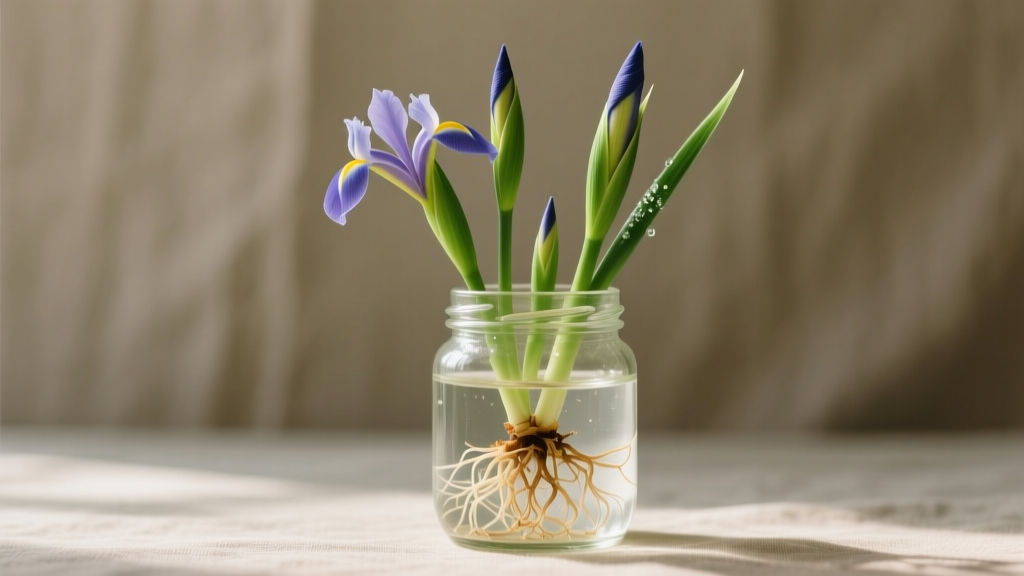
How to Speed Up Rooting for Irises Cuttings
You snip a healthy-looking piece of iris, pot it up, keep it “just moist,” and… nothing happens. Two weeks later the “cutting” is limp, the base is mushy, and you’re left wondering why the easiest plants in the garden suddenly feel impossible. Here’s the surprising truth: most irises don’t root from classic stem cuttings the way coleus or geraniums do. The fastest “rooting” success comes from working with the plant’s natural propagation parts—rhizomes (bearded iris) or basal fans/divisions (many beardless types)—and then using a few professional tricks to push new roots quickly without rot.
This guide focuses on what actually speeds up root initiation for irises at home: timing, clean cuts, correct dryness vs. moisture, warm soil, bright light, and resisting the urge to overfeed. I’ll also walk through three common real-world situations I see every season (mail-order rhizomes that arrive shriveled, summer divisions that stall, and “rescues” from crowded clumps).
First: What Counts as an “Iris Cutting” (and What Usually Fails)
When gardeners say “iris cuttings,” they often mean one of three things:
- Bearded iris rhizome piece (the thick “ginger-like” stem): this is the fastest and most reliable way to get new roots.
- Fan division (leaves + a slice of rhizome or crown): also reliable if you include the growing point and some basal tissue.
- Leaf-only cutting: typically fails for irises because leaves don’t carry the right meristematic tissue to form a new plant.
If you’ve been trying to root leaf sections in water, your time is better spent dividing or trimming rhizomes properly. That’s the “speed hack” most people miss.
Extension guidance consistently emphasizes division/rhizomes as the standard propagation method for bearded iris rather than stem/leaf cuttings (Clemson Cooperative Extension, 2020; University of Minnesota Extension, 2022).
Speed Strategy: Create the Conditions Roots Want
Irises root fastest when three things line up:
- Warmth at the base (soil is warm, not cold and wet).
- Oxygen (a gritty, fast-draining medium and shallow planting).
- Stable moisture (moist around new roots, but never swampy against the rhizome).
In practice, that means you’ll do less “watering” than you think, use a leaner mix than typical potting soil, and plant shallower than feels intuitive.
Best Timing to Get Quick Roots (and When to Slow Down)
If your goal is speed, timing matters as much as technique.
- Bearded iris (Iris germanica types): fastest rooting after bloom, mid-summer through early fall. Aim for 6–8 weeks before hard frost so roots establish while soil is still warm.
- Beardless irises (Siberian, Japanese, Louisiana): often divide best in early spring or just after bloom, depending on type. They prefer more consistent moisture than bearded.
Concrete target: if your average first frost is October 15, try to divide and replant by mid-August to early September for bearded irises. Warm soil around 65–80°F (18–27°C) tends to push root growth faster than chilly spring ground.
Step-by-Step: Prepping a Rhizome “Cutting” for Fast Rooting
This is the same process I use when I’m trying to rescue a variety I don’t want to lose. The goal is to prevent rot, reduce water loss, and encourage the rhizome to spend its energy on new roots.
1) Make clean cuts and reduce leaf load
- Use a clean, sharp knife or pruners. Disinfect with 70% isopropyl alcohol or a disinfectant wipe between plants.
- Trim leaves into a fan about 4–6 inches tall. (Yes, it looks harsh. It works.)
- Cut away any soft, brown, or foul-smelling tissue until you see firm, pale interior.
Shorter leaves reduce transpiration so the rhizome doesn’t dehydrate before it can make roots.
2) Let the cut surfaces cure (this speeds rooting by preventing setbacks)
Fresh cuts are entry points for bacteria and fungi. Give them time to dry and “callus.”
- Set rhizomes in a dry, shaded, airy spot for 12–24 hours (up to 48 hours if the cut is large).
- Skip the sunbathing. Hot direct sun can scorch and dehydrate them.
“Allowing the cut surfaces to dry before planting helps reduce soft rot and improves establishment.” — Clemson Cooperative Extension iris care guidance (2020)
3) Optional but useful: a targeted antifungal dusting
If you’ve had rot problems, a light dusting of powdered sulfur on cut areas can help. Keep it light—caking it on can slow healing. Avoid getting powders down into the crown where new growth emerges.
Soil: The Fastest Rooting Mix (and Why Regular Potting Soil Often Slows You Down)
Fast rooting depends on oxygen at the base. Heavy mixes stay wet too long, especially in pots.
Fast-draining mix for bearded iris rhizomes
Use this simple blend (by volume):
- 50% quality potting mix (not moisture-control)
- 25% perlite or pumice
- 25% coarse sand or fine gravel (avoid salty beach sand)
Garden soil in a pot is usually a rooting delay—compaction means low oxygen, and low oxygen means rot.
Outdoor bed prep (where speed meets long-term success)
- Work compost into the top 6–8 inches of soil if it’s very poor, but don’t turn the bed into a sponge.
- If drainage is slow, plant on a slight mound 2–3 inches higher than surrounding soil.
- Aim for a soil pH around 6.8–7.5 for bearded iris performance.
University extension recommendations commonly stress well-drained soil and shallow planting for bearded irises to avoid rot (University of Minnesota Extension, 2022).
Light: The Quiet Rooting Accelerator
Light doesn’t directly “make roots,” but it fuels the plant so it can afford to make them. The trick is balancing strong light with reduced water loss while the plant is re-establishing.
- Bearded iris: give 6+ hours of sun outdoors. For potted starts, bright sun is fine if you keep the mix barely moist.
- Heat waves: if temps run above 90°F (32°C) for several days, give afternoon shade for the first week to prevent dehydration.
- Indoors: rooting is slower unless you use a strong grow light. Place light 8–12 inches above the foliage for 14–16 hours/day.
A common mistake is treating iris starts like houseplant cuttings—low light + high moisture—an almost perfect recipe for rot.
Watering: Moisture Without Rot (the Line You Have to Walk)
Most slow-rooting iris “cuttings” are actually overwatered. Rhizomes store water; they don’t need constant wetness.
Watering schedule for potted rhizomes (fastest rooting with lowest risk)
- Day 1 (planting day): water once to settle mix, about 1/2 cup for a 6-inch pot, then let it drain completely.
- Next 7 days: don’t water again unless the pot is feather-light and mix is dry 2 inches down.
- Weeks 2–4: water lightly when dry 2 inches down—typically every 5–10 days depending on heat and pot size.
If you’re planting in the ground, water at planting, then water again only if you have no rain for 7–10 days and the soil is dry several inches down.
The “shallow plant” rule (huge for rooting speed)
For bearded iris, plant so the top of the rhizome is at or slightly above the soil surface. Burying it slows rooting and invites rot. In hot climates you can dust with 1/4 inch of soil to prevent sunscald, but don’t bury deep.
Feeding: What to Apply (and What to Skip) If You Want Roots Fast
Heavy nitrogen pushes soft, sappy growth—great for rot organisms, not great for establishment.
- At planting: skip strong fertilizer. If you must, use a light application of a balanced granular like 5-10-10 scratched into the soil around (not on) the rhizome, about 1 tablespoon per square foot.
- After 3–4 weeks (once you see new root tug-resistance or new leaf growth): feed lightly.
- Avoid: high-nitrogen lawn fertilizers (e.g., 30-0-0) near iris beds.
If you’re potting up starts, I prefer a slow-release fertilizer at 1/2 the label rate mixed through the potting medium, not piled in the planting hole.
Method Comparison: Which Approach Roots Fastest?
Here’s a practical comparison with real numbers you can plan around. Actual times vary by temperature, moisture, and cultivar, but the pattern holds.
| Propagation method | Typical time to “tug-resistant” rooting | Rot risk | Best temperature range | Best use case |
|---|---|---|---|---|
| Rhizome division (bearded iris), callused 24 hrs | ~10–21 days | Low–medium (if overwatered) | 65–80°F soil | Fastest, most reliable for most home gardeners |
| Fresh-cut rhizome planted immediately (no curing) | ~14–28 days (often delayed by rot) | Medium–high | 65–80°F soil | Only if you can keep very dry and airy; risky in humid weather |
| Fan division with small rhizome/crown piece (beardless types) | ~14–30 days | Medium | 60–75°F soil | Good when clumps are crowded; needs steadier moisture than bearded |
| Leaf-only “cuttings” (water or soil) | Rarely successful | High (rot) | N/A | Not recommended for irises |
Three Real-World Scenarios (and How to Get Faster Roots in Each)
Scenario 1: Mail-order rhizomes arrived shriveled and light
This is common. Your job is to rehydrate without inviting rot.
- Rinse gently and inspect. Cut away any mushy spots.
- Soak the roots only (not the rhizome body) in clean water for 30–60 minutes. If there are no roots, skip soaking the whole rhizome.
- Let surfaces dry for 12–24 hours.
- Plant shallow in gritty mix; water once, then hold back for a week.
Speed tip: warmth matters here—set pots where the root zone stays around 70°F (a warm patio, not a cold garage).
Scenario 2: You divided in summer, and the fans look fine but nothing grows
Summer stalls usually come from one of three things: planted too deep, too wet, or too much shade.
- Gently uncover the top of the rhizome—if it’s buried, raise it so it’s at soil level.
- If soil is staying wet more than 3 days after watering, improve drainage (add grit, replant on a mound, or switch to a pot with a faster mix).
- Move to a spot with at least 6 hours of sun.
Scenario 3: You rescued irises from a crowded clump and broke pieces off
Broken pieces can root fast if they include a healthy growing point and firm tissue.
- Sort pieces: keep those with a firm rhizome section and at least one fan or visible bud.
- Trim leaves to 4–6 inches.
- Callus 24–48 hours if breaks are fresh and juicy.
- Plant shallow, label, and don’t fuss with them.
Speed tip: don’t try to “help” by frequent watering—rescues rot easily because wounds are fresh.
Common Problems That Slow Rooting (With Symptoms and Fixes)
Problem: Base turns soft and smells bad (soft rot)
- Symptoms: mushy rhizome, foul odor, leaves collapse from the base.
- Cause: bacteria thriving in warm, wet, low-oxygen conditions; often triggered by buried rhizomes and overwatering.
- Fix:
- Dig up immediately.
- Cut back to firm tissue with a disinfected knife.
- Dust lightly with sulfur (optional).
- Let cure 24–48 hours.
- Replant higher in a grittier medium; water once, then pause.
Problem: Leaves shrivel or flop but rhizome is still firm
- Symptoms: limp foliage, dry tips, no mush at the base.
- Cause: dehydration after division (too much leaf area; hot sun; no roots yet).
- Fix:
- Trim leaves to 4 inches.
- Provide afternoon shade for 5–7 days if temps exceed 90°F.
- Water deeply once, then let the top couple inches dry before watering again.
Problem: No rooting after 3–4 weeks, but no rot either
- Symptoms: plant sits, doesn’t anchor, minimal new growth.
- Cause: soil too cold, light too low, or rhizome planted too deep.
- Fix:
- Check planting depth: top of rhizome should be visible.
- Increase light to 6+ hours sun (or stronger grow light).
- Warm the root zone: move pots to a spot with nights above 55°F (13°C) if possible.
Problem: New roots start, then brown and stop
- Symptoms: small roots appear, then tip-burn or browning; growth stalls.
- Cause: fertilizer burn, salty soil, or cycles of soggy-then-bone-dry.
- Fix:
- Flush pot with water once (let drain completely), then return to light watering.
- Hold fertilizer for 2–3 weeks.
- Improve consistency: water only when dry 2 inches down.
Speed Boosters That Actually Work (and the Ones That Waste Time)
Works: Warm, airy rooting conditions
- Use smaller pots (like 4–6 inch) for single rhizomes so the mix dries predictably.
- Choose terracotta if you tend to overwater—it breathes and reduces sogginess.
- Mulch around, not on top of, the rhizome outdoors. Keep mulch pulled back 2–3 inches from the rhizome “shoulders.”
Works sometimes: Rooting hormone (with realistic expectations)
Rooting hormone isn’t magic for irises, because rhizomes already have stored energy and buds. If you use it, use a light dusting on the cut end only, and keep everything on the dry side. If you tend to rot plants, skip hormone and focus on drainage and curing time.
Usually a waste: Rooting in water
Irises aren’t water-prop plants. Water rooting encourages weak, water-adapted roots (if any form), and it keeps tissues wet long enough for rot to take hold.
How to Tell You’ve Succeeded (Without Digging Everything Up)
Give it time, then test gently.
- After 10–14 days in warm conditions, hold the fan and give a light tug. If it resists, roots are forming.
- Look for fresh, upright growth from the center of the fan rather than older leaves perking up.
- In pots, you may see fine white roots at drainage holes after 3–5 weeks.
If you’re the anxious type, set a calendar reminder for 21 days and refuse to poke around before then. Irises reward patience more than “checking.”
Sources That Back Up the Practical Advice
These references reflect the standard horticultural guidance behind shallow planting, division timing, drainage, and curing cuts:
- Clemson Cooperative Extension. Iris cultural guidance and propagation notes (2020).
- University of Minnesota Extension. Growing irises (2022).
Rooting speed with irises is less about special products and more about respecting how the plant is built. Start with the right “cutting” (rhizome or division), let wounds cure for a day, plant shallow in a gritty mix, then water like a minimalist. Do that, and most healthy rhizomes will grab hold within a couple of weeks—often faster than the ones you fuss over.