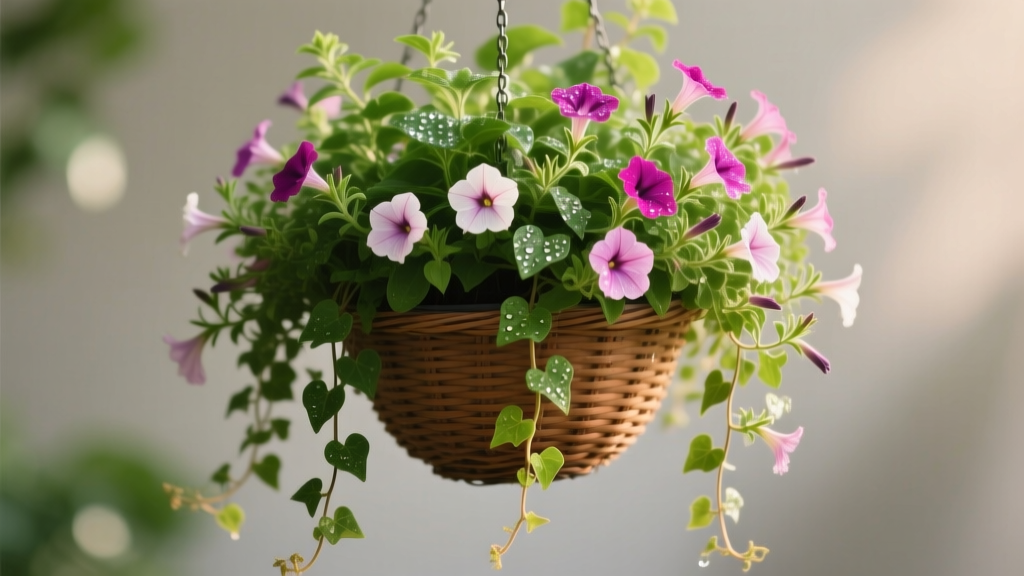
Super Cropping Hanging Baskets for Higher Yields
You’ve got a hanging basket that looks lush from the sidewalk—trailing stems, plenty of leaves—but when you lean in close, the flowers or fruit are mostly on the outside, and the center is a shaded tangle. Or maybe the opposite: one “alpha” stem shot out, hogged the light, and everything else stalled. Hanging baskets are notorious for this. The plant grows where gravity and light tell it to, and your yield (more blooms, more herbs, more fruit) ends up uneven.
Super cropping—careful, controlled bending (and sometimes a gentle pinch) of stems—lets you reshape that growth so more tips get light, airflow improves, and the basket fills evenly. It’s not magic, and it’s not roughhousing. Done at the right time and paired with good watering, soil, and feeding, it’s one of the fastest ways I know to turn a “pretty but sparse” basket into a steady producer.
What “super cropping” means in a hanging basket (and what it doesn’t)
In plain gardener terms: super cropping is strategic stem training. You soften a stem at a point, bend it over, and guide it so the plant redistributes hormones and energy to multiple growing tips. In baskets, you’re using it to keep growth low and wide, not tall and stringy.
It is NOT yanking stems until they snap, or repeatedly crushing the same spot. Your goal is a bend with minimal damage. You want the plant to keep moving water and sugars through that stem while it heals and strengthens.
Best plants for super cropping in baskets
You’ll get the best results with flexible, fast-growing basket plants:
- Edibles: strawberries, trailing cherry tomatoes (small cultivars), compact peppers (with gentler bending), basil, mint (aggressive—needs boundaries)
- Flowering baskets: petunias, calibrachoa, bacopa, fuchsia, geranium (zonal types can be trained, but bend slowly)
- Trailing foliage: sweet potato vine, ivy (train lightly; don’t crush woody stems)
Avoid super cropping brittle or woody stems (older rosemary, woody lavender, mature geranium trunks). For those, use pruning and soft ties instead.
Three real-world basket scenarios (and how super cropping changes the outcome)
Scenario 1: The “donut basket” (pretty outside, empty center)
Common with petunias and calibrachoa. The outer rim shades the middle, and the center turns into bare stems.
- Fix: Super crop 4–8 long outer stems by bending them inward across the center, pinning lightly with soft plant ties.
- Result: New side shoots pop along the bent stems, and the center refills within about 10–21 days in warm weather.
Scenario 2: The “one-stem takeover” (a single leader dominates)
Common in basket tomatoes, nasturtiums, and vigorous sweet potato vine.
- Fix: Bend the dominant stem down and sideways to the basket rim at a point where it’s still green and flexible.
- Result: Light reaches lower nodes; you get multiple fruiting or flowering tips instead of one long vine with sparse production.
Scenario 3: The “dry-by-lunch” basket (wilts daily, never catches up)
Super cropping helps here, but watering and soil matter more. Still, training can reduce leaf scorch by spreading foliage and reducing heat pockets.
- Fix: Improve moisture retention and watering timing, then do only light training (no heavy bends during heat stress).
- Result: Less midday wilt, steadier growth, and fewer bud drops.
Method comparison: super cropping vs. pinching vs. pruning
These three tools overlap, but they’re not identical. Here’s how they stack up in baskets where space and airflow are tight.
| Method | What you do | Best timing | Recovery time (typical) | Yield/shape effect in baskets |
|---|---|---|---|---|
| Super cropping (bend + soften) | Gently pinch/roll a stem section, bend to redirect growth | Early to mid season; stems still flexible | 3–7 days for perk-up; 10–21 days for fuller branching | Spreads canopy, improves light distribution, can increase flowering sites |
| Pinching | Remove soft tip growth (1–2 inches) | Very early; repeated as needed | 5–14 days to see new tips | Creates bushiness but can delay blooms if overdone |
| Pruning (cut back) | Remove longer sections of stems, sometimes by 1/3 | Midseason “reset” or to correct legginess | 7–21 days depending on heat and feeding | Fast shape correction; can temporarily reduce blooms/fruit while regrowing |
How to super crop a hanging basket (step-by-step)
Pick a cool part of the day. I like early morning when plants are hydrated and stems are pliable.
- Hydrate first. Water the basket 1–2 hours before you train. Bending dehydrated stems is how you get accidental snaps.
- Select the targets. Choose 3–8 stems that are:
- Too long and shading others
- Growing straight up or straight down with no branching
- Blocking airflow in the center
- Find the bend point. Aim for a spot 2–6 inches below a growing tip, on green, flexible growth.
- Soften the stem (optional, gentle). Roll the stem between thumb and forefinger for 5–10 seconds. You’re not trying to crush it—just make it pliable.
- Bend slowly. Bend to about 45–90° depending on plant and stem thickness. Stop if you hear cracking.
- Set the new position. Use soft ties, garden Velcro, or coated wire to anchor to the basket rim. If you can, distribute stems like spokes on a wheel to open the center.
- Give it a week. Keep watering steady and avoid heavy fertilizing for 3–5 days if you caused any stem bruising. New shoots will start pushing from nodes.
“Avoid training or pruning during peak heat or drought stress—plants heal and branch best when water status is steady.” — University of Minnesota Extension (2023)
Watering: the make-or-break factor for basket yields
Super cropping doesn’t fix inconsistent watering. Hanging baskets dry from the top, sides, and bottom all at once. If your goal is higher yields—more flowers, more herbs, more fruit—water has to be boringly consistent.
How often to water (realistic schedule)
- Mild weather (60–75°F): usually every 1–2 days
- Hot weather (80–95°F): often daily, sometimes twice daily for small baskets or full sun
- Windy locations: treat wind like extra heat; it can double drying speed
Most home gardeners under-water baskets because they water “a little bit.” You want a full soak until water runs out the bottom for 10–20 seconds. Then pause and water again briefly—dry potting mixes can shed water at first.
Quick moisture check that actually works
- Stick a finger in 2 inches. If it’s dry there, water thoroughly.
- Lift the basket: light means dry. After a week of paying attention, you’ll know the “dry weight” by feel.
Troubleshooting watering symptoms
Symptom: Leaves wilt every afternoon, even after morning watering.
Likely causes: Root-bound basket, hydrophobic potting mix, too-small container, or intense reflected heat.
Fix:
- Water twice: once to re-wet the mix, again 5 minutes later.
- Add a 1–2 inch layer of fine mulch (cocoa hulls or compost) if the plant type allows it.
- If roots are circling hard, step up to a larger basket next season (or slip-pot midseason if practical).
Soil: build a mix that can hold water and air at the same time
Basket soil has to do two jobs that fight each other: drain fast enough to avoid rot, but hold enough moisture that you aren’t watering three times a day.
A practical basket mix
- 60–70% quality peat/coir-based potting mix
- 20–30% compost (fine, mature—no chunky sticks)
- 10% perlite or pumice for air space
If you buy bagged mix, improve it with 1–2 quarts of perlite per 10-quart bag, especially for baskets in rainy climates.
Drainage reality check
Every basket needs clear drainage holes. If water dribbles slowly and the basket stays heavy for days, you’ll get root problems and poor yields. If water shoots right through and the plant wilts fast, you need more water-holding material (compost/coir) and a better watering routine.
For container media basics, including why garden soil is a poor choice in containers, see Penn State Extension (2021).
Light: shaping the canopy so more of the plant gets sun
Most basket plants perform best at 6–8 hours of direct sun. Partial shade (4–6 hours) can still give good yield if watering and feeding are right, but flowering and fruiting usually slow down.
How super cropping improves light use
- Opens the basket center so inner leaves can photosynthesize
- Turns one tall leader into multiple productive tips
- Reduces self-shading that causes leaf drop and bare stems
When light is too intense
Symptom: Bleached leaves, crispy edges, flowers fading fast.
Fix: Give 30–40% afternoon shade, or move the basket where it gets morning sun and dappled afternoon light. If you can’t move it, train foliage to shade the soil surface and keep watering consistent.
Feeding: more tips mean more mouths to feed
When super cropping increases branching, nutrient demand rises. In baskets, nutrients leach quickly because you water often and water drains out the bottom.
A simple feeding program that works
- At planting: mix in a controlled-release fertilizer according to label rate (commonly about 1–2 tablespoons per gallon of potting mix, but follow your product).
- Weekly: apply a water-soluble fertilizer at 1/2 strength.
- For heavy bloomers: switch to a “bloom” formula once buds are setting, but don’t starve foliage entirely—leaves drive yield.
If you want one actionable rule: feed lightly but often. Heavy doses cause soft growth that snaps when trained, and can increase pest pressure.
Comparison analysis: light weekly feeding vs. occasional strong feeding
In baskets, leaching is constant. A weekly half-strength program typically maintains steadier growth than a “big feed every 3–4 weeks” approach, especially in hot weather when you may water daily. Steady feeding also reduces the boom-bust cycle where plants surge, then stall, then drop buds.
Nutrient troubleshooting
Symptom: Pale leaves, slow growth, fewer blooms.
Likely causes: Underfeeding, exhausted slow-release fertilizer, or pH issues from poor-quality water.
Fix:
- Start weekly feeding for 2–3 weeks and observe new growth color.
- If you use very hard water, occasionally flush the basket with plain water until it runs freely for 30 seconds to reduce salt buildup.
Symptom: Lots of leaves, few blooms (especially petunias).
Likely causes: Too much nitrogen, not enough light, or failure to deadhead.
Fix: Reduce nitrogen-heavy feeds, increase sun exposure if possible, and deadhead or shear lightly.
Common problems after super cropping (and how to fix them fast)
Problem: Stem splits or snaps
What you’ll see: A crease that opens, or the stem folds and wilts above the bend.
Immediate action:
- If partially split: align the stem, wrap with grafting tape or stretchy plant tape, and support with a tie to the basket rim.
- If fully snapped: make a clean cut below the break and treat it as a pruning cut. Most basket plants will branch from below.
Prevention: Train hydrated stems, bend in stages over 2–3 days if needed, and avoid older woody growth.
Problem: Wilting after training
What you’ll see: The trained stem droops for a day, then recovers—or doesn’t.
Fix:
- Check moisture at 2 inches depth and water thoroughly.
- Provide temporary shade for 24–48 hours if the basket is in full afternoon sun.
- If it doesn’t recover, you likely kinked the stem too sharply; reposition with a gentler bend.
Problem: Fungal issues from a denser canopy
What you’ll see: Gray fuzz (botrytis), leaf spotting, flowers collapsing in humid weather.
Fix:
- Thin a few stems to improve airflow through the center.
- Water the soil, not the foliage; water early so surfaces dry before night.
- Remove spent blooms promptly—decaying petals are botrytis magnets.
For disease pressure and airflow best practices in home gardens, see University of California Agriculture and Natural Resources guidance on managing common ornamental diseases (UC ANR, 2022).
Timing: when to super crop for maximum payoff
Training too early can slow establishment; too late and stems are stiff and resent being bent.
- Best window: when stems are actively growing and still green—often 2–5 weeks after planting a basket outside.
- Frequency: light training every 7–14 days beats one dramatic session.
- Temperature sweet spot: train when temps are 60–80°F if you can. Plants recover faster than during heat spikes.
Super cropping paired with smart pruning: a practical routine
If you want a repeatable system, this is the one I use for long-season baskets (petunia mixes, strawberry baskets, herb bowls):
- Week 2–3: Pinch fast growers once (remove 1 inch of tips) to encourage early branching.
- Week 4–6: Super crop the longest stems to open the canopy and level the top.
- Midseason (around week 8–10): If blooming slows, shear lightly by 1/3, water well, and feed weekly for recovery.
This routine is especially effective in mixed baskets where one plant (usually a spiller) tries to dominate. Training keeps all plants contributing instead of one winning and two sulking.
Yield expectations: what “higher yields” looks like in baskets
In baskets, “yield” usually means one of three things: more blooms per week, more harvestable tips of herbs, or more fruit clusters on compact edibles. Super cropping won’t turn a 10-inch basket into a farm, but it can make the difference between a basket that flowers only on the rim and one that stays full and productive across the whole canopy.
As a rule of thumb, if you increase the number of well-lit growing tips by training (say from 6 dominant tips to 12–18 tips), you create more flowering sites. That only translates into real output if the plant has the water and nutrients to support them—so don’t separate training from care.
Quick reference: symptoms, causes, fixes (keep this handy)
- Leggy growth, bare center: Not enough light to inner canopy → Super crop long outer stems inward; prune lightly; increase light exposure.
- Buds drop before opening: Dry swings or heat → Water consistently; add afternoon shade; avoid heavy feeding spikes.
- Yellow lower leaves: Underfeeding or salt buildup → Weekly half-strength feed; flush with clear water for 30 seconds.
- Mildew/spotting: Humid, crowded canopy → Thin stems; water early; improve airflow; remove infected material.
The best part about super cropping baskets is how quickly you can see the plant respond. When you bend a stem and a week later you notice new shoots waking up along it, you realize you’re not stuck with the plant’s default shape. You’re collaborating with it. Keep your watering steady, keep the soil airy, feed lightly and often, and use training as a gentle steering wheel—not a wrestling match. Do that, and your baskets won’t just trail; they’ll produce.
Sources: University of Minnesota Extension (2023); Penn State Extension (2021); UC ANR (2022).