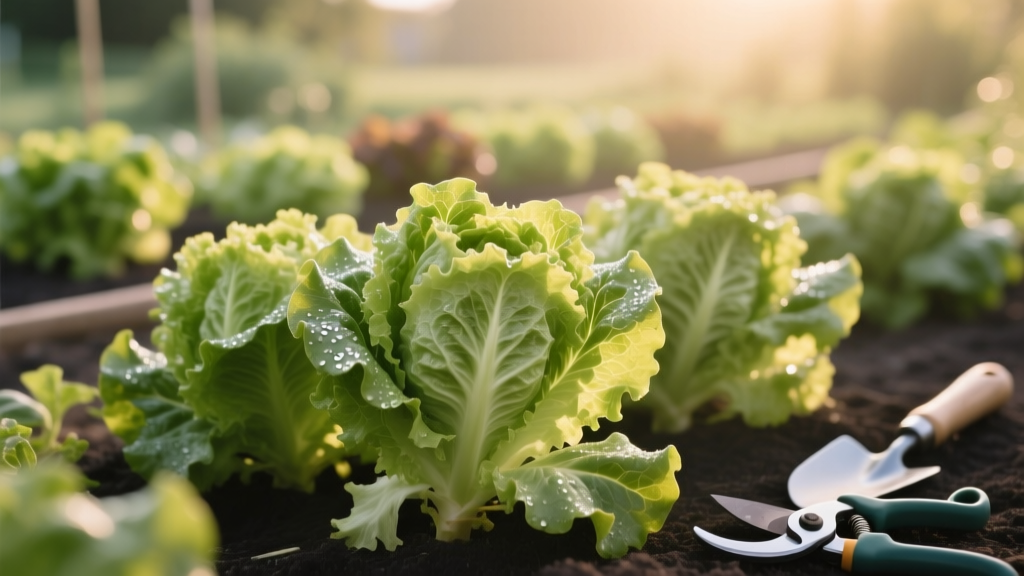
How to Stimulate More Blooms on Lettuce
You plant lettuce for leaves… and then one warm week later it shoots up a stalk and throws tiny yellow flowers like it’s trying out for a wildflower mix. If you’ve ever thought, “Why is my lettuce blooming already?” you’re not alone. Here’s the twist: getting more blooms on lettuce is easy—almost too easy. The real skill is stimulating blooms on purpose (for seed saving, pollinators, or breeding) while keeping plants healthy long enough to flower well.
This guide is for the gardener who wants lettuce to flower on cue, not by accident. I’ll walk you through what actually triggers lettuce flowering (bolting), how to push it along safely, and how to avoid the common problems that ruin flower stalks and seed set.
First, a reality check: lettuce blooms only after it “bolts”
Lettuce (Lactuca sativa) is an annual that shifts from leafy growth to flowering when conditions signal it’s time to reproduce. That shift is bolting: the plant elongates, sends up a flower stalk, then blooms and sets seed.
So when we talk about “more blooms,” we’re really talking about:
- Getting lettuce to bolt reliably (if that’s your goal)
- Keeping the bolting plant vigorous enough to produce more flower branches
- Supporting pollination and seed fill so those blooms aren’t wasted
According to UC ANR’s lettuce guidance, lettuce is a cool-season crop and heat pushes it quickly toward bolting and bitterness (University of California Agriculture and Natural Resources, 2010). And university extension resources consistently point to temperature and day length as key drivers of bolting in leafy crops (Cornell Cooperative Extension, 2021).
“High temperatures and long days accelerate bolting and flowering in lettuce; once triggered, plants shift resources away from leaf production to seed production.” — Cornell Cooperative Extension horticulture guidance (2021)
Know your goal: blooms for seed, blooms for pollinators, or blooms as a “mistake”
Before you start turning up the heat (literally), decide what success looks like. Here are three real-world scenarios I see all the time in home gardens:
Scenario 1: You want lettuce flowers to save seed
You’ll want strong, healthy plants that bolt, branch, and bloom over a long window so seeds mature evenly. This means steady watering, moderate feeding, and preventing stress crashes after bolting begins.
Scenario 2: You want blooms to support pollinators in a mixed garden
Lettuce flowers can be surprisingly attractive to beneficial insects. You can push bolting on a few plants intentionally while keeping others in leaf mode for salads.
Scenario 3: Your lettuce keeps bolting too early and you want fewer blooms
It’s still useful to understand bloom triggers—because the same levers that increase blooms are what you’ll dial down to keep lettuce leafy.
Light and temperature: the bloom trigger you can actually control
If you do nothing else, warmth and long days will do the job. Lettuce tends to bolt faster as temperatures rise, especially when daytime highs regularly exceed 75°F (24°C). Prolonged warm nights (above 60°F / 16°C) also speed the shift.
Here’s how to stimulate more blooms intentionally:
Use heat strategically (without cooking the plant)
- Move containers to a spot with 6–8 hours of sun to encourage faster bolting.
- In-ground, remove shade cloth once plants are established and you’re ready to trigger flowering.
- If you’re growing under lights, extend day length to 14–16 hours daily for a couple of weeks to push the plant toward reproductive mode.
Practical warning: heat stress can cause weak stalks, sparse blooms, and poor seed set. The goal is “warm enough to trigger,” not “hot enough to shut down.” If your lettuce is wilting by noon even with watering, you’ve gone too far.
Comparison: shade cloth vs full sun for bloom stimulation
| Method | Typical day temps at plant level | Bolting speed | Bloom/seed quality risk | Best use case |
|---|---|---|---|---|
| Full sun (no shade) | 75–90°F (24–32°C) depending on region | Fast (often 7–14 days once triggered) | Medium–High (wilting, aborted flowers if dry) | When you want quick flowering on a few plants |
| 30–40% shade cloth | 65–80°F (18–27°C) | Moderate (often 14–28 days) | Low–Medium (stronger stalks, steadier bloom) | Seed saving where you want more branches & better fill |
If you’re after more blooms (not just fast bolting), the shade cloth approach often wins: the plant keeps enough energy to branch and flower over a longer period rather than rushing through a stressed bloom.
Watering: the difference between “bolted” and “blooming well”
Drought stress can trigger bolting, but it usually does it in an ugly way—short plants, thin stalks, fewer flowers, and seeds that don’t mature evenly. If you want abundant blooms, you want consistent moisture once bolting begins.
How much water does blooming lettuce need?
For most gardens, aim for about 1.0–1.5 inches of water per week (rain + irrigation), adjusted for heat and soil type. In containers, you’ll water more often because pots shed moisture quickly.
A master-gardener watering routine that works
- Before bolting: keep soil evenly moist to build a strong root system.
- At first sign of stalk elongation: switch to deep watering in the morning, 2–3 times per week for in-ground beds (more during heat waves).
- During flowering: don’t let plants wilt midday more than occasionally. Chronic wilting reduces bloom number and seed fill.
Container rule of thumb: in a 10–12 inch pot in warm weather, check moisture daily. Water when the top 1 inch is dry.
Troubleshooting watering symptoms
- Symptom: Tall stalk but very few flowers
Likely cause: Drought stress right as bolting started
Fix: Deep soak in the morning; add a 1–2 inch mulch layer to stabilize moisture. - Symptom: Flowers form, then dry up and drop
Likely cause: Repeated wilting + hot afternoons
Fix: Add afternoon shade (even temporary), water earlier, and increase mulch. - Symptom: Soft, floppy stalk that leans and breaks
Likely cause: Overwatering + fast growth in rich nitrogen
Fix: Let the top couple inches dry slightly between waterings; reduce nitrogen.
Soil: build a plant that can afford to flower
Lettuce will bolt in mediocre soil, but it won’t bloom well there. For abundant flowering, think of soil as your plant’s savings account—if it’s broke, it can’t fund a long flowering period.
Soil texture and drainage
Lettuce likes a soil that holds moisture yet drains well—loam is ideal. If your soil is heavy clay, incorporate compost and consider growing seed lettuce in a raised bed.
- Add 1–2 inches of finished compost and mix into the top 6–8 inches of soil before planting.
- Mulch with straw or shredded leaves at 1–2 inches deep once plants are established.
pH and nutrient availability
Target a soil pH around 6.0–7.0. If you’re serious about seed saving, a simple soil test is worth it—imbalances (especially low phosphorus or potassium) can show up as weak flowering and poor seed maturity.
Feeding: how to get more blooms without making a floppy mess
Here’s the trap: many gardeners push nitrogen because lettuce is a leafy crop. But once you want blooms, excessive nitrogen can backfire—lush, watery growth and weaker stems, with fewer flowers per branch.
Think of feeding in two phases:
Phase 1 (leaf-building): moderate nitrogen early
- If your soil is average, mix in compost and you may not need much else.
- If using fertilizer, a light application of something balanced (like 5-5-5) at planting is usually enough.
Phase 2 (bloom support): emphasize phosphorus and potassium
When you see the center start to stretch (early bolting), shift away from high-N feeds.
- Top-dress with compost (a thin layer, about 1/2 inch).
- If using an organic fertilizer, choose a lower nitrogen option (for example 3-5-4 or similar).
- Apply lightly—about 1–2 tablespoons of granular organic fertilizer per plant, scratched into the soil surface, then water in.
Timing tip: feed once at early bolting, then again about 2–3 weeks later if plants are still flowering strongly and leaves aren’t overly dark green and soft.
Comparison analysis: high nitrogen vs bloom-leaning feed
| Feeding approach | Example N-P-K | What you’ll see | Bloom impact | Best for |
|---|---|---|---|---|
| High nitrogen feed | 10-5-5 | Fast, lush leaf growth; softer stems | Often fewer blooms; more lodging (flopping) | Leaf harvest before bolting (not seed plants) |
| Balanced | 5-5-5 | Steady growth; decent stem strength | Reliable flowering, moderate branching | Mixed goal: leaves + a few seed stalks |
| Bloom-leaning (lower N) | 3-5-4 | Less leaf push; sturdier stalks | Better flowering persistence and seed fill | Seed saving and pollinator rows |
Common problems that limit blooms (and what to do about them)
Lettuce flowers are small and numerous; you don’t notice a problem until bloom production is disappointing. Here are the issues that most often cut bloom count or seed set in half.
Heat spikes: “It bolted, then it stalled”
Symptoms: stalk shoots up quickly, then flowering slows; flower buds look dry; plant seems stuck.
Solutions:
- Add temporary afternoon shade during heat spikes (even a bedsheet over hoops).
- Mulch to keep roots cool.
- Water early morning, deeply.
Many extension resources emphasize consistent cool-to-moderate conditions for lettuce vigor; extreme heat reduces quality and accelerates stress responses (University of California Agriculture and Natural Resources, 2010).
Aphids on flower stalks: sticky stems and poor blooms
Symptoms: curled new growth on stalk tips, sticky honeydew, ants climbing, flowers sparse.
Solutions that work in home gardens:
- Blast aphids off with a strong stream of water every morning for 3 days.
- If pressure is high, use insecticidal soap in the evening and repeat in 5–7 days (follow label instructions).
- Encourage beneficials by letting a few herbs flower nearby (dill, cilantro, alyssum).
Powdery mildew late in the season: weak plants, fewer blooms
Symptoms: white powdery coating on leaves, then yellowing; plants decline before seeds mature.
Solutions:
- Increase airflow: thin neighboring plants and avoid overhead watering late in the day.
- Water at soil level in the morning.
- If it’s a recurring issue, grow seed plants with a bit more spacing: 12–18 inches between plants.
Flopping stalks (lodging): big plant, fewer usable flowers
Symptoms: stalk leans, kinks, or breaks; side branches get shaded; flowers form poorly.
Solutions:
- Stake tall seed plants early—don’t wait until they’re top-heavy. A simple bamboo stake and soft ties work.
- Back off nitrogen and keep watering steady (not feast/famine).
- If wind is an issue, choose a slightly sheltered spot for seed lettuce.
Step-by-step: a reliable plan to produce more lettuce blooms
If you want a repeatable method you can use every season, this is the one I recommend for home seed savers.
- Select the right plants. Choose 2–6 of your healthiest lettuce plants to dedicate to flowering. (If you’re saving seed, dedicate more than one to preserve diversity.)
- Stop harvesting heavily. Light leaf picking is fine, but don’t keep shaving the plant down—let it build energy.
- Trigger bolting with warmth and longer days. Move pots into fuller sun or remove shade. If you’re under lights, move to 14–16 hours of day length.
- Stabilize moisture. Aim for 1.0–1.5 inches of water per week; mulch 1–2 inches.
- Feed lightly at early bolting. Use compost + a low-N fertilizer (example 3-5-4). Avoid heavy nitrogen.
- Stake early. Once stalks hit about 12–18 inches, loosely tie to a stake to prevent wind damage.
- Keep pests from camping on stalk tips. Check twice a week for aphids and treat early.
Three real-world case fixes (what I’d do in your shoes)
Case 1: “My lettuce bolts, but it barely flowers—just a skinny stalk.”
This is usually a stress-bolt: the plant panicked (heat/drought) before it had resources to branch.
- Next round, keep lettuce growing steadily until it’s robust, then trigger bolting with warmth.
- Don’t induce bolting by withholding water; instead, keep moisture even and use heat/day length as the trigger.
- Feed once at early bolting with a low-N fertilizer so it can afford to branch.
Case 2: “My lettuce flowers, but everything dries up in midsummer.”
That’s heat plus inconsistent watering. The plant starts, then can’t sustain bloom production.
- Add 30–40% shade cloth for afternoons only.
- Mulch and water early morning.
- Grow your seed lettuce where it gets morning sun and a little late-day relief.
Case 3: “Aphids cover the flower stalks and the blooms look deformed.”
Aphids love tender stalk tips. If you let them build up, they’ll absolutely cut bloom production.
- Start with water sprays for 3 days straight.
- If that’s not enough, use insecticidal soap at dusk and repeat in 5–7 days.
- Don’t overfeed nitrogen—aphids explode on soft, nitrogen-rich growth.
Quick troubleshooting: symptoms and exact next steps
- Symptom: Leaves turn bitter and flowers appear early
Cause: Heat/long days triggered bolting before the plant sized up
Next steps: If you want blooms, support the plant (water, mulch, light feeding). If you want leaves, add shade and keep temps down. - Symptom: Lots of buds but few open flowers
Cause: Stress (hot afternoons, dry roots, or sudden fertilizer spike)
Next steps: Morning deep watering, temporary afternoon shade, avoid high-N feeding. - Symptom: Stalk grows tall fast, then top looks cramped and distorted
Cause: Aphids or tip damage (sometimes thrips)
Next steps: Inspect the growing tip; wash off pests; treat with soap if needed. - Symptom: Flower stalk bends over after a storm
Cause: No staking + fast growth
Next steps: Stake early; tie loosely; reduce nitrogen going forward.
A note on timing: when to start your “bloom batch”
If you’re planning ahead, schedule lettuce for flowering so it bolts when conditions are warm but not brutal. In many climates that means:
- Planting in early spring, then letting selected plants bolt in late spring to early summer
- Or planting in late summer for flowering in early fall (where frost arrives late enough)
Once flowering starts, expect the bloom period to stretch over multiple weeks if the plant stays healthy. The more you prevent stress crashes (wilting, pests, nutrient extremes), the more side branches you’ll get—and the more blooms those branches can carry.
If your original goal was “more blooms,” remember: lettuce is already inclined to flower when it thinks the season is turning. Your job is to make that transition happen under conditions where the plant can keep its footing—steady water, reasonable soil fertility, and just enough warmth and light to flip the switch. Do that, and your lettuce won’t just bolt. It’ll put on a real bloom show.
Sources: University of California Agriculture and Natural Resources (UC ANR), “Lettuce” crop guidance (2010). Cornell Cooperative Extension horticulture resources on bolting/flowering triggers in cool-season crops (2021).