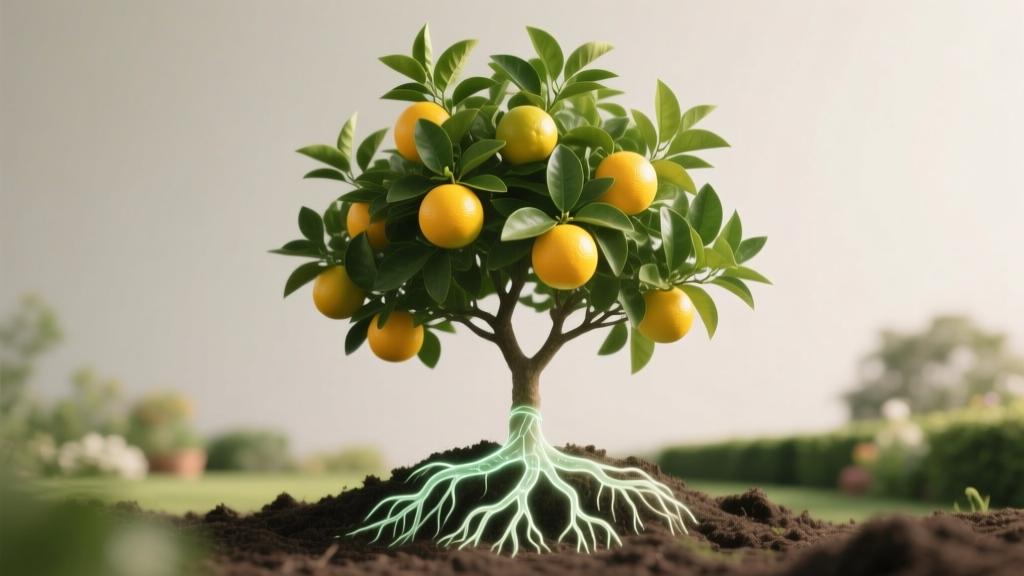
Using Mycorrhizal Fungi with Citrus Trees
I’ve lost count of how many times a gardener has told me: “My lemon tree is alive, but it just sits there.” The leaves look a little pale, the new growth is skimpy, and no matter how faithfully they water or fertilize, the tree acts like it’s stuck in neutral. A surprising fix—especially for container citrus and newly planted trees—isn’t another bottle of fertilizer. It’s getting the roots partnered up with the right mycorrhizal fungi.
Mycorrhizae are beneficial fungi that live in (or on) plant roots and extend the effective root system into the soil. Citrus can form arbuscular mycorrhizal (AM) relationships, and when conditions are right, that partnership can improve nutrient uptake (especially phosphorus and micronutrients), help with drought stress, and support better root architecture. The trick is doing it at the right time, in the right soil, with realistic expectations.
This is a practical, soil-under-your-fingernails guide for home citrus growers—backyard trees, patio pots, and everything in between. I’ll walk you through how to use mycorrhizal inoculants correctly, how it changes watering and feeding, and how to troubleshoot when you don’t see results.
What mycorrhizal fungi actually do for citrus (and what they don’t)
Think of AM fungi as a network of fine threads (hyphae) that act like extra root hairs. They explore tiny soil pores that roots can’t easily enter, bringing back water and nutrients. In exchange, the plant feeds the fungi sugars from photosynthesis.
Here’s the grounded part: mycorrhizae won’t fix a citrus tree that’s drowning in soggy soil, frozen back by cold, or planted too deep. They don’t replace fertilizer forever. What they can do is make the tree more efficient—so your fertilizing and watering actually pay off instead of leaching away or locking up in the soil.
“Mycorrhizal fungi can significantly improve phosphorus uptake and plant water relations, especially when soil phosphorus is not excessive.” — UC ANR guidance on mycorrhizae and nutrient management (University of California Agriculture and Natural Resources, 2020)
Two important realities to keep in mind:
- High-phosphorus soil can suppress colonization. If you’ve been using high-P “bloom booster” fertilizers, you may be making it harder for mycorrhizae to establish.
- These fungi need living roots. Inoculant sprinkled on top of soil, far from roots, usually does very little. Contact matters.
Real-world scenarios: where mycorrhizae help most with citrus
Scenario 1: New in-ground citrus planted in spring
You plant a 5-gallon orange tree, water it regularly, but growth is slow and the first summer heat hits hard. Mycorrhizae can help the tree build a more resilient root system during that establishment window—especially if your native soil is low in organic matter or has been disturbed.
Scenario 2: Container lemon that “won’t green up” despite feeding
Container mixes drain fast and can be low in biological activity. Inoculating at pot-up (when roots are exposed) is one of the best uses of mycorrhizae in home gardening. The difference is often most noticeable in improved vigor and reduced “crash” between waterings.
Scenario 3: Citrus in alkaline soil with micronutrient issues
In many regions, citrus struggles in soils with pH above 7.5, where iron and zinc become less available. Mycorrhizae don’t magically change pH, but they can improve micronutrient uptake efficiency. Pair that with good soil management and you can reduce recurring chlorosis.
Research and extension publications consistently note that mycorrhizal benefits are strongest when the plant is under moderate stress or nutrient limitation—not when everything is already optimal. For a home gardener, that means: don’t expect fireworks in a rich loam with perfect irrigation; do expect help in pots, new plantings, sandy soils, and “tired” beds.
Soil: getting the conditions right for colonization
Mycorrhizae are living organisms. Give them a soil environment they can survive in, and they’ll do their job.
Target soil texture and drainage
Citrus roots need oxygen. If your soil stays wet for long stretches, root rot organisms win and mycorrhizae struggle. Aim for a soil that drains so the top few inches dry slightly between waterings.
- In-ground: If a 12-inch-deep hole fills with water and takes more than 24 hours to drain, fix drainage before worrying about inoculants.
- Containers: Use a well-aerated mix. Avoid garden soil in pots.
Soil pH targets for citrus + mycorrhizae
Citrus generally performs best around pH 6.0–7.0. Many AM fungi can function outside that range, but nutrient availability becomes the limiting factor. If your pH is 7.8–8.2 (common in arid regions), plan on managing iron chlorosis with chelated iron and organic matter while mycorrhizae support uptake efficiency.
For pH and nutrient recommendations, university extension programs consistently advise soil testing rather than guessing. Texas A&M AgriLife Extension emphasizes matching fertilization to soil and tissue needs for citrus (Texas A&M AgriLife Extension Publication, 2022).
Phosphorus: don’t overdo it
Here’s a common mistake: gardeners apply a starter fertilizer high in phosphorus when planting, then add mycorrhizae. Excess available P can reduce the plant’s “interest” in partnering with fungi.
Practical guideline: if you’re using a granular citrus fertilizer, choose one with modest phosphorus (for example, something close to 8-3-9 or 6-4-6) rather than a high-P bloom formula like 10-30-20. If a soil test shows high P, skip phosphorus additions for a season and focus on nitrogen timing and micronutrients.
How to apply mycorrhizal fungi to citrus (what actually works)
Mycorrhizal inoculants only help when spores or colonized root fragments touch active roots. Surface applications can work eventually, but they’re slow and unreliable.
Best times to inoculate
- At planting (in-ground or container): ideal, because roots are accessible.
- At up-potting (moving from 5-gallon to 10–15 gallon): excellent timing for container citrus.
- Early spring when root growth resumes: good for established trees if you can get inoculant into the root zone.
Step-by-step: planting a citrus tree with mycorrhizae
- Dig the hole only as deep as the root ball, and 2–3 times wider.
- Locate the topmost roots and keep the root flare slightly above grade (don’t bury the trunk).
- Dust or sprinkle inoculant directly onto the root ball surface and into the hole where roots will contact it.
- Backfill with native soil (amending heavily can create a “pot effect” in clay).
- Water in slowly with 2–5 gallons for a 5-gallon tree, depending on soil type.
- Mulch 2–4 inches deep, keeping mulch 6 inches away from the trunk.
Step-by-step: inoculating established in-ground citrus
If the tree is already in the ground, your goal is to get inoculant into the feeder root zone (generally under the canopy dripline, in the top 6–12 inches of soil).
- Water the tree the day before so the soil is workable, not dusty or muddy.
- Use a soil probe, auger, or a sturdy trowel to make holes 6–8 inches deep around the dripline, spaced about 12–18 inches apart.
- Add inoculant to the holes according to label rates (rates vary widely by product concentration).
- Backfill and water lightly to settle soil.
- Mulch and keep the area evenly moist for the next 2–3 weeks (not soggy).
Containers: the easiest place to see results
For potted citrus, inoculate when you can physically touch the roots:
- When potting up, sprinkle inoculant on the exposed root ball and in the new soil layer.
- For a 5-gallon pot moving to 10–15 gallons, many gardeners use roughly 1–2 tablespoons of a typical granular inoculant, but always follow the product label—spore counts vary.
- Water thoroughly until you see runoff, then let the top 1–2 inches dry before watering again.
Watering: how mycorrhizae change the “rules” (slightly)
Mycorrhizae can improve drought tolerance, but they don’t make citrus a desert plant. They help you get more mileage out of good watering habits.
Establishment watering for newly planted trees
For the first 4–8 weeks, prioritize consistent moisture in the root ball while roots explore native soil.
- Week 1–2: water every 2–3 days in warm weather if soil drains well.
- Week 3–8: shift to every 4–7 days, applying a deeper soak.
Adjust for your climate: in 95°F+ heat with wind, you’ll water more often; in cool coastal weather, less. The goal is moist soil with oxygen, not constant saturation.
Container watering targets
In pots, the biggest enemy is the swing between bone-dry and swampy. With mycorrhizae, try to keep a steadier rhythm:
- Water when the top 1–2 inches are dry.
- Water until 10–20% drains out the bottom (this helps flush salts).
- In summer, many patio citrus need water every 1–3 days, depending on pot size and sun.
Troubleshooting watering symptoms
- Symptom: Leaves curl inward and feel crisp; fruit drops when small.
Likely cause: Underwatering or irregular watering (common in containers).
Fix: Deeply water, then reset a schedule; add mulch on top of the potting mix (keep it off the trunk). - Symptom: Leaves yellow evenly; new growth weak; soil smells sour.
Likely cause: Overwatering/poor drainage; roots suffocating.
Fix: Improve drainage immediately; repot containers into a chunkier mix; avoid inoculating until root health stabilizes.
Light and temperature: don’t ask fungi to fix shade
Citrus needs strong light to feed both itself and its fungal partners. In shade, photosynthesis drops, the tree produces fewer sugars, and the whole system limps.
- Best light: 6–8+ hours of direct sun for most citrus.
- Temperature: Root activity slows in cold soil; mycorrhizal activity also drops. If soil temps are below about 55°F, expect slow response.
In very hot climates, afternoon shade can prevent leaf scorch, but don’t overdo it. A lemon tree tucked under a patio roof often looks “hungry” because it’s light-starved, not because it lacks nutrients or mycorrhizae.
Feeding citrus when you’re using mycorrhizae
Mycorrhizae help with uptake efficiency; they don’t create nutrients out of thin air. You still need a smart feeding plan, especially nitrogen for growth and fruiting.
A practical fertilizing schedule (home garden scale)
For in-ground citrus, many extension programs recommend splitting nitrogen applications through the growing season rather than dumping it all at once. UC ANR citrus guidance emphasizes timing and avoiding excessive fertilization that can leach (University of California Agriculture and Natural Resources, 2021).
Simple approach for mature in-ground citrus:
- Feed 3 times per year: early spring, late spring/early summer, and mid-summer.
- Avoid heavy nitrogen late in the season in colder areas; tender growth is more frost-prone.
For container citrus:
- Use a complete citrus fertilizer at a reduced rate but more frequently during active growth (follow label rates; containers vary widely).
- Flush the pot with plain water every 4–6 weeks to prevent salt buildup.
Micronutrients matter (and mycorrhizae can help)
If you see interveinal chlorosis (yellow leaves with green veins), don’t just add more nitrogen. Citrus commonly needs iron, zinc, and manganese—especially in alkaline conditions.
- For iron chlorosis in high pH soils, use chelated iron (EDDHA forms work better in alkaline soil than EDTA in many cases).
- Apply foliar micronutrients during mild temperatures (60–85°F) to reduce leaf burn.
Comparison: inoculation methods that actually work (with numbers)
Gardeners love “quick fixes,” so let’s compare the common approaches with realistic expectations. These numbers assume you’re using a reputable AM inoculant and the tree is otherwise well cared for.
| Method | Root contact quality | Typical timing to notice change | Best use case | Cost efficiency (home scale) |
|---|---|---|---|---|
| Dusting roots at planting | High (direct contact) | 4–12 weeks | New trees, transplant shock reduction | High |
| Mixing inoculant into potting mix during up-potting | High | 3–8 weeks | Container citrus, fast-draining media | High |
| Soil probing/holes around dripline | Medium (depends on feeder roots) | 8–16 weeks | Established in-ground trees | Medium |
| Broadcasting on soil surface under mulch | Low to medium | 12–24 weeks | Maintenance, low disturbance beds | Low to medium |
| Adding to irrigation water (if label allows) | Variable | 8–20 weeks | Drip zones where inoculant reaches roots | Medium |
If you want the strongest odds, put inoculant where roots are actively growing. For citrus, that usually means at transplant time or during a pot-up. Surface applications can work, but they’re the “slow boat,” and you may not notice anything for months.
Common problems (and how to tell if mycorrhizae are involved)
Problem: No noticeable improvement after inoculating
This is the most common complaint. In my experience, one of these is almost always true:
- Phosphorus is already high (suppresses colonization).
- Soil is staying too wet (root issues block the partnership).
- Inoculant never touched roots (sprinkled on top, watered in once, forgotten).
- Tree is light-starved (not enough sun to fund the fungi with sugars).
- Product mismatch: Citrus needs AM fungi; some products emphasize ectomycorrhizae, which are great for many trees but not the main partner type for citrus.
What to do: Start with basics: verify sun exposure (aim for 6–8 hours), check drainage, and consider a soil test. Then reapply properly at the root zone during an active growth window.
Problem: Leaf yellowing after inoculation
Mycorrhizae don’t cause yellowing directly, but changes in watering or feeding around the time of application can.
- Symptom: Older leaves yellow first, tree looks generally pale.
Likely cause: Nitrogen deficiency or root stress.
Fix: Apply a citrus fertilizer at label rate; ensure soil is moist but airy; avoid piling mulch against the trunk. - Symptom: New leaves are yellow with green veins.
Likely cause: Iron deficiency (often pH-related).
Fix: Apply chelated iron; add organic matter; avoid overliming; keep irrigation water quality in mind.
Problem: Root rot (Phytophthora) signs
If your citrus has gumming at the crown, a thinning canopy, and leaves that yellow and drop despite adequate watering, stop focusing on inoculants and address root health first.
Fix checklist:
- Ensure the root flare is above grade; remove soil piled against trunk.
- Improve drainage (regrade, French drain, raised bed if needed).
- Water less often but more deeply once drainage is corrected.
- Consider extension-recommended management options for Phytophthora in your area (local recommendations vary).
Feeding vs. mycorrhizae: a practical comparison with real numbers
Here’s a grounded way to think about it. If your citrus is in a pot and you’re fertilizing heavily, a lot of what you apply can wash out with frequent watering. Mycorrhizae can help the plant capture more of what’s already there, but they can’t compensate for chronic nutrient loss without a plan.
A simple method comparison for container citrus during summer:
- Method A (fertilizer-only): Fertilize at full label rate every 2–4 weeks; water daily in heat; flush occasionally. Can produce fast growth but higher salt risk.
- Method B (mycorrhizae + moderated feeding): Inoculate at pot-up; fertilize at 75–100% label rate but prioritize consistency; flush every 4–6 weeks; keep moisture steadier. Often yields sturdier growth and fewer “boom/bust” cycles.
Actual results vary, but in the home garden, Method B tends to be more forgiving—especially if you sometimes miss a watering or your patio runs hot.
Choosing and handling inoculants (so you don’t waste money)
Not all mycorrhizal products are equal. You’re looking for AM fungi (often listed as Glomus species or “arbuscular mycorrhizae”). Also check storage and expiration; these are living propagules, not magic dust.
- Check the label for AM fungi and spore/propagule count.
- Buy fresh from a retailer with decent turnover.
- Store cool and dry, and don’t leave it baking in a shed at 100°F.
- Avoid fungicide drenches right after inoculating unless you’re treating a serious disease problem—some fungicides can interfere with beneficial fungi establishment.
Three quick case fixes from the garden
Case 1: Patio Meyer lemon in a 7-gallon pot, leaves dropping mid-summer. The owner watered lightly every day. We repotted to a 15-gallon container, inoculated directly on the root ball, and changed watering to deep soaks until runoff every other day in heat, letting the top inch dry. Within 6 weeks, new growth held onto leaves better and the tree stopped its weekly wilt-and-recover cycle.
Case 2: New grapefruit tree planted into compacted clay, slow growth. The problem wasn’t a lack of biology—it was oxygen. We widened the planting area, corrected grade so water didn’t pool, mulched 3 inches deep, and then inoculated into the root zone. Growth improved the next flush, but the real win was fixing drainage first.
Case 3: Older orange tree in alkaline soil, recurring yellow new leaves. Mycorrhizae helped a little, but the breakthrough came from pairing inoculation with chelated iron and better mulch management. The tree’s new leaves emerged greener within 3–4 weeks of the iron application, and the canopy stayed more stable through the season.
If you take one lesson from those three: mycorrhizae are a strong helper, but they’re not the boss. Sun, drainage, and sane watering still run the show.
Get the fungi onto the roots at the right time, keep phosphorus reasonable, and avoid drowning the soil. Do that, and citrus usually responds the way you hoped fertilizer would respond in the first place—steadier growth, better color, and a tree that looks like it actually wants to live in your yard.